Pest Control Advice · LONDON
Flying Ants Indoors: When a Swarm Points to a Nest
A practical UK guide to interpreting flying ants indoors: how to tell a brief outdoor flight from evidence of an indoor route or nest.
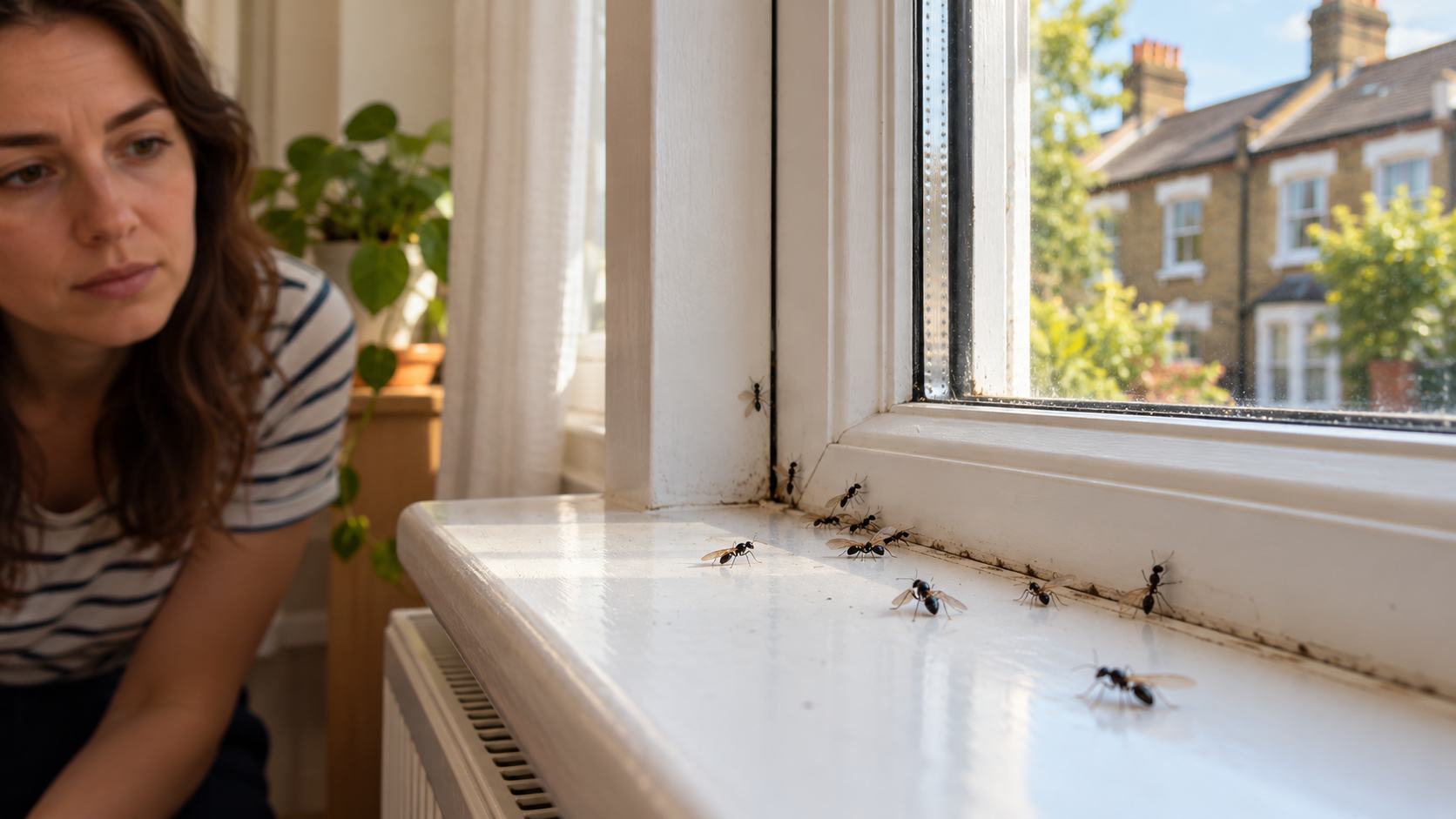
Winged ants suddenly appearing on an inside windowsill can look like a nest has opened in the wall. Sometimes that is the right lead; sometimes a nearby outdoor flight has simply found an open window. The number of insects alone will not settle it. Where they first appeared, whether ordinary worker ants are present and whether the same point produces insects again are more useful clues.
This guide helps UK householders distinguish a short seasonal arrival from evidence that an ant colony is using part of the building. It is about observation and safe next steps, not a promise to identify every species from a photograph. The Natural History Museum explains that winged ants are reproductive males and females leaving established nests for mating flights, often in warm, still summer weather. An indoor sighting needs to be read in that wider context.
Watch the first few minutes before cleaning
Note the room, date, time and weather. Was the window open, and were flying ants visible outside at the same time? Did the insects collect at the glass after appearing in the room, or did you see them emerge from a skirting gap, floor joint or service opening? Take a wide photograph of the room and a closer image of the suspected emergence point. Keep a small sample in a clear container if it can be collected safely for identification.
Do not immediately pour liquid into a crack or spray around sockets. Those actions can damage materials or create hazards and can obscure the route a pest professional needs to inspect. If the insects are simply trapped at the window, close the opening and remove them without scattering them through the home. Then watch the same location for further activity over the next few days.
Understand what a flying-ant flight means
Most ants seen walking around a home are wingless workers. Winged ants are produced by a mature colony at a particular stage and leave to mate. The Natural History Museum’s flying-ant explainer notes that there is no single nationwide flying-ant day: flights can occur over several weeks, with local weather influencing the timing. A burst on a warm afternoon is therefore compatible with an outdoor nest nearby.
Seeing winged insects indoors does not by itself prove that they developed inside the property. Light and windows can draw insects that entered through a door or vent. Conversely, repeated emergence from one interior joint, especially with workers moving to and from it, deserves closer inspection. Record which observation you have rather than converting a possibility into a diagnosis.
Compare the window cluster with the suspected route
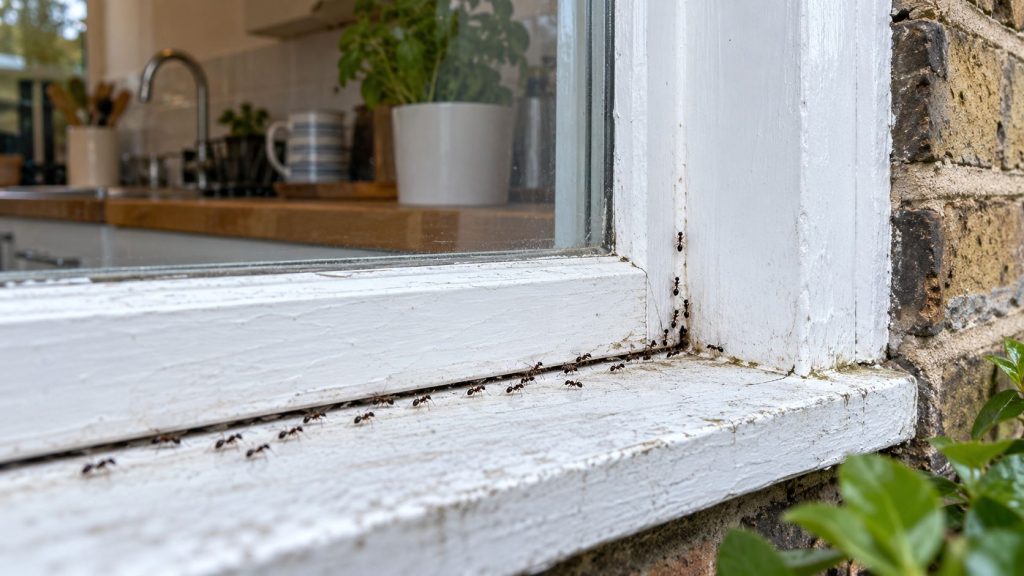
A windowsill can be a collection point rather than a source. Look for insects at the frame and on both sides of the glass if safely accessible. If many are also active on an outside patio or garden wall, the indoor group may have entered from there. If the first insects appeared at a skirting junction and then moved toward the light, the skirting is the stronger lead. A short video can capture direction of travel better than a still image.
Check the immediate exterior without disturbing paving or a nest. Small piles of loose soil along a patio joint may show where a colony is active. Do not lift heavy slabs or dismantle a window frame on the strength of one flight. The aim is to map access, not to expose a nest that may be harmless outdoors.
Look for workers and repeat activity
After the flight subsides, check whether wingless ants continue to appear in the same room. Are they following a line along a pipe, threshold or kitchen edge? Do they return on different days, or did the entire event end after the window was closed? A repeated trail has a different meaning from one brief cluster at the glass. Record the path and any nearby food or moisture source without putting bait down at random.
The British Pest Control Association advises correct identification of ants found indoors, especially in heated urban buildings where species with different behaviour may be present. Its ant identification advice is a reminder not to assume every small ant is the familiar garden species. Panther’s separate Pharaoh ant guide covers a distinct indoor problem; do not apply its treatment approach to a black-ant flight without identification.
Check the building conditions, not just the insects
Look at accessible gaps around the window, skirting and services, and note whether the room is next to a patio, garden bed or shared wall. A crack may allow entry without containing a nest. In a flat, an insect can travel through a communal route; in a house, a colony beneath paving may be close to a doorway. Photograph the route from both sides if it is safe to do so.
Keep sweet food covered and clean ordinary spills, but do not treat housekeeping as proof that a nest has gone. Ants may be using the room for food while their nest remains outside. If a contractor is already repairing a window seal or threshold, share the ant observations so the work addresses the actual gap without blocking ventilation or service access. The site’s pest inspection service can help distinguish a building route from a colony within the structure.
What to do if the swarm repeats indoors
Repeated winged ants from the same interior point, especially on more than one day or alongside a persistent worker trail, justify a closer investigation. Mark the position and preserve a specimen. Do not seal the opening while insects are emerging; they may find another route into the room, and sealing first can hide the location. An inspector can identify the species, determine where the nest is likely to be and advise whether treatment or a simple access repair is appropriate.
Not every repeat appearance is an emergency. A short summer flight from an outdoor nest may need only exclusion from the room. Urgency increases when the species is uncertain, activity is in a food-handling setting, several flats are affected or insects emerge near electrical fittings. Keep the inspection safe: do not remove socket covers or use liquid insecticide around wiring.
Deal with the immediate nuisance carefully
For a small group that has flown indoors, closing the window and collecting insects from accessible surfaces may be enough for the day. A vacuum may help with a large cluster on a dry, safe surface; empty it promptly and keep the collection contained. Do not vacuum around exposed electrics or a wasp-like insect you have not identified. If you are unsure whether the insects are ants, photograph one in focus before removing them.
Avoid treating the whole room with aerosol because insects have gathered at a light source. The nest may be outside, or the species may require a different strategy. The British Pest Control Association’s general ant guidance describes the value of finding nest entrances and worker routes before control. For indoor uncertainty, an inspection is a more reliable start than a product chosen only by the shape of the wings.
Keep a useful record for a professional
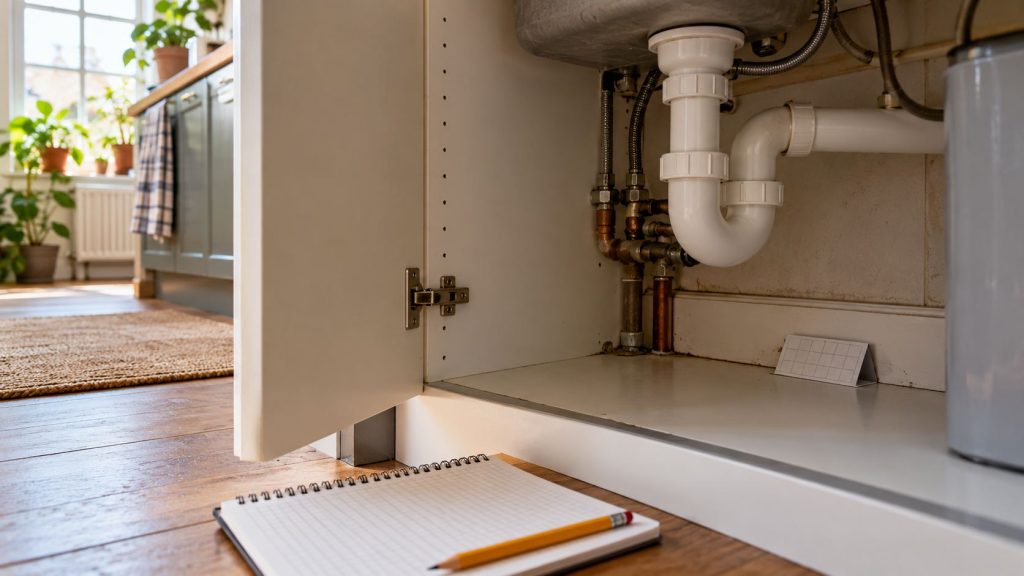
Write down the first sighting, whether the window was open, where insects appeared before they reached the glass, whether there were outdoor flights nearby and whether workers remain after the winged group has gone. Add two or three photographs: the room, the route and an insect with scale. If multiple people in a block are reporting the same afternoon, ask each to give the precise room and emergence point rather than combining everything into one vague “swarm in the building”.
That record lets a professional decide where to look and which species questions to answer. Panther’s inspection-led process explains how evidence informs a targeted response. If the same interior point produces another flight, or if wingless ants continue to travel inside, request an assessment with the timeline and images. A calm record of where insects came from is more valuable than the number removed from the windowsill.

Al Joel is a practical writer and long-term property maintenance specialist focused on real-world pest control, home safety and prevention advice. His guides translate common warning signs into clear next steps for homeowners, tenants, landlords and property managers.His approach begins with correct identification. A sighting in one room may originate from a neighbouring flat, service riser, drainage, roof space, delivery or communal waste area. Al explains how to preserve useful evidence, reduce food and water sources, avoid spreading activity and choose proportionate treatment.What readers can expectClear identification clues and practical inspection stepsSafe preparation, cleaning and aftercare guidancePrevention advice for homes, flats and commercial premisesHonest guidance on when DIY is reasonable and when professional help is the smarter optionWhen professional help makes senseRepeated sightings, activity in several rooms, uncertain identification, vulnerable occupants or signs involving food, electrics and shared building routes deserve a professional inspection. A lasting solution normally combines targeted treatment with proofing, hygiene and follow-up monitoring.Explore the Pest Library, learn how treatment works, or request property-specific advice.