Heavy movement in the loft by day
Record where and when this sign appears. Avoid disturbing useful evidence before inspection.

RODENT CONTROL · LONDON RESPONSE
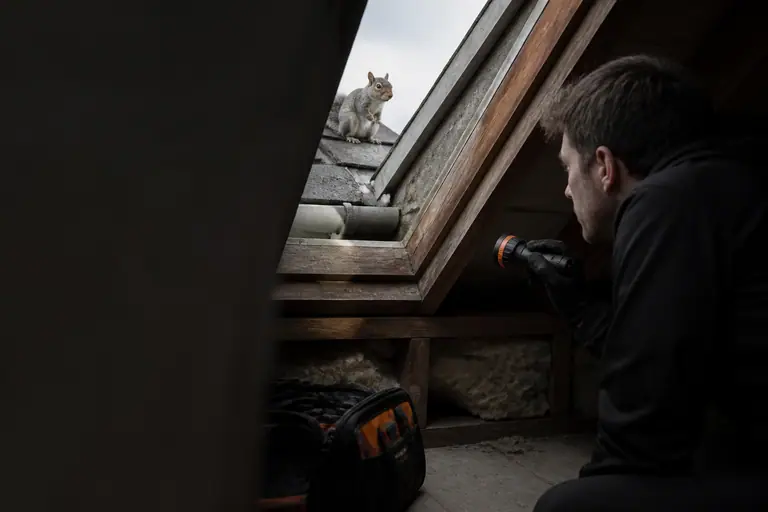
Squirrels entering roofs can damage insulation, timber and wiring, so control begins by confirming activity and finding how the animals gain access.
CASE TYPE / RODENTS
Inspect the evidence.FIELD SIGNALS
Record where and when this sign appears. Avoid disturbing useful evidence before inspection.
Record where and when this sign appears. Avoid disturbing useful evidence before inspection.
Record where and when this sign appears. Avoid disturbing useful evidence before inspection.
Record where and when this sign appears. Avoid disturbing useful evidence before inspection.
INSPECTION MAP
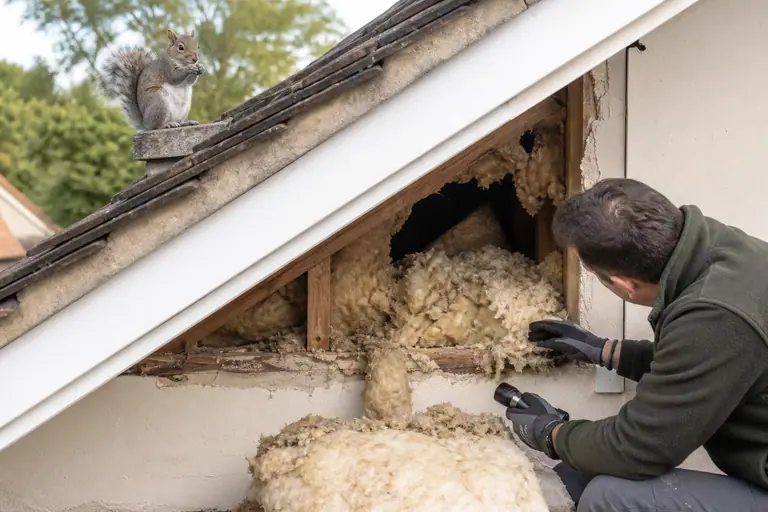
Roof edges, eaves and accessible loft areas are checked for entry damage, nesting, droppings and routes through nearby trees or structures.
CONTROL SEQUENCE
Differentiate squirrels from rats, mice or birds and identify active access points.
Use a lawful, site-appropriate control approach based on access and building use.
Repair entrances only after activity is resolved and manage branches or weak points where practical.
THE SERVICE, EXPLAINED
Daytime movement and substantial gnawing help separate squirrels from smaller rodents.
Grey squirrels are commonly active from early morning through daylight hours. Heavy running, disturbed insulation, nesting material and damage around eaves can indicate that a roof space is being used.
Do not rely on sound alone. Rats, mice and birds can occupy similar voids, so droppings, entry damage, timing and a safe loft inspection are needed before control is chosen.
The survey connects internal evidence to active exterior access.
Accessible loft areas are checked for nesting, droppings, runs and damage. From outside, the technician reviews roof edges, nearby branches and routes across adjoining structures where visibility and access permit.
Fragile ceilings, unsafe loft boards, electrical hazards and high-level defects can limit the survey. Specialist roofing or access work may be required before every opening can be confirmed.
Grey squirrel control and disposal must follow applicable wildlife law.
The method is selected for the building, access, occupancy and evidence found. Traps or other professional measures must be positioned and managed responsibly, with checks arranged as required.
Relocating a captured grey squirrel is not an appropriate release solution. The technician explains the proposed approach and any access or monitoring responsibilities before work proceeds.
Squirrels can damage more than insulation, so affected services may need separate assessment.
Fresh gnawing on cables, timber, pipe insulation or stored goods should be photographed and kept clear. Suspected electrical damage needs evaluation by a qualified electrician; pest control does not certify wiring as safe.
Contaminated insulation or building repairs may also fall outside the control scope. The report should make these boundaries clear so the owner can coordinate the correct trade.
An active entrance should not be sealed until the animals have been resolved.
Premature closure can trap an animal inside or force damage at another point. Once monitoring supports proofing, suitable gaps and damaged vents can be repaired with materials appropriate to the structure.
Trim access branches where practical and review adjoining roof routes. Continued observation after repair helps confirm that the entrance is closed and no dependent animal was overlooked.
THE PANTHER METHOD
Establish the pest, the extent of activity and the routes it uses.
Reduce immediate activity and limit the chance of spread.
Apply a targeted method selected for the property and infestation.
Close the loop with follow-up measures and practical prevention.
DIRECT ANSWERS
Grey squirrels are generally active during daylight, often around early morning.
Do not seal an active entrance until the animals have been dealt with, as this can trap them inside.
They can disturb insulation and gnaw timber, stored items and electrical cables.
Yes. Control and disposal must follow applicable wildlife law, so professional assessment is important.