Pest Control · LONDON
Summer Ant Problems in London Kitchens
A 1mm gap in your skirting board is the only invitation a colony needs to turn your London kitchen into a permanent foraging site. If you've spent...
A 1mm gap in your skirting board is the only invitation a colony needs to turn your London kitchen into a permanent foraging site. If you’ve spent your morning scrubbing a Victorian terrace kitchen in Clapham only to find a fresh trail of black ants on your worktop an hour later, you’re dealing with more than just a stray scout. These persistent ant problems in London homes often signal a deeper colony issue within the building’s masonry or subfloors. We provide professional ant control that stops these trails at the source, moving beyond the temporary results of supermarket sprays.
It’s frustrating to watch DIY baits fail whilst the infestation grows closer to your food storage areas. You need to know exactly which species has moved in and how to disrupt their pheromone trails for good. This article explains how to identify the invaders, why they chose your specific property, and the technical methods our experts use to resolve infestations. We’ll look at the reality of nest locations and why a surface-level approach is never enough for a permanent resolution.
Key Takeaways
- Distinguish between seasonal garden foragers and permanent indoor colonies to determine the correct level of intervention required for your home.
- Learn why Victorian lime mortar and modern communal heating pipes make London properties uniquely vulnerable to persistent ant problems.
- Understand the risk of “budding,” where repellent sprays cause certain species to split their colonies and accelerate the infestation.
- Identify borough-specific triggers, from grease build-up in Camden to damp in Greenwich, to implement a more effective “Seal and Shield” proofing strategy.
- Discover why professional baiting relies on rotating active ingredients to overcome bait shyness and ensure the entire nest is eliminated.
Identifying Your Ant Problem: Foragers vs. Resident Colonies
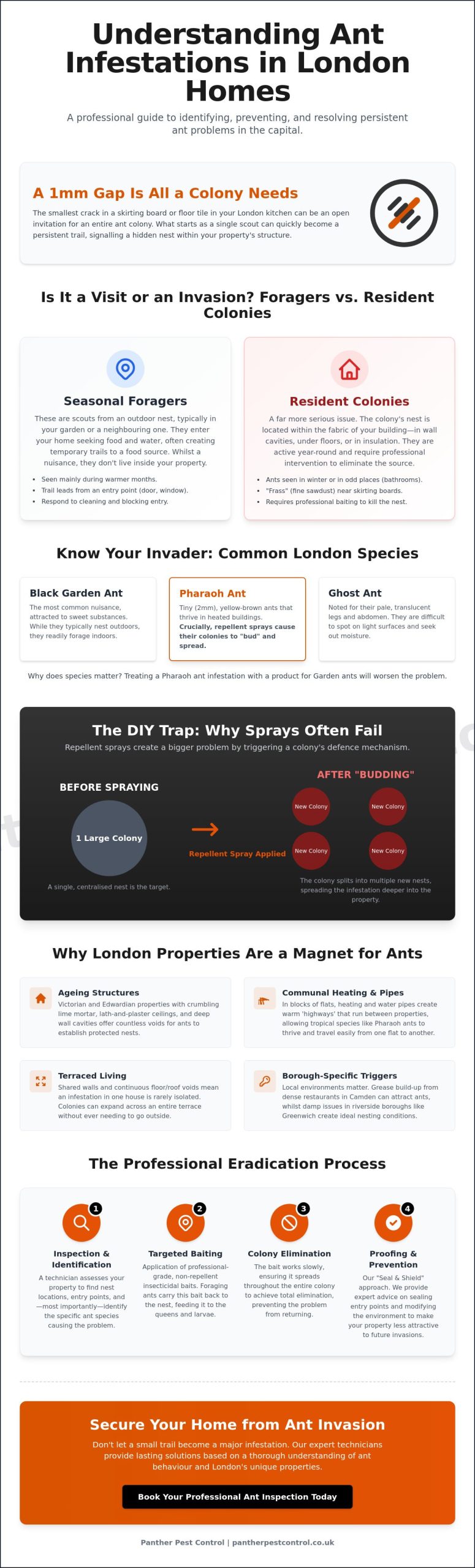
When a resident in a Clapham flat notices a steady trail of insects emerging from behind a kitchen skirting board, the issue is rarely a one-off. Professional ant control in London focuses on identifying whether these pests are seasonal foragers from the garden or a resident colony living within the building’s fabric. For homeowners and tenants, understanding this distinction is the difference between a quick fix and a recurring nightmare.
Identifying the specific species is the first step in any successful treatment. The common Black Garden ant is easy to spot, but we frequently encounter more complex invaders in heated city buildings. Ghost ants are tiny and translucent, making them nearly invisible on light-coloured worktops. These persistent ant problems often stem from species that have adapted to urban environments, like the yellow-brown Pharaoh ants. Whilst garden ants are a nuisance, these tropical species thrive in the constant warmth of London apartment blocks and require a completely different tactical approach. Ants are highly opportunistic, and without identifying the specific invader, your efforts will likely fail.
To better understand the behaviour of these pests, watch this helpful video:
Signs of an Established Indoor Nest
If you see live ants in your bathroom or around electrical sockets, you aren’t dealing with a garden scout. These areas provide the moisture and warmth a resident colony needs to survive year-round. Look for “frass” near your wooden window frames or floorboards; this debris looks like fine sawdust and indicates that insects are excavating space for their nest. Another red flag is the presence of winged “flying ants” indoors during the winter or early spring. This suggests a mature colony is already living inside your walls, as outdoor swarms only happen during the height of summer.
Why Species Identification Matters for Treatment
Treating a Pharaoh ant infestation with standard repellent sprays is a mistake that often makes the situation worse. Garden ants can sometimes be managed by blocking entry points and using basic baits. Tropical species are different. They have multiple queens and a survival mechanism called “budding”. If they sense a threat, the colony splits and spreads deeper into the building. This is why a professional pest inspection is vital. Our technicians use this stage to determine the exact species and choose the correct non-repellent bait that the workers will carry back to the queens without suspicion.
Why London Properties are Susceptible to Infestations
London’s diverse building stock creates unique challenges for pest management. A top-floor flat in Fulham might seem safe from ground-dwelling insects, yet residents often report ants emerging from ornate ceiling roses or light fittings. This happens because colonies exploit the internal voids and lath-and-plaster ceilings common in Victorian conversions. They aren’t just visiting; they’re using your home’s skeleton as a protected highway. These ant problems are rarely about a lack of cleanliness and almost always about structural opportunity.
The “London Garden” factor plays a massive role in seasonal infestations. Many kitchen extensions in areas like Putney or Wandsworth feature timber decking that sits flush against the house. This creates a damp, dark microclimate where nests thrive undisturbed right next to your threshold. If your property borders a railway embankment or a leafy communal square, you’re facing a constant influx of scouts from vast, established colonies. Understanding these environmental drivers is essential when evaluating professional ant control methods for long-term success.
Structural Vulnerabilities in Older London Homes
Crumbling lime mortar in older terraces provides easy excavation for nests. Air bricks and weep holes are essential for ventilation, but they act as open gateways for foraging scouts. In a typical London terrace, a problem in one house is rarely isolated. Ants travel through shared wall cavities, meaning your neighbour’s structural gaps directly affect your kitchen’s security. It’s a pragmatic reality of city living; you can’t always control the entry points if they originate in the property next door.
The High-Rise Challenge: Communal Infrastructure
High-rise living introduces a different threat entirely. Modern blocks use communal heating pipes and service ducts that act as “ant motorways”. These provide the constant temperatures that Pharaoh ants require to survive our winters. Treating a single apartment is often a temporary fix if the infestation has reached the building’s core ductwork. In these scenarios, commercial pest control is the only logical solution to manage the infrastructure of the entire block. Business owners operating in historic interconnected buildings may also benefit from structured commercial pest control contracts in Hampstead, which provide ongoing monitoring across shared premises. If you’re struggling to locate the source of a persistent trail, speaking with a technician can help clarify the structural causes behind the invasion.
The DIY Trap: Why Sprays Often Worsen Ant Problems
Reach for the supermarket spray? Stop. For many Londoners in multi-unit blocks, this is the quickest way to turn a minor nuisance into a building-wide crisis. When you encounter Pharaoh ants, a common resident in heated London flats, a repellent spray triggers a survival mechanism called “budding”. The colony detects the toxin and immediately fragments; multiple queens then move to different parts of the property to start new nests. You haven’t solved the ant problems; you’ve just forced them to relocate and multiply behind your skirting boards.
Cleaning the visible trail with bleach or vinegar is another common mistake. Whilst it removes the immediate pheromone scent, it does nothing to the thousands of workers still inside the nest. Professional Integrated Pest Management (IPM) strategies prioritise understanding these biological triggers over aggressive, aimless spraying. We use non-repellent formulations that the ants cannot detect. They continue their normal foraging behaviour, blissfully unaware that they are carrying the solution back to the heart of the colony.
Repellent Sprays vs. Non-Repellent Baits
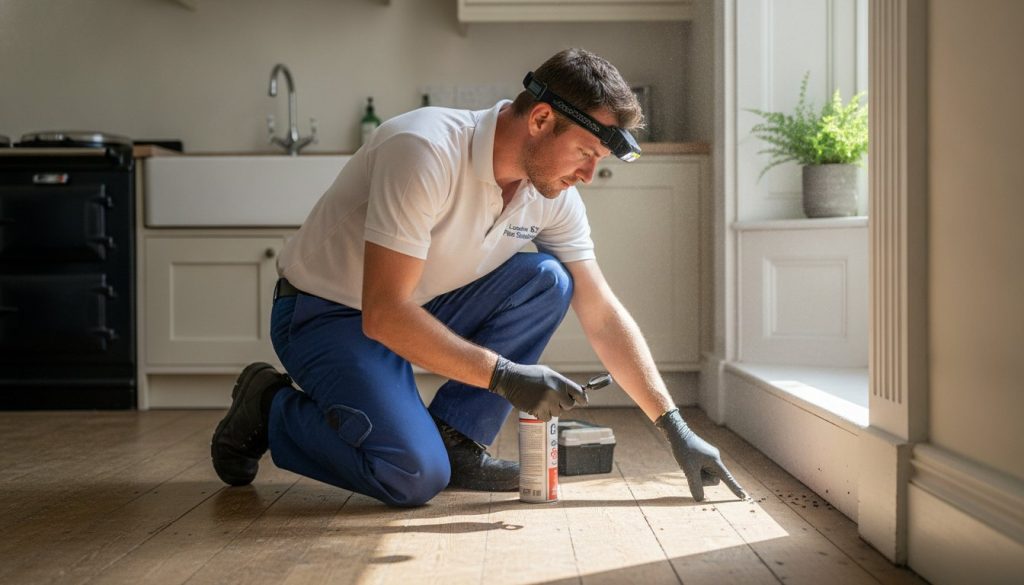
Standard aerosols create a chemical barrier. Ants simply find a new route, often emerging in a different room or even a neighbouring flat. Professional-grade baits rely on “trophallaxis”, a process where ants share food mouth-to-mouth. This ensures the active ingredient reaches the queens and larvae. Supermarket baits often fail because the poison concentration is too high. It kills the worker before they can return to the nest, leaving the source untouched. Our technicians use specific, slow-acting agents that allow the ant to survive long enough to distribute the bait throughout the entire structure.
The Danger of Amateur Pesticide Overuse
Drenching a kitchen in retail-grade chemicals presents genuine health risks, especially in food preparation areas. Lingering residues can be harmful to pets and children, and excessive runoff eventually enters London’s Victorian drainage systems. In complex cases involving multiple pests, a professional heat treatment might be considered for other insects, but for ants, precision is key. Service reality means being patient. Professional baiting takes 7-14 days to show full results. You might even see more ants initially as they are drawn to the bait, but this is a sign the process is working. We don’t offer instant “knockdown” because it doesn’t offer a permanent fix.
Practical Prevention: Ant-Proofing Your London Kitchen
Preventing an infestation requires more than a clean worktop. In high-density areas like Camden, grease build-up in kitchen extractor fans often becomes a primary attractant that residents overlook. Conversely, Greenwich basement flats frequently face ant problems driven by moisture and sub-floor dampness. You must address the specific environmental draw of your property to achieve lasting results. Professional proofing isn’t a generic task; it’s a targeted response to your building’s unique vulnerabilities.
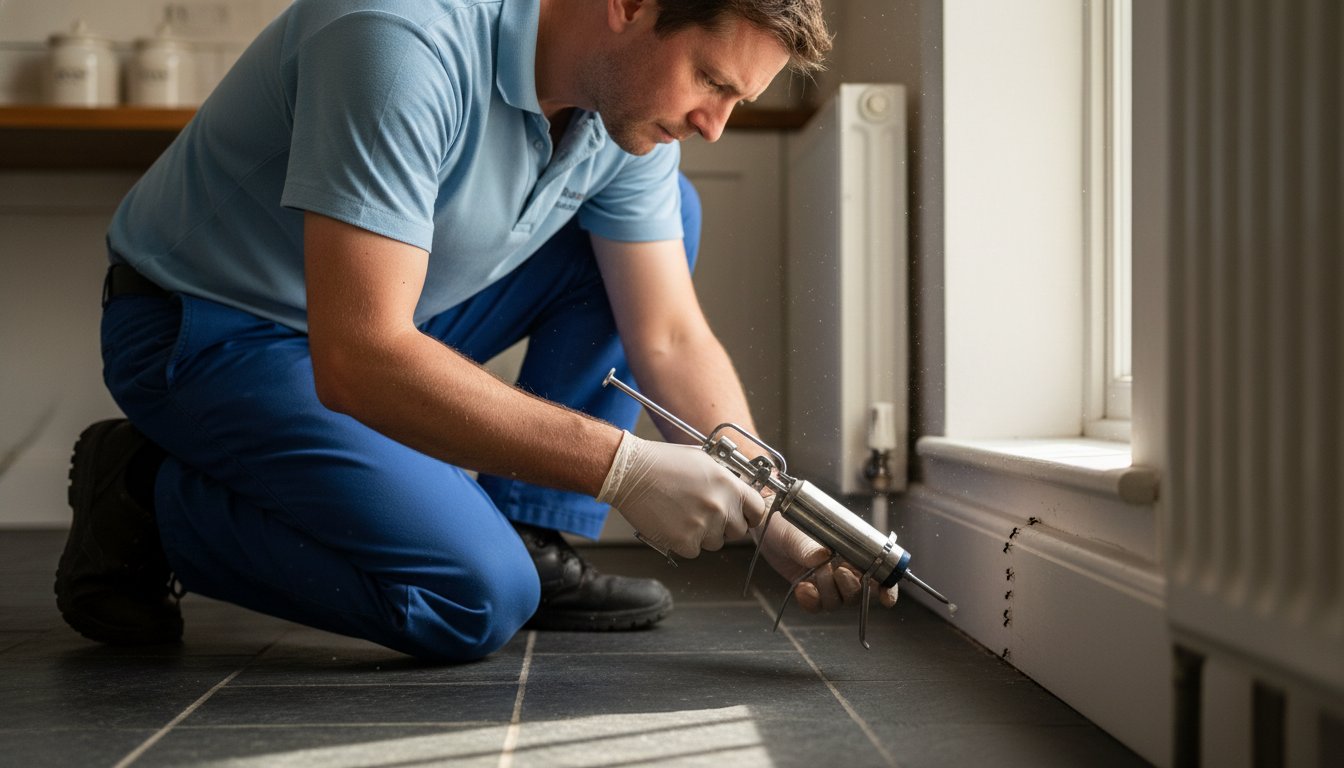
Our “Seal and Shield” approach focuses on the structural gaps common in London’s varied architecture. We don’t rely on temporary fillers that crack under the vibrations of the city. For internal gaps around skirting boards and window frames, high-grade silicone sealants provide the necessary flexibility. For external masonry, particularly in Victorian builds, we recommend matching the original lime-based mortar to prevent further degradation. Urban ants are opportunistic, and even a hairline fracture in an old brick wall is a viable entry point.
Kitchen hygiene must extend to the areas you cannot see. Spills behind kickboards or sugar granules trapped in cupboard hinges provide enough sustenance to support a growing colony for weeks. Pet food is another significant risk factor. Leaving a bowl of wet food out overnight creates an all-you-can-eat buffet for scouts. We recommend a strict feeding schedule and cleaning the floor immediately after your pet finishes their meal. If your proofing efforts aren’t stopping the trails, it’s time for a professional assessment. Book your kitchen inspection today to identify hidden entry points.
Effective Sealing for Victorian Terraces
Air bricks are essential for preventing timber rot, but they are also the most common gateway for garden ants. Fitting a fine stainless steel mesh over these vents allows airflow whilst blocking insects. Consider a typical scenario in Croydon, where a homeowner found ants entering through a bay window. The issue wasn’t the window itself, but the perished seal at the base of the frame where it met the external masonry. Replacing this with a weatherproof sealant and proofing the sub-floor vents resolved the issue without the need for aggressive chemicals.
Internal Hygiene Habits for High-Density Living
The “Nightly Sweep” is a non-negotiable habit for Londoners in shared buildings. A single dirty plate left in the sink or a crumb-filled toaster is enough to signal a successful foraging site to the rest of the nest. Store all dry goods, especially sugar, flour, and cereals, in airtight plastic or glass containers. Original cardboard packaging is easily breached by persistent scouts. Managing humidity is also vital. If you notice ants in your bathroom, you likely have an underlying damp issue that might also attract silverfish. Reducing moisture through better ventilation stops these pests from establishing a permanent foothold. Victorian conversions in the SW4 postcode are particularly prone to these combined moisture-driven pest pressures, and professional silverfish control in Clapham addresses the same structural damp conditions that can make your property vulnerable to multiple infestations simultaneously.
Professional Eradication: The Panther Pest Control Process
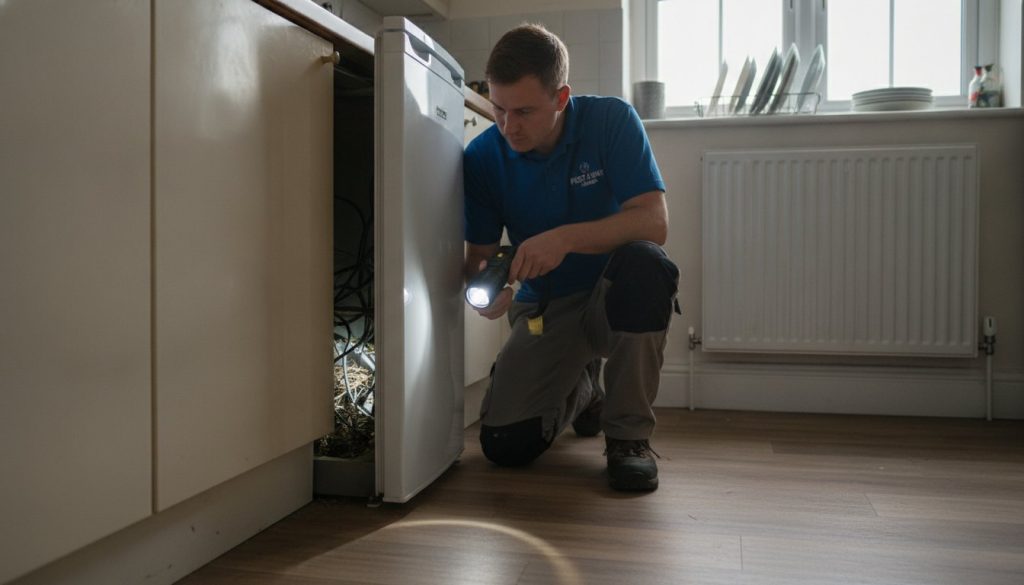
Expert intervention begins with a forensic inspection of the property’s structure. We don’t just treat the visible ant problems on your kitchen tiles; we track the workers back to the primary nesting site. This often involves inspecting sub-floors, wall voids, and external entry points that homeowners naturally overlook. By locating the source, we ensure the treatment reaches the heart of the colony rather than just managing the symptoms.
Our custom baiting strategy is built on biological science. We rotate active ingredients to prevent “bait shyness”, a common issue where colonies learn to avoid specific toxins. This professional standard ensures that the foraging workers continue to take the bait back to the queens. A single visit is rarely sufficient for established infestations. We schedule follow-up visits to monitor the decline of the population and ensure the breeding cycle is completely broken.
What to Expect During a Professional Visit
Preparation is simple but vital. We ask that you don’t clean away existing trails before our technician arrives. These trails act as a map, allowing us to identify the colony’s specific foraging patterns. We understand the need for discretion in high-density London neighbourhoods. Our staff operate with a professional, low-profile approach that resolves the issue without causing unnecessary alarm to your neighbours. Safety remains our priority. We use targeted application methods that protect children and pets whilst ensuring 100% eradication of the nest.
Long-Term Protection and Managed Solutions
A managed solution offers far more security than a one-off treatment. Once the colony is eliminated, we provide a detailed report on the structural repairs needed to prevent re-entry. This might include specific advice on repointing Victorian masonry or sealing internal service ducts. Londoners trust Panther for our rapid response across the M25 area. You can check our prices for transparent residential rates. Our goal is to restore your kitchen’s hygiene and provide the peace of mind that comes from a professionally secured home.
Reclaiming Your Kitchen from Urban Infestations
Solving persistent ant problems in London requires a shift from surface-level cleaning to structural intervention. You now understand that Victorian mortar and modern heating ducts provide the perfect environment for colonies to thrive year-round. Repellent sprays often trigger colony splitting; this biological response only spreads the issue to your neighbours. Professional eradication relies on non-repellent baits that workers carry to the heart of the nest, ensuring the queens are reached.
Our technicians provide direct access to certified technical experts who understand the specific pest pressures of the M25 area. We utilise eco-friendly baiting techniques that remain safe for pets whilst ensuring the colony’s lifecycle is broken. If you need a rapid response, we maintain a 24/7 emergency response across London to address urgent infestations before they escalate.
Don’t let a minor trail turn into a building-wide crisis. Get a Professional Ant Eradication Quote for Your London Property and secure your home against future seasonal invasions. Your kitchen should be a sanctuary, not a foraging site. With the right technical approach, your property can remain pest-free throughout the summer months.
Frequently Asked Questions
How much does professional ant control cost in London?
Professional intervention costs vary based on the infestation’s scale and the property’s structural complexity. Factors like the species involved and the number of follow-up visits required to break the lifecycle influence the final investment. Whilst some one-time treatments are available, persistent colonies in larger London terraces often require managed plans to ensure long-term protection. You should check with a technician for a specific quote based on your property type.
Can ants cause structural damage to my London house?
Common black ants won’t destroy your home’s foundations, but they can excavate crumbly lime mortar between Victorian bricks. This activity creates voids that can lead to moisture ingress or provide entry points for other pests. If you notice “frass” or debris near timber window frames, it is a sign that insects are actively modifying the building’s fabric to expand their nesting sites. Expert identification is necessary to ensure the structure remains secure.
Why do I have ants in my bathroom but not the kitchen?
Bathrooms provide the high humidity levels that certain resident colonies, such as Pharaoh ants, require to survive. They are often drawn to condensation on pipes or slow leaks behind tiles rather than food waste. If you’ve resolved your kitchen ant problems but still see activity in the bathroom, the colony is likely nesting near a moisture source within the internal wall cavities. Addressing the damp issue is often as vital as the treatment itself.
Are the ants in my house dangerous to my health?
Ants are a significant hygiene risk because they travel from external waste areas directly onto your food preparation surfaces. They can mechanically transport bacteria like Salmonella as they forage through your cupboards. Whilst they don’t carry diseases in the same way as rodents, their presence in a kitchen environment compromises the safety of your food storage areas. Professional eradication is the only way to restore a sterile environment.
How long does it take for professional ant bait to work?
You should expect to see full results within 7 to 14 days of the initial bait application. This timeframe is necessary because professional baits are designed to be slow-acting, allowing workers to share the active ingredient with the queens through trophallaxis. You might notice increased activity immediately after treatment as the ants are drawn to the bait; this is a sign the process is working. Patience is required to ensure the entire nest is eliminated.
Can ants climb to the top floor of a London apartment block?
Ants easily reach the highest floors of London high-rises by utilising communal service risers and internal plumbing. Modern blocks with shared heating systems are particularly susceptible because the constant warmth allows tropical species to thrive year-round. They don’t need to climb the exterior; they move through the building’s “nervous system” of pipes and electrical conduits to find new foraging sites. These ant problems often require a building-wide management approach.
What is the “flying ant day” and should I be worried?
This event is a natural nuptial flight where new queens and males leave the nest to start new colonies. It usually occurs during a humid spell in July or August across London boroughs. Whilst the sudden swarm is a nuisance, it is a temporary outdoor event. However, seeing flying ants indoors during winter suggests a mature colony is already established within your property’s structure. If they emerge inside, it is a sign of a resident infestation.
Do I need to leave my house during an ant treatment?
Most professional ant treatments involve targeted baiting which does not require you to vacate the premises. These modern formulations are low-odour and applied in discreet, inaccessible areas like gaps behind skirting boards or under appliances. If a more intensive service like fogging is required for a wider pest issue, your technician will provide specific safety instructions regarding re-entry times for your family and pets. We prioritise safety whilst ensuring 100% eradication.

Al Joel is a practical writer and long-term property maintenance specialist focused on real-world pest control, home safety and prevention advice. His guides translate common warning signs into clear next steps for homeowners, tenants, landlords and property managers.
His approach begins with correct identification. A sighting in one room may originate from a neighbouring flat, service riser, drainage, roof space, delivery or communal waste area. Al explains how to preserve useful evidence, reduce food and water sources, avoid spreading activity and choose proportionate treatment.
What readers can expect
- Clear identification clues and practical inspection steps
- Safe preparation, cleaning and aftercare guidance
- Prevention advice for homes, flats and commercial premises
- Honest guidance on when DIY is reasonable and when professional help is the smarter option
When professional help makes sense
Repeated sightings, activity in several rooms, uncertain identification, vulnerable occupants or signs involving food, electrics and shared building routes deserve a professional inspection. A lasting solution normally combines targeted treatment with proofing, hygiene and follow-up monitoring.
Explore the Pest Library, learn how treatment works, or request property-specific advice.