Pest Control Advice · LONDON
How to monitor rodents without leaving loose poison
Poison is not a monitoring plan. Map the signs, use suitable contained devices and review the record so you can decide when inspection, repair or treatment is needed.
A row of bait trays tells you very little if nobody can say when the last rat was seen, which unit had fresh droppings or whether the back door still closes properly. In a home, shop or shared building, the useful first question is not “Where can we put poison?” It is “What is happening, where, and how will we know when it stops?” Rodent monitoring answers that question through repeatable observations and a record of changes.
Monitoring without loose poison can involve an inspection, photographs, a site map and, where appropriate, contained non-toxic devices or professionally managed traps. It does not mean ignoring active rodents or promising to solve every infestation without treatment. It gives the person responsible for the property a way to distinguish an old sign from continuing activity, target the real route and decide whether control measures are needed. The Health and Safety Executive identifies hygiene, physical barriers and traps alongside biocidal products as methods of rodent control, and notes the risks rodenticides can pose to children, pets and other animals.
Start with a question the visit can answer
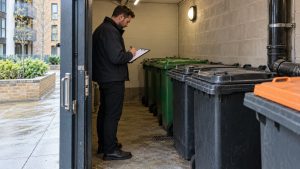
“Do we have mice?” is too broad for a single glance around a building. More useful questions are: Is there new activity in the kitchen since the cupboard was cleaned? Is the rat route beside the bin store still used after the door repair? Are signs confined to one flat, or are they appearing along the communal riser? Each question suggests an observation point and a date for checking it again. If the answer changes, you can change the plan rather than continue the same routine indefinitely.
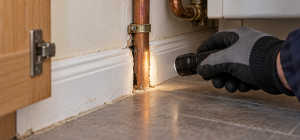
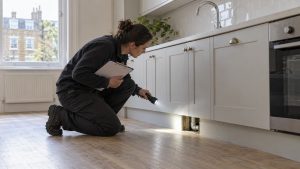
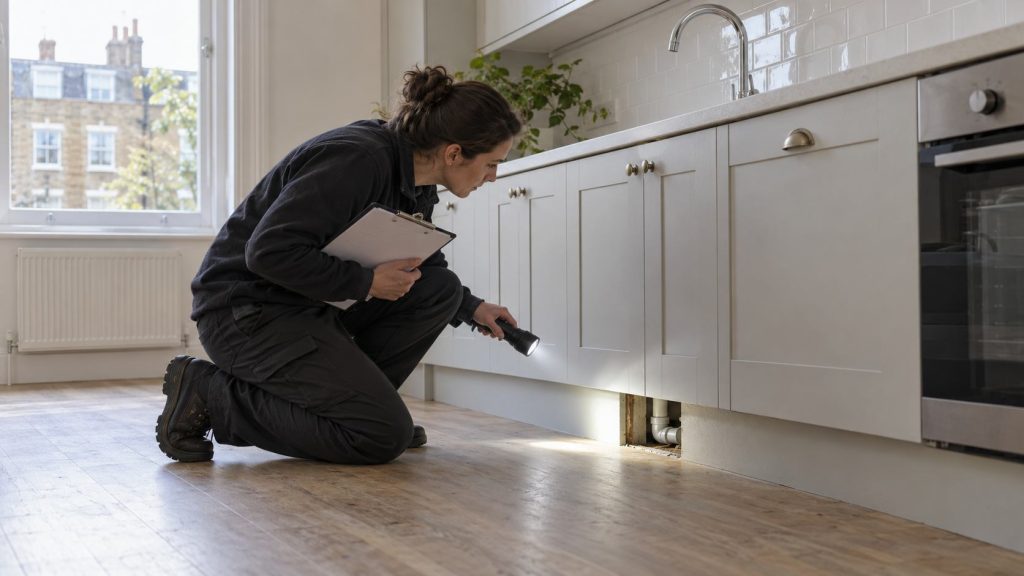
Make a simple plan of the rooms and outside areas relevant to the report. Mark each sign with a number, the date and what was actually seen: droppings, a sighting, a gnaw mark, a disturbed stored item or a damaged door seal. Photograph the whole location before a close-up so the next person can find it. Record which areas were inaccessible. A space that has not been checked should not be described as clear.
Location matters as much as the sign itself. Droppings behind an appliance and droppings outside a rear door may point to different routes and possibly different species. Do not make a species call from a photograph alone when the scale, shape or surrounding evidence is uncertain. Panther’s pest inspection service is the appropriate next step when the source or extent needs a professional assessment.
Separate an old sign from new activity
A vacant cupboard can hold old droppings long after the original problem has ended. A neat row of bait boxes can remain on a wall long after anyone remembers why they were put there. Neither observation proves current activity. Record the initial condition, arrange safe cleaning where needed, then check the same places at agreed intervals. A new finding in a previously documented clean area carries more weight than an isolated mark with no baseline.
Do not handle droppings to decide whether they are fresh, and avoid sweeping or vacuuming contaminated material without suitable advice. Keep people away from affected food preparation surfaces and ask for a safe cleaning plan. Panther’s mice control page describes the signs a technician assesses when mice are suspected. Here the emphasis is on maintaining a repeatable record after the first discovery.
When recording a sound or sighting, note the time, exact place and any change since the last visit. “Noise somewhere upstairs” is hard to act on; “scratching heard at 22:30 behind the utility wall on three nights” gives an inspector a more useful lead. A single quiet night is not proof that activity has stopped, just as a single unexplained sound is not proof of a large infestation. Look for a pattern across several observations and the building layout.
Choose monitoring points carefully
Monitoring is more useful when points sit on plausible travel routes rather than in a decorative line along every wall. A technician may choose a position near a service penetration, behind a protected fixture, by a bin store threshold or along a route where signs were found. The choice depends on the species, room use, access, cleaning regime and who else may encounter the device. The aim is to gather interpretable information without introducing a hazard or interfering with the room.
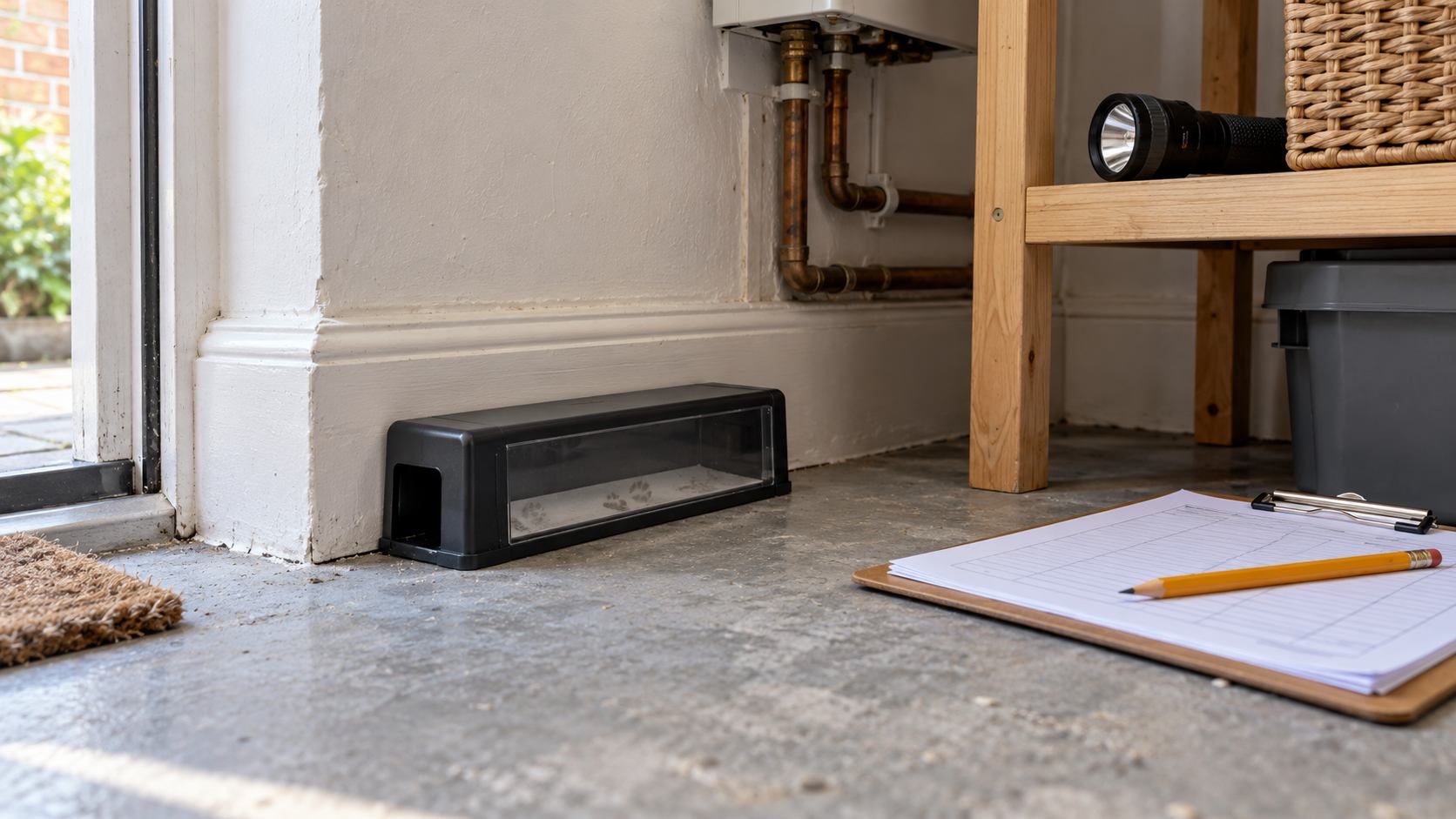
A non-toxic tracking tunnel may record footprints as an animal passes through. A suitable camera may show movement at an entrance. Tamper-resistant monitoring stations may hold a non-toxic indicator. None of these tools is a substitute for checking the site and reading the result in context. A track may show that something passed through a point, but it may not identify where it entered the building. A camera may miss a narrow route beyond its view. Devices can be moved by cleaning staff, affected by dust or moisture, or ignored by rodents. Record placement and any change to the setup.
Keep monitoring equipment away from open food, children’s reach, pet access and routes where it could trip somebody or be mistaken for a treatment station. In a business, agree with the manager who may inspect or move it. If a device requires specialist setup or interpretation, leave that to the pest professional. Never scatter flour or other loose tracking material around a food area as an improvised test; it can contaminate surfaces and confuse the cleaning record.
What a useful monitoring log contains
A good log is short enough that someone will actually complete it. For each point, record its identifier, location, date, condition, sign found, action taken and person who checked it. If a station was blocked by stock or a camera lost power, record that rather than filling the line with “no activity”. If a door was repaired or waste practice changed, add the date. Otherwise, a later drop in signs may be difficult to explain or reproduce.
Use the same location names each time. “Cupboard B by the cold-water pipe” is clearer than “back corner”. Keep the photographs with the log and avoid cropping away the reference point. A property manager can then compare visits and pass a concise account to a contractor, landlord or neighbour. The CRRU Code of Practice stresses a planned site survey and a location record when rodenticide is used; the same discipline is valuable before any treatment decision.
The log should also show what was done outside the monitor. Closed bin lids, repaired door brushes, stored food and cleared spillage may explain a change in activity. If the underlying access remains open, a quiet monitor may be temporary. Conversely, continuing signs after a repair may show that another route needs investigation. Monitoring supports decisions only when someone responds to what the record shows.
Monitoring is not the same as control
If rats are entering a food premises or mice are contaminating a kitchen, collecting data for weeks while the problem continues would be the wrong response. An active infestation needs a timely plan to protect people, food and the building. A professional may combine inspection, proofing, hygiene changes, traps or an authorised rodenticide where the circumstances justify it. The method and visit schedule should be chosen for the site, with the product label and relevant rules followed where chemicals are used.
“Without loose poison” also needs a precise meaning. A contained non-toxic monitor is not rodenticide. A professionally managed trap is a control measure, not merely an indicator, and it needs placement and checking that fit the setting. A secured rodenticide bait station still contains poison, even though it is not scattered loose on a floor. Ask what each device contains, what it is intended to do, who checks it and when it will be removed. Those answers matter more than the shape of the box.
HSE notes that rodenticide products can be restricted by location, user type and treatment programme. Do not copy a neighbouring property’s baiting scheme or leave packets in accessible voids as a precaution. If treatment is indicated, let a competent person assess risks and explain the plan. Panther’s rat control service describes an inspection-led approach to external access, bins, drains and building routes.
Read the result, not just the device
Suppose a tracking point by the bin room shows repeated movement after the door brush was replaced. The result does not prove that the brush failed; the route may be elsewhere. The next visit should compare the door, adjacent wall, stored waste and any signs inside. If a point stops recording movement, check that it remained in place and functional before declaring success. A monitor that was knocked behind a shelf provides no useful negative result.
Set review dates when the plan begins. A new report, a rise in signs or damage to a device can bring the visit forward. In a shared building, decide who receives the findings and who can arrange repairs in communal areas. A short written decision after each review might be “continue observation for another week”, “inspect the riser with the managing agent” or “begin targeted control”. This makes the record operational rather than a folder of unchecked forms.
Also decide what would allow the monitoring phase to end. The answer depends on the site and original problem: no new signs at the affected points, repair of the identified entry, safe storage of food and a professional check where the earlier activity was significant. A monitor can remain as part of future prevention if someone is responsible for it, but an abandoned device is not a programme. If conditions change, revisit the assessment.
For homes, shops and shared buildings
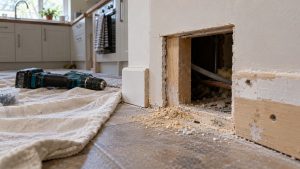
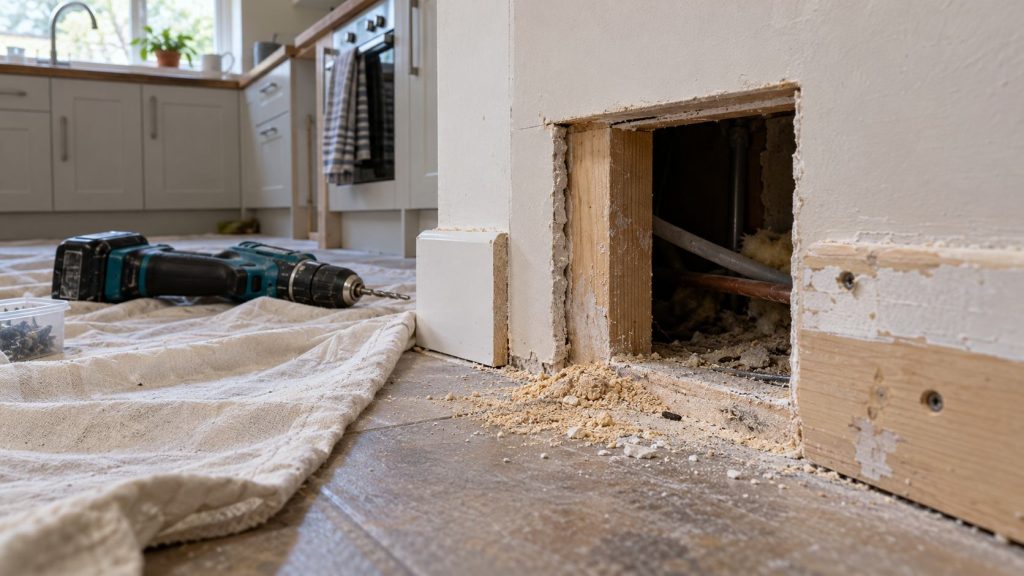
In a home, a few dated photographs and a simple map may be enough to help a technician locate activity. Keep children’s toys and pet bowls away from a suspect area and tell the inspector about any vulnerable occupants. Do not disturb a wall or ceiling void solely to position a camera. If there is gnawing near electrical fittings, keep clear and ask the relevant trade to assess the damage.
In a shop or hospitality setting, a manager needs a clear reporting route for staff: where to log a sighting, which food or stock may be affected, and who calls the pest contractor. Monitoring points should be compatible with cleaning and stock movement. The record should include corrective actions, not just a line of empty boxes. The older Panther guide to restaurant pest control requirements addresses the wider food business responsibilities; this article deals with the practical monitoring decision.
In a block of flats, a resident can document signs inside their own home, but a shared bin store, riser or corridor may need the managing agent to coordinate access. Mark the room and level of each report, without assuming one flat caused another’s problem. A building-wide log can reveal whether repairs in one area are followed by activity elsewhere. If residents receive different advice from separate contractors, bring the observations together before more work is commissioned.
When to ask for help
Ask for a professional assessment when signs repeat, food is at risk, the species is uncertain, activity crosses property boundaries, or a route leads into an inaccessible service void. Bring the dates, photographs, floor plan and details of any devices already present. Ask the inspector to explain what is confirmed, what remains possible, which immediate risks need action and what the next visit will check. If a rodenticide is proposed, ask why that method fits the site and what safeguards and removal plan apply.
Monitoring works when it changes what people do. It can prevent a hasty, poorly placed intervention, but it should also expose a problem that needs prompt control. Keep the record small, consistent and connected to repair decisions. To arrange an inspection or discuss an existing monitoring setup, contact Panther Pest Control with the locations and dates of the signs you have found.

Al Joel is a practical writer and long-term property maintenance specialist focused on real-world pest control, home safety and prevention advice. His guides translate common warning signs into clear next steps for homeowners, tenants, landlords and property managers.His approach begins with correct identification. A sighting in one room may originate from a neighbouring flat, service riser, drainage, roof space, delivery or communal waste area. Al explains how to preserve useful evidence, reduce food and water sources, avoid spreading activity and choose proportionate treatment.What readers can expectClear identification clues and practical inspection stepsSafe preparation, cleaning and aftercare guidancePrevention advice for homes, flats and commercial premisesHonest guidance on when DIY is reasonable and when professional help is the smarter optionWhen professional help makes senseRepeated sightings, activity in several rooms, uncertain identification, vulnerable occupants or signs involving food, electrics and shared building routes deserve a professional inspection. A lasting solution normally combines targeted treatment with proofing, hygiene and follow-up monitoring.Explore the Pest Library, learn how treatment works, or request property-specific advice.