Cockroaches seen after dark
Record where and when this sign appears. Avoid disturbing useful evidence before inspection.

CRAWLING PEST CONTROL · LONDON RESPONSE
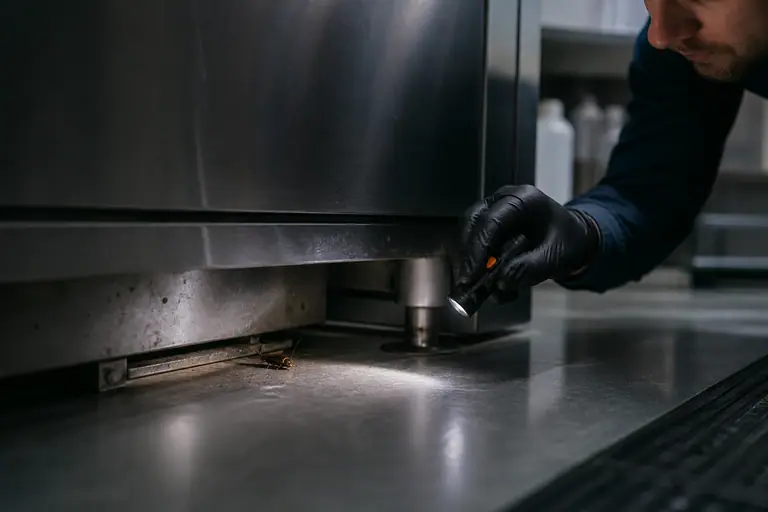
Cockroaches hide in warm, tight harbourage close to food and water, requiring careful inspection, targeted placements and follow-up monitoring.
CASE TYPE / CRAWLING PESTS
Inspect the evidence.FIELD SIGNALS
Record where and when this sign appears. Avoid disturbing useful evidence before inspection.
Record where and when this sign appears. Avoid disturbing useful evidence before inspection.
Record where and when this sign appears. Avoid disturbing useful evidence before inspection.
Record where and when this sign appears. Avoid disturbing useful evidence before inspection.
INSPECTION MAP
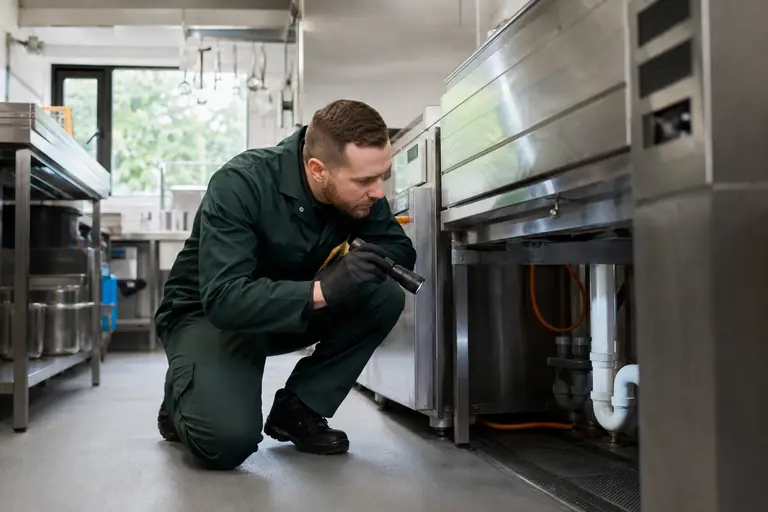
Kitchens, appliances, service ducts, plumbing, warm equipment and adjoining rooms are checked for harbourage, droppings and movement routes.
CONTROL SEQUENCE
Identify species and concentrate inspection around warmth, food and moisture.
Use suitable baits, monitors or other controlled placements in confirmed routes.
Reinspect, refresh control where required and improve cleaning, storage and gap sealing.
THE SERVICE, EXPLAINED
Night-time sightings often indicate harbourage close to warmth, food or moisture.
Cockroaches commonly stay hidden behind appliances, inside service voids and around warm equipment during the day. Other evidence can include cast skins, egg cases, droppings and a concentrated odour where activity is established.
Species identification is important. German and Oriental cockroaches favour different conditions and may use different routes through a building, so a photograph or retained specimen can make the first assessment more useful.
The technician follows edges and connected voids rather than treating open floors at random.
The survey focuses on kitchens, bathrooms, plant areas, cupboards and accessible gaps behind equipment. Heat, condensation, food debris and leaking pipework can support activity even where cleaning standards are otherwise good.
In flats, restaurants and managed premises, the inspection may need to consider risers, neighbouring units, deliveries and waste routes. Access limitations should be identified before a treatment plan is agreed.
Treatment combines targeted placement with continued monitoring.
Professional gels, residual products or monitoring devices may be used according to species, activity and site conditions. Products are positioned around confirmed harbourage and movement routes, with attention to food-handling and occupied areas.
Fogging is not an automatic substitute for detailed treatment. A space application may form part of some plans, but hidden harbourage still needs targeted work and the area must be prepared correctly.
Access and hygiene actions should support the treatment without removing all evidence.
Clear reasonable access beneath sinks and around affected equipment, store food securely and remove loose waste. Do not apply domestic sprays immediately before the visit because they can disperse activity and interfere with the planned approach.
Commercial sites may need treatment timed around production, cleaning and re-entry requirements. Tell Panther about sensitive stock, alarms and restricted areas during booking.
Reduced sightings are useful, but monitoring confirms whether harbourage remains active.
Follow the cleaning restrictions given for treated edges and leave monitoring devices in place. Report the date and location of further sightings so the next visit can distinguish isolated activity from a persistent source.
Repairs to leaks, gaps and damaged finishes may be recommended. Shared-building activity sometimes requires coordination beyond the treated unit.
Keep a simple record of monitor catches and sightings by room. This gives the technician evidence of direction and frequency, and helps separate a remaining local harbourage from insects moving through a shared service route.
THE PANTHER METHOD
Establish the pest, the extent of activity and the routes it uses.
Reduce immediate activity and limit the chance of spread.
Apply a targeted method selected for the property and infestation.
Close the loop with follow-up measures and practical prevention.
DIRECT ANSWERS
They are generally nocturnal and shelter in narrow harbourage during the day.
Established infestations commonly need monitoring and follow-up because insects and egg cases may be hidden.
Avoid disturbing or dispersing activity; tell the technician about any products already used.
Clean food residues, manage waste, report leaks and provide access behind or beneath equipment without removing evidence.