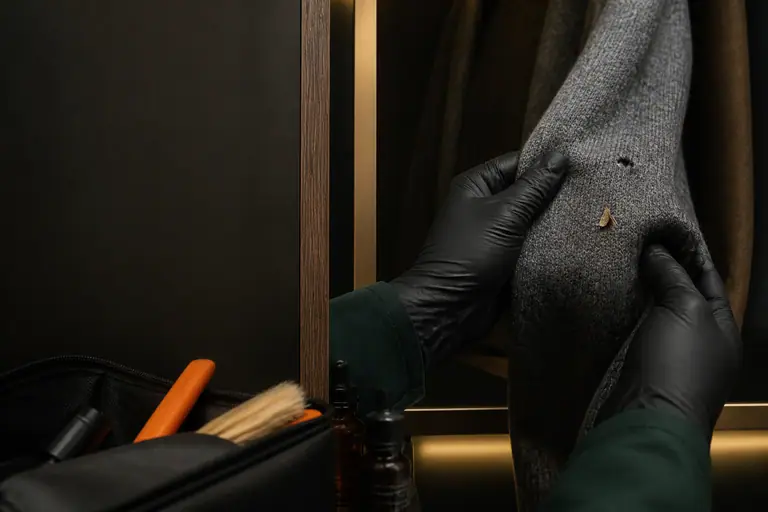
Small holes in natural-fibre clothing
Record where and when this sign appears. Avoid disturbing useful evidence before inspection.

FLYING PEST CONTROL · LONDON RESPONSE
Moth control depends on identifying whether larvae are feeding in textiles or stored food and then finding the source rather than chasing adult moths alone.
CASE TYPE / FLYING PESTS
Inspect the evidence.FIELD SIGNALS
Record where and when this sign appears. Avoid disturbing useful evidence before inspection.
Record where and when this sign appears. Avoid disturbing useful evidence before inspection.
Record where and when this sign appears. Avoid disturbing useful evidence before inspection.
Record where and when this sign appears. Avoid disturbing useful evidence before inspection.
INSPECTION MAP
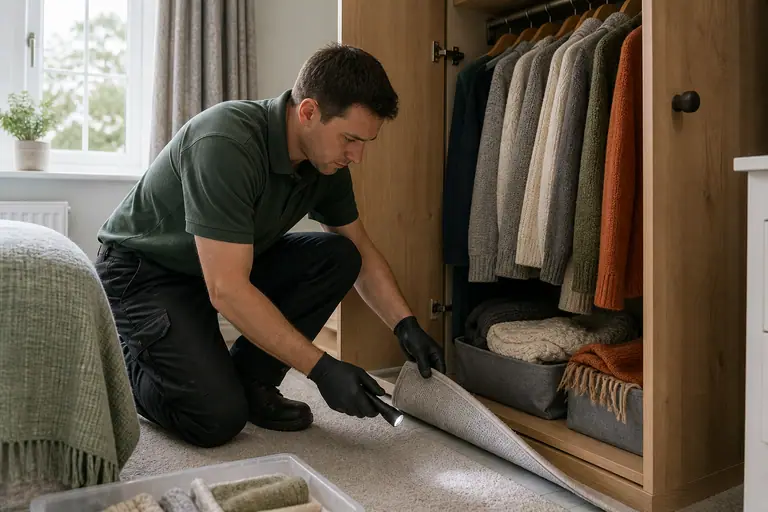
Wardrobes, carpets, upholstered edges or food cupboards are checked according to species, with attention to larvae, webbing and infested materials.
CONTROL SEQUENCE
Determine the moth type and inspect the materials its larvae can use.
Dispose of or process infested material and target confirmed harbourage.
Use monitoring where appropriate and keep vulnerable textiles or foods clean and sealed.
THE SERVICE, EXPLAINED
The damaged material and larval evidence are more useful than an adult moth alone.
Clothes moth larvae feed on natural fibres and debris in quiet wardrobes, carpet edges and upholstered furniture. Stored-product moths are associated with dry foods and can spread through cupboards and packaging.
Keep a specimen or clear photograph where possible. Treating the wrong source wastes time and can leave the actual breeding material untouched.
The survey follows the material the larvae can use.
For textile activity, the technician checks wardrobes, carpet edges, furniture undersides and stored natural fibres. Food-related activity shifts the focus to cupboards, packaging, spills and inaccessible product debris.
Old bird nests, animal hair and undisturbed storage can also support textile pests. The scope should reflect every affected area, not only the room where an adult moth was seen.
Cleaning, containment and targeted treatment work together.
The plan may use professional residual treatment, monitoring traps and specific handling of affected items. Traps support identification and monitoring but should not be treated as a complete solution on their own.
Heat or specialist processing may be suitable for some belongings, while others require careful cleaning or disposal. Follow material-care advice and the treatment-specific instructions.
Preparation depends on whether the source is textile or food.
Do not move loose affected textiles through the property. Bag items as directed, create access to edges and separate clean items from those awaiting processing.
For stored products, inspect packaging and dispose of confirmed affected food securely. Clean shelves and cracks according to the preparation plan without applying mixed domestic sprays.
The absence of flying moths alone does not confirm that larval activity has ended.
Continue checking vulnerable materials, quiet edges and monitors for the period advised. New damage, larvae or webbing should be recorded with the item and location.
Regular cleaning beneath furniture, sealed storage for vulnerable textiles or dry foods, and removal of old nesting material can reduce available sources.
Rotate and inspect stored items rather than leaving vulnerable materials untouched for long periods. In commercial storage, label monitoring positions and dates so fresh evidence can be traced to a particular rack, product group or delivery.
THE PANTHER METHOD
Establish the pest, the extent of activity and the routes it uses.
Reduce immediate activity and limit the chance of spread.
Apply a targeted method selected for the property and infestation.
Close the loop with follow-up measures and practical prevention.
DIRECT ANSWERS
No. Damage to textiles or food is caused by the larval stage.
Some clothes moth larvae can feed on natural fibres and debris in undisturbed carpet edges.
Not always. Depending on the item, laundering, heat, freezing or specialist cleaning may be suitable.
They are useful for detection and monitoring but usually need to be combined with source removal and treatment.