Pest Control Advice · LONDON
Ants at the Window Frame: Trace the Trail Before Sealing the Gap
A practical guide to tracing ants at window frames, checking real entry gaps and choosing a measured response.
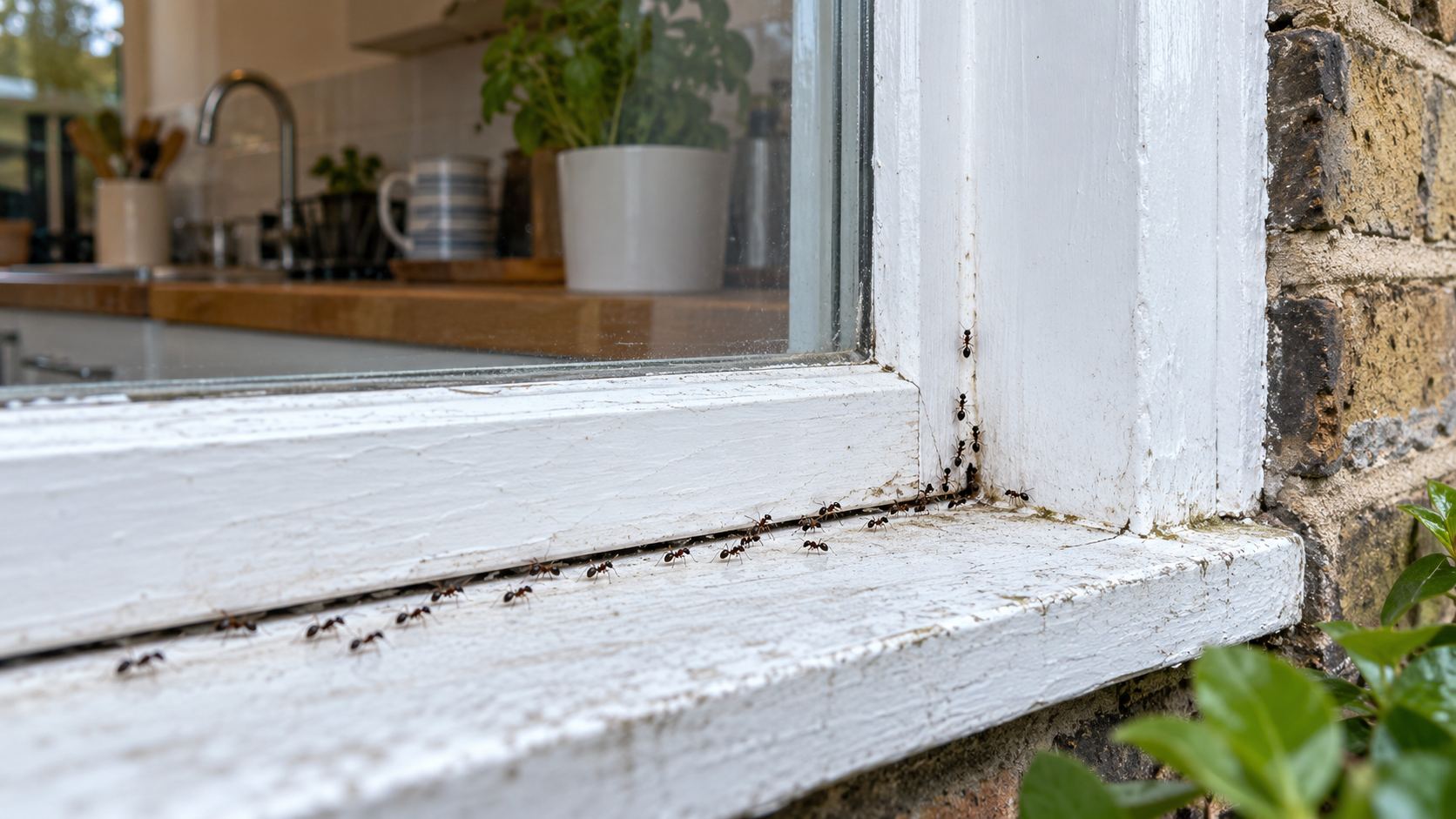
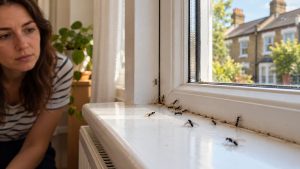
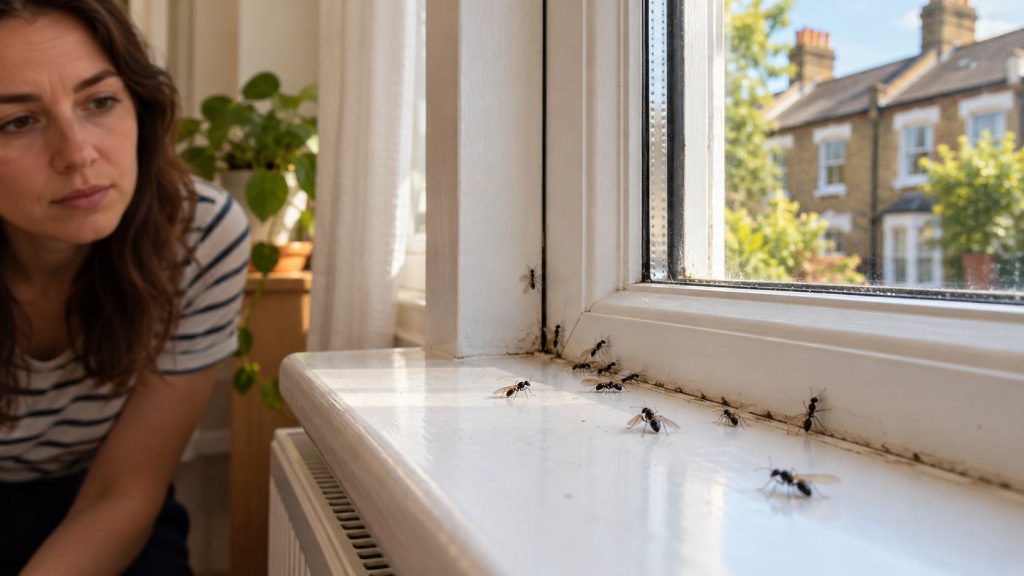
A line of ants crossing a window sill looks as though the window itself must be the problem. Sometimes a worn seal or a small joint in the frame is the opening, but the nest may be outside in soil, under paving or elsewhere along the wall. The useful first job is to trace the route without destroying the evidence. That tells you whether the insects are entering for food, moving along the exterior, or emerging from a place that needs a closer inspection.
Most dark ants that enter UK homes are foraging workers of the black garden ant, but colour and a window location are not enough to identify every species. The British Pest Control Association emphasises identification, especially in centrally heated blocks where smaller tropical ants can occur. This guide concentrates on a visible trail at a window frame: how to map it, check the nearby conditions and decide whether a simple repair or a professional ant-control inspection is appropriate.
Follow the workers before you wipe the sill
For a few minutes, watch the ants rather than cleaning them away at once. Where do they enter the frame? Do they come from the brickwork, a planter, a drainpipe or a climbing plant? Once inside, are they heading towards a sticky jar, a pet-food bowl, a crumb-filled corner or a source of moisture? A phone photograph of the frame and a wider photograph of the wall can help you mark the line. Record the time, weather and whether the trail is regular or only appears after rain or a warm afternoon.
A line across the sill may branch at a corner that is hard to see from standing height. Look beneath the sill, around the side reveal and at the junction between frame and masonry. On an upper floor, inspect safely from indoors; do not lean out or climb onto a ledge to follow ants down the façade. A trail can run beside a window even when its real entrance is a separate crack nearby.
Once you have recorded the route, remove accessible food residue and wipe the indoor surface as part of normal cleaning. That may reduce the reward for foragers. It does not prove the colony has gone, and ants may explore another route. Panther’s broader guide to ants indoors covers general household control; the frame assessment here is about finding the specific building edge and deciding what it needs.
Check the frame, seal and wall as different parts
A window assembly has more than one possible crossing point. The opening sash has a gasket or weather seal; the fixed frame meets plaster and external render; the sill has joints and sometimes drainage slots. A visible gap at the wall-frame junction may need a weather-resistant repair. A drainage opening designed into the window should not be filled simply because ants walked past it. Blocking it can trap water and create a more serious maintenance problem.
Look for cracked sealant, loose trim, decayed timber, a warped sash and damp staining. Ask whether a recent repair left a small unsealed edge. If paint or plaster is lifting, moisture might be involved; address the building defect rather than treating the ant trail as an isolated surface nuisance. A professional window fitter or maintenance contractor can advise on the right material and which openings must remain clear.
Do not assume that insects disappearing behind trim are nesting in the frame. They may use a concealed route through a cavity and return to an outdoor colony. Likewise, ants seen inside a timber joint are a reason to inspect the material and moisture, not proof that they are eating sound wood. Photograph any loose material or repeated emergence for a pest professional and a building tradesperson to interpret together.
Look outside for what makes the route convenient
Vegetation touching the wall can give ants a path to a first-floor window. A planter pressed against the sill, soil built up against masonry or a bin with sugary residue nearby may also make the edge attractive. Where access is safe, trim vegetation back, move containers slightly away from the wall and clean spills. The BPCA notes that food and drink are major ant attractants and recommends closing cracks with suitable weather-resistant sealant as part of prevention.
Check whether the trail runs from a paving joint or small mound in the garden. The BPCA advises finding nest entrances by watching workers travel between nest and food. There is no need to excavate paving on the strength of one line. A clear route and repeated activity provide better grounds for selecting a control method. Be particularly careful with boiling water near doors, windows, cables, children or pets; a casual attempt can cause burns or damage without reaching the colony.
In a flat, the relevant exterior wall may belong to the landlord or freeholder. Note the defect and send photographs to the person responsible for repairs. An individual resident should not seal a shared façade or access a high window from outside without permission and safe equipment. The most helpful report says where the ants cross and what building defect you can see, not merely that “there are ants everywhere”.
Make species identification part of the decision
Black garden ants are commonly dark and form visible foraging trails. Very small pale or two-toned ants in a heated block need more caution. The BPCA’s 2026 advice says that Pharaoh’s ants and ghost ants can live in the structure of large warm buildings and that incorrect insecticidal spraying can scatter colonies. If the insects are tiny, appear in several flats or do not seem connected to an outdoor trail, retain a few safely in a sealed container and request identification before applying a product.
Even with black garden ants, a photograph showing scale is more useful than a guess. Photograph an ant next to a ruler without crushing it if possible. Note whether there are wings; a brief swarm at a window can involve reproductive ants attracted to light and may not be the same as a persistent worker trail. A single winged insect on a sill is not a map of the nest.
Our professional pest inspection service can help where the species or route is uncertain. Identification matters because treatment aimed at a simple outdoor garden-ant line may be unsuitable for a multi-nest tropical species inside a connected building.
Choose a measured response to an ordinary garden-ant trail
Start by removing the food source, cleaning the indoor surface and noting the path. If a legitimate building gap remains after you have understood the route, arrange a proper repair. A suitable ant bait may be an option for a confirmed garden-ant trail, used strictly according to its label and kept away from children and pets. Baits depend on workers carrying material back; spraying over them or shifting the bait repeatedly can work against the intended approach.
Aerosol sprayed into every edge of a window is a poor diagnostic tool. It may kill visible workers while leaving the colony and building gap untouched, and it risks contaminating a frequently handled surface. Do not apply insecticide near ventilation openings or electrical fittings without product-specific instructions. If a professional has placed bait, follow their instructions on cleaning, access and follow-up rather than improvising around it.
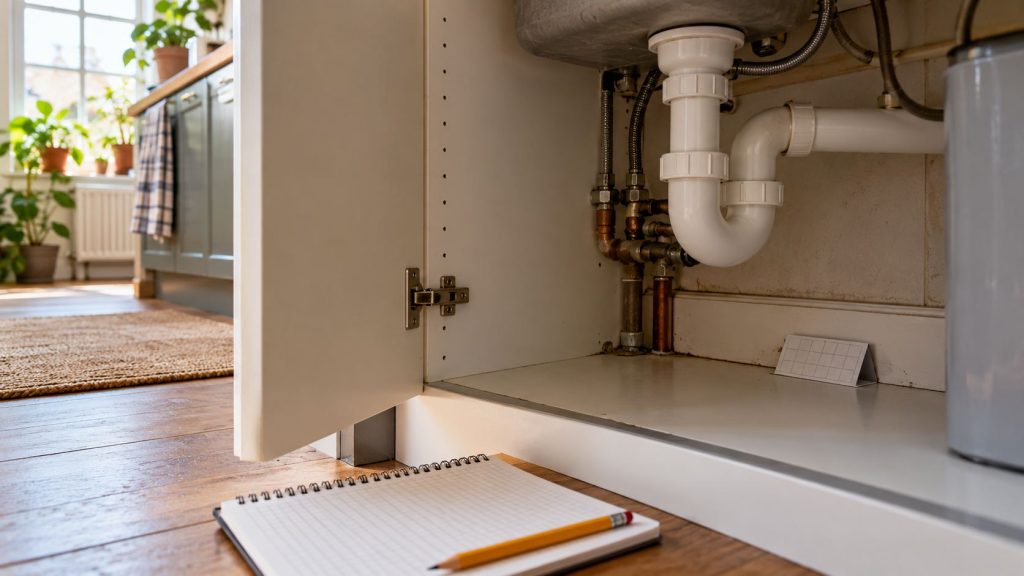
Ant activity often changes with weather and available food. One quiet day after wiping a sill should not be called permanent control. Keep a brief dated record: whether workers return, which side of the frame they use and whether the indoor food source has been removed. If they reappear at another gap, the pattern can help a technician distinguish an untreated colony from a new route.
When the problem belongs to the building
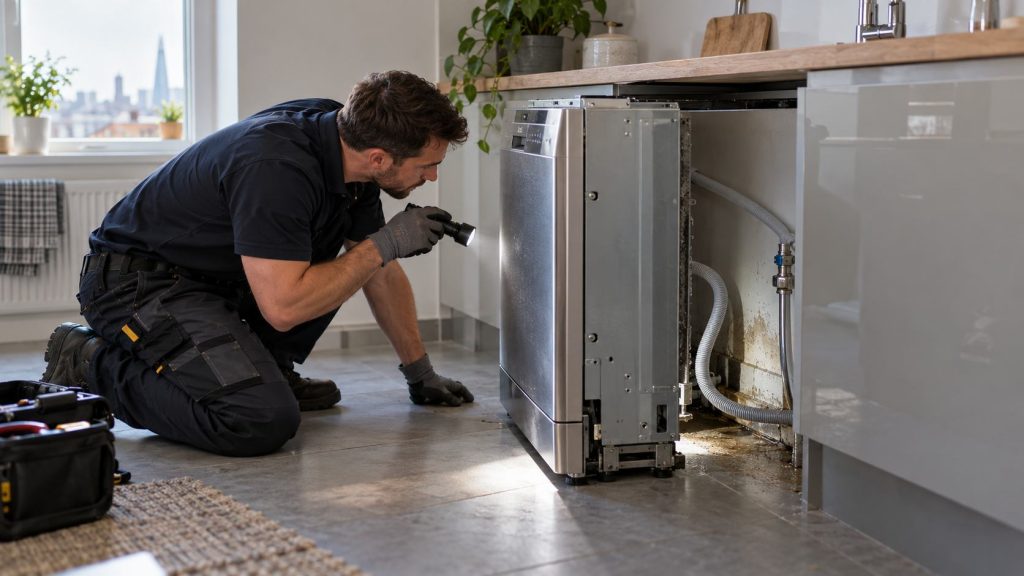
Repeated trails around several windows, ants emerging from a wall void, damp timber, failed seals or reports from neighbouring flats call for a wider look. A pest technician can map foraging and identify the species; a maintenance contractor can repair frame or façade defects. These jobs complement each other. Sealing a visible crack while active ants remain behind the lining can redirect the route, and treating workers without repairing an obvious opening can invite renewed entry.
For a managing agent, collect comparable reports: flat number, side of building, window position, first and latest dates, photographs and any food or moisture source. Do not assume every resident has the same species because the insects look similar in a phone picture. A focused inspection is more proportionate than treating all windows in a block. The Panther contact page lists the location and evidence details that help arrange the right access.
Give residents a practical message while the route is investigated: clear exposed food, avoid unplanned sprays, photograph an identifiable insect and report a damaged window seal. Avoid promising that sealing one hole will permanently remove a colony whose location is not known.
What to check after the repair or treatment
Return to the exact point you photographed. Is the seal continuous, is the sash closing properly, and can water still drain as designed? Watch at a similar time of day for new foragers, and check whether they have moved to a neighbouring joint. If a bait was used, follow the technician’s expected review interval; its effect is not judged by a minute of watching the sill.
The window frame is a useful clue because it lets you see a route clearly. It is only one part of the story. Tracking the ants both ways, confirming the species and fixing a real building defect lead to a better decision than repeatedly wiping away the line without learning where it begins.

Al Joel is a practical writer and long-term property maintenance specialist focused on real-world pest control, home safety and prevention advice. His guides translate common warning signs into clear next steps for homeowners, tenants, landlords and property managers.His approach begins with correct identification. A sighting in one room may originate from a neighbouring flat, service riser, drainage, roof space, delivery or communal waste area. Al explains how to preserve useful evidence, reduce food and water sources, avoid spreading activity and choose proportionate treatment.What readers can expectClear identification clues and practical inspection stepsSafe preparation, cleaning and aftercare guidancePrevention advice for homes, flats and commercial premisesHonest guidance on when DIY is reasonable and when professional help is the smarter optionWhen professional help makes senseRepeated sightings, activity in several rooms, uncertain identification, vulnerable occupants or signs involving food, electrics and shared building routes deserve a professional inspection. A lasting solution normally combines targeted treatment with proofing, hygiene and follow-up monitoring.Explore the Pest Library, learn how treatment works, or request property-specific advice.