Irregular damage to wool or natural fibres
Record where and when this sign appears. Avoid disturbing useful evidence before inspection.

FLYING PEST CONTROL · LONDON RESPONSE
Carpet beetle larvae damage natural fibres and accumulate in quiet edges, so control combines source-finding, detailed cleaning and targeted treatment.
CASE TYPE / FLYING PESTS
Inspect the evidence.FIELD SIGNALS
Record where and when this sign appears. Avoid disturbing useful evidence before inspection.
Record where and when this sign appears. Avoid disturbing useful evidence before inspection.
Record where and when this sign appears. Avoid disturbing useful evidence before inspection.
Record where and when this sign appears. Avoid disturbing useful evidence before inspection.
INSPECTION MAP
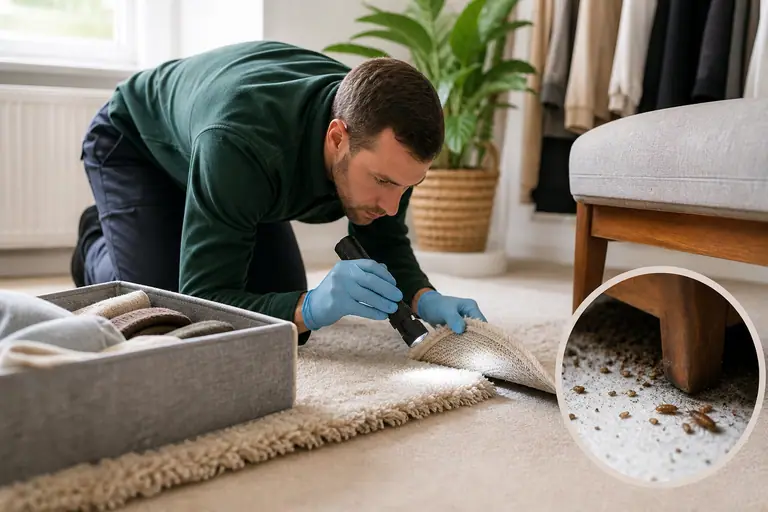
Carpet edges, cupboards, stored textiles, upholstered furniture, lint and possible bird or animal material are checked for larvae and cast skins.
CONTROL SEQUENCE
Inspect vulnerable fibres and undisturbed debris to map larval activity.
Remove lint and infested material, then target confirmed harbourage as appropriate.
Store clean textiles securely and check edges, windows and vulnerable items for new signs.
THE SERVICE, EXPLAINED
The hairy larvae damage materials; adult beetles seen at windows are often the first visible clue.
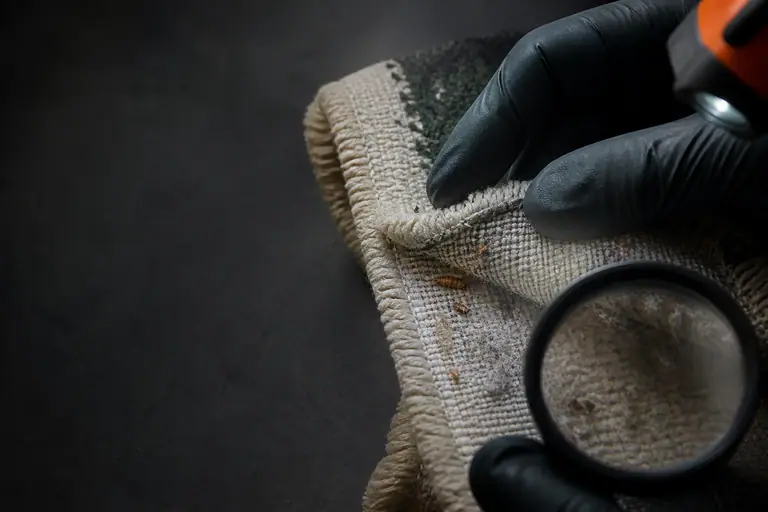
Larvae can feed on wool, fur, feathers, hair, lint and dead insects in quiet edges. Look for cast larval skins and irregular damage beneath furniture, inside cupboards or around stored natural-fibre items.
Photograph or retain a specimen and keep damaged items in their original area. This helps distinguish carpet beetles from clothes moths and prevents avoidable movement through the property.
A thorough inspection follows the materials larvae can consume, not only the adult beetles.
The technician checks carpet perimeters, furniture undersides, wardrobes, airing cupboards and stored textiles. Accumulated lint, animal hair and inaccessible debris can sustain activity where the visible room appears clean.
Old bird nests, loft debris or animal material may create a source near the affected space. Access limits and any need for specialist investigation are recorded before treatment is proposed.
Source removal reduces food for larvae while treatment addresses confirmed harbourage.
Detailed vacuuming, secure disposal of debris and careful handling of affected belongings form part of the plan. A professional residual treatment may be applied to suitable edges and cracks according to room use.
Do not apply mixed sprays to clothing or valued textiles. Some items can be laundered, heat processed, frozen or professionally cleaned, but the appropriate method depends on material and care instructions.
Preparation should expose edges without spreading larvae or cast skins.
Create access beneath movable furniture and around carpet perimeters as directed. Bag suspect items before transport, separate inspected clean materials and empty affected storage in a controlled way.
Tell the technician about delicate rugs, taxidermy, musical instruments or collections containing animal-based materials. These may need a specialist handling plan rather than routine treatment.
Adult sightings can continue briefly, so larval evidence and new damage are the better progress measures.
Check cleaned edges, vulnerable items and windows for fresh cast skins or larvae. Keep dated photographs of any new damage and avoid returning uninspected materials to treated storage.
Regular edge cleaning, sealed storage and removal of nesting or lint sources reduce future risk. Repeat evidence in another room may indicate a second source requiring inspection.
THE PANTHER METHOD
Establish the pest, the extent of activity and the routes it uses.
Reduce immediate activity and limit the chance of spread.
Apply a targeted method selected for the property and infestation.
Close the loop with follow-up measures and practical prevention.
DIRECT ANSWERS
The larvae cause textile damage; adults commonly feed outdoors and may be noticed at windows.
Larvae can feed on wool, fur, feathers and other animal-based fibres or debris.
Hair, lint and dead insects accumulate in quiet edges and can support larvae.
Yes. Old nests and animal material in or near a building can sometimes provide a source.