Pest Control Advice · LONDON
Cockroaches After Treatment: How to Monitor What Happens Next
A clear method for tracking cockroach sightings, monitor catches and conditions after a professional visit.
The first quiet evening after cockroach treatment can feel like success. Then a small insect appears beside the fridge, and the question starts again: has the work failed? A sighting by itself rarely answers that. What matters is the species, the exact location, whether it is an adult or young insect, what the monitors show, and how those observations change between visits. A useful follow-up record turns an unsettling glimpse into information the technician can act on.
This is a guide to observing activity after a professional visit, not a replacement treatment plan. The products and placements in your kitchen or business may have specific cleaning and re-entry instructions. Follow the written advice from your technician first. If you have not yet had the insect identified, start with a pest inspection; different cockroach species and other lookalike insects call for different responses.
Ask what the first visit was meant to achieve
Before judging results, read the service report. It should say what was identified, where activity was found, what was applied or placed, which areas could not be reached, and when a review is due. A gel-bait programme, a targeted residual treatment and a monitoring-only first visit do not have identical milestones. If the report is unclear, ask the contractor to explain what change they expect to see and what observation should prompt an earlier call.
Write down the baseline while it is fresh: how often insects were seen before treatment, the times of day, their apparent size and the places involved. “Three seen in the kitchen this week” is less useful than “one small insect under the sink on Tuesday at 22:00; one adult near the fridge motor on Thursday”. The comparison need not be elaborate. A short dated note kept beside the service report will do.
Panther’s cockroach control service describes inspection around warm equipment, plumbing and connected routes. Monitoring is the check on whether those routes remain active after targeted work. It can reveal a missed harbourage or a source outside the treated room; it should not be reduced to whether you saw a cockroach on one particular night.
Keep monitors in their mapped positions
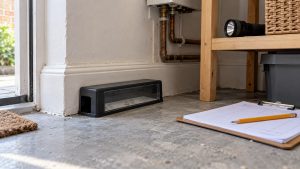
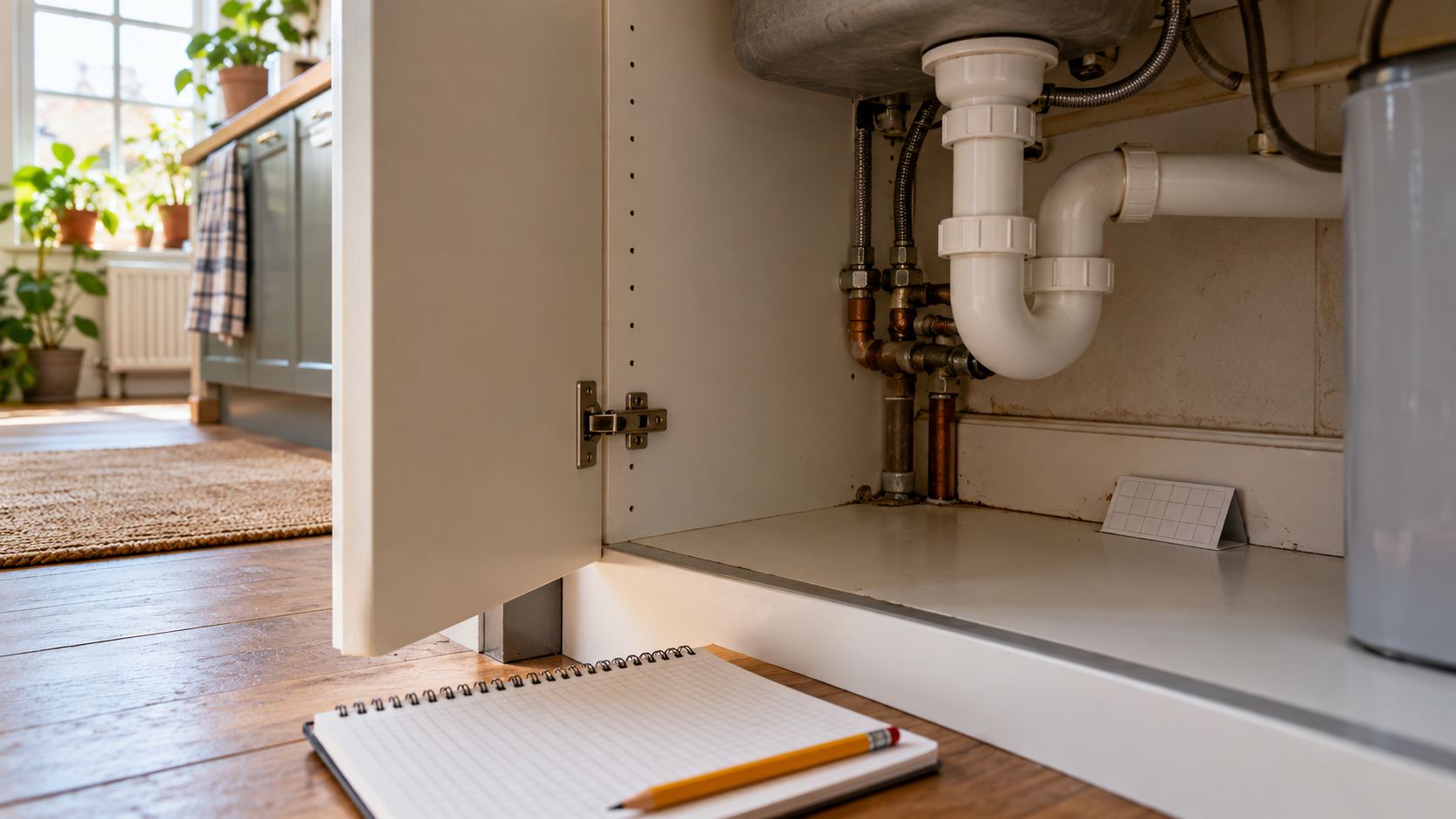
Sticky insect monitors are often placed tight to edges, near a sink, fridge, cooker or another likely route. The British Pest Control Association explains that numbering and mapping monitors helps a technician compare locations, counts and even the direction from which insects entered. Moving a monitor to a spot that “looks better” breaks that comparison. Photograph its position when it is first placed, and let the contractor know if a cleaner, child or pet accidentally shifts it.
Check only at the interval the technician recommends. A quick daily glance may be helpful in a small flat; a commercial site may have a documented inspection round. Either way, use the same method each time. Note the monitor number, date, number caught and whether the catch appears to include adults or very small young insects. Take a clear photograph if identification is uncertain. Do not put bare fingers on the adhesive or reposition a trap in a food-preparation area without advice.
A single trap with no catch is not proof that the whole property is clear. It samples one movement route. Nor does one catch automatically mean the treatment has failed. Look for a pattern across several monitors and the visual inspections. The University of Minnesota Extension recommends placing sticky traps against edges in likely areas such as cupboards and around appliances, then using catches to locate activity. A professional can interpret that pattern in the context of the chosen treatment.
Separate old signs from new activity
Droppings, cast skins and empty egg cases can remain after insects are gone. Photograph their location before cleaning where safe and in line with the treatment instructions. When the technician has said it is appropriate to clean that surface, remove the old mark and record the date. A new mark in the same cleared place is more informative than a mark that was never dated. Do not scrub treated cracks or wash bait placements merely to create a clean baseline; doing so may interfere with the programme.
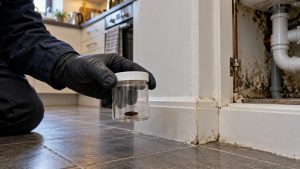
Live sightings deserve detail too. An insect moving slowly in the open shortly after work may have contacted a product, but appearance alone cannot establish why it is there. Repeated agile insects emerging from the same gap, especially alongside fresh catches or young stages, deserve a prompt review. Keep a specimen safely in a sealed container when possible. If the species was uncertain at the initial visit, an identifiable sample can change the plan.
Be wary of comparing unlike observations. A customer who previously looked only in daylight may start checking at midnight after treatment and understandably see more. Cockroaches often shelter by day and move at night. Increased attention can look like increased activity, so record the time and place as well as the count. That does not dismiss a genuine rise; it gives the technician a fair comparison.
What to do when one appears after treatment
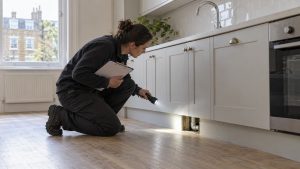
Note the date, room and exact edge or appliance. Photograph or contain the insect if safe. Check nearby monitors without moving them. Then follow the reporting threshold in your service instructions. If no threshold was supplied, send the technician the observations and ask whether the planned review should move forward. A quick phone photo and a floor-plan mark are usually more useful than an estimate of how many must be hidden.
Do not respond by spraying supermarket aerosol into the treated gap. It can contaminate bait, drive insects into another route or create avoidable exposure. Avoid adding a second bait or dust without the technician’s approval for the same reason. The BPCA’s account of cockroach control stresses continued monitor checks and visual inspection until activity is resolved; it does not treat an unplanned spray as a substitute for follow-up.
If a cockroach is found in a food-handling business, follow the site’s own food-safety procedure as well as notifying pest control. Protect exposed food and record the affected location and time. A manager may need to review cleaning, stock and access before the next visit. Make decisions about service or closure under the business’s actual food-safety system rather than a generic blog rule.
Check the conditions that keep a harbourage attractive
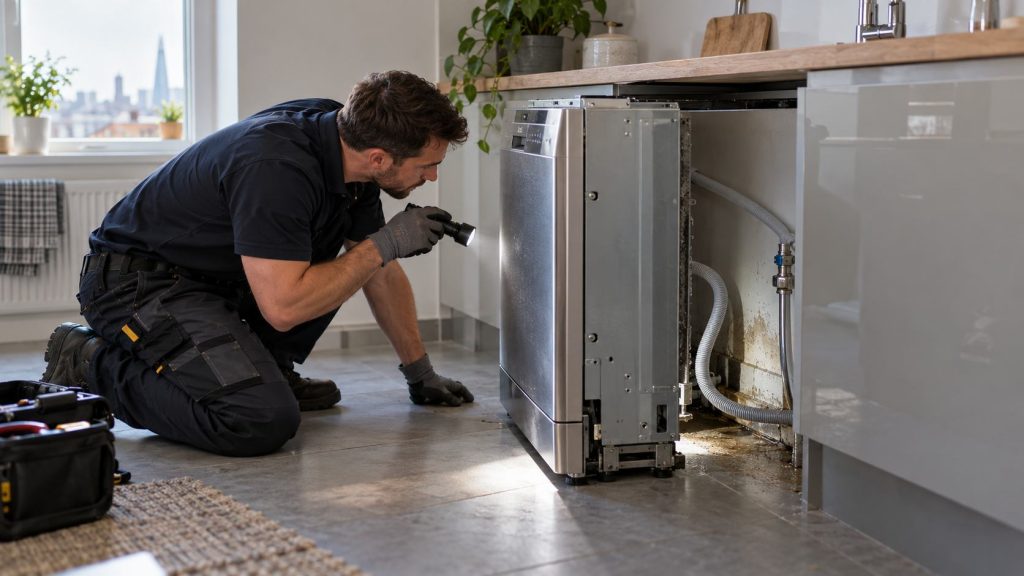
Treatment is easier to assess when competing food and water sources are controlled. Clear food residues, close stock and pet food, remove waste regularly, and report leaks or condensation. Look behind appliances only where access is safe and agreed; pulling out a heavy fridge or dismantling electrical equipment can cause damage and may disturb placements. A drip tray, a leaking waste pipe or a gap behind a sink unit can matter more than an immaculate open worktop.
Distinguish housekeeping from treatment interference. Wipe food-contact surfaces as directed, but leave treated edges, bait points and monitors alone until the contractor says otherwise. If another cleaner or shift team uses the room, share a short site-specific note: which corners not to wash, which numbered monitors must stay in place, and who reports new sightings. This is particularly important in restaurants where nightly cleaning routines may otherwise erase the monitoring record.
Repairs may be part of the outcome. Seal gaps or fix damaged finishes at the stage recommended by the technician, after the active route has been understood. Closing one opening prematurely can simply shift insects to another. In a flat, note whether sightings are clustered around a shared riser or service penetration; the contractor may need to discuss access to connected areas with a managing agent.
Read the trend, not a single number
At review, place the baseline and the new record side by side. Are catches declining in the original hot spots? Have new monitors begun catching insects elsewhere? Are there young stages, egg cases or fresh droppings in a place that was previously quiet? Has a water leak been fixed? The answers can support another targeted application, a search for a hidden source, or a decision to keep monitoring. A zero on one date is welcome, but it is not a stand-alone guarantee.
Species and building layout affect the interpretation. German cockroaches commonly use warm kitchen harbourage, while Oriental cockroaches may be associated with damp ground-level or service areas. The technician should confirm the species rather than infer it from the room alone. In a block of flats, repeated catches beside a service duct may call for coordination beyond one home. For the broader expectation of treatment stages, see Panther’s cockroach treatment timeline; use your own service report for the actual review date and instructions.
If you need to send observations before a scheduled appointment, Panther’s contact page explains which details help. Include the postcode, room, monitor number, first and latest sighting, photographs and any change to cleaning or access. That gives the next visit a clear purpose.
When to request another inspection
Contact the treating contractor if catches remain steady or increase, activity moves into a new room, young insects appear repeatedly, or the planned review date passes without a clear next step. Report a damaged or contaminated bait placement, a moved monitor or cleaning that may have affected treated surfaces. If you find a different-looking insect, ask for identification rather than assuming the original diagnosis still covers it.
Monitoring works best as a modest, repeatable habit. Leave devices mapped, preserve good evidence, respect the treatment instructions and tackle the conditions the inspection identified. The goal is a decision based on where activity persists and how it is changing, not a promise drawn from one quiet night.

Al Joel is a practical writer and long-term property maintenance specialist focused on real-world pest control, home safety and prevention advice. His guides translate common warning signs into clear next steps for homeowners, tenants, landlords and property managers.His approach begins with correct identification. A sighting in one room may originate from a neighbouring flat, service riser, drainage, roof space, delivery or communal waste area. Al explains how to preserve useful evidence, reduce food and water sources, avoid spreading activity and choose proportionate treatment.What readers can expectClear identification clues and practical inspection stepsSafe preparation, cleaning and aftercare guidancePrevention advice for homes, flats and commercial premisesHonest guidance on when DIY is reasonable and when professional help is the smarter optionWhen professional help makes senseRepeated sightings, activity in several rooms, uncertain identification, vulnerable occupants or signs involving food, electrics and shared building routes deserve a professional inspection. A lasting solution normally combines targeted treatment with proofing, hygiene and follow-up monitoring.Explore the Pest Library, learn how treatment works, or request property-specific advice.