020 3404 5177
Some infestations don’t respond well to sprays or surface treatments. When pests are deep inside mattresses, furniture, or wall gaps, heat treatment London is often the more effective option. Panther Pest Control uses controlled high temperatures to treat entire rooms, reaching areas that are normally difficult to access.
Instead of targeting only visible activity, this approach works by raising the temperature to a level that affects all life stages of pests, including eggs. That’s why it’s commonly used for bed bug infestations in London flats, where hiding spots are spread across tight spaces and layered materials.
In one recent job in a furnished flat in Central London, repeated treatments hadn’t resolved the issue because bed bugs were hiding inside the sofa frame and under flooring edges. Using heat treatment London, the entire space was treated in one controlled process, allowing heat to penetrate areas that standard methods couldn’t reach.
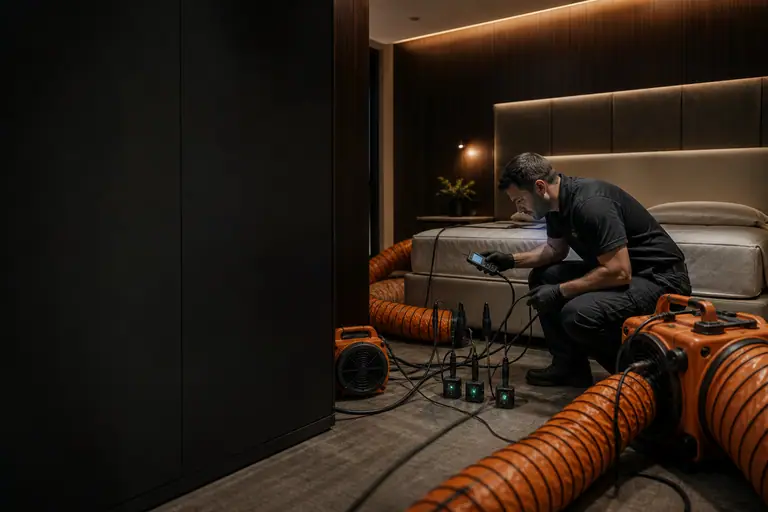
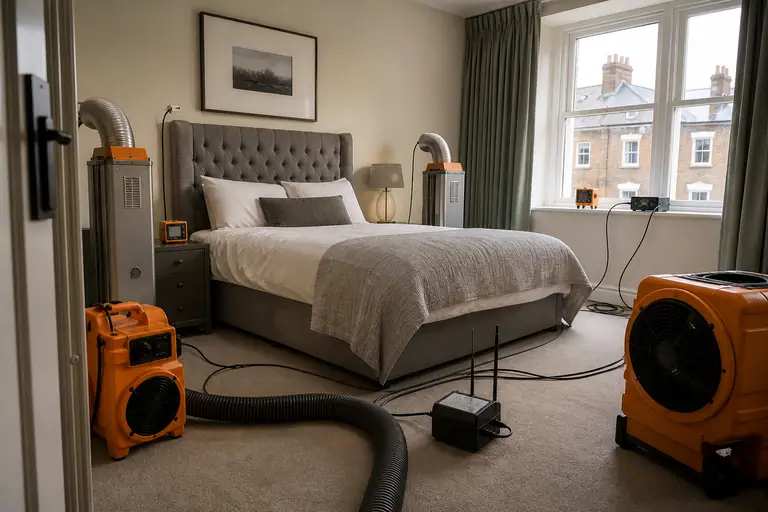
With heat treatment London, the aim isn’t to treat surfaces — it’s to change the entire environment inside the room. At Panther Pest Control, we use specialist heaters and air movers to gradually raise the temperature to a level that’s lethal to bed bugs at all life stages, including eggs. This heat is circulated evenly so it reaches deep into mattresses, sofas, carpets, and small structural gaps.
In London flats, this is particularly useful because of how compact and layered the spaces are. Bed frames, divan bases, and fitted furniture create multiple hiding spots that standard treatments struggle to reach. During a recent heat treatment London job in a one-bedroom flat in Fulham , activity was spread between the bed, wardrobe, and a fabric sofa — heat allowed all of these areas to be treated at the same time.
Preparation and access make a big difference. Heat needs to move freely, so clutter, tightly packed storage, or blocked airflow can slow down the process. We often advise moving items slightly away from walls and ensuring access to key areas before starting heat treatment London.
The structure of the building also matters. Older London properties with thicker walls or uneven insulation can hold heat differently, which is why temperatures are monitored throughout the process. In some cases, items like electronics, heat-sensitive materials, or certain belongings may need to be removed or protected beforehand.
Timing varies depending on the size and layout of the property. Most heat treatment London jobs are completed within a single day, but larger or more complex layouts may take longer to reach and maintain the required temperature consistently.
This method is usually recommended when infestations are well established or have not responded to previous treatments. It’s also a practical option for furnished properties where pests are likely to be hidden across multiple items.
That said, heat treatment London isn’t always necessary. Smaller, localised infestations can sometimes be handled with targeted treatments instead. At Panther Pest Control, we assess each situation before recommending the approach, based on how widespread the activity is and how accessible the affected areas are.
After heat treatment London, activity typically stops quickly because all stages of the infestation are affected during the process. However, it’s still important to monitor the situation for a short period, especially in buildings with shared walls where reintroduction is possible.
We also provide practical guidance after the visit, such as how to avoid reintroducing pests through luggage or second-hand furniture.
A common expectation is that heat treatment London is a quick “switch on and done” process. In reality, it requires controlled setup, gradual temperature increase, and constant monitoring. At Panther Pest Control, we don’t just heat the air — we make sure the heat penetrates into materials where bed bugs actually hide, such as mattress seams, wooden joints, and upholstered furniture.
Another misunderstanding is that preparation isn’t needed. While heat treatment London reduces the need for chemicals, it still relies on proper access. Items stacked tightly, blocked airflow, or closed-off spaces can create cooler pockets where pests may survive. In one recent job in a compact flat in Camden, stored boxes under the bed had to be repositioned before treatment could be effective, as they were preventing heat from circulating properly.
People also assume all belongings can stay untouched. While most items are safe, certain heat-sensitive objects — like candles, some electronics, or specific materials — may need to be removed or protected beforehand.
The layout of the property plays a big role. Open-plan spaces allow heat to circulate more evenly, while partitioned rooms or tight layouts require more careful setup. In London flats with limited space, airflow management becomes key to ensuring consistent temperatures throughout.
Building type matters too. Older properties with thicker structures or uneven insulation can take longer to heat evenly. That’s why temperatures are measured in multiple points during heat treatment London, not just in one area.
Power supply and access are also practical factors. In some buildings, especially conversions or older flats, electrical capacity can affect how equipment is set up and how long the process takes.
Once the treatment is finished, the property is gradually cooled down to normal conditions. In most cases, you can use the space again the same day, depending on how the treatment was carried out.
With Panther Pest Control, we usually recommend a short monitoring period to confirm that the infestation has been fully resolved. In buildings with shared walls, there’s always a small risk of reintroduction, so awareness is important.
When done properly, heat treatment London provides a reliable solution for bed bug infestations, especially in cases where other methods haven’t reached all the hiding spots.
One of the main advantages of heat treatment London is its ability to reach areas that are normally inaccessible with standard methods. Bed bugs don’t stay on exposed surfaces — they hide deep inside materials like mattresses, sofa frames, and small structural gaps. Heat moves through these materials more effectively than sprays, allowing the treatment to reach where pests actually live.
In London properties, this is especially important. Tight layouts, fitted furniture, and shared walls create multiple hidden spaces where infestations can spread without being seen. We often see this during heat treatment London jobs carried out by Panther Pest Control, where activity is found across several items rather than in one single location.
Another key factor is that heat affects all life stages, including eggs, which are often missed with other treatments. That’s why heat treatment London is commonly used for more established or recurring infestations where full coverage is needed.
Before starting any heat treatment London, preparation plays a key role in how effective the process will be. At Panther Pest Control, we guide you through what needs to be done based on your specific property, but there are some common points that apply to most London homes.
First, access is essential. Heat needs to circulate freely, so areas around beds, sofas, and walls shouldn’t be tightly packed. Items stored under beds or pushed against walls often need to be moved slightly to allow airflow. In smaller London flats, this can take a bit of planning, especially where storage space is limited.
Certain belongings also need attention. While most furniture and fabrics can remain in place during heat treatment London, some items are sensitive to high temperatures. These can include candles, aerosols, specific electronics, and heat-sensitive materials. We usually advise setting these aside beforehand to avoid damage.
Another important step is reducing clutter. Not because clutter causes infestations, but because it creates barriers that prevent heat from reaching all areas evenly. In a recent job in a two-bedroom flat in Hammersmith, treatment had to be adjusted because tightly packed storage was blocking airflow under the bed and around wardrobes.
Laundry preparation can also help. Washing bedding and clothing at high temperatures before the visit removes part of the infestation and supports the overall result of the heat treatment London. However, it’s not a replacement for the treatment itself.
Timing is another factor. The property needs to be available for several hours while the temperature is gradually increased and maintained. During this time, the space cannot be occupied.
Proper preparation doesn’t make the treatment more complicated — it makes it more effective. When everything is accessible and heat can circulate properly, Panther Pest Control can carry out heat treatment London in a way that reaches all key areas and delivers consistent results across the entire space.
These are some of the responses from our customers who are very satisfied
Other locations we cover nearby: Central London
Contact us today to request your free, no-obligation quote and take the first step toward a pest-free environment.