Adult flies gathering at windows
Record where and when this sign appears. Avoid disturbing useful evidence before inspection.

FLYING PEST CONTROL · LONDON RESPONSE
Fly control identifies the species and breeding material first, because adult-killing measures alone rarely resolve a persistent source.
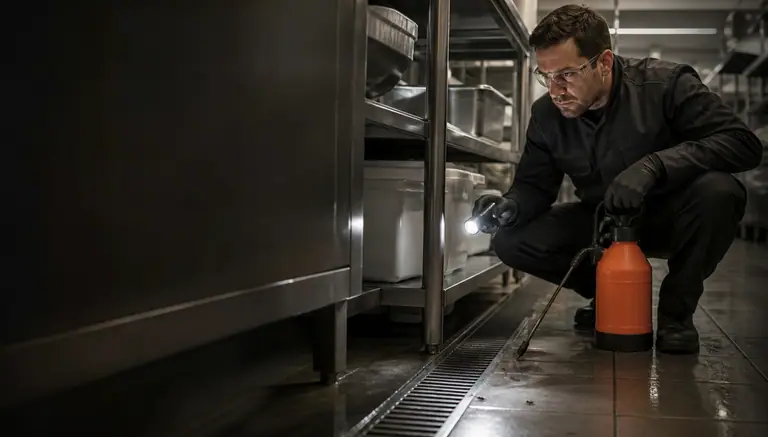
CASE TYPE / FLYING PESTS
Inspect the evidence.FIELD SIGNALS
Record where and when this sign appears. Avoid disturbing useful evidence before inspection.
Record where and when this sign appears. Avoid disturbing useful evidence before inspection.
Record where and when this sign appears. Avoid disturbing useful evidence before inspection.
Record where and when this sign appears. Avoid disturbing useful evidence before inspection.
INSPECTION MAP
Waste, drains, food storage, moisture, dead-animal risk and entry points are checked to locate likely breeding and resting sites.
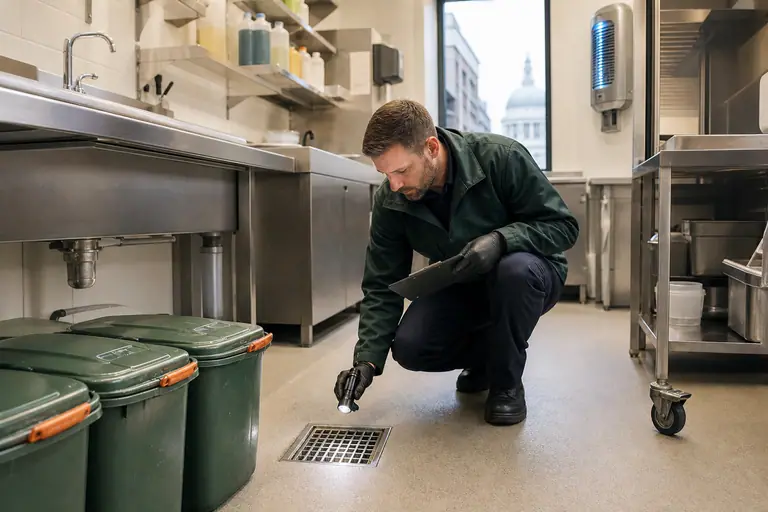
CONTROL SEQUENCE
Use appearance and location to narrow the fly type and source.
Correct breeding material, waste, drain or hygiene issues and apply targeted control.
Improve screens, storage and waste routines, then watch for renewed activity.
THE SERVICE, EXPLAINED
Different flies point to different breeding material, so appearance and location guide the investigation.
Large flies at windows, small flies around fruit, moth-like insects beside drains and repeated emergence from one void do not share a single cause. Photographs and a retained specimen can shorten the identification process.
Record the rooms, time of day and numbers seen. Adult flies moving towards light may emerge some distance from the source, particularly within ceiling, wall or service voids.
Persistent control depends on locating and correcting the material where immature stages develop.
The technician checks waste storage, drains, food residues, damp organic debris, plant material and accessible voids. Entry through doors and windows is assessed separately from breeding inside the premises.
A sudden cluster of larger flies can sometimes indicate a dead animal in an inaccessible area. The source location, access and odour should be assessed before opening building fabric.
Adult reduction supports control, but it does not replace source removal.
Targeted residual or space treatment, traps and commercial fly-control units may be considered according to species and premises. Food areas require controlled placement and preparation under the agreed safety instructions.
Fogging may be useful in some defined situations, but it is not an automatic answer to an active drain, waste or carcass source. The scope should state what is treated and what corrective work remains.
Restaurants, shops and managed premises need a repeatable hygiene and exclusion plan.
Waste frequency, bin condition, drain cleaning, deliveries, door use and food storage are reviewed around the activity pattern. Monitoring positions should be labelled and checked consistently rather than moved without records.
Electronic fly-control equipment must be correctly positioned and maintained. It should support exclusion and source control, not compensate for open routes or accumulating organic material.
Remove breeding opportunities and make routine entry less likely.
Keep waste enclosed, clean spills promptly, maintain drains appropriately and repair suitable screens, seals and door closures. Rotate stored produce and inspect incoming goods where relevant.
Continue monitoring after corrective work and record any renewed concentration by species and location. Early evidence makes it easier to distinguish a new entry event from a source that was not fully removed.
THE PANTHER METHOD
Establish the pest, the extent of activity and the routes it uses.
Reduce immediate activity and limit the chance of spread.
Apply a targeted method selected for the property and infestation.
Close the loop with follow-up measures and practical prevention.
DIRECT ANSWERS
Many adult flies move towards light after emerging elsewhere in the room or building.
It may reduce adults but persistent control depends on removing the breeding source.
They can breed in organic film within wet drains and similar moist areas.
Prompt waste removal, drain care, closed food storage and maintained doors or screens are key measures.