Regular wasps entering one gap
Record where and when this sign appears. Avoid disturbing useful evidence before inspection.

FLYING PEST CONTROL · LONDON RESPONSE
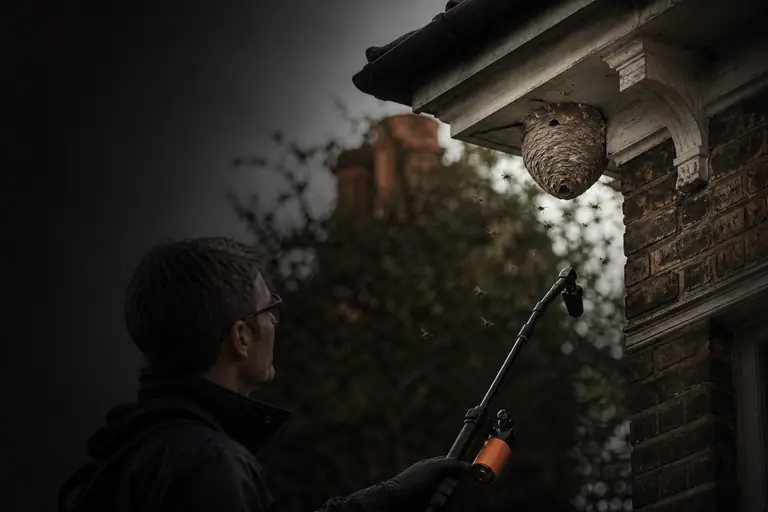
Wasp control follows the flight line to an active nest and treats it without blocking the entrance or placing occupants at unnecessary risk.
CASE TYPE / FLYING PESTS
Inspect the evidence.FIELD SIGNALS
Record where and when this sign appears. Avoid disturbing useful evidence before inspection.
Record where and when this sign appears. Avoid disturbing useful evidence before inspection.
Record where and when this sign appears. Avoid disturbing useful evidence before inspection.
Record where and when this sign appears. Avoid disturbing useful evidence before inspection.
INSPECTION MAP
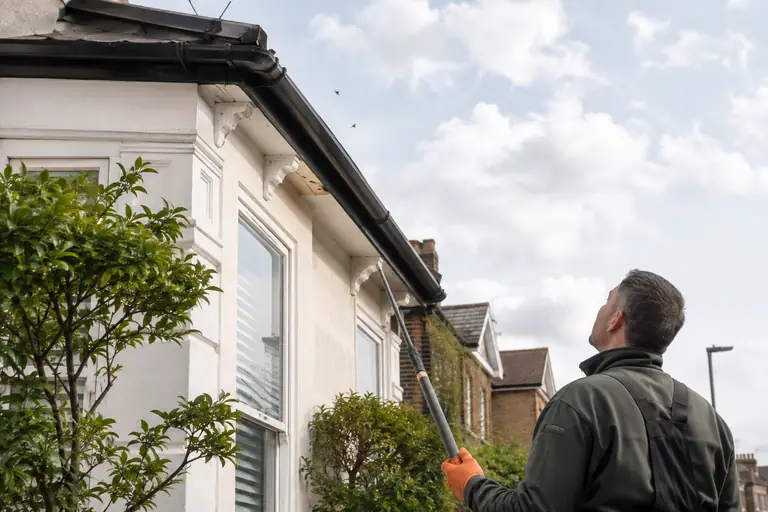
Flight direction, entrance location, nest access, height and nearby occupants are assessed from a safe position before treatment.
CONTROL SEQUENCE
Observe the flight line and confirm an active nest entrance.
Apply a suitable nest treatment using access appropriate to the site.
Keep clear, observe activity reduction and only seal access after the nest is inactive.
THE SERVICE, EXPLAINED
Repeated wasp traffic to one point is more useful than a single sighting.
Wasps may enter roof edges, air bricks, sheds, wall cavities and garden structures. The visible entrance is not always the nest itself, so blocking it can force insects into the building or create a new exit.
Observe the flight line from a safe distance and keep people and pets clear. Do not climb, strike the structure or apply products into an opening.
Safe treatment depends on the nest location, height and route to the entrance.
The technician identifies the active point and assesses ladders, roof access, fragile surfaces, electrical hazards and public areas. A nest hidden inside a cavity may be treated through its entrance without opening the structure.
Some locations require specialist access or property-manager approval. Share photographs and access details when booking so limitations can be discussed before attendance.
Treatment targets the active nest route while the area is controlled.
The selected professional method depends on nest position and accessibility. People and animals must remain away from the treatment zone, and temporary activity may continue as returning workers reach the nest.
The technician provides a safe observation period and explains when the entrance can be reviewed. Immediate physical removal is not always necessary or possible.
The risk changes when a flight path crosses a doorway, seating area or working zone.
At homes, tell the team about children, pets and windows near the entrance. Commercial properties should identify public access, deliveries and operating times so the treatment area can be managed.
A wasp indoors does not automatically prove a nest inside. Investigation is useful when sightings repeat in the same area.
Do not seal the entrance until activity has stopped and the advice period has passed.
Monitor from a distance and avoid disturbing the opening. If strong activity continues beyond the expected observation period, report the location and timing to the team.
Later repairs to roof gaps, vents or damaged structures may reduce suitable access, but wasps can establish new nests elsewhere in a following season.
THE PANTHER METHOD
Establish the pest, the extent of activity and the routes it uses.
Reduce immediate activity and limit the chance of spread.
Apply a targeted method selected for the property and infestation.
Close the loop with follow-up measures and practical prevention.
DIRECT ANSWERS
No. Disturbing an active nest can trigger defensive behaviour and stings.
No. Wasps may seek another route, including into occupied rooms.
No. Species identification matters and bee situations may require a beekeeper or different advice.
A completed wasp nest is generally not reused, though a suitable site may attract a new queen in another season.