All Pest Control · LONDON
How to Get Rid of a Wasp Nest Safely: UK and London Expert Guide
A wasp nest beside a London doorway, loft hatch or children’s play area needs a calm risk assessment, not a hurried attack with an aerosol. Wasps defend the nest entrance, and treatment at height or inside a cavity…
A wasp nest beside a London doorway, loft hatch or children’s play area needs a calm risk assessment, not a hurried attack with an aerosol. Wasps defend the nest entrance, and treatment at height or inside a cavity can expose occupants, neighbours and passers-by. This guide explains how to identify an active nest, when it can be left alone, what safe professional removal involves and how to prevent repeat nesting without harming bees or blocking live insects into the building.
Key Takeaways
- Confirm wasps, bees or hornets before treatment; the correct response differs.
- Keep people and pets away from the flight path and never block an active entrance.
- Avoid ladders, fire, water and improvised chemicals.
- Professional treatment is most appropriate near occupied areas, at height, inside cavities or where allergy risk exists.
- Book wasp control for a site-specific assessment.
Table of Contents
- Is It a Wasp Nest, Bee Nest or Hornet Nest?
- Decide Whether the Nest Needs Treatment
- What Not to Do
- How Professional Wasp Nest Treatment Works
- Lofts, Wall Cavities, Roofs and Ground Nests
- Wasp Control for London Businesses
- Preventing Wasp Nests Next Season
- Practical London Access and Timing
- After Treatment: Verification and Proofing
- Booking Checklist for Wasp Nest Removal
- Frequently Asked Questions
- Related Articles
Is It a Wasp Nest, Bee Nest or Hornet Nest?
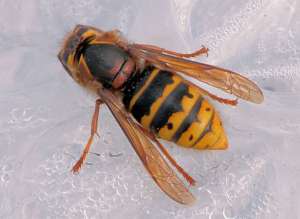
Common wasps and German wasps form grey-brown paper nests made from chewed wood fibres. Workers have a narrow waist and bright yellow-and-black markings. A steady stream entering one hole every few seconds is stronger evidence than several wasps feeding on flowers. Early nests can be golf-ball sized; mature nests hidden in lofts or wall cavities may become much larger.
Honey bees are hairier and brown-gold, while many solitary bees use individual holes without forming a defensive colony. Bumblebees are robust and furry and often nest beneath sheds or in old rodent holes. Bees are valuable pollinators, and relocation or tolerance may be more appropriate. Send a clear photograph before booking if identification is uncertain.
The native European hornet is larger, with chestnut and yellow colouring, but is not automatically more aggressive away from its nest. Any suspected Asian hornet should be reported through the current official route because it is an invasive species. Do not approach it for a close photograph.
Decide Whether the Nest Needs Treatment
A nest high in an unused tree at the far end of a large garden may be left until the colony naturally dies in autumn. Wasps do not reuse the same nest the following year. Treatment becomes proportionate when the entrance is beside a door, window, school area, café terrace, loft access, maintenance route or a household member with a known severe allergy.
In terraced streets, consider the public footway and neighbours. A technician treating a front elevation in Islington or Westminster may need a controlled working area so pedestrians do not enter the flight line. Nest location, access height and the possibility of wasps emerging indoors determine the method.
If anyone develops breathing difficulty, facial or throat swelling, dizziness or collapse after a sting, call 999. For ordinary local reactions, follow NHS advice. Pest technicians assess the nest; they do not provide medical diagnosis.
What Not to Do
Do not block the entrance with foam, mortar or tape while the colony is active. Trapped wasps can chew alternative routes into bedrooms, ceiling voids or neighbouring rooms. Proofing comes after confirmed inactivity. Do not strike the nest or shine a bright lamp into the entrance at close range.
Never burn a nest, pour petrol into a cavity or direct a hose at roof eaves. Fire spreads through dry loft materials, water damages electrics and neither provides controlled exposure. Retail aerosols sprayed from a ladder combine fall risk with defensive wasps.
Do not assume night makes DIY work safe. Activity is lower, but the colony remains present and poor visibility increases mistakes. Professional protective equipment, access planning and labelled products are the relevant controls.
How Professional Wasp Nest Treatment Works
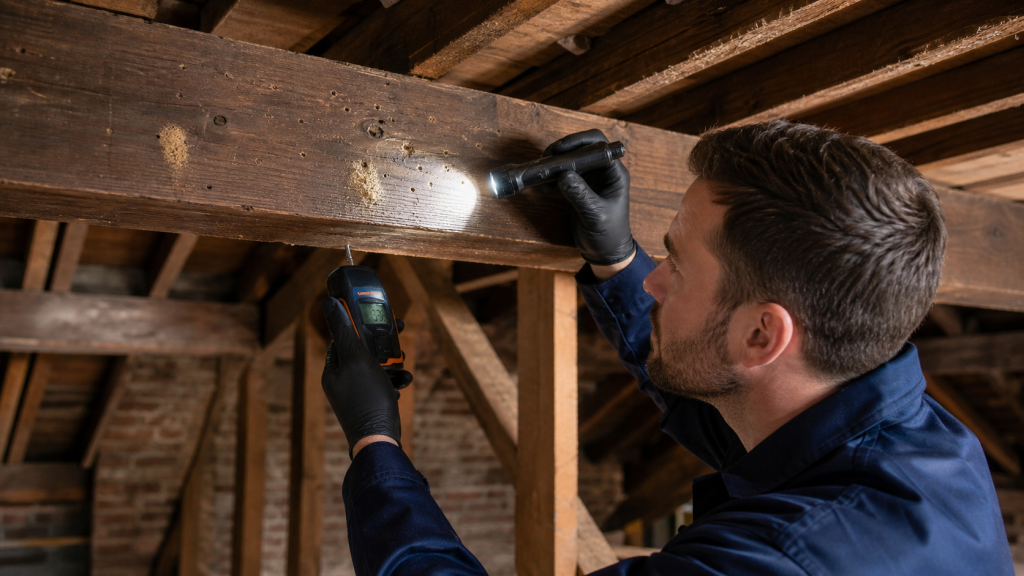
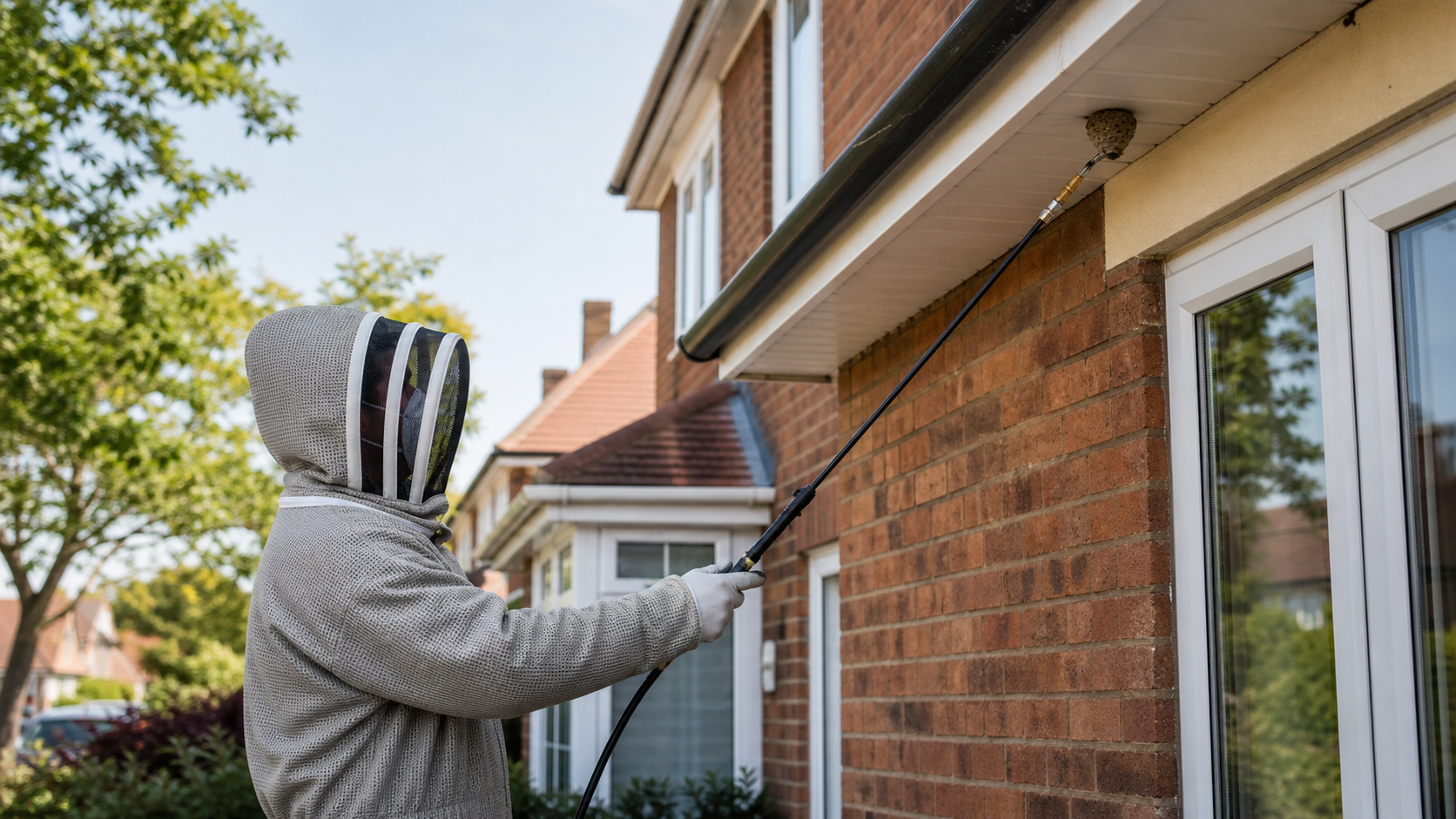
The technician confirms species, entrance, nest position, access and nearby hazards. A surface nest may be removed into a sealed container when safe. A concealed nest is usually treated through the established entrance using an authorised insecticide delivered so returning workers contact the deposit.
Technicians wear suitable protective clothing and keep occupants away. Long-reach equipment can reduce work at height. Where access equipment is necessary, the quotation should explain it. Treatments follow the product label, risk assessment and COSHH controls; indiscriminate spraying around the garden is not professional practice.
Activity often reduces quickly, but returning workers may remain visible for a period. Follow the written advice on exclusion time and when the entrance can be sealed. A nest should not be opened immediately after treatment merely to satisfy curiosity.
Lofts, Wall Cavities, Roofs and Ground Nests
A loft nest may hang from a rafter or sit deep in insulation. Do not enter if wasps are emerging around the hatch. Close the hatch, keep the room below clear and tell the technician about water tanks, fragile ceilings and restricted boarding. Read our guide to a wasp nest in a loft.
For cavity nests, the visible hole is a doorway, not necessarily the nest itself. Sealing it first can redirect the colony through vents and service penetrations. After control, repair failed pointing, fascia joints and pipe gaps with materials appropriate to the building.
Ground nests in compost, borders or old burrows are easy to step on during gardening. Mark the area from a safe distance, stop mowing and keep pets away. Do not excavate an active colony.
Wasp Control for London Businesses
Restaurants, pubs, bakeries and food markets attract foraging wasps even when the nest is off-site. Keep external bins clean and closed, rinse sugary recycling, clear spillages promptly and use screened preparation areas. Electronic fly killers are not a substitute for locating a nearby nest.
For a Soho pub or Borough Market supplier, treatment timing must protect customers and avoid contaminating food. The pest contractor should coordinate access before opening, document products and advise staff when the area can return to use. Commercial sites may benefit from seasonal surveys under a pest management contract.
Record sting incidents, nest reports and corrective work. Where workers face a known risk, the employer’s health-and-safety assessment should consider first-aid arrangements and vulnerable employees.
Preventing Wasp Nests Next Season
Inspect eaves, soffits, airbricks and sheds in late winter, when old nests are inactive. Repair damaged fascia and fine gaps while preserving ventilation. Fit insect mesh designed for vents rather than blocking them. Keep roof repairs weatherproof; a blob of foam is rarely durable.
In spring, a queen may build a tiny open nest. Early professional assessment is simpler than dealing with a mature colony in August. Fake paper nests and ultrasonic products are unreliable substitutes for maintenance.
Reduce foraging pressure by managing waste and fallen fruit. Keep compost covered, clean barbecue residue and do not leave sugary drinks open. Prevention cannot remove every wasp from a garden, and it should not: wasps are predators of many other insects.
Practical London Access and Timing
Central London properties often have nests above conservatories, light wells or narrow rear alleys where ordinary ladders cannot be used safely. Send photographs from ground level and describe parking, gate width, roof access and whether scaffolding is present. This allows the company to bring suitable equipment.
Peak call volume is usually during warm summer weather when colonies are large. A same-day promise is useful only if the operator can reach and treat the actual entrance. Ask whether the quote includes difficult access, a return visit and removal of a visible nest.
In conservation areas, proofing repairs should respect original brick, timber and ventilation details. Pest control makes the colony inactive; a roofer or builder may be needed for permanent fabric repair.
After Treatment: Verification and Proofing
Observe from indoors or well outside the flight line. A substantial reduction is expected, but weather and nest position affect the timeline. Contact the provider if organised traffic continues beyond the advised period rather than applying another product.
Once inactivity is confirmed, remove an accessible nest if required and safe, then clean residues according to instructions. Old concealed nests are often harmless and can remain if removal would damage the structure.
Seal entry defects only after confirmation. Photograph the repair and add the location to an annual spring inspection list. If wasps now appear inside, close the room and contact the technician because the route may have changed.
Booking Checklist for Wasp Nest Removal
Provide the address, nest height, entrance location, indoor or outdoor activity, allergy concerns and any product already used. State whether access crosses a neighbour’s land or public pavement and whether pets, children or customers use the area.
Ask for the treatment method, access charge, expected activity after treatment, guarantee conditions and whether physical removal is included. Confirm that the operator is insured and uses authorised products.
Keep windows nearest the entrance shut during attendance, move vehicles or furniture that obstruct access and follow re-entry instructions. Do not stand outside to watch the treatment.
Seasonal Behaviour and Why Timing Changes the Job
In early spring, a solitary queen searches lofts, sheds and eaves and builds the first cells herself. At this stage the nest is small and worker traffic may be intermittent. By early summer, workers take over nest building and food collection. In late summer the colony can contain thousands of wasps, and the balance shifts from collecting protein for larvae to seeking sugary foods. That is why pub gardens and bins can suddenly become busy in August even when staff have changed nothing.
Cold weather ends the annual colony, but warm sheltered London roof voids can remain active later than exposed rural nests. Do not assume a calendar date proves inactivity. Watch the entrance on a mild day and use professional inspection where the route enters an occupied cavity. Queens found indoors during winter may simply be overwintering individuals rather than evidence of a functioning nest.
Treatment planning also depends on weather. Heavy rain and strong wind affect flight, access equipment and product application. A responsible operator may reschedule a hazardous roof treatment rather than rush it. For businesses, agree a safe time window and temporary exclusion zone in advance so a weather change does not collide with customers or deliveries.
Once the seasonal problem is resolved, do not seal every small opening indiscriminately. Victorian and Edwardian roofs need ventilation, and blocked air flow can contribute to condensation and timber decay. Use insect-resistant vent mesh and competent building repairs. Photograph the original entrance, the completed treatment and the final repair; this creates a useful maintenance record for landlords, facilities managers and future technicians.
Frequently Asked Questions
How much does wasp nest removal cost in London?
Price depends on access, height, nest position and whether specialist equipment or a return visit is needed. Obtain a site-specific quote.
Will wasps return to the same nest?
No. A colony dies and the paper nest is not reused, although a suitable roof void may attract a new queen nearby next year.
Can I block the entrance?
Not while the nest is active. Blocking can force wasps into the building. Seal only after control and confirmed inactivity.
How quickly does treatment work?
Activity often falls within hours, but returning workers may be seen for longer. Follow the technician’s stated verification period.
Should a nest always be removed?
No. An inaccessible inactive nest can often remain without harm. Removal is useful when accessible, contaminated or obstructing repairs.
Are wasps protected in the UK?
Common wasps are not generally protected, but treatment should still be necessary, targeted and environmentally responsible. Bees require different consideration.
What if the nest is in a rented property?
Report it promptly to the landlord or agent. Responsibility depends on the tenancy, cause, location and repair obligations.
Can wasps damage a house?
They scrape wood fibres for nest material but usually do not consume structural timber. The greater issue is access through existing defects and indoor emergence.
Related Pest Control Articles
- Wasp Nest in Loft
- Queen Wasp Compared with a Normal Wasp
- Dealing with Wasp Stings
- Seasonal Pest Calendar UK

Al Joel is a practical writer and long-term property maintenance specialist focused on real-world pest control, home safety and prevention advice. His guides translate common warning signs into clear next steps for homeowners, tenants, landlords and property managers.His approach begins with correct identification. A sighting in one room may originate from a neighbouring flat, service riser, drainage, roof space, delivery or communal waste area. Al explains how to preserve useful evidence, reduce food and water sources, avoid spreading activity and choose proportionate treatment.What readers can expectClear identification clues and practical inspection stepsSafe preparation, cleaning and aftercare guidancePrevention advice for homes, flats and commercial premisesHonest guidance on when DIY is reasonable and when professional help is the smarter optionWhen professional help makes senseRepeated sightings, activity in several rooms, uncertain identification, vulnerable occupants or signs involving food, electrics and shared building routes deserve a professional inspection. A lasting solution normally combines targeted treatment with proofing, hygiene and follow-up monitoring.Explore the Pest Library, learn how treatment works, or request property-specific advice.