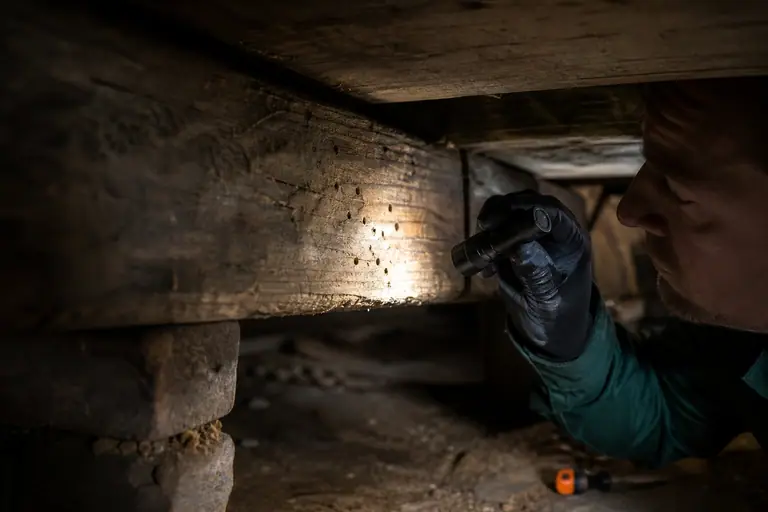
Small round holes in timber
Record where and when this sign appears. Avoid disturbing useful evidence before inspection.

CRAWLING PEST CONTROL · LONDON RESPONSE
Woodworm is the larval stage of wood-boring beetles; an inspection distinguishes active infestation from old flight holes before treatment is considered.
CASE TYPE / CRAWLING PESTS
Inspect the evidence.FIELD SIGNALS
Record where and when this sign appears. Avoid disturbing useful evidence before inspection.
Record where and when this sign appears. Avoid disturbing useful evidence before inspection.
Record where and when this sign appears. Avoid disturbing useful evidence before inspection.
Record where and when this sign appears. Avoid disturbing useful evidence before inspection.
INSPECTION MAP
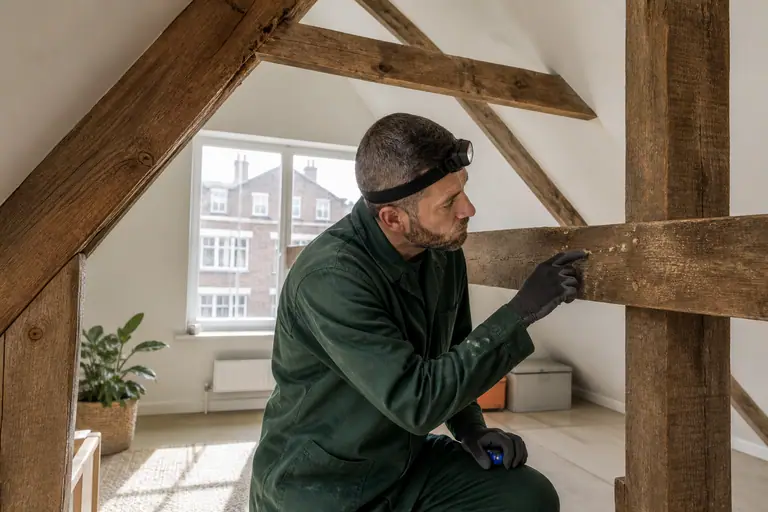
Accessible structural and furniture timber is checked for hole shape, fresh dust, moisture, beetles and the extent and condition of affected wood.
CONTROL SEQUENCE
Inspect evidence and determine whether signs appear current or historic.
Apply the specified treatment to prepared accessible wood where active infestation is confirmed.
Address moisture and arrange repair or specialist structural advice for weakened timber.
THE SERVICE, EXPLAINED
Old flight holes can remain for decades, so holes alone do not prove an active infestation.
Fresh pale bore dust, crisp-edged holes or emerging adult beetles provide stronger evidence. The size and shape of holes, timber species and location can help narrow the wood-boring beetle involved.
Avoid cleaning all dust before inspection. Photograph the evidence with scale, note when it appeared and retain any beetle safely so the assessment is based on more than historic damage.
The survey considers activity, access and structural condition before treatment.
Accessible floorboards, joists, roof timbers, stairs and furniture are checked as relevant. The technician records hole patterns, fresh dust, coatings, damp conditions and the visible spread across connected timber.
Persistent moisture can favour certain beetles and also weaken wood independently. Pest treatment does not restore structural strength, so a surveyor, joiner or damp specialist may be required where deterioration is significant.
Treatment should be specified for confirmed or reasonably supported active infestation.
Suitable accessible timber may receive a professional surface or injected treatment depending on species, section and product instructions. Paint, varnish or other coatings can prevent penetration and may require preparation.
Hidden or inaccessible timber cannot be assumed treated. The proposal should define the areas included, any exclusions and whether further opening-up or specialist access is needed.
Clear, sound access is needed for inspection and even application.
Move stored belongings away from affected timbers and follow instructions on lifting coverings or exposing surfaces. Electrical risks, fragile ceilings and confined areas must be identified before work starts.
Occupants and pets may need to remain outside the treatment zone for a specified period. Do not sand coated or damaged timber until the agreed preparation and safety requirements are clear.
Controlling insects and repairing damaged structure are separate responsibilities.
Replace or reinforce timber where a competent building professional advises it. Correct leaks, condensation or poor ventilation that contributed to damp conditions, and retain inspection access where practical.
Monitor for genuinely fresh dust or beetles during the relevant emergence period. Existing holes will remain visible after successful treatment and should not be used alone to judge a new problem.
THE PANTHER METHOD
Establish the pest, the extent of activity and the routes it uses.
Reduce immediate activity and limit the chance of spread.
Apply a targeted method selected for the property and infestation.
Close the loop with follow-up measures and practical prevention.
DIRECT ANSWERS
No. Old exit holes can remain for years; fresh dust or insects provide stronger evidence of current activity.
Coatings can restrict penetration, so timber may need preparation depending on the product and surface.
Treatment controls insects but does not restore lost strength; compromised wood may need repair or replacement.
Some wood-boring beetles favour damp timber, so correcting moisture can be an important preventive measure.