Repeated insects using one opening
Record where and when this sign appears. Avoid disturbing useful evidence before inspection.

FLYING PEST CONTROL · LONDON RESPONSE
A nest inspection identifies the insect, activity route and nest position before treatment, removal or monitoring is recommended.
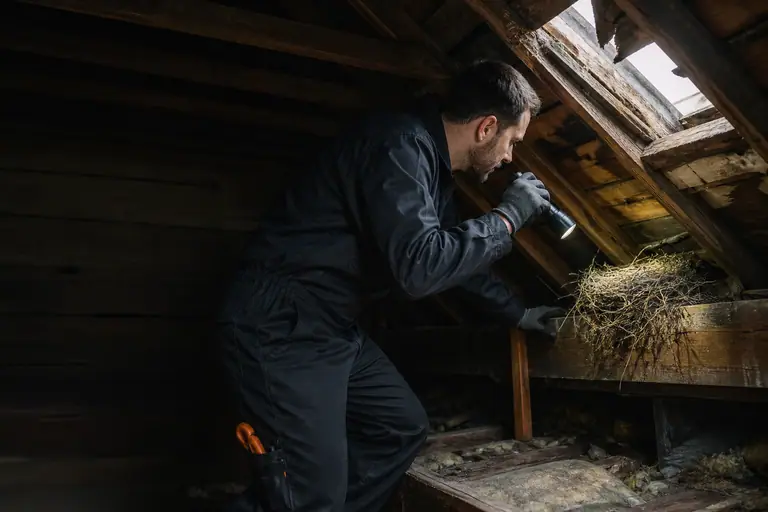
CASE TYPE / FLYING PESTS
Inspect the evidence.FIELD SIGNALS
Record where and when this sign appears. Avoid disturbing useful evidence before inspection.
Record where and when this sign appears. Avoid disturbing useful evidence before inspection.
Record where and when this sign appears. Avoid disturbing useful evidence before inspection.
Record where and when this sign appears. Avoid disturbing useful evidence before inspection.
INSPECTION MAP
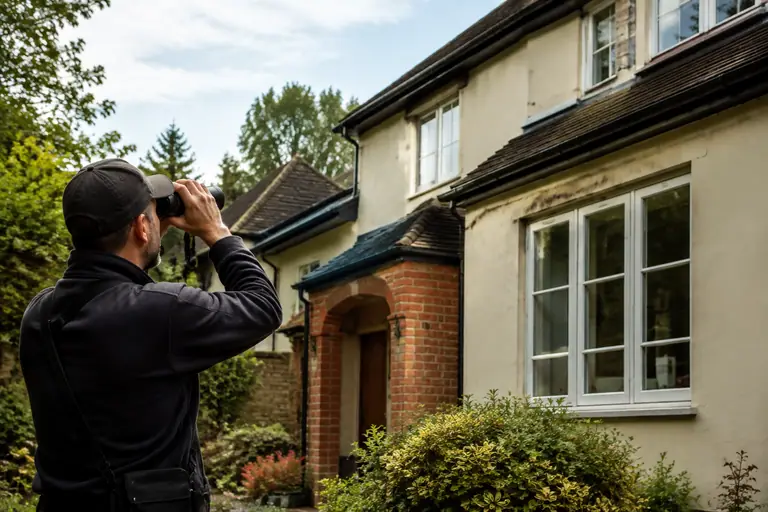
The survey observes flight paths from a safe distance, checks accessible nest sites and considers height, access, species and risk to people nearby.
CONTROL SEQUENCE
Identify the insect and trace regular movement without disturbing the nest.
Confirm access, nest position and whether treatment is necessary and feasible.
Treat, monitor or refer the access work as appropriate, then reduce future nesting opportunities.
THE SERVICE, EXPLAINED
Repeated insect traffic is more informative than a single wasp, bee or flying insect indoors.
A consistent flight line into eaves, soil, sheds or a wall opening can indicate an active nest. Buzzing from a void and a visible paper structure also warrant assessment without disturbing the area.
Keep people and pets away, observe from a safe position and record short video if possible. Do not block the entrance or insert household products, because insects may redirect into occupied rooms.
Wasps, bees and other insects do not automatically require the same response.
The technician considers appearance, flight behaviour, nest material and season. Clear photographs can support triage, but close inspection may still be needed where the route or species is uncertain.
Some bee situations are better referred to a beekeeper or specialist, while low-risk activity may simply be monitored. Identification prevents unsuitable treatment and unnecessary disturbance.
The entrance may be visible even when the nest itself is deep inside a cavity.
Ground-level observation establishes the active route before ladders or specialist access are considered. Height, fragile surfaces, electrical hazards and public circulation determine whether closer work is safe and practical.
A concealed nest does not always require opening the building. Where access through fabric is necessary, owner approval and a separate roofing or building trade may be needed.
The outcome of inspection is a proportionate next step, not an automatic treatment.
An accessible active wasp nest may be suitable for targeted treatment through its established entrance. Returning insects can remain visible for a period, so the observation and re-entry instructions must be followed.
A specialist referral, delayed work or monitoring may be recommended when species, legal status, access or nesting stage makes immediate treatment inappropriate.
Keep the route undisturbed until the advised monitoring period has passed.
Record activity from a safe distance and contact Panther if the pattern does not reduce as expected. Do not seal the entrance while insects are still using it.
Once activity has ended, suitable gaps or damaged roof details can be repaired to reduce future access. A completed wasp nest is generally not reused, although the same sheltered location may attract a new queen in another season.
THE PANTHER METHOD
Establish the pest, the extent of activity and the routes it uses.
Reduce immediate activity and limit the chance of spread.
Apply a targeted method selected for the property and infestation.
Close the loop with follow-up measures and practical prevention.
DIRECT ANSWERS
No. Blocking an active entrance can redirect insects into the building and make treatment more difficult.
Risk depends on species, location and nearby activity; an inspection helps determine the appropriate response.
It may be assessed from ground level first; specialist access may be needed before closer work.
Removal is not always necessary or accessible. The recommended approach depends on the insect, nest and location.