Pest Control Advice · LONDON
Cockroaches Behind a Dishwasher: Finding the Moisture Source
A practical guide to investigating water and cockroach signs around a dishwasher without moving a powered appliance or scattering insects.
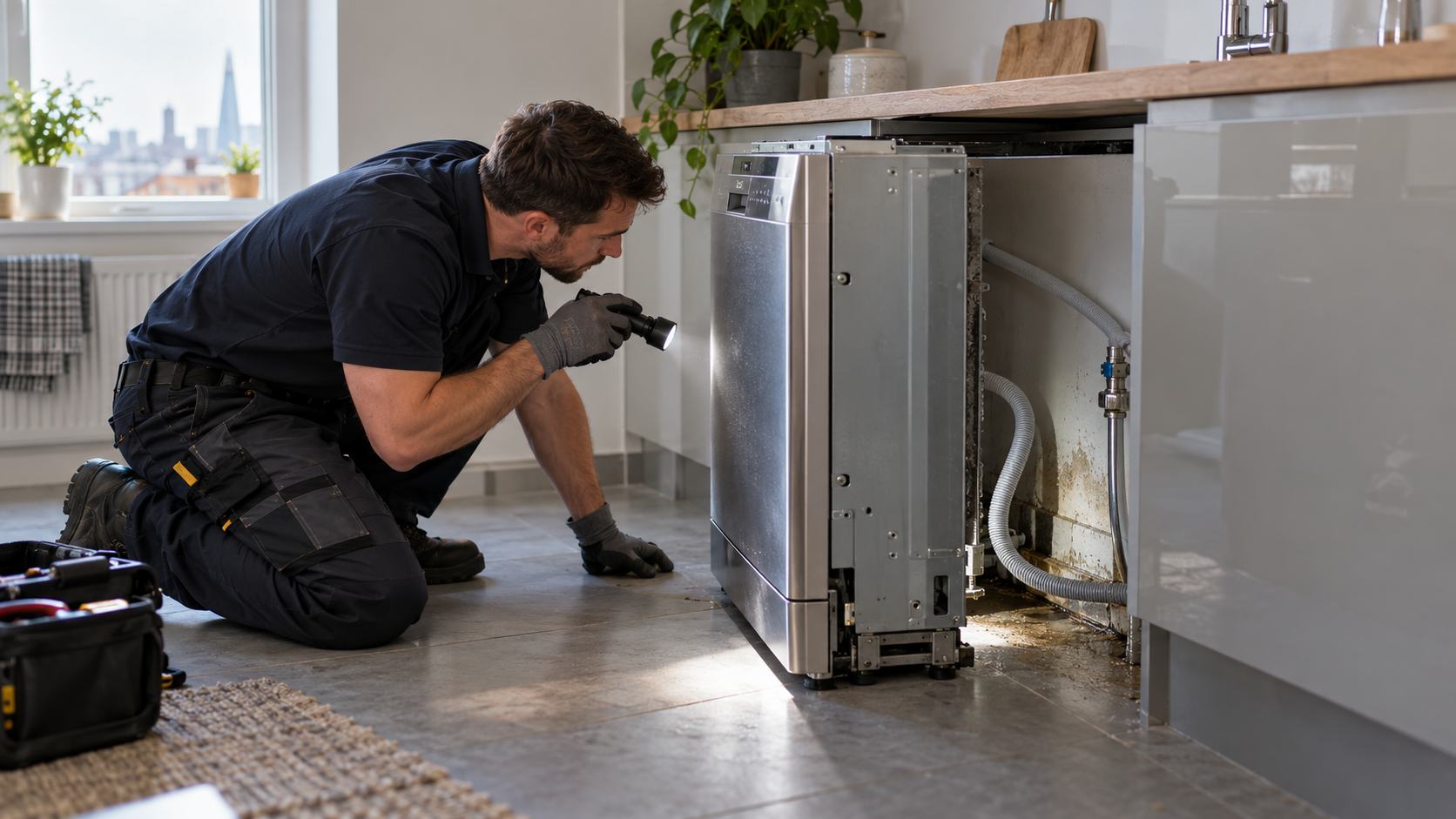
A cockroach appearing beside the dishwasher is easy to read as a cleaning problem. The floor may be spotless, yet the space behind the machine can still offer warmth, a slow leak and an undisturbed route along the wall. The useful question is not simply how to kill the insect you saw. It is whether the appliance area is wet, how the water arrived and whether activity extends into adjoining cupboards or service voids.
This guide is for UK households and small food premises that have noticed cockroach activity around a dishwasher. It explains what can be checked without pulling a heavy appliance or touching electrics, how to document a suspected moisture source and when to bring in a plumber and pest technician. A damp patch does not prove a cockroach infestation, and one insect does not prove that a leak is present. Both need evidence.
Begin with the visible floor and cupboard
Look for water at the front edge of the dishwasher, under the neighbouring sink and along the cabinet kickboard. Note whether the floor is damp before or after a wash cycle. Check for a drip at the tap, waste trap or accessible hose connection without reaching behind powered equipment. A small patch that dries between cycles may be missed on a routine clean. Photograph it with the date and the appliance’s last use.
Do not pull a built-in machine out by its door or tug on hoses to see the back. A dishwasher may be fixed to the worktop or cabinetry, and hidden connections can be strained. If there is water near a socket, cable or the machine’s electrical parts, stop using it and seek competent appliance or electrical advice. A plumber or appliance engineer can investigate the leak while preserving evidence for pest inspection.
Check whether the moisture is a leak, spill or condensation
Water behind a dishwasher can come from several places: the supply hose, waste hose, nearby sink plumbing, a door seal, a spill that ran under the plinth or condensation on a cold pipe. The pattern helps a contractor diagnose it. A drip that appears only during draining points to a different question from a damp wall present every morning. Record when the patch appears, whether it grows and whether the surrounding timber is swollen.
Avoid declaring the dishwasher at fault because it is the nearest appliance. The source may be in the adjacent sink unit or a shared service wall. Do not repeatedly run a leaking machine as an experiment. If the leak is active, contain ordinary surface water safely and arrange repair. Keep wet food packaging and stored utensils away from the area, especially in a food business where local hygiene procedures apply.
Inspect for insects without scattering them
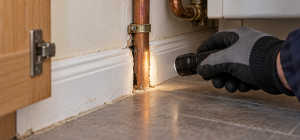
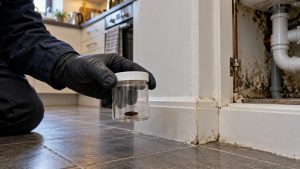
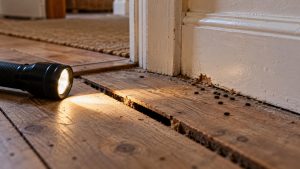
Use a torch to look along the visible plinth line, adjacent cabinet hinges, pipe penetrations and the floor-wall junction. Photograph any live insect before it disappears if that can be done without moving the machine. Look for dark specks, shed skins or egg cases, but do not label every stain as a cockroach sign. A specimen in a clear container is often more useful for identification than an out-of-focus photograph.
The British Pest Control Association notes that cockroaches favour warm, dark, damp places and calls out leaking cupboards and refrigerator drip areas as examples. The BPCA guidance also stresses inspection before treatment. Look beyond the one machine: under the sink, along other appliance edges and where pipes cross into a neighbouring unit. A pest inspection can identify the species and map the extent of activity.
Let the right contractor move the appliance
If the dishwasher must be withdrawn, arrange someone competent to disconnect or secure it as needed and protect the floor and hoses. The pest technician may want to observe the space before it is cleaned, while the appliance engineer needs access to the water connections. Agree the order so the machine is moved once where possible. In a rented or managed property, confirm who can authorise the work and whether the kitchen unit is part of the landlord’s fixtures.
Photograph the back wall, floor and hose route when they are safely exposed. Note water staining, food debris, gaps around pipes and insect signs separately. A wet wall may need building or plumbing investigation; an open service gap may need later proofing; live cockroaches need species-specific pest control. Treating one of those conditions alone may leave the other two in place.
Do not spray the machine or electrics
Aerosol insecticide directed into a dishwasher cavity is a poor substitute for identifying the harbourage. It may not reach concealed insects, can contaminate surfaces and may be unsuitable near electrical components. Do not put powder into ventilation slots or use a household fogger because a cockroach vanished behind the plinth. Ask a qualified pest technician what method fits the species, location and appliance.
In a commercial kitchen, keep the finding within the business’s pest and food-safety procedure. The London Borough of Bromley’s cockroach guidance for food businesses recommends repairing dripping taps and pipes, cleaning around movable equipment and using pest contractors for treatment. Those principles also help in a domestic kitchen, although the formal duties of a food business differ from a household.
Repair the water source before calling the area dry
Once a plumber or appliance engineer identifies the leak, record the repair and dry the affected area appropriately. If a cabinet base is swollen or mouldy, ask whether damaged material must be replaced. A newly sealed hose joint is progress, but trapped moisture beneath flooring or behind a plinth can persist. Recheck after a normal wash cycle under the engineer’s guidance and compare photographs with the original wet patch.
Where the appliance is built into fitted units, ask the contractor to photograph the underside and rear connection before it goes back. This helps the next person understand what was repaired without pulling the machine out again. Keep the service sheet with the pest report, including any recommendation to replace a deteriorated seal or cabinet panel. A note that simply says “leak fixed” may not identify which joint failed or whether drying was complete.
Keep water and pest observations on the same timeline. If cockroach activity falls after treatment but the leak returns, the conditions that supported it may return too. If the leak is fixed but insects still appear, the harbourage may extend to another appliance or connected void. The site’s cockroach control service can combine identification, targeted treatment and monitoring with the repair information.
Coordinate the pest plan with cleaning
Clean ordinary food residue and spills, but ask the technician how to handle surfaces selected for monitoring or treatment. Scrubbing every crevice immediately after a professional application may interfere with the plan; leaving accessible food debris untouched also undermines it. Get written instructions for what to clean now, what to leave for a stated period and when to report new activity.
A small monitoring card may help show where insects are travelling, but it needs a labelled position and a regular check. Do not move it to the place where the last insect was seen without telling the technician; changing the location makes comparison difficult. In a block of flats, reports from adjacent kitchens or service risers may change the scope of inspection. Shared pipe routes can matter even when the first sighting was at one dishwasher.
Use a simple follow-up record
Record the first sighting, the exact appliance and side, any dampness, when the machine was last run, contractor findings, water repair date, pest identification and follow-up checks. Photograph the same accessible edge each time. A dry floor plus no fresh insect signs over the agreed monitoring period gives a more useful picture than either fact alone. A single quiet night does not establish that a hidden harbourage has gone.
If activity continues, do not repeat an unplanned spray. Share the combined water and pest record so the technicians can revisit the route. Panther’s inspection-led process explains how a site assessment leads to targeted control and review. To arrange help, use the contact page with clear photographs and any appliance repair report.

Al Joel is a practical writer and long-term property maintenance specialist focused on real-world pest control, home safety and prevention advice. His guides translate common warning signs into clear next steps for homeowners, tenants, landlords and property managers.His approach begins with correct identification. A sighting in one room may originate from a neighbouring flat, service riser, drainage, roof space, delivery or communal waste area. Al explains how to preserve useful evidence, reduce food and water sources, avoid spreading activity and choose proportionate treatment.What readers can expectClear identification clues and practical inspection stepsSafe preparation, cleaning and aftercare guidancePrevention advice for homes, flats and commercial premisesHonest guidance on when DIY is reasonable and when professional help is the smarter optionWhen professional help makes senseRepeated sightings, activity in several rooms, uncertain identification, vulnerable occupants or signs involving food, electrics and shared building routes deserve a professional inspection. A lasting solution normally combines targeted treatment with proofing, hygiene and follow-up monitoring.Explore the Pest Library, learn how treatment works, or request property-specific advice.