Widespread flying-insect activity
Record where and when this sign appears. Avoid disturbing useful evidence before inspection.

SPECIALIST SERVICE · LONDON RESPONSE
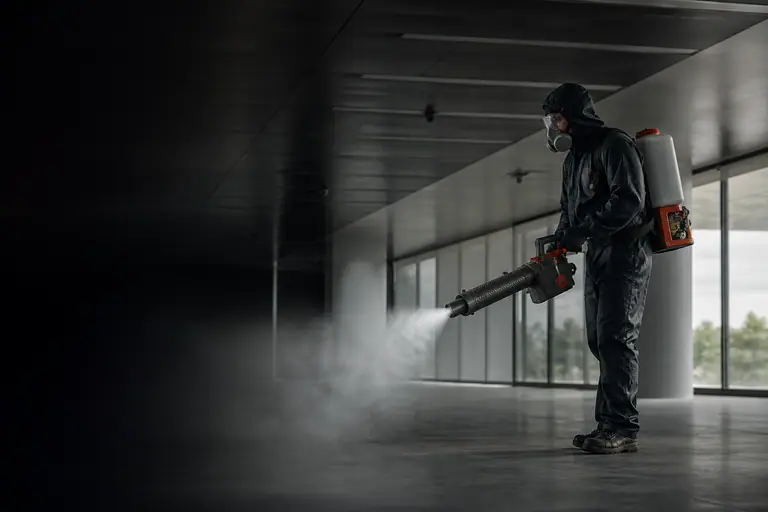
Fogging disperses a fine treatment into a prepared enclosed space and may form part of a wider insect-control plan where broad exposed-area coverage is appropriate.
CASE TYPE / SPECIALIST SERVICES
Inspect the evidence.FIELD SIGNALS
Record where and when this sign appears. Avoid disturbing useful evidence before inspection.
Record where and when this sign appears. Avoid disturbing useful evidence before inspection.
Record where and when this sign appears. Avoid disturbing useful evidence before inspection.
Record where and when this sign appears. Avoid disturbing useful evidence before inspection.
INSPECTION MAP
The visit confirms the insect, extent of activity, ventilation, fire systems, sensitive items and whether fogging is suitable alongside targeted treatment.
CONTROL SEQUENCE
Identify the pest, define the treatment zone and provide preparation instructions.
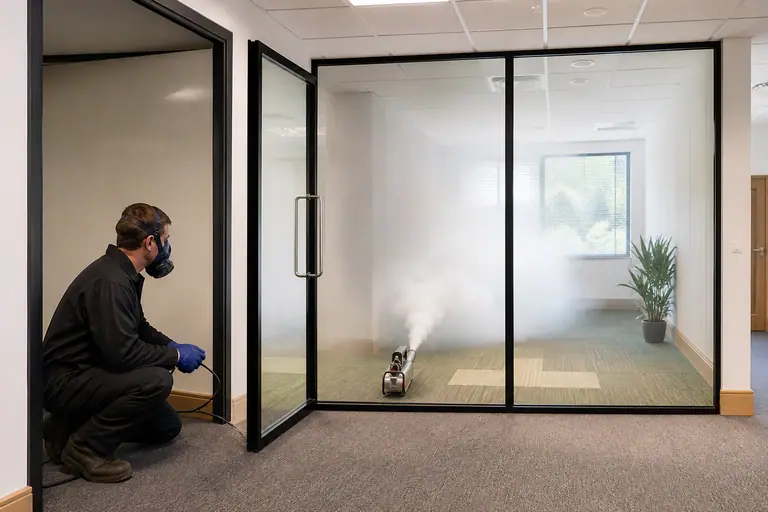
Treat the empty, secured space with suitable professional equipment.
Observe the stated re-entry period, ventilate as directed and remove breeding or entry conditions.
THE SERVICE, EXPLAINED
Fogging disperses a fine insecticidal treatment through a prepared, unoccupied enclosed space.
It can provide broad exposed-area coverage and rapid adult insect reduction in selected situations. It should not be assumed to penetrate sealed walls, deep furniture or every crack where pests develop.
The pest and source must be identified first. A fog may support a wider plan, but it does not replace removal of breeding material, targeted harbourage treatment or repairs to entry routes.
The site, insect and operational risks determine whether fogging is appropriate.
The technician reviews room volume, ventilation, connected spaces, ignition risks, detectors, sensitive equipment and food or stock. The treatment zone must be isolated and secured for the full process.
Fogging is not automatically suitable for bed bugs, cockroaches or hidden infestations. Where activity sits in protected harbourage, targeted methods and monitoring remain essential.
Detailed preparation protects people, animals and sensitive contents while allowing effective distribution.
Occupants, pets and uncovered food must leave the zone as instructed. Aquariums, alarms, ventilation systems, electronics and sensitive products require site-specific arrangements agreed before attendance.
Access doors, adjoining rooms and responsible contacts should be confirmed. Commercial premises may need coordination with fire, facilities and food-safety procedures rather than an informal detector shutdown.
The empty area is treated with professional equipment and remains closed for the specified period.
Only the agreed dose and treatment zone are used. No one should enter during application or the stated exposure period, and unauthorised access must be prevented.
Ventilation and re-entry follow the technician’s written instructions. Surfaces are handled according to the aftercare plan; indiscriminate cleaning can remove deposits that are intended to remain.
A reduction in visible adults is not proof that the breeding source has been removed.
Waste, drains, food residues, carcasses, entry gaps or insect harbourage should be corrected as identified. Monitoring shows whether the source has been resolved or activity is rebuilding.
Repeat fogging should not become a substitute for investigation. Any follow-up must respond to new evidence, site use and the performance of the wider control plan.
THE PANTHER METHOD
Establish the pest, the extent of activity and the routes it uses.
Reduce immediate activity and limit the chance of spread.
Apply a targeted method selected for the property and infestation.
Close the loop with follow-up measures and practical prevention.
DIRECT ANSWERS
No. It is mainly a space-treatment technique and does not replace inspection or targeted work in hidden harbourage.
Yes, occupants and pets must leave the treatment area for the period specified by the technician.
A fog treats exposed airspace and surfaces; it should not be assumed to penetrate sealed voids or every hiding place.
Preparation varies, but may include clearing access, covering or removing sensitive items and isolating alarms under agreed site procedures.