Pest Control Advice · LONDON
Fleas in a Shared Hallway: How to Investigate Without Blame
A calm, evidence-led guide for residents and managers handling possible flea activity in communal halls and landings.
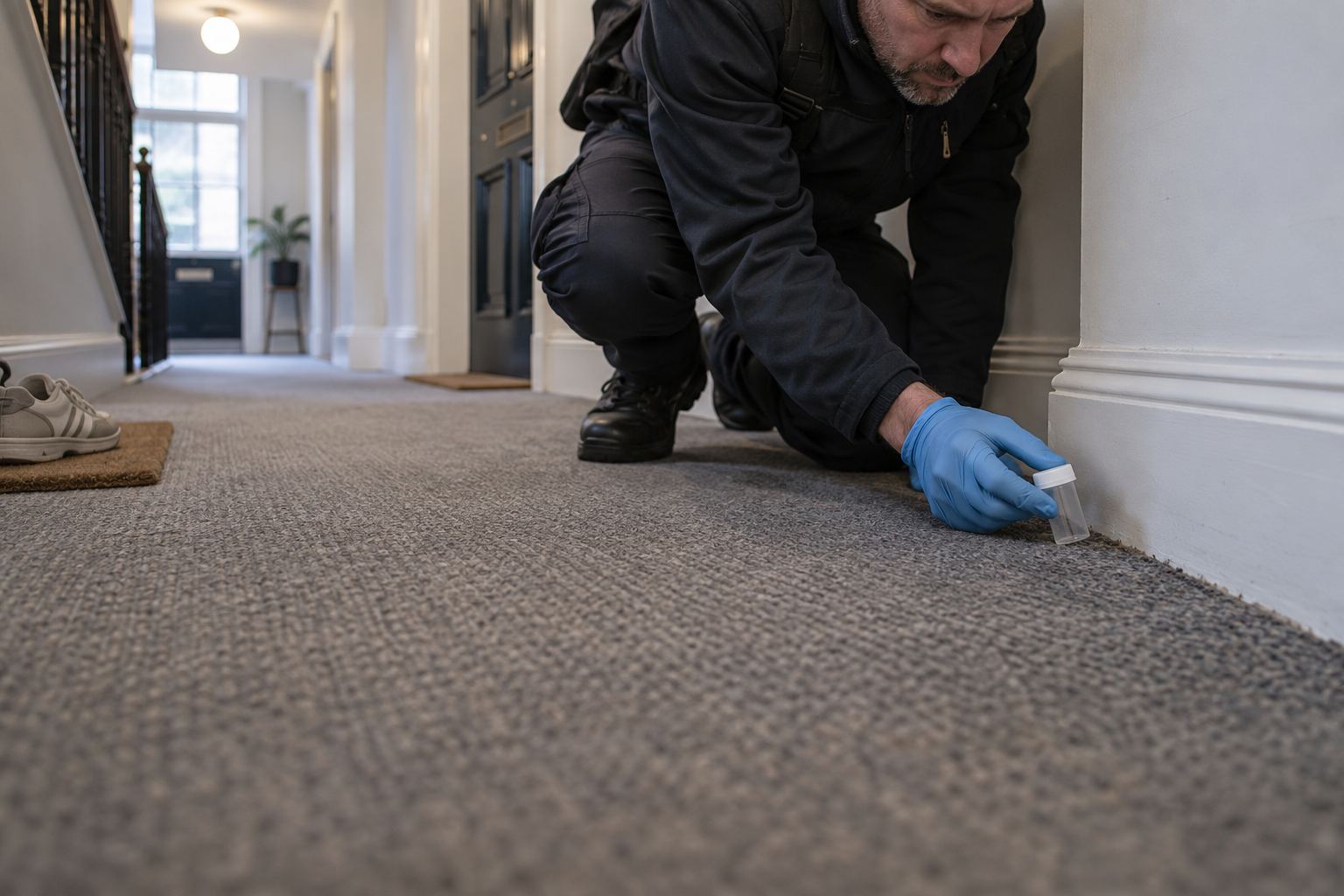
A resident reports bites after crossing the communal hall; another has seen a tiny jumping insect beside the lift. It is tempting to treat the whole corridor immediately or to assume a neighbour’s pet is responsible. Neither conclusion follows from those reports alone. Fleas can be carried into a shared space, but their developing stages usually need a suitable place associated with an animal host. The first useful job is to identify the insect and map exactly where activity is occurring.
This guide is for residents, caretakers and managing agents of flats with a possible flea report in a hallway, landing or stairwell. It explains how to make a proportionate record, inspect plausible sources and arrange treatment without assigning blame. If a jumping insect has been found but nobody can identify it confidently, start with a professional pest inspection before choosing a product.
Confirm the insect before calling the hallway infested
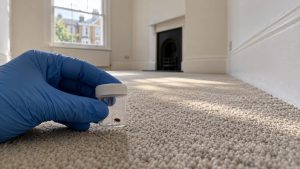
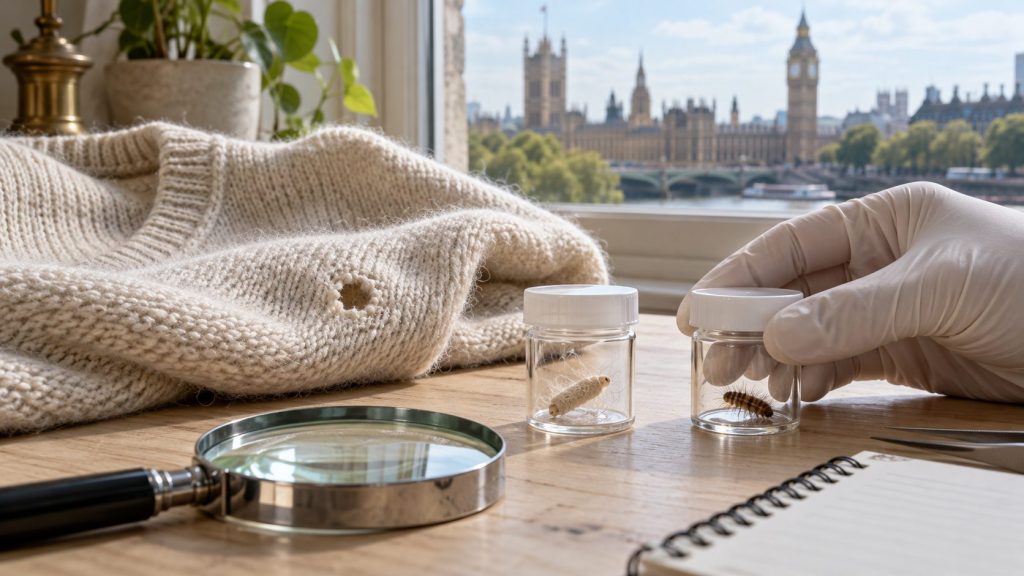
An itchy mark is evidence of irritation, not a flea identification. Reactions differ between people and can appear after the original exposure. Small beetles, springtails and other insects may also be called fleas in a hurried phone description. If a live insect is accessible, capture it in a clear sealed container or take a sharp photograph against a plain background with an object for scale. Record the exact spot: the threshold of Flat 2 is different from the carpet outside the bin store.
Ask whether the report concerns a jumping insect, a pet scratching, flea dirt on an animal, or only skin marks. The British Pest Control Association describes seeing fleas or flea droppings on a pet as useful confirmation and notes that people respond differently to bites. A resident should contact a pharmacist or clinician for troublesome skin symptoms, while the building inquiry focuses on the insect and its location.
A single confirmed flea in a hall establishes that it reached the hall; it does not tell you where it developed. It might have moved with a pet, clothing or belongings. Repeated insects in one carpeted section, or a pattern spanning a vacant flat and adjacent landing, provides a stronger reason to investigate that section. Avoid describing one sighting as proof that every flat needs treatment.
Make a simple map of the communal route
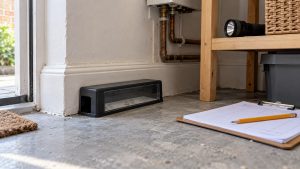
Use a building plan or an ordinary sketch. Mark the date and time of each physical sighting, the floor level, the exact edge or mat, and whether a specimen was retained. Include the type of surface: deep carpet, washable hard floor, upholstered chair or a pile of abandoned fabric. Keep separate entries for bites reported after using the hall, because the actual exposure may have been inside a flat or elsewhere.
Ask the caretaker about recent changes. Has a vacant property been opened after a long period? Has carpet been lifted, a resident moved out, or an animal bed or old sofa been left in a shared area? The BPCA explains that flea eggs and immature stages develop in the environment, with adults emerging from protected stages later. A newly used quiet space can therefore show activity without a pet living in the hallway. That is a possibility to investigate, not a diagnosis from the building history alone.
Photograph conditions before clearing them if they might be relevant. Then remove abandoned textiles through the manager’s normal process, rather than carrying suspect items into another communal room. Keep the record factual and private. A message saying “three insects were seen near the first-floor carpet edge this week” invites useful observations; naming a household without evidence does not.
Check the likely source, not just the shared carpet
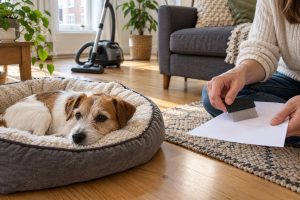
Fleas often develop around pet resting places, rugs and upholstery. If a household has confirmed fleas on an animal, the pet owner should seek veterinary advice for an appropriate product, while the property may need environmental control. PDSA advises that the animal and the home are both considered; a hall-only spray will not solve an active reservoir beside a pet’s bed in a flat.
The reverse also matters. A pet-free flat may have a problem after a previous resident’s animal has gone, or wildlife may be relevant in some properties. A manager should not rule out a source simply because the present occupant has no pet. A technician can inspect the pattern across the hallway and any flats for which access is authorised, looking for the insects and development areas rather than assuming the nearest door is responsible.
Panther’s flea treatment service describes pet bedding, floor edges, carpets and upholstery as inspection zones. The useful scope in a shared building depends on where activity is confirmed. Ask the contractor to state which rooms or common parts require access, which remain uncertain, and whether a second visit is expected.
Arrange treatment with access and cleaning instructions
Before a professional visit, the manager should arrange safe access to the affected hall and relevant units, confirm who controls any shared carpet, and tell the contractor about children, pets, aquariums and people who may need assistance following re-entry instructions. The pet owner, vet and pest professional each have a different role. Property management cannot prescribe animal medicine; the pet owner cannot treat a shared corridor without building authorisation.
Cleaning is not a substitute for identifying the source. Vacuuming can be part of preparation, but after a residual treatment the permitted cleaning schedule depends on the actual product and surface. The BPCA cautions that washing or vacuuming a treated carpet too soon can remove residual insecticide. Follow the contractor’s site-specific written aftercare, including when residents may pass through or use a particular entrance. If the carpet must remain untouched for a period, organise an alternative safe route where needed.
Do not scatter supermarket powders or spray thresholds from several flats into the hall. These uncoordinated applications can create exposure and interfere with a planned treatment. If residents have already used a product, ask them to tell the technician what and where. For preparation details that apply to a booked visit, Panther’s flea treatment preparation checklist is a starting point; the supplied job sheet should take precedence.
Communicate without identifying a neighbour as the cause
A building notice should say what was found, where the inspection will take place, how to report a specimen, and what access or cleaning restrictions apply. It need not reveal who first complained or which household has a pet. Encourage residents to report live jumping insects with a date and location, and to seek veterinary advice if their animals show fleas or flea dirt. Ask them to avoid leaving bedding, cushions or pet items on shared landings until the situation is understood.
Give a named contact for follow-up. If occupants cannot tell whether a hall was treated, they may clean it too early or assume each new skin mark proves failure. A short update after inspection can separate confirmed findings from open questions: for example, whether a flea was identified, which areas were treated, and when the technician will review activity. It is better to admit an unknown source than to assert one from proximity alone.
For a tenant, write to the landlord or managing agent with photographs and dates rather than treating common property independently. For a managing agent, keep the pest report and the repairs or cleaning actions together. A good record supports proportionate access requests if activity is later found on another floor.
Monitor the trend after work is done
Agree in advance what the technician wants residents to report. A few adults can emerge from protected pupal stages after an environmental treatment, so a single sighting soon afterwards may not establish failure. Record live insects by exact position and date, note whether there are new pet signs, and compare the pattern with the pre-treatment map. Steady or increasing activity, repeated catches at a new edge or a confirmed untreated source should prompt a review.
Do not judge progress by the number of old bite marks. A mark can remain itchy after the insect has gone, and its appearance does not locate where a person was bitten. A clear specimen is more decisive. If no further insects are found, the absence of sightings over the agreed observation period is reassuring, but the property manager should still close any unresolved access or maintenance action from the report.
Where several flats or hall sections remain involved, ask the contractor whether a wider inspection is needed. Panther’s contact page sets out useful details for a report: postcode, affected floor, first and latest dates, photographs, pet history and previous treatment. That gives the next visit a defined question to answer.
A practical decision for the building
If there is only a bite report, seek a physical sign before ordering hall treatment. If a flea is confirmed, map it and inspect plausible sources with the right access. If activity is established, coordinate veterinary care for affected animals and professional environmental work, then monitor the same locations afterwards. The hallway matters as a shared route, but it rarely tells the whole story on its own.

Al Joel is a practical writer and long-term property maintenance specialist focused on real-world pest control, home safety and prevention advice. His guides translate common warning signs into clear next steps for homeowners, tenants, landlords and property managers.His approach begins with correct identification. A sighting in one room may originate from a neighbouring flat, service riser, drainage, roof space, delivery or communal waste area. Al explains how to preserve useful evidence, reduce food and water sources, avoid spreading activity and choose proportionate treatment.What readers can expectClear identification clues and practical inspection stepsSafe preparation, cleaning and aftercare guidancePrevention advice for homes, flats and commercial premisesHonest guidance on when DIY is reasonable and when professional help is the smarter optionWhen professional help makes senseRepeated sightings, activity in several rooms, uncertain identification, vulnerable occupants or signs involving food, electrics and shared building routes deserve a professional inspection. A lasting solution normally combines targeted treatment with proofing, hygiene and follow-up monitoring.Explore the Pest Library, learn how treatment works, or request property-specific advice.