Pest Control Advice · LONDON
Clothes Moth or Carpet Beetle Larvae? How to Tell Them Apart
Both pests damage natural fibres, but their larvae and surrounding evidence differ. Here is a careful way to identify the source before treating clothing or carpets.
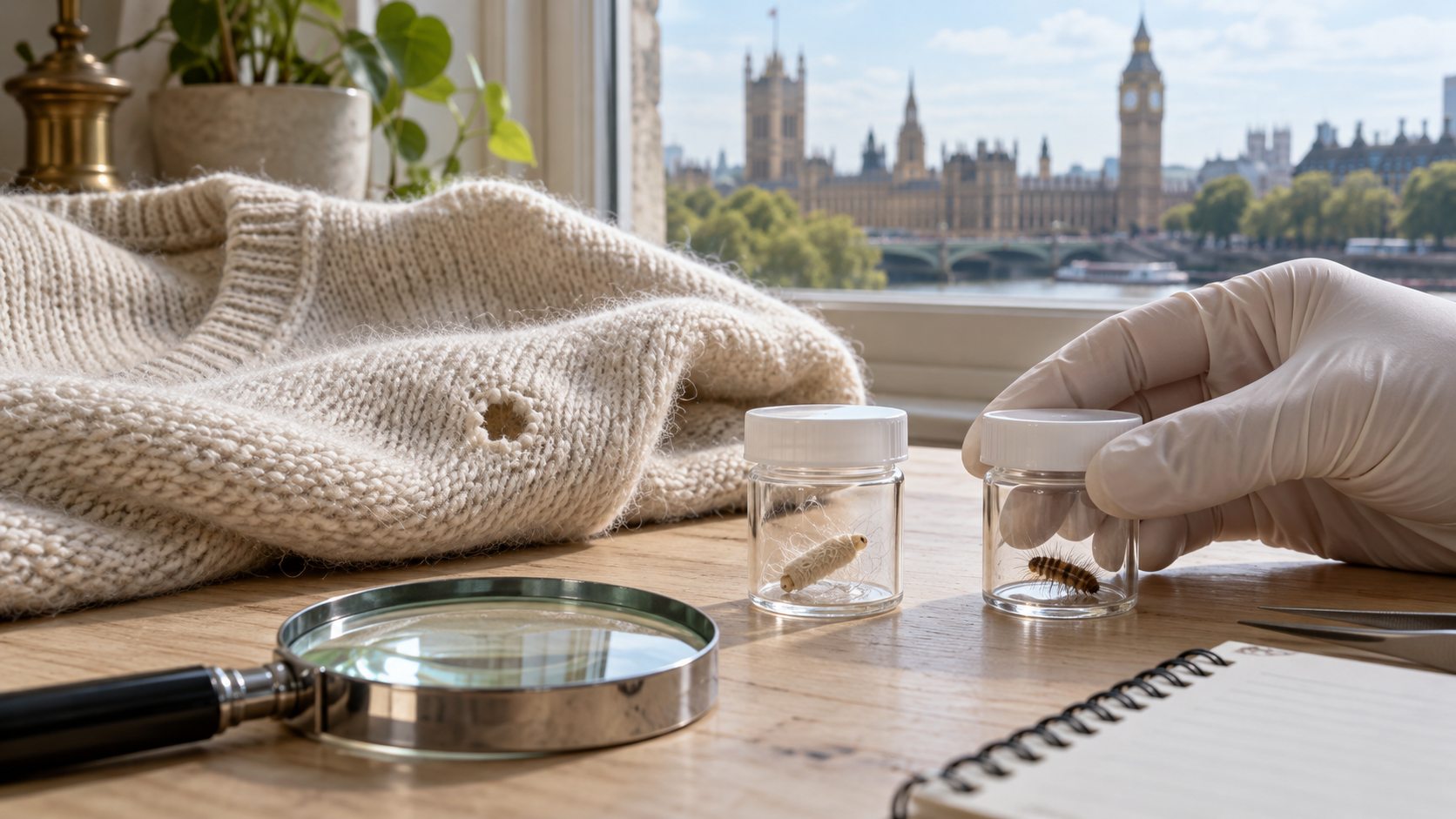
A small hole in a wool jumper and a larva in the wardrobe make an obvious suspect: clothes moths. Then someone spots a tiny beetle on the windowsill and the diagnosis changes again. Both clothes moth larvae and carpet beetle larvae can feed on animal-based fibres. The adult insects are easier to notice, but the quiet larval stage does the damage.
There is no need to identify a species from a hole alone. A useful first check combines the larva’s appearance, what lies beside it and where the damaged item has been stored. Those clues shape the inspection and stop a valuable rug or garment being treated for the wrong pest. This guide is a practical comparison for London homes, with clear limits where a photograph cannot settle the question.
The two larvae do not look alike when you can see them clearly
A common webbing clothes moth larva is pale, with a contrasting brown head. It may sit within a web of fine silk and fabric fibres. A case-bearing clothes moth larva carries a small portable case made from silk and fragments of its food. These can be hard to notice when the case matches the cloth. The Natural History Museum’s clothes moth identification guide describes both of the damaging UK species and confirms that larvae, rather than adult moths, eat the textile.
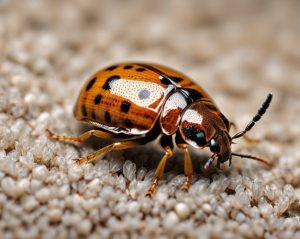
Carpet beetle larvae are more obviously bristly or hairy. Some look like short, tapered brown “woolly bears”, and their shed skins retain that hairy outline. A small adult beetle near a window can be a useful clue, but it does not show where larvae are feeding. The Natural History Museum’s carpet beetle guide notes that larval cast skins and powdery debris may accompany clean-looking holes, without the silk webbing commonly associated with clothes moths.
Photographs can deceive. Fabric fluff can look like hairs; a damaged case can look like lint; a cast skin can be mistaken for a living insect. Place an intact specimen in a closed clear pot, photograph it from the side and above with a scale, and keep the pot linked to the item and room where it was found. Avoid crushing it into tape if the bristles or case are the very feature you need to see. If no specimen is available, describe the evidence as uncertain.
Read the damaged material before the hole
Both groups favour animal-derived material such as wool, fur and feathers. A hole in a wool scarf therefore does not decide between them. Check the label and any mixed fibres: a garment sold as synthetic may have a wool lining, fur trim or food-stained natural component. Larvae may also use accumulated hair or lint under furniture rather than the obvious garment at the front of a cupboard.
Silk webbing on or beside the affected fibre points towards webbing clothes moth larvae. A little mobile case attached to a folded textile can suggest a case-bearing clothes moth. Hairy, banded cast skins and dust-like residues along a quiet edge may lean towards carpet beetles. None is infallible in isolation. A house can have more than one insect, and a hole may be old while a beetle on the window is recent. Look for a live larva or fresh activity in direct contact with the material.
Location helps narrow the source. Clothes moth larvae often sit in undisturbed folds, seams, carpet edges and the shaded underside of upholstered furniture. Carpet beetle larvae may also occupy these areas, but a trail of cast skins under a sofa, in accumulated lint or close to feathers and old animal material can broaden the survey. Panther’s moth control inspection follows textile evidence, while its carpet beetle control service includes quiet edges and possible animal-material sources.
A comparison that does not overstate the clues
| What you find | May suggest clothes moth larvae | May suggest carpet beetle larvae |
|---|---|---|
| Body | Pale, relatively smooth larva with brown head; sometimes in a fibre case | Brownish, bristly or hairy larva; often tapered |
| Material close by | Fine silk webbing or a portable case made with fibres | Hairy cast skins and powdery debris without silk webbing |
| Adult clue | Small plain-looking moth near dark textile storage | Small beetle, often noticed near a window |
| Important limit | A moth flying indoors is not proof it feeds on clothes | A beetle at a window is not proof the wardrobe is its source |
Use the table to decide what to photograph and where to look next, not to prescribe a product. Adult clothes moth traps can monitor particular moth species, but they do not tell you whether a hairy larva is a carpet beetle. A zero catch in a moth trap cannot clear a carpet beetle problem, nor does it prove that all moth larvae have gone. The source item and larval evidence remain central.
Search methodically without carrying larvae through the home
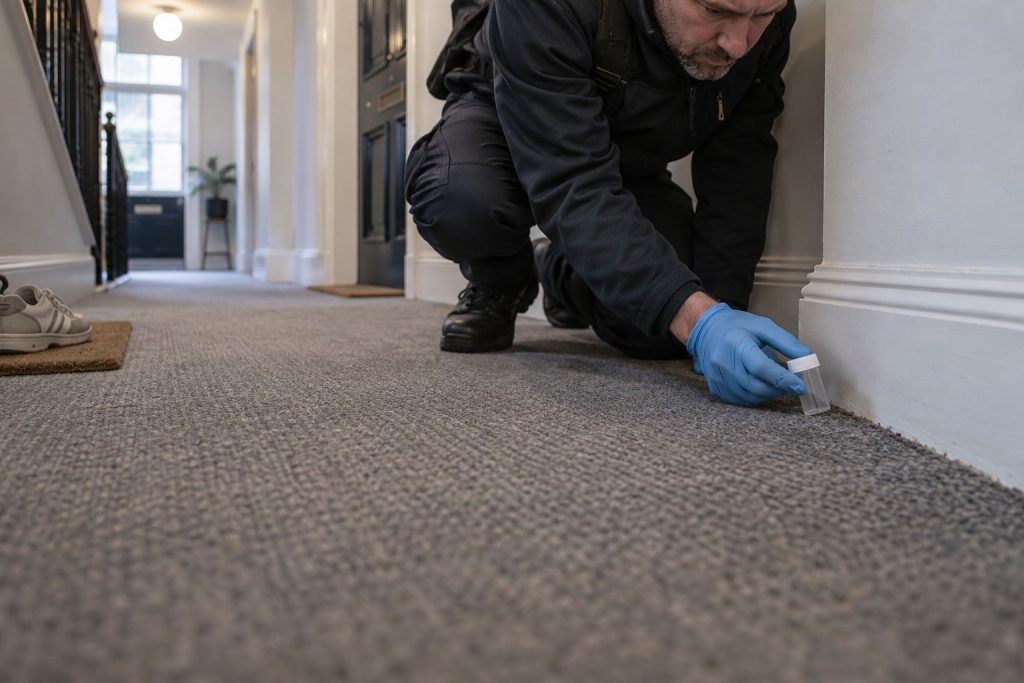
Start with the exact item where you found damage. Lay it over a clean pale surface and inspect seams, cuffs, pockets, folds and hidden layers. Photograph any live larva, webbing, case or cast skin before cleaning. Put the suspect item in a sealed bag and mark the bag with its original location. Do not shake a damaged jumper over a bed or carry an open pile of woollens from room to room.
Next inspect neighbouring items made of similar material, the shelf or drawer corners, and the carpet edge under the wardrobe. If the first evidence was at floor level, check the underside of nearby furniture and the wall edge. A small torch is useful; a magnifier may help with a specimen. A vacuum is useful for exposed dust and lint after the record is made, but empty its contents securely outside. Do not vacuum up your only intact larva before anyone has identified it.
If the search moves towards a chimney, roof void or bird material, stop at a safe access point. Old nests and animal remains can support textile pests, but removal may involve other hazards or legal restrictions. An inspector can advise on the relevant access and source. For a delicate rug, heirloom coat or museum-quality item, do not apply household sprays, improvised heat or uncertain freezing; consult its care instructions and a textile professional.
What changes after the insect is identified
For clothes moths, the survey concentrates on vulnerable natural fibres and dark storage where larvae feed. It needs to distinguish textile moths from moths associated with stored food; a pantry moth at a light fitting does not explain a hole in a wool coat. Cleaning or specialist processing of affected items, access to carpet and furniture edges, and monitoring of the confirmed species may form the plan. A pheromone trap is a measuring tool, not a substitute for finding larvae.
For carpet beetles, the survey may follow cast skins and adult beetles back to accumulated natural material, including lint, animal hair, feathers or an old nest. Cleaning the visible wardrobe while leaving a source under furniture can allow new larvae to appear. The plan may still include careful item handling and targeted professional treatment, but the source map differs. This is why an accurate specimen can save considerable unnecessary handling of clothing.
Both problems can have old and new evidence together. A cast skin can remain after the insect has moved; a hole can predate your tenancy. Look for live larvae, fresh residue and change on a photographed item or edge. Keep recently checked, clean natural-fibre belongings sealed until the active source is understood. The Panther contact team can use a clear specimen photo, the material affected and the room location to advise on the right inspection scope.
Common mistakes that obscure the answer
Buying a moth spray because a wool jumper has a hole is the first. The mark can be old, and a carpet beetle larva may be responsible. Treating every adult insect seen near a window as the same species as a larva in the wardrobe is the second. Adults travel, while larvae may be hidden far from the most visible insect. A third mistake is discarding all affected clothing before photographing or retaining the only specimen.
Over-cleaning also removes the pattern. A good clean is part of control, but take a baseline first: the item, nearby shelf, underside and floor edge. Then clean in a contained sequence, keeping suspect and checked items separate. If you need to move a rug or garment for treatment, bag it. A pest technician should say which items need processing and which edges need access; avoid broad chemical application to valuable textiles.
Finally, resist certainty from one clue. Silk can be hard to see on patterned fabric, some beetle skins may be mixed with ordinary dust, and small larvae may be photographed out of focus. A short written record of where each sign was found is often more reliable than an unlabelled bag of specimens gathered from several rooms. The inspection is a way to test the working identification, not just to confirm the first guess.
A small evidence pack for a useful inspection
Keep three things together: a clear photo or intact contained larva, a photograph of the damaged item with its fibre label, and a note of the exact storage location. Add images of any webbing, cases or hairy shed skins. Note when the item was last checked and whether more than one object is affected. If you have seen adults, photograph one separately and say where it was found. This gives the technician a route from the insect to its likely food source.
If identification remains uncertain, leave the field open. The goal is to stop fresh damage with the least unnecessary disturbance, whether the culprit is a clothes moth, carpet beetle or something else. Once the larva and its source are established, cleaning, item care, targeted treatment and monitoring can be planned for the right insect.

Al Joel is a practical writer and long-term property maintenance specialist focused on real-world pest control, home safety and prevention advice. His guides translate common warning signs into clear next steps for homeowners, tenants, landlords and property managers.His approach begins with correct identification. A sighting in one room may originate from a neighbouring flat, service riser, drainage, roof space, delivery or communal waste area. Al explains how to preserve useful evidence, reduce food and water sources, avoid spreading activity and choose proportionate treatment.What readers can expectClear identification clues and practical inspection stepsSafe preparation, cleaning and aftercare guidancePrevention advice for homes, flats and commercial premisesHonest guidance on when DIY is reasonable and when professional help is the smarter optionWhen professional help makes senseRepeated sightings, activity in several rooms, uncertain identification, vulnerable occupants or signs involving food, electrics and shared building routes deserve a professional inspection. A lasting solution normally combines targeted treatment with proofing, hygiene and follow-up monitoring.Explore the Pest Library, learn how treatment works, or request property-specific advice.