Pest Control Advice · LONDON
Fleas in an Empty House: What Changes When There Is No Pet?
A quiet property can show fleas when someone walks in again. This guide explains delayed emergence, source questions and a practical monitoring plan without a resident pet.
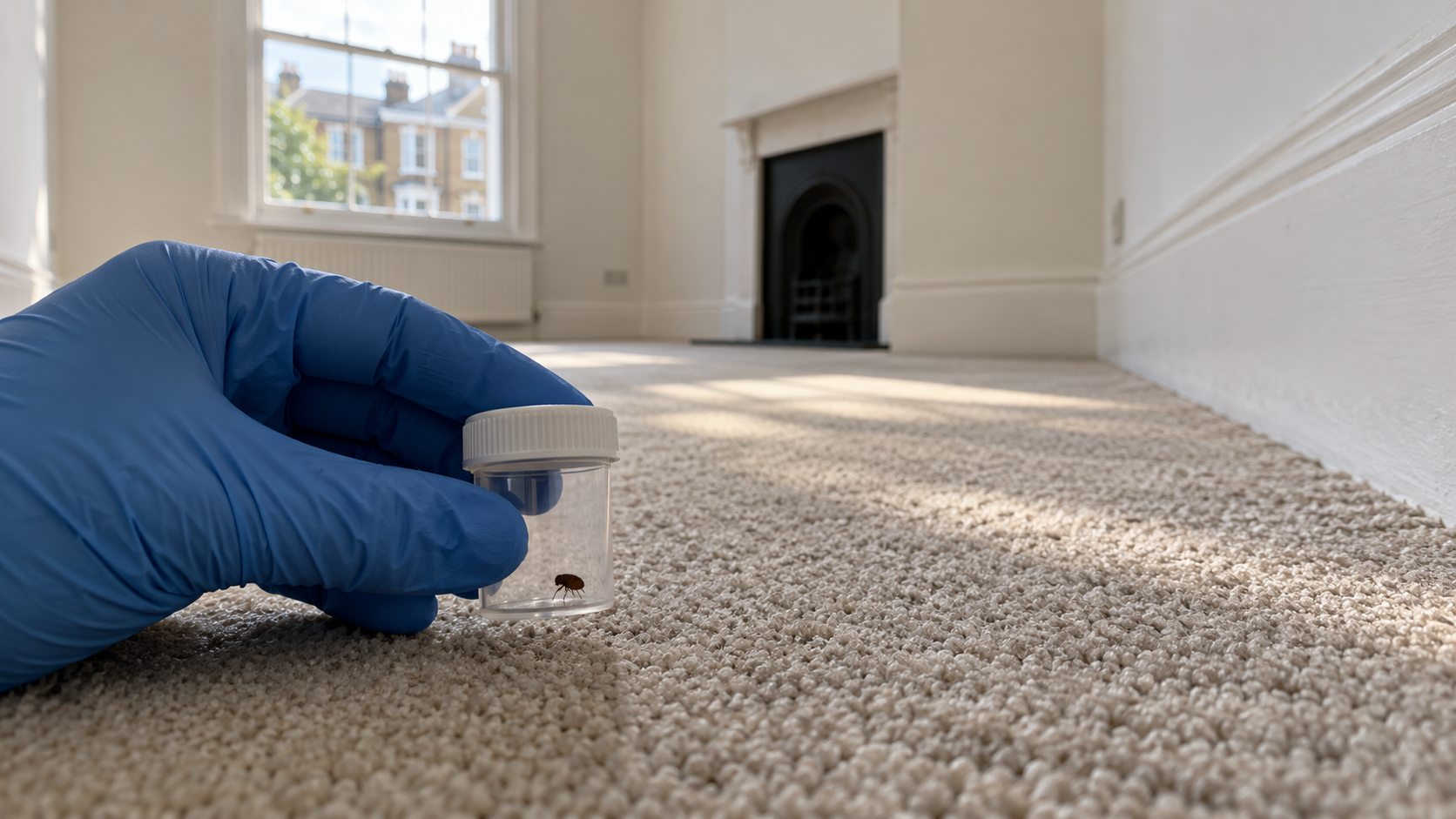
The dog moved out weeks ago, the carpets were cleaned and the property has stood empty. Then a new occupier walks through the living room and notices small jumping insects around their ankles. An empty house can seem like the last place to find fleas, yet the timing may be a clue rather than a contradiction.
Flea development happens partly in the surroundings where an animal rested. A protected stage can remain in carpet edges and other sheltered spots while a room is quiet, then adults may emerge when movement, warmth or exhaled breath signal that a host has arrived. The absence of a current pet changes the investigation: the priority is to confirm the insect, identify where it developed and decide whether there is an ongoing animal source. It does not justify assuming that the last occupier caused every bite.
Why an empty room can suddenly show activity
Adult fleas usually feed on an animal, but their eggs do not stay attached to a pet. They fall into the places the animal uses; larvae and pupae develop in protected surroundings. A fully formed adult can wait within its cocoon until conditions signal a likely host. The Merck Veterinary Manual describes physical pressure, movement, warmth and carbon dioxide as emergence cues. The duration varies widely with conditions, so a vacant interval is not a reliable “all clear”.
Walking into a previously quiet room can therefore coincide with several newly visible fleas. This does not mean a colony has multiplied without a blood source throughout the vacancy. It means the environmental stages may have been present before the room became active again. Equally, a current source may exist: an animal visiting the property, wildlife using a void, or infested belongings brought in. The history should be gathered, not invented.
A burst of activity on the first day after reoccupation is suggestive but not conclusive. Ask which rooms were used by pets, what flooring remains, when the property was last occupied and whether any treatment was documented. If insects continue appearing in places unrelated to old pet resting areas, or fresh animal signs are present, a wider source inspection is warranted. Panther’s flea treatment service considers room use and whether a property has recently stood empty for precisely this reason.
Confirm the insect before treating a bite
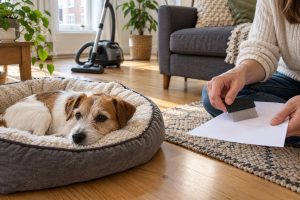
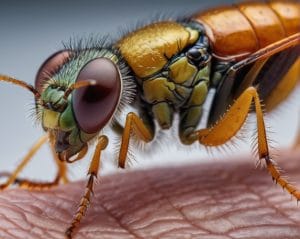
An itchy mark cannot identify a flea. Other insects and non-insect causes can produce similar skin reactions, and people respond differently. Look for the insect itself: a tiny dark, laterally flattened jumper that moves rapidly. Capture one safely on a piece of clear tape or in a closed pot if possible, and photograph it with a scale. Do not rely solely on a dark speck in the carpet; debris, lint and old flea dirt can be difficult to distinguish without context.
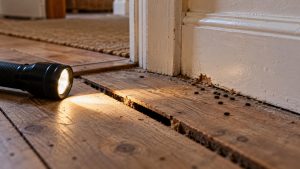
Note the room, time and exact place where each insect was seen. Is activity strongest at one carpet edge, beside a former pet bed, near upholstered furniture or across several rooms? Check accessible skirting edges and rugs with a torch, but avoid moving suspect items through the house. A white sock can make a jumping insect easier to see while you walk briefly through a room, although it does not replace a specimen for identification. Stop if you are being bitten repeatedly or have a concerning reaction.
If no insect has been seen, avoid declaring that every mark is flea related. A professional assessment should consider the distribution of signs and alternative explanations. The flea preparation checklist offers a broad starting point; this article concentrates on the unusual timing and source questions of a home without a resident pet.
Map the floor before you vacuum
Make a small room plan showing carpets, rugs, sofa positions, floor gaps and any place an animal may have rested. Ask the former occupier or agent about pets if that information is reasonably available, but treat their recollection as context rather than proof. If the property is rented, preserve the inventory and move-in photographs. Record the first day of bites or insect sightings before preparation or treatment changes the scene.
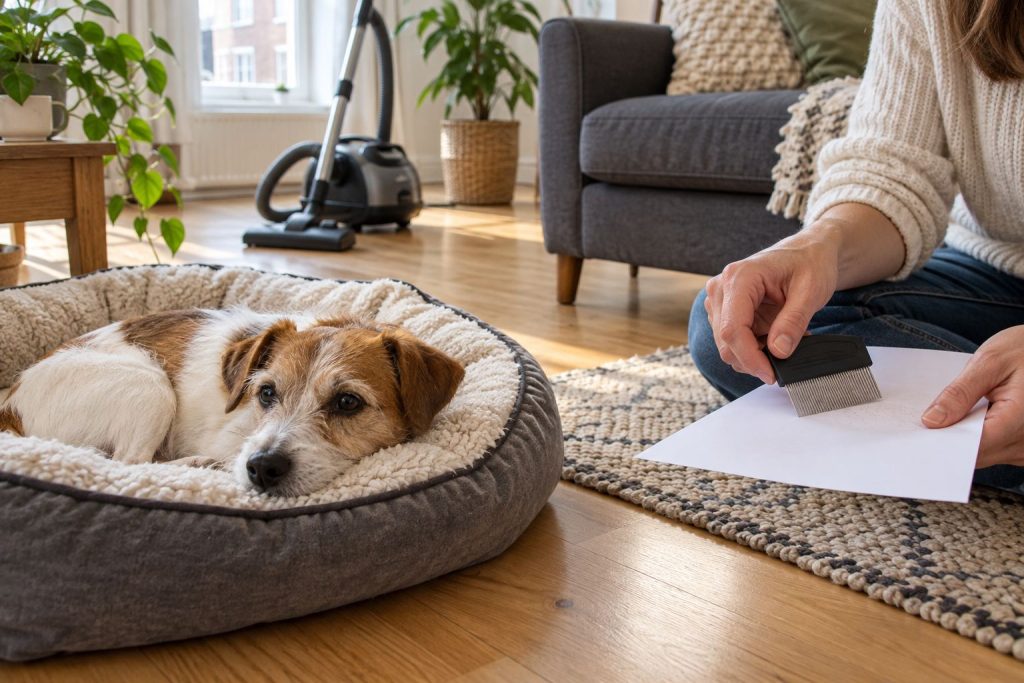
Vacuuming can remove debris and some developing stages, and its vibration may stimulate adults to emerge. That is useful, but timing matters. Before any professional product is applied, ask for a written preparation plan specifying which floors and furnishings to vacuum, how to dispose of the contents and what to move. The BPCA advises removing vacuum waste to an outside bin. After treatment, follow the technician’s specific cleaning restrictions; washing treated edges too soon can undermine the agreed method.
Do not assume that hard flooring makes a room irrelevant. Gaps between boards, skirting edges, rugs and upholstery may still provide sheltered spots. Conversely, a carpet with no evidence need not automatically be blamed because it is soft. An inspection should connect the activity to the room and its use, then define which areas fall within the treatment scope. That prevents both a narrow treatment that misses relevant rooms and unnecessary work in places with no supporting evidence.
Look for an animal source without guessing
If the property has no pet now, ask whether a previous resident kept one, whether visiting animals have been inside and whether the building has signs of wildlife or rodents. That list is an inspection prompt, not a conclusion. Fleas associated with pets can persist as environmental stages after the animal has left; wildlife can also introduce fleas in some settings. A technician may need to distinguish a one-off legacy problem from a source that continues to feed the cycle.
Inspect only accessible areas safely. Do not enter a contaminated loft, lift unstable floorboards or handle wildlife. If there are fresh signs of a rodent or animal nest in a void, arrange assessment of that source before assuming floor treatment alone will solve the issue. The sequence matters: reduce the active flea problem while identifying and managing the host route, then reassess. If a pet is present in another connected unit, coordination may require the owner and a veterinary professional; pest technicians treat the premises, not the animal.
Property managers should communicate carefully. A new tenant reporting fleas on day one needs an inspection, not an argument about whether they own a pet. A vacancy, an old pet history and a floor plan may explain the pattern, but a specimen and site evidence decide the response. Panther’s guide to pest responsibility in rented homes addresses the separate question of obligations; it should not replace finding and controlling the source.
What changes in the treatment plan when no pet lives there
There may be no resident animal to treat, but the floor and furnishing stages still need attention. The inspector should state which rooms and edges are included, what preparation is required, whether furniture can stay in place and how occupants must observe re-entry instructions. The method is chosen for the confirmed pest and the occupied property, taking account of children, respiratory sensitivities, aquariums and other relevant circumstances. A broad aerosol used before assessment can obscure the pattern without reaching protected stages.
The absence of a pet also makes follow-up evidence more revealing. If adults emerge for a while and then decline after proper environmental treatment, that may fit a legacy reservoir. If new activity appears after the expected review period, the scope, preparation and possible ongoing host source deserve reconsideration. No exact number of days applies to every room: temperature, humidity, flooring and the treatment used can change the observed pattern. Ask the technician what interval and level of activity they expect for this specific job.
The BPCA’s flea advice leaflet explains why vacuuming and the cocoon stage matter, but cleaning instructions after treatment should come from the provider using the actual product. Keep that written instruction and do not mix it with generic advice from another treatment. In particular, do not wash or vacuum a treated edge sooner than directed, even if an emerging adult has been seen there.
A realistic monitoring record for a vacant-property case
Use a short daily log rather than counting every itch. For each observed insect, record the room, location, date and whether the same area had been vacuumed or treated. Keep a photograph or specimen where possible. Record actual bites separately; they may lag or have another cause. Note any new animal evidence and any changes in occupancy or furniture. This helps a follow-up visit distinguish gradual decline from an untreated room or a continuing source.
If the flat will be empty again after treatment, ask how the follow-up will be assessed. A room with no people walking through it may show few visible adults even while sheltered stages remain. A planned inspection, monitored visit or controlled re-entry gives a better basis for judgement than simply reporting “nobody saw anything for two weeks”. The University of Minnesota Extension also notes that warmth, breath and movement can trigger emergence from cocoons, which is why a quiet room can give a misleading impression.
Keep communication clear between agent, owner, incoming resident and pest technician. State what was found, what areas were treated, which source questions remain open and who will report new sightings. When furniture or rugs are to be removed, ask how they should be handled so that possible insects are not carried into another room or vehicle. Do not promise an immediate all clear on the day of treatment.
When to request help
Arrange identification if you can see jumping insects, if several people notice activity on entering a vacant property, or if bites recur in one room. Seek professional advice before using multiple products or moving suspect furnishings. A clear specimen, the vacancy dates and the old floor layout are especially valuable. If no insect can be found, describe the signs as uncertain so the inspection considers other causes.
Send the postcode, floor type, rooms affected, vacancy period, pet history if known and any photographs when you contact Panther Pest Control. An empty house changes the timing of visible activity and the way a result is monitored. It does not remove the need to identify the pest, inspect the environment and check whether an animal source remains.

Al Joel is a practical writer and long-term property maintenance specialist focused on real-world pest control, home safety and prevention advice. His guides translate common warning signs into clear next steps for homeowners, tenants, landlords and property managers.His approach begins with correct identification. A sighting in one room may originate from a neighbouring flat, service riser, drainage, roof space, delivery or communal waste area. Al explains how to preserve useful evidence, reduce food and water sources, avoid spreading activity and choose proportionate treatment.What readers can expectClear identification clues and practical inspection stepsSafe preparation, cleaning and aftercare guidancePrevention advice for homes, flats and commercial premisesHonest guidance on when DIY is reasonable and when professional help is the smarter optionWhen professional help makes senseRepeated sightings, activity in several rooms, uncertain identification, vulnerable occupants or signs involving food, electrics and shared building routes deserve a professional inspection. A lasting solution normally combines targeted treatment with proofing, hygiene and follow-up monitoring.Explore the Pest Library, learn how treatment works, or request property-specific advice.