Pest Control Advice · LONDON
How to Inspect Stored Wool Before Putting It Away
A practical pre-storage inspection for wool garments and blankets, with clear checks for clothes moth and carpet beetle signs.
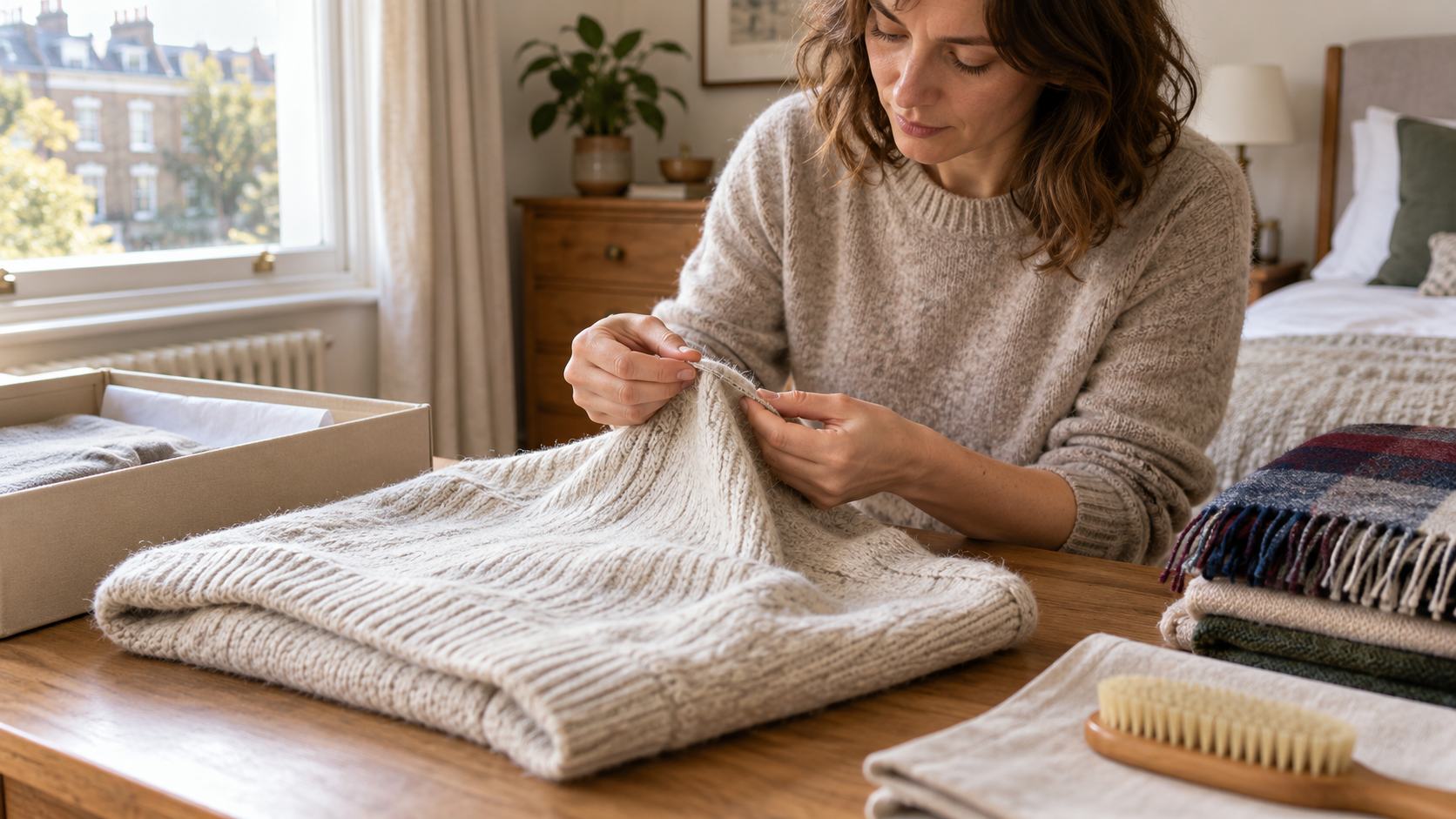
Putting winter wool away is usually a quick job: fold a jumper, close a drawer and forget it until the weather changes. That routine can also hide a small patch of damage until it has spread to several pieces. A careful check before storage is more useful than relying on a scented sachet or assuming that a clean-looking wardrobe is pest-free.
This guide is a practical inspection sequence for wool jumpers, scarves, blankets and other natural-fibre items in a UK home. It focuses on finding damage and deciding what to do before the item is sealed away. Clothes moth and carpet beetle larvae can both affect wool, but a hole alone does not identify which insect, if any, caused it. Preserve useful evidence and ask for identification when the pattern is unclear.
Set up one clean inspection area
Choose a table with good light and enough room to lay each item flat. Keep unchecked wool in one pile and inspected pieces in another; do not mix them again until you have decided what needs cleaning. A phone camera, pale sheet of paper and a small clear bag for a possible specimen are enough. Do not shake a suspect garment over the whole wardrobe, where loose material may fall among clean clothes.
Start with the items worn least often or stored in the darkest places. A scarf at the back of a drawer may have been undisturbed for months. Note which cupboard or box each item came from, because a cluster of signs from one shelf may point to a local source. Inspect the storage area itself before putting cleaned garments back.
Check the hidden folds before the obvious surface
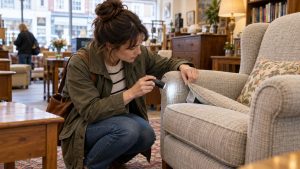
Turn the garment inside out if the construction allows it. Examine collar edges, cuffs, underarms, hems, pockets, seams, labels and any fold that stayed pressed together in storage. Spread the fabric gently over a pale background so new holes, webbing or loose fibres are easier to see. For a blanket, inspect the binding and folded corners; for a rug or upholstery, look at edges and undisturbed undersides without damaging the item.
English Heritage’s clothes moth guidance recommends checking creases, folds and behind labels. It also notes that dark, undisturbed areas are important. A quick scan of the front of a jumper is therefore the least informative part of the check. Work methodically and put the item down before moving to the next one.
Look for larvae and cases, not only holes
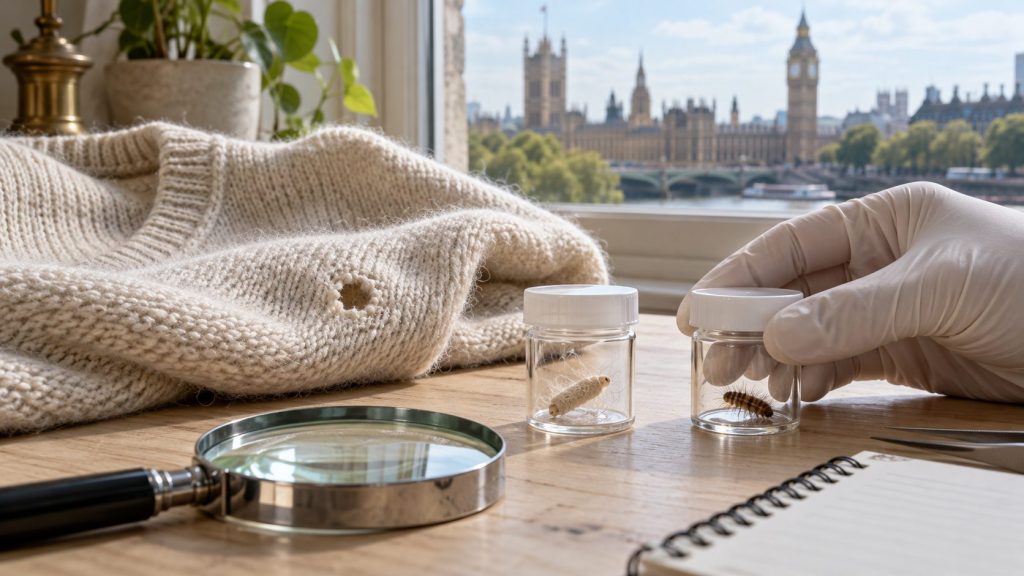
A small irregular hole can be caused by wear, a snag or insect feeding. Look nearby for a larva, a portable case, fine webbing or small shed skins. The Natural History Museum’s clothes moth identification guide explains that larvae, rather than adult moths, damage natural fibres. An adult moth seen elsewhere in the room is a reason to inspect; it does not prove that the particular jumper has active larvae.
Carpet beetle larvae can also feed on wool and leave different clues, including cast skins. The museum’s carpet beetle guide describes larvae as the damaging stage for those insects too. If you find a larva, photograph it against a scale and keep a specimen if safe. Do not guess the species from the shape of a hole or from a single fuzzy photograph.
Separate damaged pieces from clean ones
Put a suspect item in a closed bag or container while you decide how to clean or assess it. Mark the bag with the garment and its original location. Do not move it between wardrobes to “keep it out of the way”. Keep clean items away from the inspection surface until it has been cleared. This simple separation makes it easier to tell later whether a new sign appeared in storage or was already present.
If an heirloom or delicate garment is affected, avoid an improvised heat or freezer treatment. Textile construction, dye and trim can react badly. Seek a suitable textile-care or conservation service and explain the suspected insect evidence. For ordinary washable items, follow the care label and ask a pest professional if you are uncertain how to address a live finding.
Clean before closing the storage box
Store only items that are clean and fully dry. Perspiration, food residue and dampness can make a folded garment less suitable for long storage even if no insect is present. Use the care label to choose washing or dry cleaning; do not assume every wool piece tolerates a hot cycle. Once dry, fold it into a clean bag or box with a sound lid. A torn bag or a drawer left open during the season offers little protection.
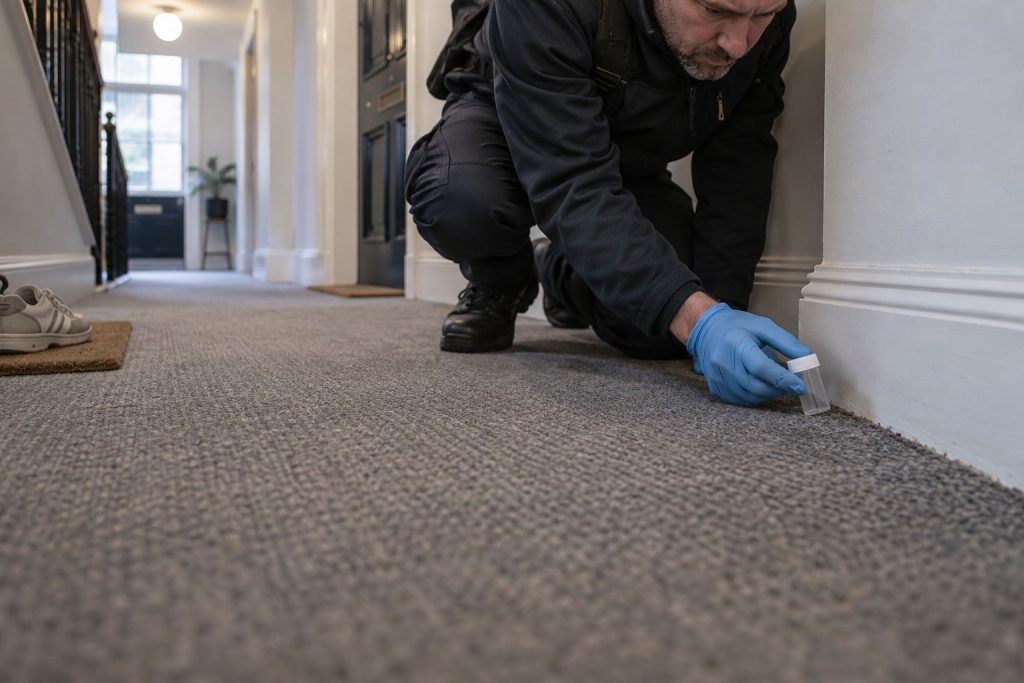
Vacuum the empty wardrobe or shelf, particularly corners, skirting edges and the space beneath drawers. Remove hair, lint and old packaging. English Heritage’s guidance emphasises both clean clothing and regular cleaning around wardrobes. If you find repeated larvae in the cupboard itself, a wider pest inspection may be needed; sealing garments will not resolve an active source in carpet edges or nearby upholstery.
Choose storage that can be checked later
Airtight or closely sealed bags and boxes help protect a clean item, but they are not a substitute for the initial inspection. Pick containers that can be opened without emptying an entire wardrobe. Record what is inside and the date it was packed. Keep boxes away from obvious damp and check for condensation or musty odour before leaving them for months.
Think about the container as part of the inspection record. A transparent box lets you see a forgotten scarf without opening everything. A fabric storage bag can be convenient, but check its zip and seams. Avoid packing a garment while it still feels cool and damp from washing or steam; let it dry completely according to its care instructions. If several household members use the same cupboard, agree that borrowed items are checked before they go back, so one unchecked piece does not become mixed with the clean stock.
Scented products may make a drawer pleasant, but they should not be treated as a cure for larvae already in fabric. The strongest routine is inspect, clean, dry, seal and recheck. If you use monitoring traps, understand that a trap catching adult moths signals a reason to look harder; it does not prove which garment has larvae or eliminate the source on its own. The site’s pest library can help frame identification questions before you choose control.
Recheck before you need the garment
Open one or two boxes during the storage period and examine the most vulnerable pieces. A quick check in good light is easier than discovering damage on the morning you want to wear a jumper. Compare any new hole with the photograph you took before packing. If the container has been opened and borrowed from, note that too; a later finding may be connected to how the item was handled.
For an active finding, inspect nearby wool, carpet edges and upholstered furniture rather than repeatedly cleaning only the item with the most visible hole. A pest professional can identify the insect and the likely harbourage, then explain whether treatment is needed. Panther’s inspection-led approach begins with that evidence rather than a blanket spray.
Make a short record when you find damage
Photograph the whole garment, then the hole or material and its seam or fold. Note the storage location, when the item was last worn or washed and whether similar signs appear on other pieces. Keep a larva or case for identification if one is found; do not scrape it away before recording it. A set of three clear observations is more useful than a cupboard full of unlabelled photographs.
If several wool items show new damage or larvae are present in the storage area, request advice with the photographs and locations. The goal is to protect the remaining textiles and find the source, not to assume every moth in the house came from one jumper. A deliberate pre-storage check gives you a baseline and a much better chance of spotting a change early.

Al Joel is a practical writer and long-term property maintenance specialist focused on real-world pest control, home safety and prevention advice. His guides translate common warning signs into clear next steps for homeowners, tenants, landlords and property managers.His approach begins with correct identification. A sighting in one room may originate from a neighbouring flat, service riser, drainage, roof space, delivery or communal waste area. Al explains how to preserve useful evidence, reduce food and water sources, avoid spreading activity and choose proportionate treatment.What readers can expectClear identification clues and practical inspection stepsSafe preparation, cleaning and aftercare guidancePrevention advice for homes, flats and commercial premisesHonest guidance on when DIY is reasonable and when professional help is the smarter optionWhen professional help makes senseRepeated sightings, activity in several rooms, uncertain identification, vulnerable occupants or signs involving food, electrics and shared building routes deserve a professional inspection. A lasting solution normally combines targeted treatment with proofing, hygiene and follow-up monitoring.Explore the Pest Library, learn how treatment works, or request property-specific advice.