Pest Control Advice · LONDON
Mice Under Floorboards: What to Check Before Lifting a Board
What scratching beneath a timber floor can and cannot tell you. Record useful signs, check safe access points and plan any floor opening with the right professional.
Scratching beneath the floor can make lifting a board feel like the quickest way to find an answer. It is rarely the best first step. Sound moves through joists, pipes and empty spaces, so the place where a noise seems loudest may not be where an animal is moving. A lifted board can also expose wiring, pipework or contaminated material without telling you how the animal entered.
If you suspect mice under a timber floor, begin with observations you can make from occupied rooms and accessible outside areas. This guide explains which signs are useful, how to record them, what can be confused with mouse activity and when a floor opening should be planned with the right professional. It does not assume that every night-time noise is a mouse.
Separate a noise from evidence
Write down when you heard the sound, how long it lasted and whether it seemed to come from one spot or move across the room. Note whether heating, plumbing or ventilation was running. Pipes can click as temperatures change, and a loose board can make noise under foot. A single sound in an otherwise quiet house is less informative than the same pattern returning at a similar time over several nights.
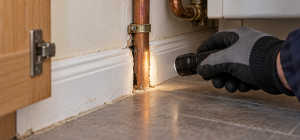
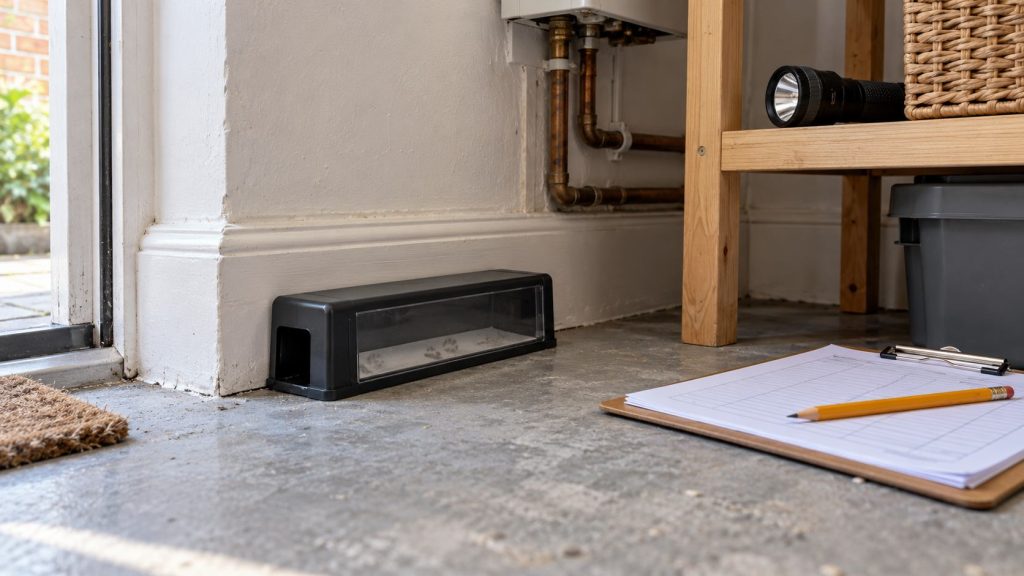
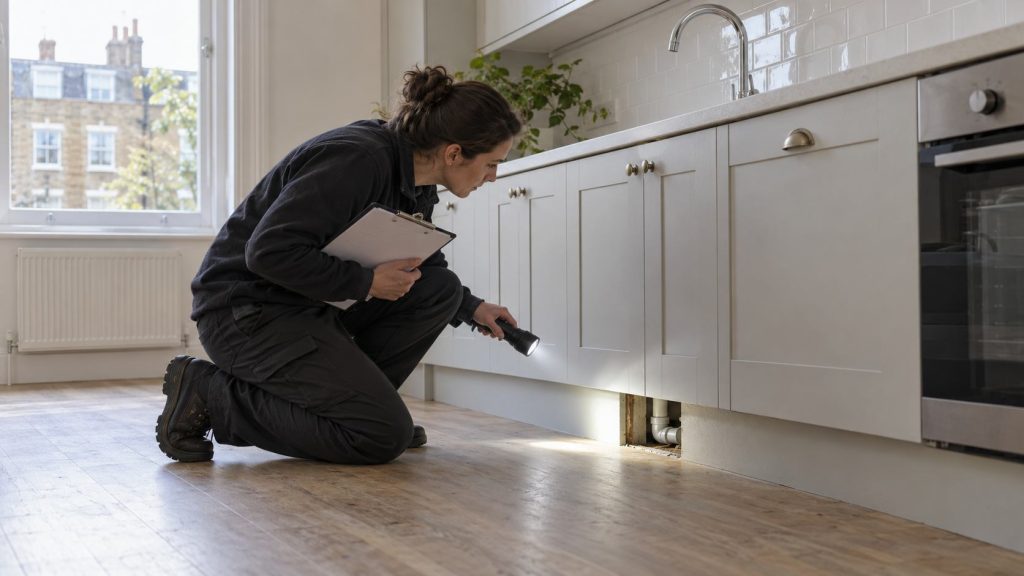
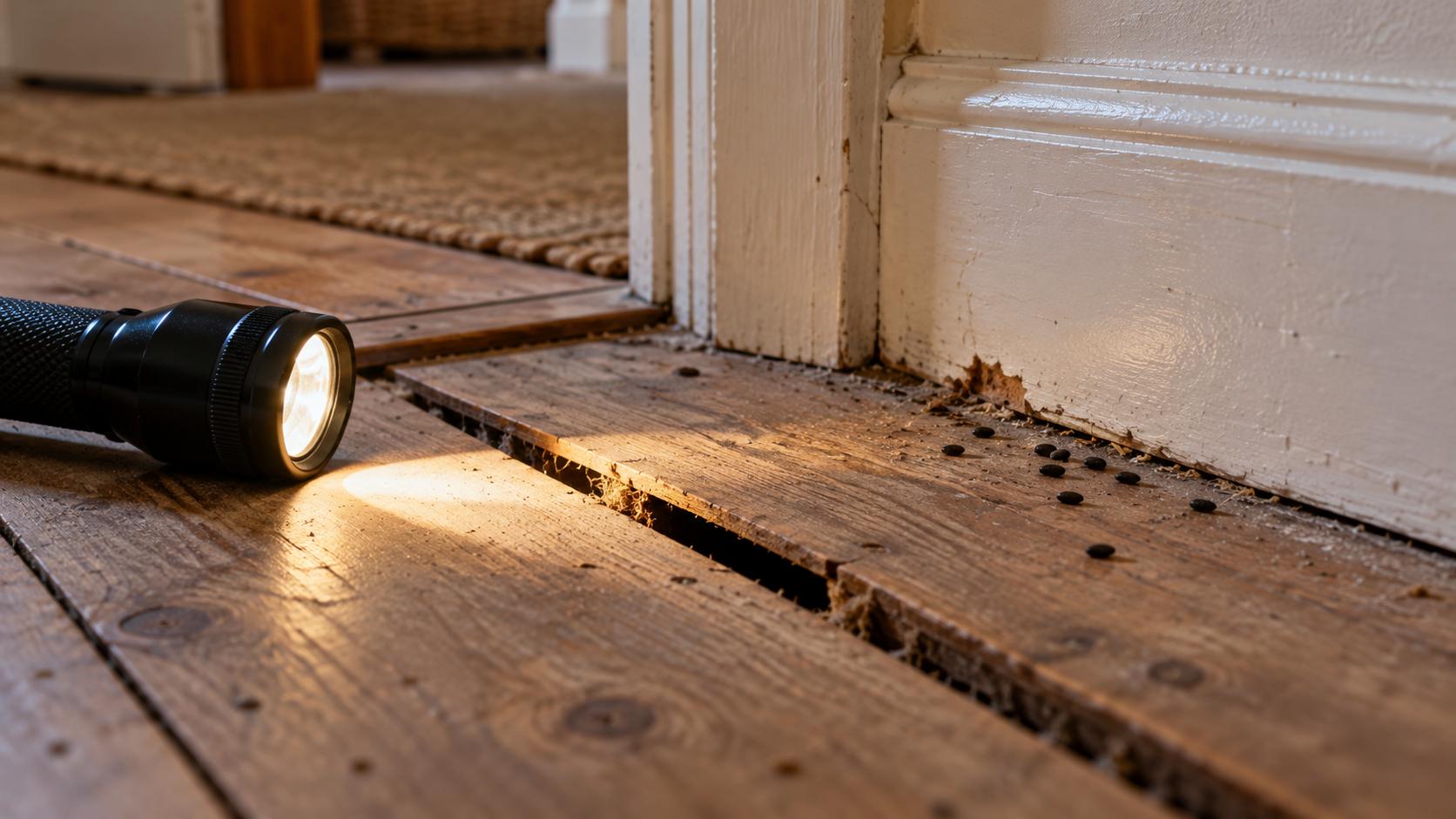
Look for signs in places you can see without dismantling the floor: beneath a kitchen unit, beside a skirting board, inside a pantry, around a service pipe and near an external doorway. Droppings, gnaw marks, disturbed dust, chewed packaging or a visible gap are stronger clues than sound alone. Angus Council’s pest guidance lists nests under floorboards as a possibility and describes droppings and gnawing among the signs to consider. That does not mean a floor nest can be identified by listening through a room.
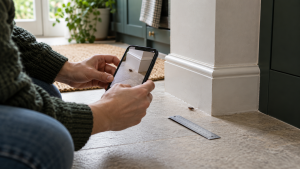
Photograph any sign in place before cleaning or moving it. Include a wider view so an inspector can find the exact corner later. A short dated log helps distinguish one event from repeated activity. If you see several similar pellets, avoid deciding on species from their apparent size alone; the site’s article on mouse and rat droppings explains the limits of that comparison.
Map the accessible edges of the floor
A suspended timber floor has edges: skirting boards, service penetrations, threshold gaps, vents and sometimes an accessible subfloor entrance. Walk the room slowly and note where those features are, without reaching into a void. A gap beside a pipe may connect a cupboard to the subfloor, while a gap beneath a door may lead directly outdoors. Record both possibilities rather than committing to the first one you find.
Outside, look from ground level at air bricks, service entries, damaged mortar, vegetation against the wall and the base of external doors. Do not block an air brick to stop an animal; it may be part of the floor’s ventilation. A pest technician and a building professional can decide whether a guard or repair is suitable while keeping required airflow. A neat repair that makes the void damp can create a different problem.
If the home is a flat, the floor may span a shared service route or connect to another unit. Note which walls, risers and access points are communal. Ask the managing agent how they should be inspected. Pulling up a board in one flat is unlikely to explain activity across the whole structure if the route begins elsewhere.
Look for food and water above the void
Mice may shelter under flooring yet feed in an accessible room. Check where dry food, pet feed, bird seed and rubbish are stored. Inspect packaging rather than emptying every cupboard onto the floor. Crumbs beneath appliances, an open bin or a leaking pipe can make a room attractive even if the entry route is some distance away.
Store vulnerable food in sound containers and clean ordinary crumbs using the usual hygiene procedure. Do not sweep or vacuum visible rodent droppings. UK Health Security Agency guidance advises against sweeping or vacuuming mouse or rat urine, droppings and nests because disturbance can put infectious material into the air. If contamination is extensive or difficult to access, ask for appropriate cleaning advice before trying to remove it.
Watch for a leak under a sink or beside a radiator. Water staining may indicate a plumbing fault that deserves repair in its own right. A pest treatment alone cannot correct a wet board or a pipe joint that keeps supplying moisture. Keep photographs of the leak and any pest evidence separate, so each tradesperson can see the problem relevant to their work.
Why lifting a board is a decision, not a test
A floorboard may be nailed, screwed, glued, covered by finished flooring or carrying part of a fitted unit. Beneath it could be electrical cable, pipework, insulation or fragile plaster above a lower room. The effort and risk vary widely. If the visible evidence is weak, opening the floor may produce damage without finding a nest or entry point.
Ask a pest inspector what they expect to learn from access. Is there a specific run to inspect, a dead animal to retrieve, or a likely opening that cannot otherwise be reached? Which board would provide the view, and who should open and reinstate it? A clear purpose makes the work more proportionate. If another view, monitoring point or external repair could answer the question first, that should be considered.
Never lift a board to place loose poison into an unknown void. You may not know what wildlife can reach it, where an animal could die or how the space could be monitored. Pest control products have label conditions and legal restrictions. The GOV.UK pest control guidance recommends professional advice where you do not know which methods are permitted or how to use them correctly.
Plan for services and hidden hazards
If a cable appears chewed or damaged, keep away from it and arrange assessment by a qualified electrician. Do not touch it to take a better photograph or try to wrap it in tape. If work would affect gas pipework or a gas appliance, a Gas Safe registered engineer must assess that work. Water damage or a suspected leak calls for an appropriate plumber. These trades can coordinate with the pest technician so that access and repairs address both safety and rodent movement.
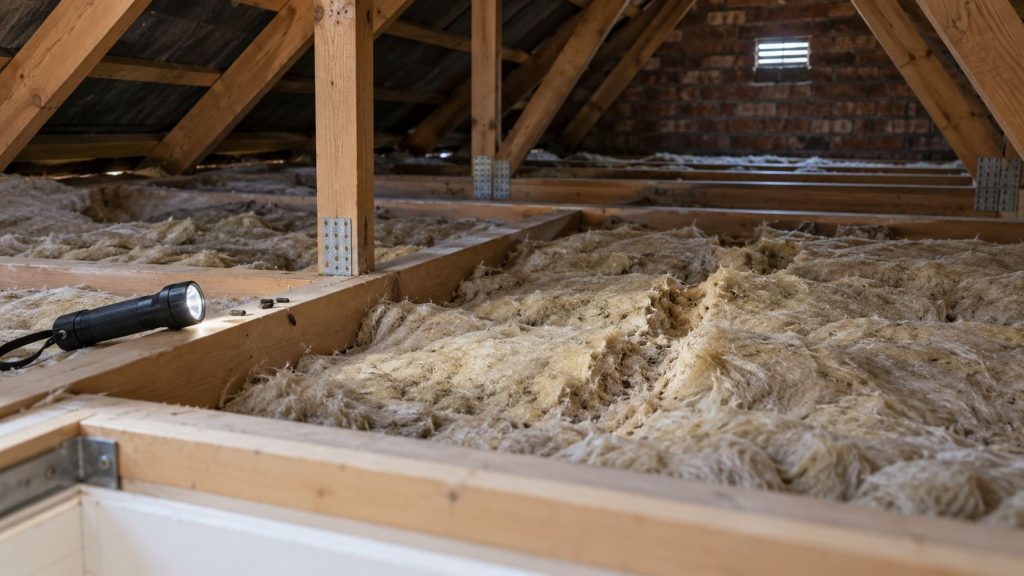
A void may contain dust, insulation and droppings. Avoid reaching into it or disturbing material without knowing what is there. If an inspection requires opening the floor, discuss protection of occupants, pets and belongings, how the area will be isolated, and who will clean and reinstate it. In a rented home, get the landlord or managing agent involved before structural access is arranged.
There may also be other protected animals or old building materials in a void. Do not assume an unseen animal is a mouse from a scratching noise, and do not seal a possible exit while the species and route remain unclear. A technician can decide what evidence is needed for identification and whether any specialist advice is required.
What an inspection should answer
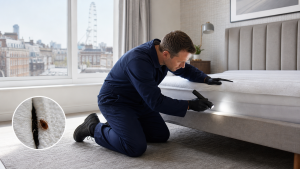
A useful pest inspection should connect the reported noise with visible signs, likely species, accessible routes and conditions that support activity. The inspector should distinguish confirmed evidence from possible routes. They may recommend monitoring or a revisit when the picture is incomplete, rather than presenting one hidden gap as certain.
Ask where the animals appear to feed and travel, whether the floor void is actually part of that route, and which gaps can be repaired safely. Ask what should be done first if active animals might be trapped by proofing. Also ask how progress will be measured: repeated sightings, new droppings, monitoring results or no further noise over an agreed period. An inspection report should give you a practical sequence, not just a list of products.
If activity is confirmed as mice, the site’s mice control service is a route to discuss control and proofing together. Share your dated notes and photographs before the visit if the service accepts them. Those records can help the technician choose where to start without promising that a floor will never need to be opened.
After the immediate problem is addressed
Keep a simple follow-up record at the same locations. Photograph a repaired gap, note when food storage or leak repairs were completed, and record any fresh sign without disturbing it. If a contractor lifted a board, confirm that it has been safely reinstated and that any access needed for future maintenance remains possible. Ask who is responsible for checking a shared void or external repair in a managed building.
Do not take silence on one night as proof that the route is closed. Compare observations over the period your pest professional recommends. If a new noise appears in a different room, report the location and timing rather than opening another board. A map of events can reveal whether activity has moved or whether the original assumption was wrong.
The first job is to gather useful evidence from safe, accessible places. Floor access becomes reasonable when it has a clear purpose and the people opening it know which services and hazards may be present. If you need help deciding whether inspection can begin without lifting anything, send the location and your observations through the site’s contact page.

Al Joel is a practical writer and long-term property maintenance specialist focused on real-world pest control, home safety and prevention advice. His guides translate common warning signs into clear next steps for homeowners, tenants, landlords and property managers.His approach begins with correct identification. A sighting in one room may originate from a neighbouring flat, service riser, drainage, roof space, delivery or communal waste area. Al explains how to preserve useful evidence, reduce food and water sources, avoid spreading activity and choose proportionate treatment.What readers can expectClear identification clues and practical inspection stepsSafe preparation, cleaning and aftercare guidancePrevention advice for homes, flats and commercial premisesHonest guidance on when DIY is reasonable and when professional help is the smarter optionWhen professional help makes senseRepeated sightings, activity in several rooms, uncertain identification, vulnerable occupants or signs involving food, electrics and shared building routes deserve a professional inspection. A lasting solution normally combines targeted treatment with proofing, hygiene and follow-up monitoring.Explore the Pest Library, learn how treatment works, or request property-specific advice.