All Pest Control · LONDON
Signs of Woodworm in UK Homes: Identification, Treatment and Prevention
Small round holes in a floorboard or loft beam are often called woodworm, but the holes may be decades old and the beetles long gone. Treating every hole wastes money; ignoring fresh activity in damp structural timber can…
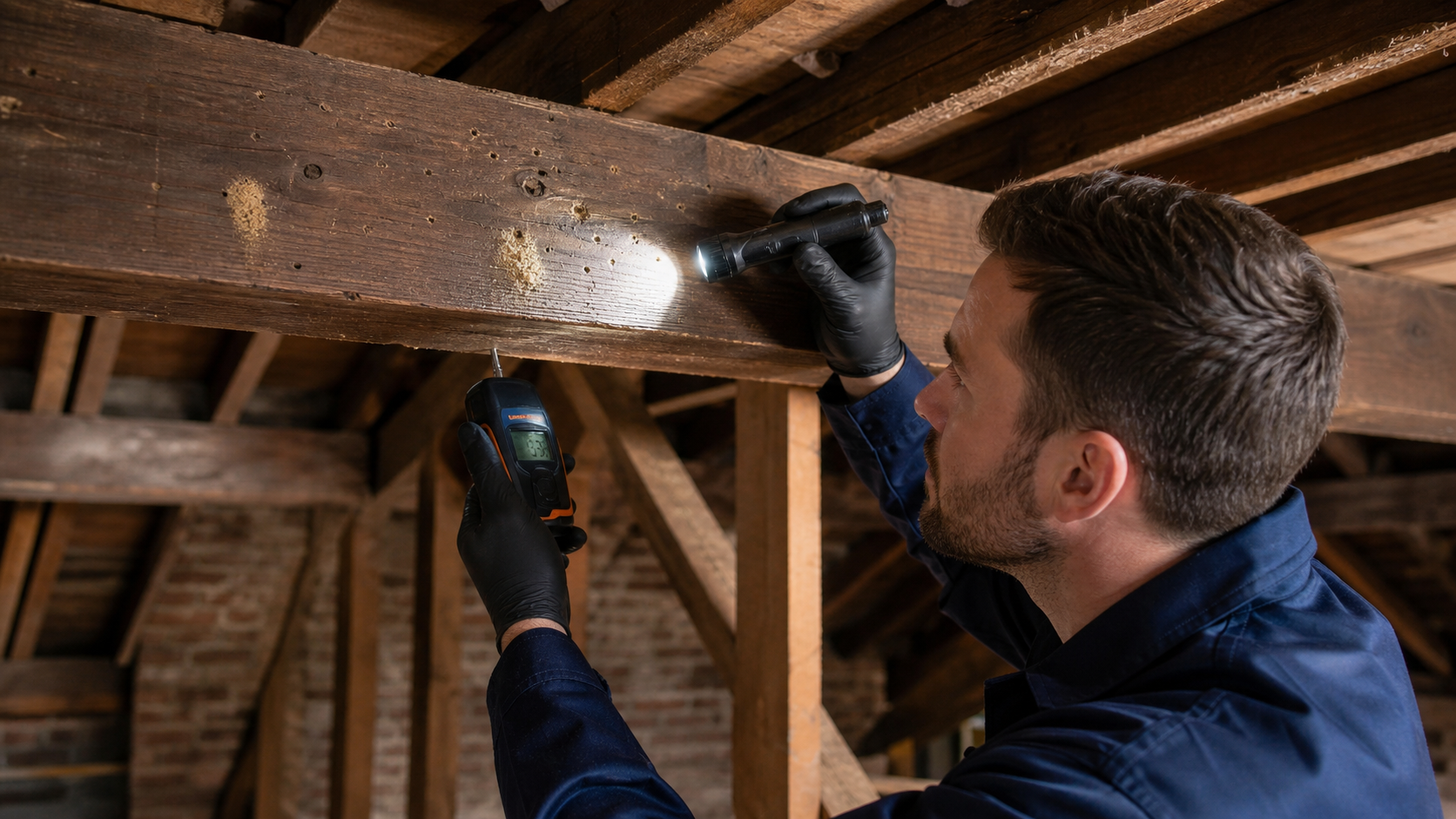
Small round holes in a floorboard or loft beam are often called woodworm, but the holes may be decades old and the beetles long gone. Treating every hole wastes money; ignoring fresh activity in damp structural timber can allow avoidable damage. This London-focused guide explains how to identify active wood-boring insects, distinguish common species, investigate moisture, specify treatment and decide when a structural timber specialist is required.
Key Takeaways
- Exit holes alone do not prove an active infestation; look for fresh frass and new seasonal emergence.
- Correct species identification matters because hole size, timber preference and risk differ.
- Moisture control is part of treatment, especially in poorly ventilated lofts, cellars and suspended floors.
- Structural timbers require assessment of residual strength, not simply surface spraying.
- Arrange professional woodworm treatment after an evidence-led inspection.
Table of Contents
- What Woodworm Actually Means
- How to Tell If Woodworm Is Active
- Common UK Wood-Boring Beetles
- A Professional Woodworm Inspection
- Why Damp and Ventilation Matter
- Woodworm Treatment Options
- DIY Treatment: Limits and Safety
- Woodworm in Floors, Lofts, Furniture and Listed Buildings
- Comparing Woodworm Surveys and Quotes
- A Practical Four-Week Monitoring Plan
- Frequently Asked Questions
- Related Articles
What Woodworm Actually Means
Woodworm is a description of the larval stage of several wood-boring beetles, not one species. Larvae live inside timber, feed and create tunnels, then adult beetles emerge through flight holes. The life cycle can take years, so damage may continue unseen before the brief adult emergence season.
In London houses, the common furniture beetle is the usual suspect. Deathwatch beetle is associated with old, damp hardwood in historic structures, while house longhorn beetle has a more restricted distribution and can cause serious structural damage. Powder-post beetles favour certain hardwoods. Identification changes the inspection scope and treatment.
Old reclaimed boards and antique furniture often carry historic holes. An inspector considers hole dimensions, shape, frass texture, timber type, moisture and distribution rather than diagnosing from one photograph.
How to Tell If Woodworm Is Active
Fresh frass is the strongest everyday clue. It may appear as pale dust or gritty pellets beneath holes during the emergence season. New holes have clean, sharp edges and unweathered wood inside; old holes are dark, dusty or coated by previous finishes. Beetles, dead adults near windows and larvae exposed during repairs add evidence.
Mark and photograph suspect areas, clean existing dust and recheck. White paper beneath furniture or beams makes new frass visible. Do not inject household insecticide into random holes; it destroys evidence and rarely reaches larvae throughout the timber.
Activity is commonly noticed from spring into summer, but heated buildings can alter timing. Absence of frass on one winter inspection does not prove inactivity. A professional may recommend seasonal monitoring before treatment where risk is low.
Common UK Wood-Boring Beetles
Common furniture beetle exit holes are typically round and around 1–2 mm, with gritty bun-shaped frass. It attacks sapwood in furniture and building timbers, especially where moisture is elevated. Damage can look extensive at the surface while sound heartwood remains, so strength needs physical assessment.
Deathwatch beetle makes larger round holes and coarse bun-shaped pellets. It is strongly associated with damp, decayed hardwood in older buildings. London churches, historic houses and timbers embedded in wet masonry require conservation-aware diagnosis rather than a blanket spray.
House longhorn beetle produces larger oval holes and extensive internal galleries, often with ribbed frass. Suspected structural activity demands specialist attention. Powder-post beetles produce very fine flour-like frass in starch-rich hardwood. Misidentification is a common cause of failed treatment.
A Professional Woodworm Inspection
The survey should cover all accessible faces of affected timber, not just the decorative hole. The technician maps distribution, probes suspect areas, checks moisture and ventilation, looks for fungal decay and records inaccessible zones. Roof leaks, plumbing faults and blocked airbricks may be more urgent than insecticide.
In a Victorian terrace, inspect the loft at eaves and chimney abutments, joist ends built into external walls and suspended ground-floor voids. In converted flats, establish who controls structural timbers and whether access is needed through another demise.
Paint, varnish, insulation and stored belongings affect inspection and treatment. The report should state limitations and distinguish confirmed active infestation from historic evidence. Ask for photographs, species reasoning and a clear treatment boundary.
Why Damp and Ventilation Matter
Many wood-boring larvae perform better in timber with raised moisture. A leaking roof, condensation in an over-insulated loft, blocked sub-floor vents or damp masonry around joist ends can maintain suitable conditions. Killing beetles without fixing water ingress invites recurrence and leaves decay untreated.
Moisture meters are useful screening tools but readings require correct interpretation for timber species, surface salts and temperature. A single number is not a full damp survey. Trace the source: rain penetration, plumbing, ground moisture, condensation or previous wetting.
Restore ventilation without chilling the home or compromising fire separation. Roofers, plumbers, damp specialists and structural engineers may be required alongside pest control. Clear responsibilities prevent each trade treating only its own symptom.
Woodworm Treatment Options
For accessible active common furniture beetle, a professional may apply an authorised water-based insecticide to cleaned bare timber. Coverage, absorption and product label determine success. Painted or varnished surfaces may need preparation, and treatment should not be sprayed indiscriminately over finished living areas.
Local injection or specialist methods may be used for thick, inaccessible or high-risk elements, depending on species and construction. Heat can be suitable for selected objects or controlled spaces, but temperatures must reach the insect throughout the timber without damaging finishes or historic fabric.
Severely weakened timber may need strengthening or replacement specified by a competent structural professional. Chemical treatment cannot restore lost cross-section. The plan should separate eradication, moisture repair and structural work.
DIY Treatment: Limits and Safety
A retail product can be appropriate for a small, confirmed active area of accessible non-structural timber if its label permits the use. Wear specified protective equipment, ventilate and protect people, pets and aquariums. More product, mixing brands or using agricultural chemicals is unsafe.
DIY is unsuitable where species is uncertain, structural beams are affected, activity is widespread, timber is damp or rotten, the property is listed, or access requires lifting floors and disturbing insulation. Surface brushing over varnish provides false reassurance.
Do not sand or drill suspect historic painted timber without considering lead paint and asbestos in adjacent materials. A pest problem does not remove normal refurbishment hazards.
Woodworm in Floors, Lofts, Furniture and Listed Buildings
Floorboards may show historic holes from a period when the sub-floor was damp. Inspect joists and ventilation before replacing boards. For furniture, isolate the item for monitoring but do not wrap damp timber in plastic; specialist treatment should preserve joints and finishes.
Loft timbers often show old common furniture beetle holes concentrated near past leaks. Fresh frass below roof slopes deserves prompt roof inspection. Remove only enough insulation for safe access and replace it correctly afterwards.
Listed buildings require methods compatible with heritage significance. Contact the conservation officer where consent may be needed for timber replacement or fabric alteration. Retain samples and records; unnecessary removal of historic timber is irreversible.
Comparing Woodworm Surveys and Quotes
A useful quotation names the likely species, states whether activity is confirmed, defines the treatment area, explains preparation and aftercare, lists exclusions and addresses moisture. A generic whole-house spray based on a few old holes is not a diagnosis.
Ask how inaccessible timbers will be assessed, whether floor lifting is included, what guarantee conditions apply and who is responsible for reinstatement. Guarantees often depend on keeping timber dry and completing recommended building repairs.
Panther Pest Control can inspect and specify woodworm treatment in London. Provide property age, survey findings, leak history, access information and photographs when booking.
A Practical Four-Week Monitoring Plan
Week one: photograph holes, vacuum existing frass and place clean paper beneath suspect areas. Check gutters, roof coverings, plumbing and vents. Week two: inspect paper and window sills for beetles, noting exact locations.
Week three: compare new evidence with the original map and obtain species identification. For structural areas or clear fresh activity, do not wait for the full month; arrange a survey immediately. Week four: decide between continued monitoring, targeted treatment and building repair.
After treatment, retain the map and dated photographs. Fresh holes are uncommon immediately because the life cycle is long; follow the surveyor’s monitoring period. Correct moisture and recheck annually at the start of emergence season.
London Case Example: Holes in a Victorian Loft
Consider a top-floor flat in Fulham where a buyer’s survey reports “possible woodworm” in rafters. The visible holes sit below an old slipped slate, but the roof was repaired ten years earlier. A poor response would be to spray every accessible beam before establishing whether anything remains alive. A better survey photographs the distribution, cleans a small monitoring area, measures moisture, checks for recent beetles and examines whether the holes continue beneath newer cut surfaces.
If holes are dark and filled with paint, no new frass appears through the emergence season and timber moisture is normal, the reasonable outcome may be a written record and monitoring. If pale frass accumulates beneath sharp-edged holes near a persistently damp eaves section, the plan changes: repair the roof defect, expose sufficient timber, identify the beetle and treat the active zone. If probing shows soft or significantly reduced joists, a structural engineer or experienced timber contractor must assess load capacity.
This distinction matters during property transactions. Mortgage valuers sometimes request a timber report, but buyers should ask whether the inspection was invasive, which areas were inaccessible and whether quoted work is precautionary or evidence-based. Sellers should not wipe away fresh deposits immediately before a visit; dated evidence helps the specialist reach a defensible conclusion.
Documentation, Guarantees and Aftercare
Keep the survey, product data, treatment plan, moisture readings, photographs and invoice with the property records. A certificate that says only “woodworm treated” is less useful than a plan showing the exact timbers, species assessment and access limitations. Future owners can then distinguish known historic holes from genuinely new activity.
After treatment, maintain roof coverings, gutters, plumbing and ventilation. Do not enclose damp timber behind impermeable finishes. Follow instructions before reoccupying, redecorating or replacing insulation. Inspect during the next emergence season and report new frass in a previously clean area with a photograph and date.
A guarantee is not a substitute for maintenance or structural repair. Read exclusions for leaks, inaccessible areas and untreated finished surfaces. The most valuable contractor is the one who is willing to say that treatment is not currently justified when evidence is historic.
Frequently Asked Questions
Does every woodworm hole need treatment?
No. Many holes are historic. Treatment should follow evidence of current activity, species and risk.
What does fresh woodworm dust look like?
It varies by species from fine flour-like powder to gritty or pellet-like frass. Fresh pale deposits beneath clean-edged holes deserve investigation.
Can woodworm destroy a house?
Severe long-term activity can weaken timber, but risk depends on species, moisture, timber and remaining cross-section. Structural assessment is required where strength is questioned.
When do beetles emerge?
Many common species emerge in spring and summer, although heated indoor conditions can shift timing.
Can I paint over treated timber?
Usually after the stated drying and curing period, but follow the product and contractor instructions because coatings affect future inspection and retreatment.
Is woodworm treatment safe around children and pets?
Professional products can be used safely when label controls, exclusion and ventilation instructions are followed. Declare vulnerable occupants and aquariums before work.
Who pays for woodworm in a leasehold flat?
It depends on the lease, whether structural or demised timber is affected and the cause. Notify the freeholder or managing agent before invasive work.
How much does treatment cost?
Cost depends on area, access, species, preparation and structural or damp repairs. An inspection-based quotation is essential.
Where access is unsafe or evidence affects load-bearing timber, stop DIY work and obtain coordinated pest, building and structural advice before altering the fabric.
Related Pest Control Articles
- Hidden Pests That Damage UK Homes
- How to Prepare Your Home for Pest Control
- Chemical Pest Control Methods
- Pest Inspection Service

Al Joel is a practical writer and long-term property maintenance specialist focused on real-world pest control, home safety and prevention advice. His guides translate common warning signs into clear next steps for homeowners, tenants, landlords and property managers.His approach begins with correct identification. A sighting in one room may originate from a neighbouring flat, service riser, drainage, roof space, delivery or communal waste area. Al explains how to preserve useful evidence, reduce food and water sources, avoid spreading activity and choose proportionate treatment.What readers can expectClear identification clues and practical inspection stepsSafe preparation, cleaning and aftercare guidancePrevention advice for homes, flats and commercial premisesHonest guidance on when DIY is reasonable and when professional help is the smarter optionWhen professional help makes senseRepeated sightings, activity in several rooms, uncertain identification, vulnerable occupants or signs involving food, electrics and shared building routes deserve a professional inspection. A lasting solution normally combines targeted treatment with proofing, hygiene and follow-up monitoring.Explore the Pest Library, learn how treatment works, or request property-specific advice.