Pest Control · LONDON
Carpet Beetles in UK Homes
Al JoelAl Joel is a practical writer and long-term property maintenance specialist focused on real-world pest control, home safety and prevention advice. His guides translate common warning signs into clear next steps for homeowners, tenants, landlords and property…
Carpet Beetles in UK Homes: How to Identify and Remove Them
Carpet beetles are small but destructive pests that often go unnoticed until significant damage has occurred. Many UK homeowners are surprised to find carpet beetle larvae hiding in carpets, wardrobes, and furniture.
Key issues caused by carpet beetles include:
-
Holes in carpets and fabrics – larvae feed on natural fibres like wool, silk, and fur.
-
Damage to clothing and upholstery – even stored items can be affected.
-
Adult beetles in bedrooms – indicating a mature infestation.
Despite being less talked about than ants or moths, carpet beetles are a common problem in UK homes. This makes them an underrated traffic opportunity for raising awareness and promoting professional intervention.
How to Identify a Carpet Beetle Infestation
Carpet beetle infestations can be subtle, but there are several signs to watch for:
-
Carpet beetle larvae crawling in carpets, under skirting boards, or inside wardrobes.
-
Holes in carpet or fabrics, often irregular and frayed around edges.
-
Adult beetles in bedrooms or living areas, particularly near windows.
-
Shed larval skins in corners or under furniture.
Even if you only spot a few adult beetles, it may indicate a larger hidden infestation of larvae.
Quick Overview: Carpet Beetle Infestation
| Symptom | What it Indicates | Damage Risk | Urgency |
|---|---|---|---|
| Carpet beetle larvae | Tiny hairy larvae crawling in carpets, upholstery, or drawers | Can eat natural fibres, causing holes | 🔴 High |
| Holes in carpet or fabrics | Evidence of feeding | Destroyed carpets, rugs, or clothes | 🔴 High |
| Beetles in bedroom | Adult beetles flying or crawling | Signals mature infestation | 🟠 Medium–High |
What Are Carpet Beetles?
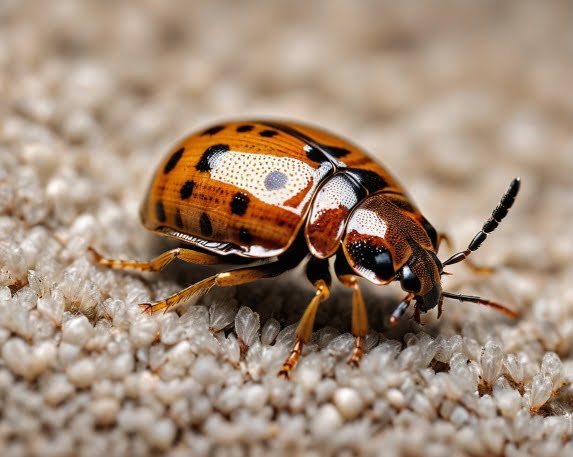
Carpet beetles are small insects, usually 2–5 mm in length, with adult beetles often having black, brown, or patterned shells. They are primarily indoor pests, with larvae being the most destructive stage. Larvae feed on natural fibres such as:
-
Wool
-
Silk
-
Fur
-
Feathers
-
Carpets and rugs
Adult beetles are often found in bedrooms or near windows, while larvae hide in dark, undisturbed areas, slowly eating through carpets, clothes, and upholstery.
Why Carpet Beetles Invade UK Homes
Carpet beetles are attracted to:
-
Natural fibres – clothing, rugs, upholstery, and bedding.
-
Dust, hair, and debris – larvae feed on keratin in dead skin or animal hair.
-
Undisturbed areas – cupboards, wardrobes, under furniture, or rarely-used rooms.
They often go unnoticed until they cause visible damage. Searches like “carpet beetle larvae” or “holes in carpet bugs” peak when damage becomes obvious.
DIY Methods to Control Carpet Beetles
Homeowners often try DIY solutions to reduce infestations:
-
Vacuuming regularly – removes larvae, eggs, and shed skins from carpets and floors.
-
Cleaning upholstery – vacuum under cushions and along edges.
-
Washing fabrics – clothing, bedding, and curtains at high temperatures.
-
Sealing cracks and gaps – prevents beetles from moving between rooms.
-
Using natural repellents – cedar blocks or essential oils can deter beetles.
While helpful, DIY methods rarely remove hidden larvae in carpets or furniture completely. Professional intervention is often needed for full eradication.
Professional Carpet Beetle Control
For serious infestations, professional pest control ensures safe and effective removal. Experts can:
-
Inspect all rooms to locate larvae and adult beetles.
-
Apply targeted insecticides and treatments safe for homes and fabrics.
-
Advise on long-term prevention measures to avoid repeat infestations.
Companies like Panther Pest Control specialise in carpet beetle removal in UK homes, protecting carpets, clothes, and upholstery before more damage occurs.
How to Prevent Future Infestations
Prevention is essential after treatment. Homeowners can reduce the risk of re-infestation by:
-
Regularly vacuuming carpets, furniture, and hard-to-reach areas.
-
Storing clothing properly – use sealed containers for off-season clothes.
-
Washing fabrics regularly, including bedding and curtains.
-
Inspecting second-hand furniture – new items may carry eggs or larvae.
-
Minimising clutter – reduces dark hiding spots for larvae.
Signs You Need Immediate Action
Certain signs indicate a serious infestation that requires professional help:
-
Widespread holes in carpets or fabrics.
-
Carpet beetle larvae visible in multiple rooms.
-
Adult beetles flying in bedrooms or living areas.
-
DIY methods failing to reduce beetle numbers.
Delaying professional treatment can lead to more damage, increased replacement costs, and prolonged infestations.
Why Early Action Matters
Carpet beetles may seem minor, but the consequences of ignoring them are significant:
-
Larvae feed continuously, destroying carpets, clothes, and upholstery.
-
Infestations can spread to multiple rooms quickly.
-
DIY treatments alone rarely eliminate hidden larvae, allowing colonies to persist.
Professional intervention ensures complete eradication and peace of mind for homeowners.
Final Thoughts
Carpet beetle infestations in UK homes are more common than many realise. From carpet beetle larvae hiding in carpets to holes in carpet bugs and adult beetles in bedrooms, early detection and professional treatment are key.
If you notice signs of infestation, Panther Pest Control can:
-
Locate hidden colonies of carpet beetles
-
Remove larvae and adult beetles safely
-
Advise on long-term prevention to protect carpets, fabrics, and furniture
Don’t wait until the damage is done — fast action saves money and keeps your home pest-free.

Al Joel is a practical writer and long-term property maintenance specialist focused on real-world pest control, home safety and prevention advice. His guides translate common warning signs into clear next steps for homeowners, tenants, landlords and property managers.
His approach begins with correct identification. A sighting in one room may originate from a neighbouring flat, service riser, drainage, roof space, delivery or communal waste area. Al explains how to preserve useful evidence, reduce food and water sources, avoid spreading activity and choose proportionate treatment.
What readers can expect
- Clear identification clues and practical inspection steps
- Safe preparation, cleaning and aftercare guidance
- Prevention advice for homes, flats and commercial premises
- Honest guidance on when DIY is reasonable and when professional help is the smarter option
When professional help makes sense
Repeated sightings, activity in several rooms, uncertain identification, vulnerable occupants or signs involving food, electrics and shared building routes deserve a professional inspection. A lasting solution normally combines targeted treatment with proofing, hygiene and follow-up monitoring.
Explore the Pest Library, learn how treatment works, or request property-specific advice.