Pest Control Advice · LONDON
Rats in Communal Bin Stores: A Managing Agent Checklist
A practical checklist for managing agents dealing with rats around shared bin stores: what to record, which building conditions to inspect, how to brief contractors and when to escalate.
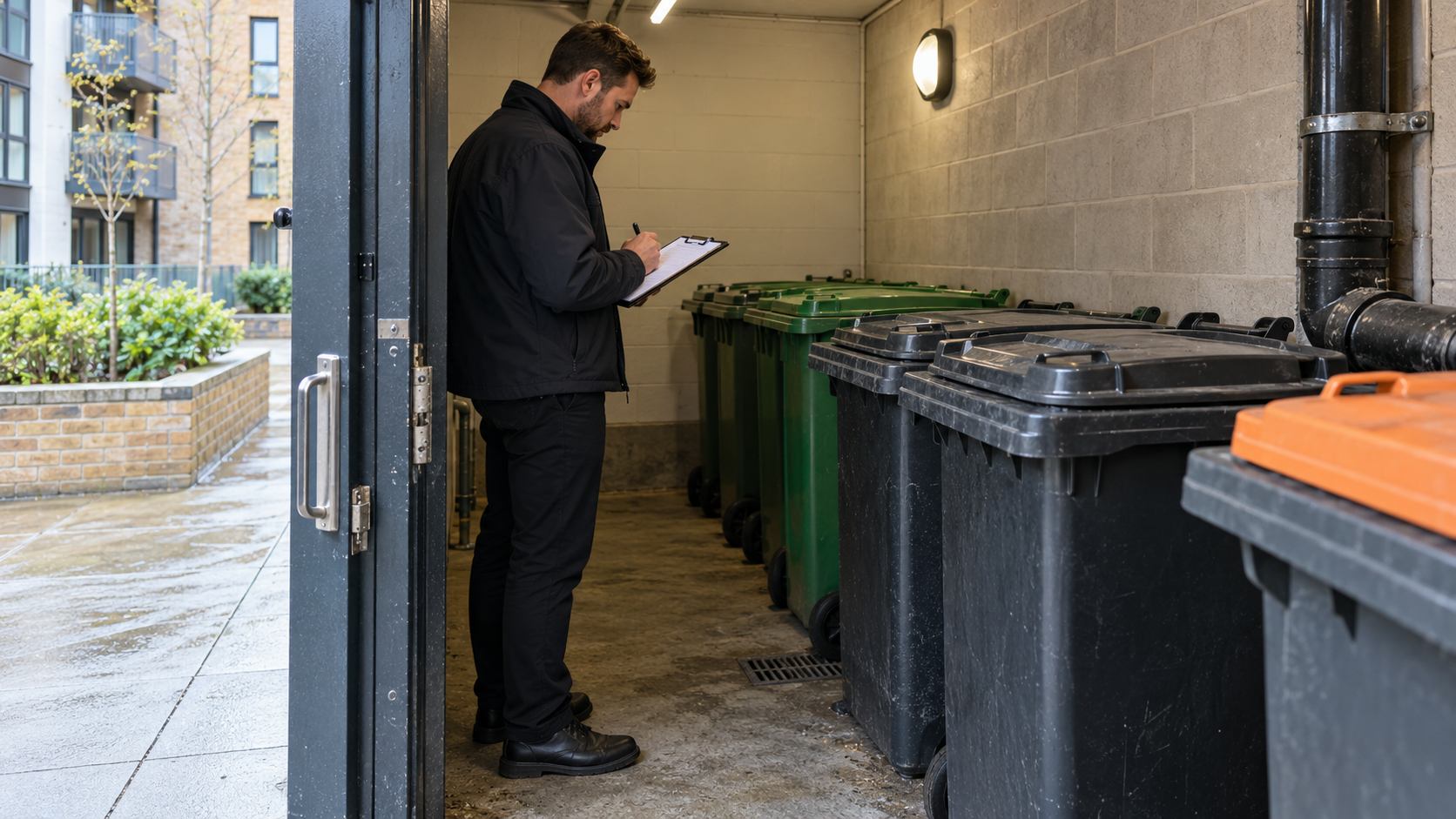
A resident reports a rat beside the communal bins. By the time the managing agent arrives, the animal is gone and the room looks ordinary. That does not make the report unimportant, but it does make a quick spray or a single trap a poor starting point. In a shared refuse area, the useful question is how food, access and shelter are coming together, and who can change each condition.
This checklist is for managing agents, caretakers and resident directors responsible for UK blocks of flats. It focuses on the bin store and the routes around it. It is not a guide to handling a rat or placing rodenticide. A clear inspection record, prompt cleaning and coordinated repairs help a pest professional find the source and let residents see what will happen next.
Make the first visit about evidence
Ask the person who reported the sighting for the date, time and exact position. Was the rat inside the store, at the external bin line, beside a drain, or moving along the wall toward a service door? A brief description of size and colour is less dependable than a location and a direction of travel. If there is a photograph, retain the original and note where it was taken. Do not ask residents to approach an animal for a better picture.
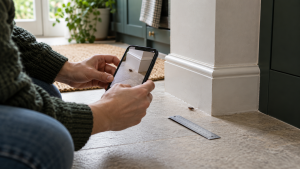
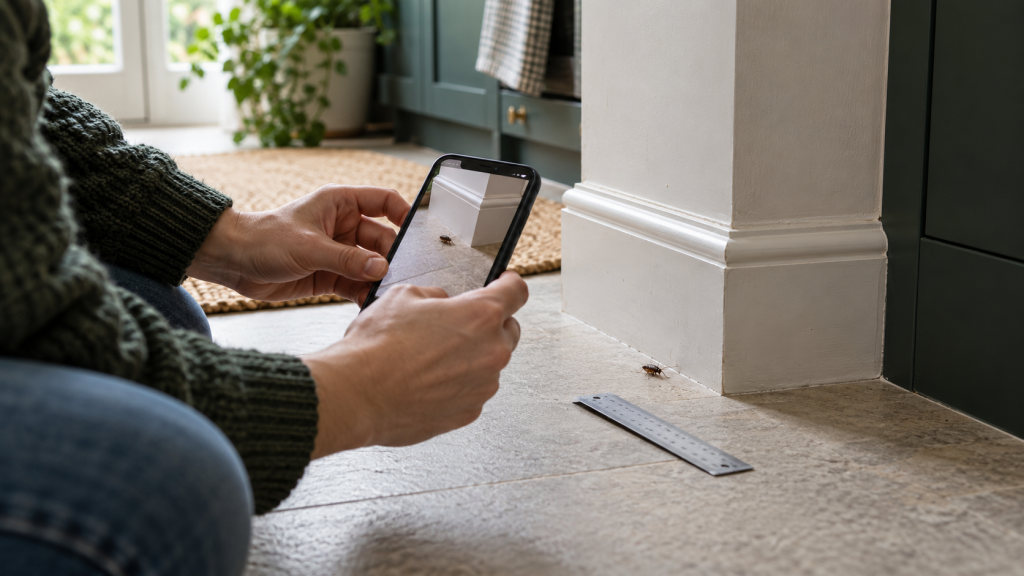
On arrival, take wide photographs before moving bins or clearing loose bags. Record any gnawing, droppings, rub marks, disturbed packaging or fresh digging, and distinguish these from stains or old damage. Look from a safe position with a torch. Do not handle droppings or sweep them dry. A sighting outside a building can have a different source from activity inside; an inspection can test the likely route rather than assuming the bin room is the nest.
Check the bins and collection routine
Start with the ordinary operation of the store. Count the containers, note their capacity and look for overflowing lids on a normal weekday as well as immediately after collection. Is waste left in loose bags because bins fill early? Are lids broken, wheels jammed or handles so awkward that residents leave containers open? Photograph the condition without identifying individual households. Where food waste is collected separately, check that its container closes properly.
Compare available capacity with collection frequency and the number of flats served. A store can be spotless on collection morning yet repeatedly overflow at weekends. Ask the contractor or caretaker whether missed collections, access problems or contaminated recycling have changed the pattern. A practical fix may be a repaired lid, an extra container or a revised collection arrangement; repeated disinfection alone will not solve an inadequate capacity problem.
Keep sacks off the floor where possible. If refuse has already leaked, arrange a safe clean-up using the site’s hygiene procedure and suitable protective equipment. Do not push loose rubbish into a gap behind the bins, where it becomes hidden food and makes later inspection harder. Record the clean-up date and take a matching photograph at the next visit.
Walk the route from the bin store outward
Close the store door and inspect it from both sides. Does it latch, is the closer working, and is there a visible gap at the threshold or where the frame meets masonry? Note the condition rather than estimating whether a rat could fit; a qualified contractor can assess the opening and specify a durable repair. A door that is routinely wedged open for deliveries or collection may need an operational change as well as a new brush strip.
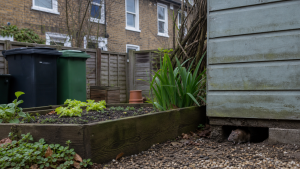
Look along the outside wall, paving, boundary, vegetation and nearby drains without lifting covers or entering unsafe spaces. Photograph exposed pipe penetrations, damaged air bricks, broken grilles and voids under slabs. A drain defect is a separate technical question: ask the appropriate drainage contractor to investigate before sealing or altering it. If the bin store adjoins flats, a plant room or a service riser, map those shared boundaries for the pest technician.
A rat seen by bins may have travelled from neighbouring land or a defective drain. Conversely, activity inside a store can continue even after the outdoor area is tidied if a structural route remains open. The aim is to build a route map, not to blame the first place where an animal was seen. For wider context on outdoor signs, see the separate guide to rats in UK gardens.
Look for water and shelter as well as food
A leaking tap, poorly draining floor or standing water beneath a container can keep the area attractive even when waste is contained. Note puddles after rain and after washing down; they may have different causes. Check whether a gully is blocked, a hose connection leaks, or water enters under the door. Arrange repair through the building’s usual contractor and record when it is completed.
Stacked spare bins, broken furniture and unused equipment create undisturbed corners that are difficult to inspect or clean. Clear only what is safe and authorised to move. Give the pest technician access to the perimeter and behind containers during the appointment. If the room has electrical equipment, avoid moving it or washing near it without the right contractor. A clear floor line and good lighting make later monitoring more reliable.
Separate immediate actions from diagnosis
On the day of a credible report, close lids, remove loose edible waste, secure the door and make any contaminated area inaccessible where appropriate. These are housekeeping and access measures. They are useful, but they do not prove the source has been removed. Log the observation and book a competent inspection when signs are repeated, inside the building, or associated with food areas or vulnerable occupants.
Avoid scattering poison or moving bait stations without a plan. Products placed where residents, children, pets or wildlife can reach them introduce risks, while an untreated entry route remains. Do not seal a suspected active opening until a professional has considered whether an animal could be trapped inside and whether another route will be used. The site’s rat control service can assess treatment alongside proofing and follow-up rather than treating the bin room as a stand-alone problem.
Give contractors one clear brief
Send the pest contractor a concise pack: site plan or simple sketch, dated sightings, photographs, collection timetable, known leaks and repairs, and access details for adjacent rooms. State which areas the agent controls and which need a leaseholder, freeholder, neighbour or utility provider. Ask the contractor to identify confirmed activity, likely routes, recommended immediate controls, repair specifications and the review date. A report that says only “baited bin store” gives the maintenance team little to act on.
Assign each recommendation an owner and a deadline. One person may arrange waste collection changes, another a door repair and another the drainage survey. Keep treatment records and repair records together so the next inspection can distinguish a failed control from an uncompleted repair. If work crosses a boundary or requires permission, record the request and the response; do not quietly mark the item complete.
Tell residents what to do without assigning blame
A short notice is better than a dramatic warning. Say what was observed, when an inspection is planned, and how residents should report fresh evidence. Ask people to use lidded bins, avoid leaving sacks outside them and report broken lids or doors. Provide one contact channel and an exact location description so several reports of the same animal are not treated as several separate infestations.
Do not identify a household as the cause without evidence. In a block, collection capacity, damaged doors and shared drainage are building-management issues. Residents can help by containing waste, but they cannot repair a communal drain. Give a realistic update after the inspection: what is confirmed, what remains uncertain, which repairs are booked and when the next review will happen. For a broader picture of the treatment process, the site’s how it works page explains the inspection-led approach.
Use a repeatable inspection sheet
For each visit, record the date and time, weather if outdoor signs matter, number of bins, whether lids close, loose waste, standing water, door and frame condition, visible penetrations, fresh signs and photographs from fixed viewpoints. Give every action a reference number. “Door D1 does not latch” is easier to follow than “proof bin area”. A simple plan with marked photograph locations helps compare the next visit with the first.
Do not count a quiet day as proof of success. Review the area after collection, at the weekend and after the repairs have had time to take effect. Ask the technician what monitoring period is appropriate for the site and what would trigger another visit. If reports continue, update the route map and widen the inspection to connected spaces rather than repeating the same treatment in the same corner.
Know when the response is urgent
Prompt professional advice is warranted when a rat is seen in an occupied internal area, there are repeated sightings in the store, food-handling premises may be affected, wiring may be damaged, or the route appears to connect with flats or a plant room. Keep people away from an unsafe area and use the building’s normal emergency procedure where electrical or structural hazards are involved. Pest control does not replace an electrician, drainage specialist or building contractor.
When you request an assessment, describe the evidence and the operational constraints, including collection times and access to locked rooms. The most useful outcome is a coordinated plan: contain waste, identify the route, repair it safely, monitor activity and keep residents informed. A bin store that looks cleaner for one morning is a start; a documented fall in signs after the repairs is a better test of progress.

Al Joel is a practical writer and long-term property maintenance specialist focused on real-world pest control, home safety and prevention advice. His guides translate common warning signs into clear next steps for homeowners, tenants, landlords and property managers.His approach begins with correct identification. A sighting in one room may originate from a neighbouring flat, service riser, drainage, roof space, delivery or communal waste area. Al explains how to preserve useful evidence, reduce food and water sources, avoid spreading activity and choose proportionate treatment.What readers can expectClear identification clues and practical inspection stepsSafe preparation, cleaning and aftercare guidancePrevention advice for homes, flats and commercial premisesHonest guidance on when DIY is reasonable and when professional help is the smarter optionWhen professional help makes senseRepeated sightings, activity in several rooms, uncertain identification, vulnerable occupants or signs involving food, electrics and shared building routes deserve a professional inspection. A lasting solution normally combines targeted treatment with proofing, hygiene and follow-up monitoring.Explore the Pest Library, learn how treatment works, or request property-specific advice.