Pest Control · LONDON
Legal Requirements for Pest Control in Restaurants UK: A Compliance Checklist
Last month, a restaurant in Sheerness was fined over £15,000 after an inspection revealed a mouse infestation. For London business owners, this isn't...
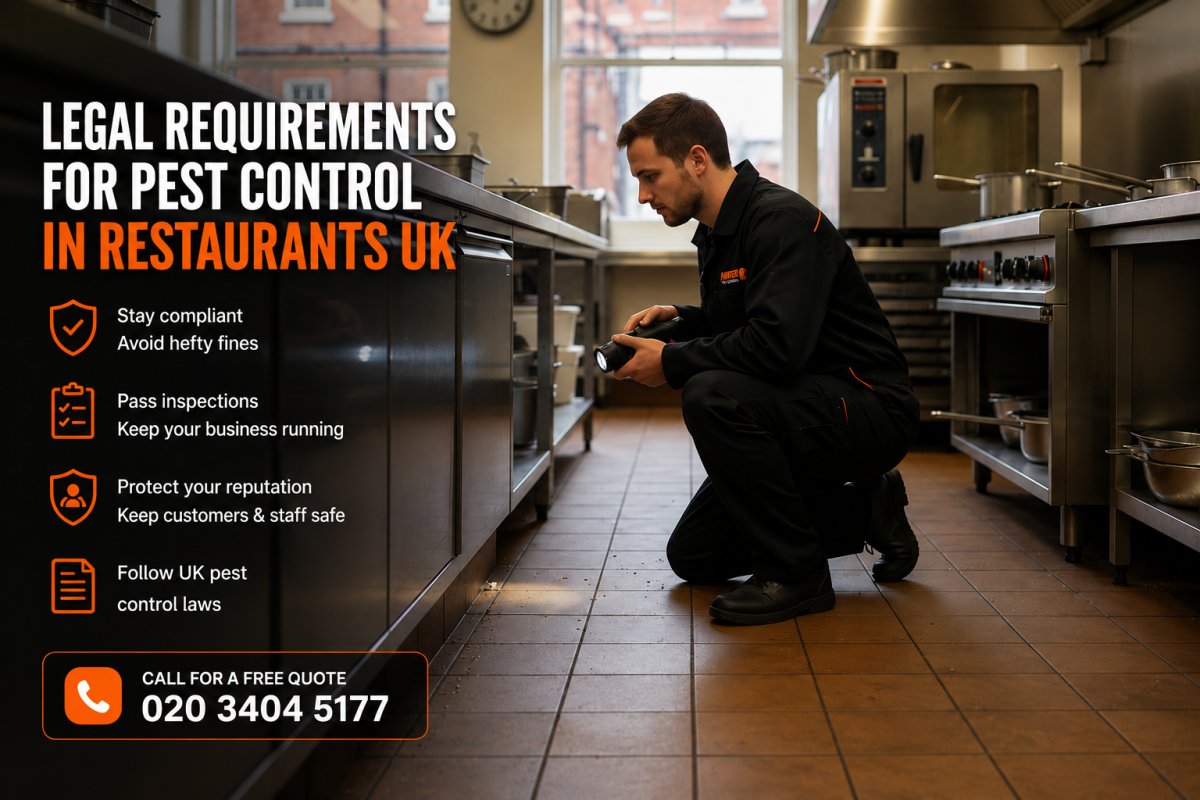
Last month, a restaurant in Sheerness was fined over £15,000 after an inspection revealed a mouse infestation. For London business owners, this isn’t just a news story; it is a constant source of anxiety. Operating out of a historic building in Soho or a converted space in Camden means you are fighting a battle against pests that regular cleaning alone cannot win. Understanding the legal requirements for pest control in restaurants UK is about long-term prevention, not quick fixes. You need your business to be protected properly, not just temporarily patched up.
We know the stress of waiting for an EHO officer to walk through your doors. You want to feel confident that your HACCP documentation is watertight and your kitchen is physically secure. This article provides a clear, actionable checklist to help you master food safety regulations and structural requirements. You will learn exactly how to manage your legal obligations, maintain a pest-free reputation in your local community, and handle your next audit with professional confidence. We are looking at the reality of compliance, focusing on professional inspections, not guesswork.
Key Takeaways
- Master the legal requirements for pest control in restaurants UK by understanding your specific obligations under the Food Safety Act 1990 and current hygiene regulations.
- Implement a robust HACCP framework that prioritises professional monitoring over guesswork; this ensures your documentation stands up to official scrutiny during audits.
- Identify why Victorian drainage in areas like Soho or Camden is a primary entry point and learn how to seal these gaps properly, not temporarily.
- Use a practical walkthrough strategy to catch “red flag” issues like expired fly killer bulbs or unsealed service penetrations before the inspector arrives.
Understanding the Legislative Framework for UK Food Businesses
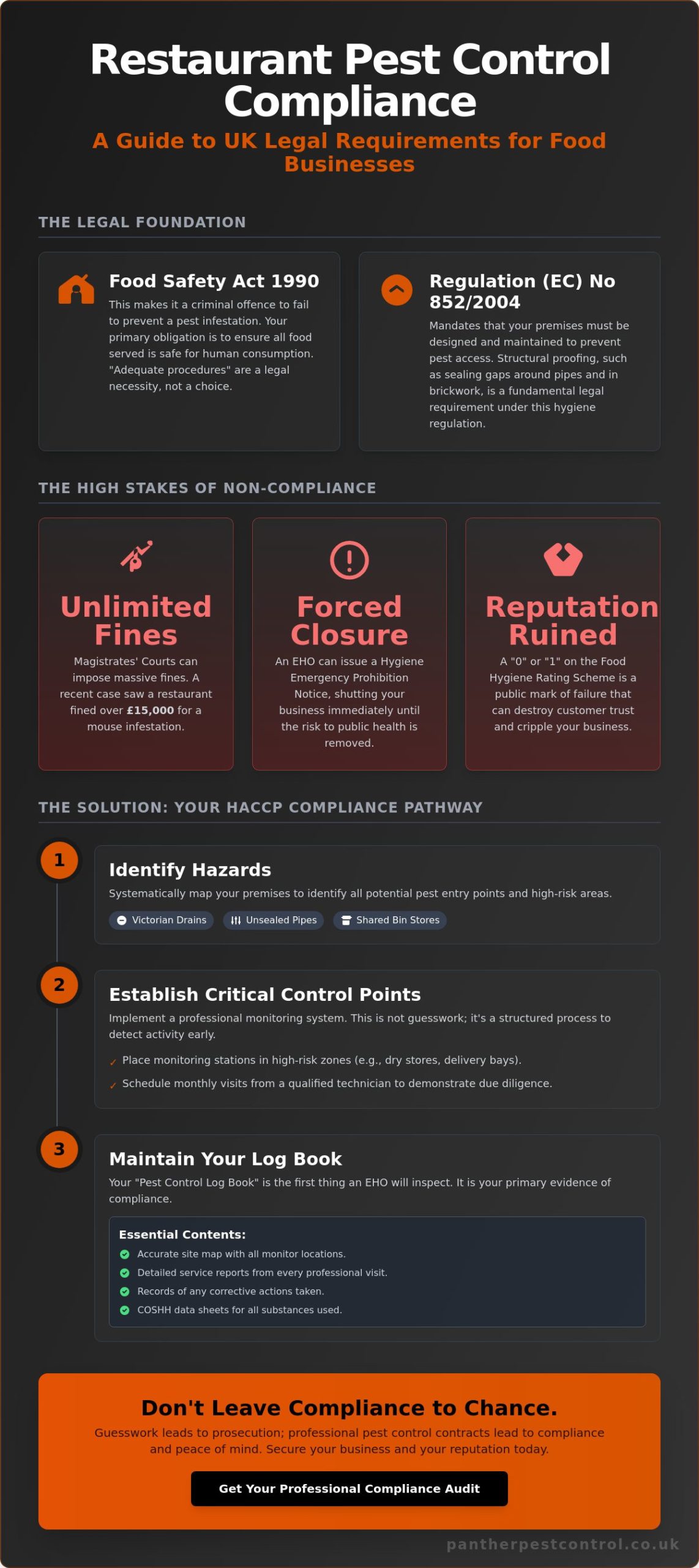
The Food Safety Act 1990 is the foundation of your business operations. It places a clear, non-negotiable obligation on you to ensure all food served is safe for human consumption. Under this act, failing to prevent a pest infestation isn’t just a hygiene slip; it’s a criminal offence. When an Environmental Health Officer (EHO) enters your premises, they aren’t looking for excuses. They are looking for proof that you have met the legal requirements for pest control in restaurants UK through consistent, professional action.
Regulation (EC) No 852/2004 takes this further by focusing on the physical environment. It mandates that the design and construction of your food premises must permit good food hygiene practices, including protection against contamination and pests. This is where pest control principles such as exclusion and proofing become legal necessities rather than optional extras. If your Soho basement has gaps in the brickwork or faulty seals around pipework, you are already in breach of these regulations.
The Food Hygiene (England) Regulations 2013 give local authorities the power to enforce these standards. The law requires “adequate procedures” to be in place to control pests. In the eyes of a judge, “adequate” means a documented system managed by experts, not a few retail traps scattered under a sink. Guesswork leads to prosecution; professional commercial pest control contracts lead to compliance. Due diligence serves as the primary legal shield for restaurant owners, proving that every reasonable precaution was taken to prevent an infestation.
The Consequences of Non-Compliance
The financial stakes are higher than most owners realise. Magistrates’ Courts now have the power to impose unlimited fines for serious hygiene breaches. As recently as May 2026, a restaurant in Sheerness was fined over £15,000 for a mouse infestation that could have been prevented with basic proofing. Beyond the fines, an EHO can issue a Hygiene Emergency Prohibition Notice, which shuts your doors immediately. In a city like London, the resulting “0” or “1” rating on the Food Hygiene Rating Scheme is a public scarlet letter that can destroy a reputation faster than any fine.
Who is Legally Accountable?
The “Food Business Operator” (FBO) carries the ultimate weight of responsibility. Even if you lease a property in a shared building, you are responsible for the hygiene within your four walls. Claiming “I didn’t know” is never a valid legal defence. We recently saw a case where a Fulham bistro owner was held liable for mice entering through a shared basement alley. Although the alley was common ground, the owner failed to secure their own entry points properly, resulting in a heavy penalty. You must manage the risks you can control, regardless of your landlord’s lack of action.
The HACCP Pest Control Checklist for Restaurant Compliance
A Hazard Analysis and Critical Control Point (HACCP) plan isn’t just a folder on a shelf; it’s a living document that proves you are meeting the legal requirements for pest control in restaurants UK. Your first step is identifying hazards, which means mapping out exactly where rodents or cockroaches could enter. In many London properties, this starts with the shared bin stores or delivery bays where grease build-up attracts activity. You should reference the Safer Food, Better Business (SFBB) pack to ensure your management system aligns with current FSA standards.
Setting up Critical Control Points (CCPs) involves placing monitoring stations in these high-risk zones. This is about professional monitoring, not DIY guesswork. If a technician finds activity in a bait station near your dry stores, that’s a CCP breach. You need established monitoring procedures that dictate how often these checks happen. Monthly visits from a qualified technician are the industry standard for demonstrating due diligence. If you spot a pest between visits, your corrective action must be immediate. This means calling for an emergency inspection and documenting the steps taken to resolve the issue.
Essential Documentation for Your Log Book
Your “Pest Control Log Book” is the first thing an EHO will ask to see. It must contain an accurate site map showing every monitor’s location and detailed service reports from every visit. These reports should clearly state what was found, what was done, and what structural improvements you need to make. You also need COSHH data sheets for every substance used. Keeping these records updated ensures you are audit-ready at any moment. These documents are a core part of the legal requirements for pest control in restaurants UK. If you aren’t sure if your current records are sufficient, you can book a professional pest inspection to verify your compliance.
Staff Training and Reporting Protocols
Legally, your staff must be supervised and instructed in food hygiene matters. This includes recognising early signs of pests. We recently trained a kitchen team in Camden to identify cockroach egg cases behind their industrial fridges, allowing them to implement professional cockroach control before the situation escalated. Every kitchen should have a simple “Pest Sightings Log” where staff can record the date, time, and location of anything suspicious. This creates a clear trail of accountability that EHOs highly value during an inspection.
Structural Proofing: Meeting Legal Standards in London Properties
London’s architectural history is a gift for diners but a nightmare for pest prevention. To meet the legal requirements for pest control in restaurants UK, your exclusion strategy must be airtight. Rodents can squeeze through any gap larger than 5mm. In a modern build, this is easy to manage. In a converted Victorian terrace, it requires a meticulous floor-to-ceiling inspection. Proper proofing is about long-term prevention, not quick fixes that an EHO will flag during their next visit.
Drainage integrity is often the most overlooked legal obligation. Faulty Victorian pipework in Soho is the primary cause of persistent rat control issues. If your pipes are cracked or redundant junctions are left uncapped, rats will enter your kitchen directly from the sewer. This is a major hygiene breach. You must ensure all drainage points are sealed with interceptors or metal bungs. It is a matter of professional standards, not guesswork.
Your refuse management and ventilation also fall under strict legal scrutiny. External waste storage must be secure and situated away from prep areas to prevent attracting flies and rodents. Inside, any windows or doors used for ventilation in food preparation zones must have mandatory fly screening. These screens must be removable for cleaning. If an inspector sees a fly-infested kitchen because a back door was left propped open without a screen, your rating will suffer immediately.
The Challenge of Victorian and Period Buildings
Old London buildings often share “pest highways” through connected ceiling voids and floorboards. If your neighbour in a terraced row has an issue, you will too unless you seal your perimeter. We recently used heavy-duty metal mesh to seal a 100-year-old air brick in a Greenwich restaurant. This stopped mice from entering the subfloor whilst maintaining the building’s required ventilation. You have to proof for the reality of the property, not just the visible surfaces. The same challenges apply to licensed premises throughout the West End, and operators seeking pest control for pubs in Soho face identical structural vulnerabilities in W1’s heritage buildings.
Pest-Proofing Materials That Pass Inspection
Using expanding foam is a common mistake that will be flagged by an EHO. Rats chew through it in seconds, and it creates a porous surface that traps grease and bacteria. Professional-grade solutions include stainless steel wool, brush strips for doors, and sand-and-cement renders for brickwork gaps. Every material used must be durable and cleanable. If you are struggling to secure an older building, you can request a structural proofing survey to identify every hidden entry point before your next audit.
Passing the EHO Inspection: Final Steps and Professional Support
Before an Environmental Health Officer (EHO) sets foot in your kitchen, you must conduct your own pre-audit walkthrough. This is the time to identify “red flag” hygiene issues that lead to instant point deductions. Check your electronic fly killers (EFKs); if the bulbs are older than twelve months, they have lost their effectiveness and will be flagged as a maintenance failure. You need to ensure your premises are pest-free and pest-proofed properly, not just temporarily tidied up for the day of the visit.
Review the last three months of your pest reports to ensure every recommendation made by your technician has been signed off. If a previous report mentioned a gap under the rear fire door and it is still there, an inspector will see it as a failure of management. Engaging a BPCA-certified partner for a commercial pest control contract is the most effective way to manage these legal requirements for pest control in restaurants UK. It moves the burden of monitoring from your busy kitchen staff to a professional who understands the specific risks of your local area.
What the EHO Looks for First
An inspector starts with high-risk areas. They look for direct evidence: fresh droppings in dry stores, smear marks along skirting boards, or gnaw damage on food packaging. They often perform a “Gap Test,” checking if a pencil can fit under a door or around pipework penetrations. Finally, they will ask for your log book. If it isn’t organised, signed, and present on-site, you cannot prove that you are meeting the legal requirements for pest control in restaurants UK, regardless of how clean your kitchen looks.
Why One-Off Treatments Often Fail Legal Tests
Local authorities have a clear legal preference for preventative rather than reactive pest management. A one-off treatment only deals with the immediate crisis; it doesn’t provide the continuous monitoring required to prove due diligence. We recently saw a Knightsbridge cafe fail an audit because they had no record of preventative rodent monitoring. They had called for help only when they saw a mouse, which the EHO correctly identified as a failure to have “adequate procedures” in place. A contract provides the paper trail that proves you are a responsible operator.
Securing Your Restaurant’s Future and Reputation
Meeting the legal requirements for pest control in restaurants UK is about protecting your livelihood from more than just infestations. It’s about building a defensive shield of documentation and structural integrity that satisfies every EHO inspection. You’ve seen how historic London architecture creates unique vulnerabilities, from Victorian sewers to shared ceiling voids. Relying on reactive treatments is a risk your business can’t afford. Proper compliance means having a proactive system that works 24/7.
We’ve completed over 20,000 London jobs properly, providing the EHO-approved documentation you need to stay operational. Our BPCA certified technicians focus on long-term prevention, not quick fixes. Maintaining a five-star hygiene rating requires constant vigilance and a professional eye. By integrating a robust HACCP plan with high-grade structural proofing, you remove the guesswork from your food safety management. Don’t wait for a red flag during an audit to address your compliance gaps. You can secure your restaurant with a professional London compliance contract today. It’s the only way to ensure your kitchen remains a safe, reputable space for your community.
Frequently Asked Questions
Is it a legal requirement to have a pest control contract for a restaurant in the UK?
No, a contract isn’t explicitly named in the legislation, but it’s the most reliable way to prove you have “adequate procedures” in place. EHOs expect to see a professional agreement to satisfy the legal requirements for pest control in restaurants UK. Without one, you’ll struggle to demonstrate due diligence if an infestation occurs. It’s about proactive management, not just reacting when you see a problem.
What happens if an EHO finds mice in my restaurant kitchen?
Finding live mice or fresh droppings usually results in immediate enforcement action. The EHO may issue a Hygiene Emergency Prohibition Notice, which closes your business until the risk is removed. You’ll likely face a significant drop in your Food Hygiene Rating and potential prosecution. In May 2026, a restaurant in Sheerness was fined over £15,000 for such a breach. It’s a high-stakes situation that requires professional intervention, not DIY attempts.
Does the law require me to use a professional pest control company?
The law requires that the person managing pest control is “competent.” Whilst you can technically do it yourself, most restaurant owners don’t have the technical expertise or equipment to meet the required standards. Using a professional company ensures your methods are safe, legal, and effective. It provides a level of professional reassurance that DIY retail products simply cannot match. It’s about getting the job done properly, not just guessing.
How often should a restaurant have a pest control inspection?
There’s no fixed legal frequency, but a risk-based approach is mandatory. For most London restaurants, eight to twelve inspections per year are the industry standard. High-risk areas like Soho or Camden, where Victorian buildings are common, often require monthly visits. Regular checks allow for long-term prevention, not just quick fixes. Your technician will adjust the frequency based on your specific property’s history and local pest pressure.
What is a Pest Control Log Book and what must be inside it?
A Pest Control Log Book is your primary evidence of compliance during an audit. It must contain your site map, service reports from every visit, and COSHH data sheets for any chemicals used. It should also include your “Pest Sightings Log” where staff record any activity. Keeping this organised and up to date is essential for meeting the legal requirements for pest control in restaurants UK. It’s your paper trail of professional accountability.
Can an EHO shut down my restaurant immediately for a cockroach infestation?
Yes, an EHO has the power to close your doors immediately if they believe there’s an imminent risk to public health. A cockroach infestation in food prep areas is a major hygiene failure. They will issue a Prohibition Notice, and you won’t be allowed to reopen until a follow-up inspection confirms the problem is resolved. This isn’t just about the fine; it’s about the total loss of trade and reputation.

Al Joel is a practical writer and long-term property maintenance specialist focused on real-world pest control, home safety and prevention advice. His guides translate common warning signs into clear next steps for homeowners, tenants, landlords and property managers.
His approach begins with correct identification. A sighting in one room may originate from a neighbouring flat, service riser, drainage, roof space, delivery or communal waste area. Al explains how to preserve useful evidence, reduce food and water sources, avoid spreading activity and choose proportionate treatment.
What readers can expect
- Clear identification clues and practical inspection steps
- Safe preparation, cleaning and aftercare guidance
- Prevention advice for homes, flats and commercial premises
- Honest guidance on when DIY is reasonable and when professional help is the smarter option
When professional help makes sense
Repeated sightings, activity in several rooms, uncertain identification, vulnerable occupants or signs involving food, electrics and shared building routes deserve a professional inspection. A lasting solution normally combines targeted treatment with proofing, hygiene and follow-up monitoring.
Explore the Pest Library, learn how treatment works, or request property-specific advice.
Related Pest Control Articles
 Pest Control for Pubs in Soho: Discreet Protection for W1 Establishments
 Pest Control for Hampstead Businesses: Compliance Guide
 Pest Control for Restaurants and Food Businesses in the UK: A Complete Guide to Compliance and Prevention
 Mouse Proofing Kitchen London: Professional Structural Fortification