Pest Control Advice · LONDON
Pest signs in a shared wall? How neighbours can work together
A sound in a shared wall does not prove which home the pest came from. Compare dates and locations, involve the right building contact and plan one useful inspection.
Scratching seems to come from the wall between two flats. One resident finds droppings behind a kitchen unit; the neighbour has heard nothing. It is tempting to decide that the other home must be the source. A shared wall can connect to floors, ceilings, service risers and outside gaps, so the sound or sign on one side does not prove where a pest entered. A calmer approach is to compare what each household can actually observe and give an inspector access to the right places.
This guide is for neighbours, landlords and managing agents dealing with suspected activity along an adjoining wall. It explains what to record, how to ask for cooperation without an accusation, and how to organise inspection and repair across property boundaries. It does not settle who should pay: that depends on the building, agreements and cause. The immediate goal is to establish the route and reduce the problem safely.
Why a shared wall is a lead, not an answer
Adjoining homes may share more than a visible wall face. Cables and pipes cross or run beside it; a suspended floor can connect with a void beneath the next room; a chimney breast or roof space can carry sound. The British Pest Control Association’s site risk guidance notes that pests can move between adjoining premises along service routes, wall cavities, roof voids and underfloor voids. That makes a shared structure worth checking, but it does not identify the original entry point.
Sound travels through building fabric. Scratching heard at the same wall in two rooms may come from a connected ceiling or floor rather than a cavity directly between them. Likewise, droppings by a skirting board may mark a route through one room while the nest or external opening lies elsewhere. Treat “inside the party wall” as a description of where the signal seems strongest, not a confirmed diagnosis.
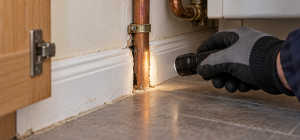
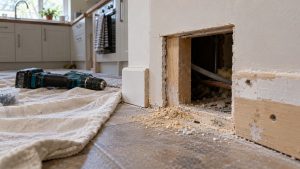
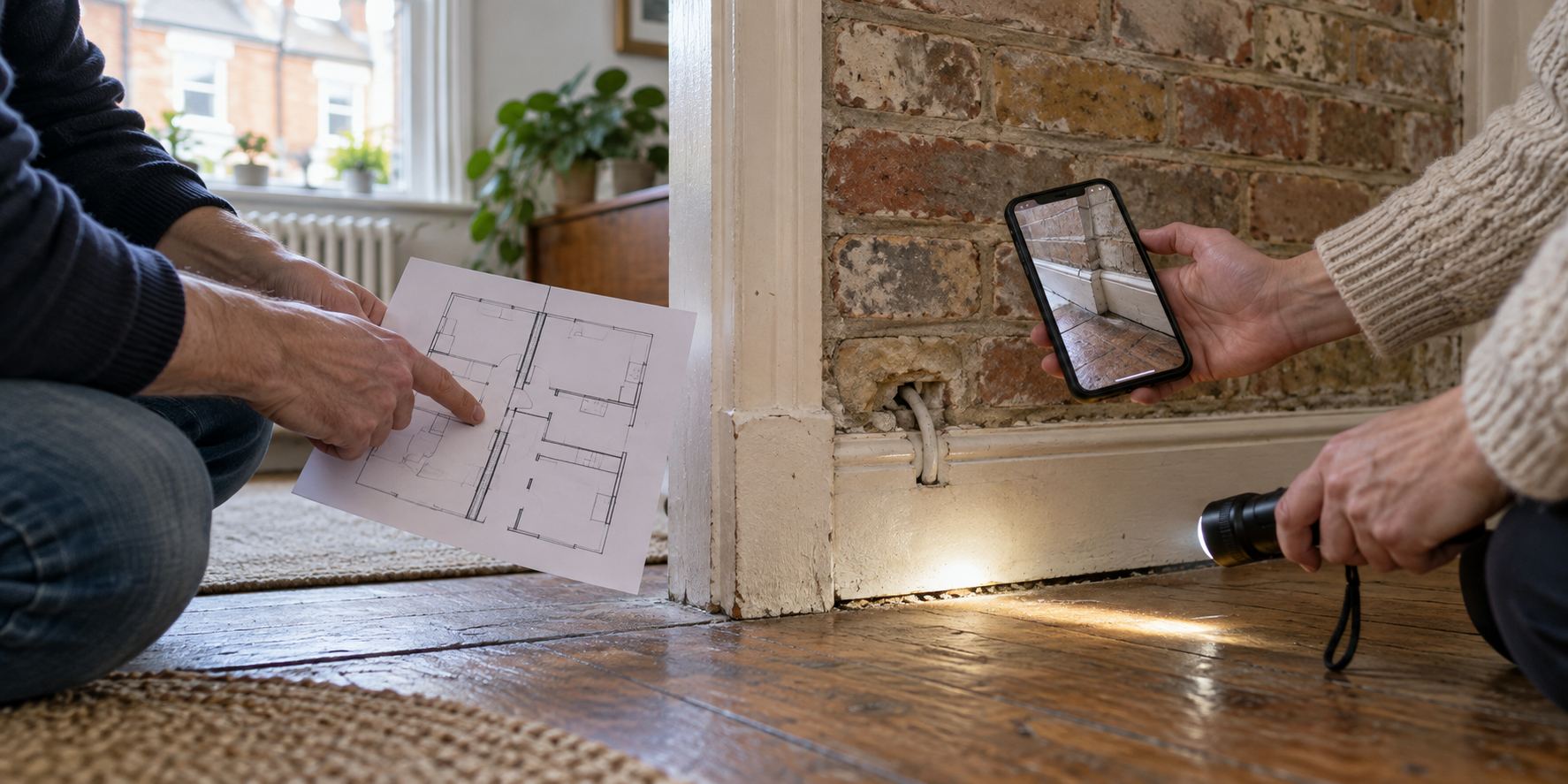
The first practical distinction is between an isolated clue and continuing activity. Photograph signs where found, note the date and room, and check whether new signs appear after the area is recorded and safely cleaned. Do not pull off sockets, dismantle pipe boxing or drill into a wall to prove a theory. Those steps may disturb wiring, gas or plumbing and can damage fire protection between homes.
Build one simple map from two sets of observations
Each household can sketch its own side of the shared wall. Mark kitchens, bathrooms, cupboards, service boxes, fireplaces, floor level and the nearest external wall. Use the same orientation so the maps can be compared. A phone photograph of a sign is useful only if another image shows where it sits in the room. Label files with dates; if the wall has several levels, include the floor. A short sequence of repeat observations is more useful than a folder of unlabelled close-ups.
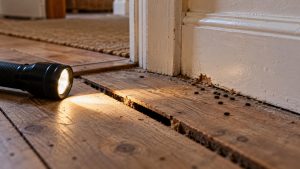
Agree on plain terms for what has been seen or heard. One neighbour might write “small dark droppings beside the boiler cupboard at 09:00 on Monday”; the other might report “scratching behind the kitchen units after midnight on Tuesday”. Neither should turn a suspicion into a statement about the other’s housekeeping. A neutral record lets an inspector compare timings and locations without first untangling a dispute.
Ask when work or changes occurred on either side: new kitchen units, a leaking pipe, a wall opening, a move-in or a change to waste storage. These events are clues, not blame. If a neighbour does not want to share details of their home, record the information they are comfortable giving. A managing agent can sometimes gather reports privately and pass a combined location map to the pest contractor without circulating personal details between residents.
How to start the conversation
A brief message works better than an allegation. Try: “We have noticed scratching near the wall between our kitchens on two evenings and found signs behind our sink. Have you noticed anything near that wall? We are arranging an inspection and wondered whether the inspector could compare both sides.” State the room and dates, offer a photograph of the location if helpful, and leave room for the answer to be no.
If there is a landlord or agent, send the report to them at the same time. Identify the affected room, the likely shared structure and any immediate concern such as food contamination or damaged wiring. Ask who can arrange access to a service riser or communal space. A tenant should not be expected to open a locked enclosure or organise a repair to another property. For English private renting, GOV.UK’s repairs guidance explains the general landlord duties for the structure and services and tells tenants to report repair needs. The exact arrangement still needs checking for the property.
If a neighbour is unwilling or unavailable, continue with what can be done from your own side. Preserve the evidence, make a report to the relevant landlord or manager, and ask for an inspection that notes the access limitation. Do not invent findings for the unseen area. A written limitation can help the person coordinating the building obtain access later if the first visit cannot trace the route.
Arrange one inspection plan, even if access happens in stages
Two separate appointments with two separate contractors may produce partial answers. If possible, agree on a coordinated visit or ask the same technician to inspect both homes and the common parts. The inspector can compare signs, follow service runs and identify openings that need a specialist trade. Where simultaneous access is impossible, share the first visit’s location notes with the person attending the second. Consent matters: a technician should enter each home only through the access arrangements agreed with its occupant or responsible party.
Define the purpose before the visit. Is the main question the likely pest, the active route, the affected areas or the repair needed? An inspector may be able to answer some but not all of them on the first day. A property pest inspection can assess the evidence and set out what remains uncertain. Ask for a written summary separating confirmed signs, likely routes, inaccessible areas and proposed next steps.
Do not let a treatment in one flat substitute for a building assessment where signs cross the boundary. A trap or treatment point may reduce activity in the accessible room, but an open route through a common void can still allow further movement. Conversely, an apparent shared-wall problem may be confined to one side. The plan should change with the evidence rather than assume a block-wide infestation from the first report.
Protect people and the building while the route is traced
Each home should keep food protected and waste in closed bins, and avoid leaving pet food out overnight. Keep children and pets away from a contaminated area until it can be cleaned safely. If there are signs close to food preparation, damaged cables or a gas appliance, report them promptly to the relevant person and avoid disturbing the fitting. Rodent identification matters because mouse activity and rat activity may need different access and control plans.
Do not feed loose bait into a wall, cover a ventilation opening or seal an active gap on one side without a plan. A visible indoor hole may be only one exit from a connected void. Closing it prematurely can hide useful evidence or redirect movement. Any permanent repair should suit the wall, service and fire separation. The pest specialist can identify the access risk; the right building trade should decide how to restore the construction safely.
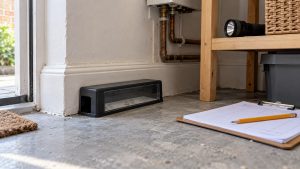
Keep intervention points under professional control and tell both households where they are. A person in one flat should not move a monitor or trap placed for an investigation simply because it is close to the shared wall. If the device becomes unsafe or is disturbed, report it rather than trying to reset it without instructions. Shared facts help everyone judge whether activity is reducing.
Who coordinates a repair?
The answer varies between a terraced house, two leasehold flats, a converted building and a block with a managing agent. Start by identifying the physical item: an external hole, a pipe penetration, a broken riser panel, a damaged door or a defect within a party wall. Find out who owns or manages that part and who can authorise access. It may take more than one trade, especially where plumbing, electrics or fire-stopping are involved.
For rented homes in England, GOV.UK describes broad repair duties for landlords, including structure and certain services; common-area responsibility and any cost question need the specific arrangement checked. Panther’s existing guide to landlord and tenant pest responsibilities deals with that wider issue. This article focuses on how residents and a building manager can collect compatible evidence and get the necessary inspection done before arguing over cause.
When the repair is agreed, ask for a short written scope: the precise opening, what will be done on each side, whether any service or ventilation is affected, and how access will be arranged. Take a photograph before the area is covered and another after completion. If a shared void could not be inspected, put that in the record. An unfinished investigation should not be marked “resolved” simply because the visible gap has been filled.
What if the neighbour does not respond?
Do not trespass, photograph into another home or leave notes that accuse someone of causing an infestation. Document the signs within your own property and use the ordinary building communication route: landlord, managing agent, freeholder or housing provider as appropriate. Ask for acknowledgement, an inspection date and an explanation of how access to common parts will be arranged. If the concern is urgent because of food, vulnerable occupants or serious damage, say exactly why.
If repairs are not progressing in an English rented home, GOV.UK points tenants towards the local council’s environmental health or housing department where conditions may cause harm. That is an escalation route, not a first step in every neighbour disagreement. Keep copies of reports and responses so an inspector or council officer can see what has been observed and attempted.
In a privately owned terrace, the party wall and boundary arrangements may be different. If structural work is proposed, take advice on the relevant property and building requirements rather than assuming a pest controller can authorise it. You can still coordinate the investigation: agree what evidence to share, what access each owner will allow and who will speak to the contractor after both sides are checked.
A short joint checklist for the next seven days
Choose one contact person per home and one for any shared area. Record the exact location and date of each new sign. Photograph from a wide and close angle. Note whether the area was cleaned, repaired or inaccessible. Agree one inspection request that asks about species, active routes, common spaces and the order of treatment and proofing. Make sure each resident knows who will provide access and when they will receive the written findings.
After a repair or treatment, continue checking the same locations rather than changing every part of the setup at once. If signs stop on one side but continue on the other, do not immediately conclude that the source has moved. Compare the dates, devices and access limitations, then ask the inspector what the pattern means. Good coordination is a process of narrowing the unknowns, not finding someone to blame.
A shared wall can make a small pest problem feel personal. It is easier to solve when each household can say what it knows, what it cannot see and what access it can offer. If you need help bringing the observations together, contact Panther Pest Control with the affected rooms, dates and any communal access details.

Al Joel is a practical writer and long-term property maintenance specialist focused on real-world pest control, home safety and prevention advice. His guides translate common warning signs into clear next steps for homeowners, tenants, landlords and property managers.His approach begins with correct identification. A sighting in one room may originate from a neighbouring flat, service riser, drainage, roof space, delivery or communal waste area. Al explains how to preserve useful evidence, reduce food and water sources, avoid spreading activity and choose proportionate treatment.What readers can expectClear identification clues and practical inspection stepsSafe preparation, cleaning and aftercare guidancePrevention advice for homes, flats and commercial premisesHonest guidance on when DIY is reasonable and when professional help is the smarter optionWhen professional help makes senseRepeated sightings, activity in several rooms, uncertain identification, vulnerable occupants or signs involving food, electrics and shared building routes deserve a professional inspection. A lasting solution normally combines targeted treatment with proofing, hygiene and follow-up monitoring.Explore the Pest Library, learn how treatment works, or request property-specific advice.