Pest Control Advice · LONDON
Black Garden Ants or Pharaoh Ants in a Flat? A Practical Comparison
A flat ant trail can come from an outdoor nest or a warm shared void. Use a specimen, route map and connected reports to guide the next step.
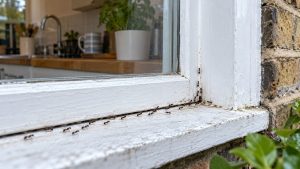
A line of ants appears beside the kitchen skirting in a London flat. The first instinct is to call them garden ants because the balcony door is close; the second is to fear Pharaoh ants because the building has a warm service riser. Both guesses can be wrong. The practical decision is whether the ants are foraging in from outside or using the heated building itself, and that takes more than a glance at colour.
Black garden ants and Pharaoh ants differ in size, appearance and nesting behaviour. The distinction changes who needs to inspect, how much of the block may be involved and which products must be avoided. This guide is a side-by-side triage for residents and managing agents. It complements Panther’s detailed Pharaoh ant article by concentrating on the comparison and the evidence needed before a treatment decision.
Compare the workers, but keep the verdict provisional
Workers of the common black garden ant are dark brown to black and typically several millimetres long. Pharaoh ant workers are much smaller, pale yellow to light brown, often with a darker abdomen. The BPCA’s 2026 advice on indoor ant identification highlights the importance of recognising the small pale species in centrally heated buildings. A clear photograph beside a millimetre ruler helps, but poor lighting can make a dark ant look pale or make a very small insect appear large on a zoomed screen.
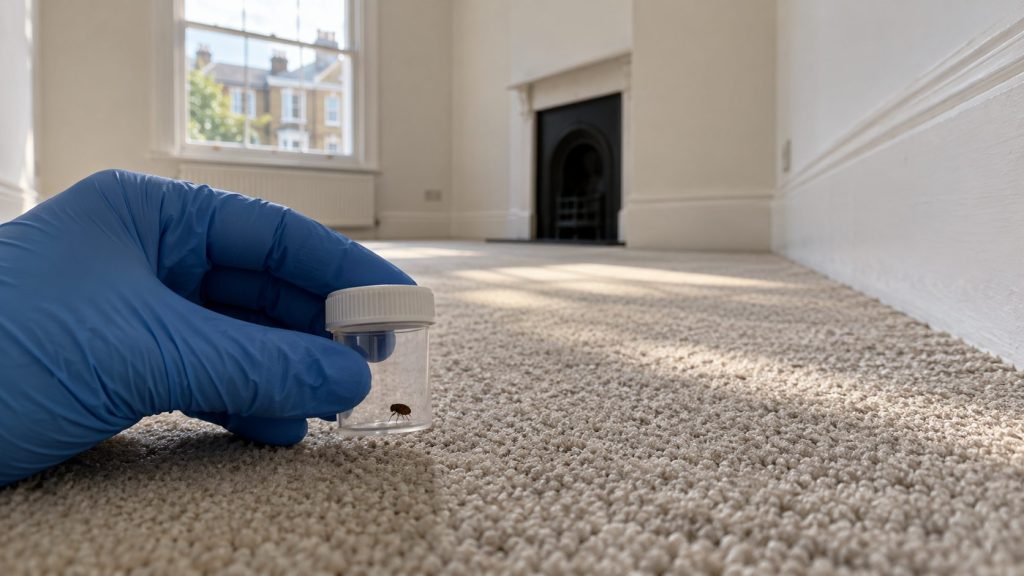
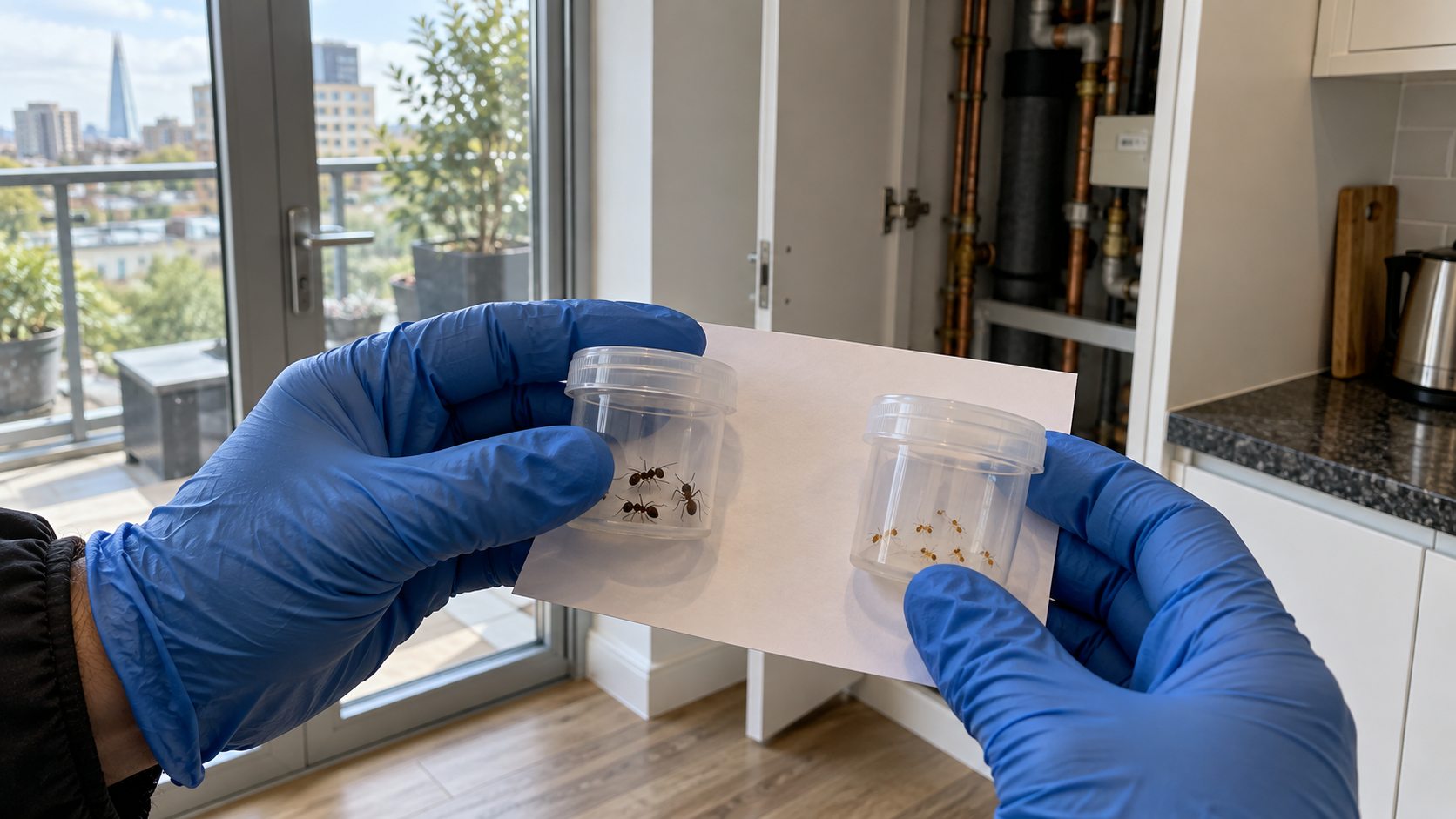
Capture a few workers in a closed transparent container if it can be done safely, and keep the collection location written down. Photograph them on a plain background from above and the side. Do not combine ants from the balcony and the kitchen in one pot; they may not be the same species. A technician may need a hand lens or microscope to separate a very small pale ant from other lookalikes. State “small pale ant” if that is all the evidence supports.
One large winged ant on a summer day is another clue to interpret cautiously. Garden ant colonies can produce winged reproductive ants seasonally. A Pharaoh ant colony typically expands within buildings by budding rather than by the same obvious outdoor flight. Yet a winged insect on a window is not enough to identify the whole indoor trail. Keep it separate, record where it appeared and ask for identification if the worker ants remain active.
Follow the trail to a boundary
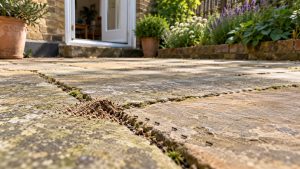
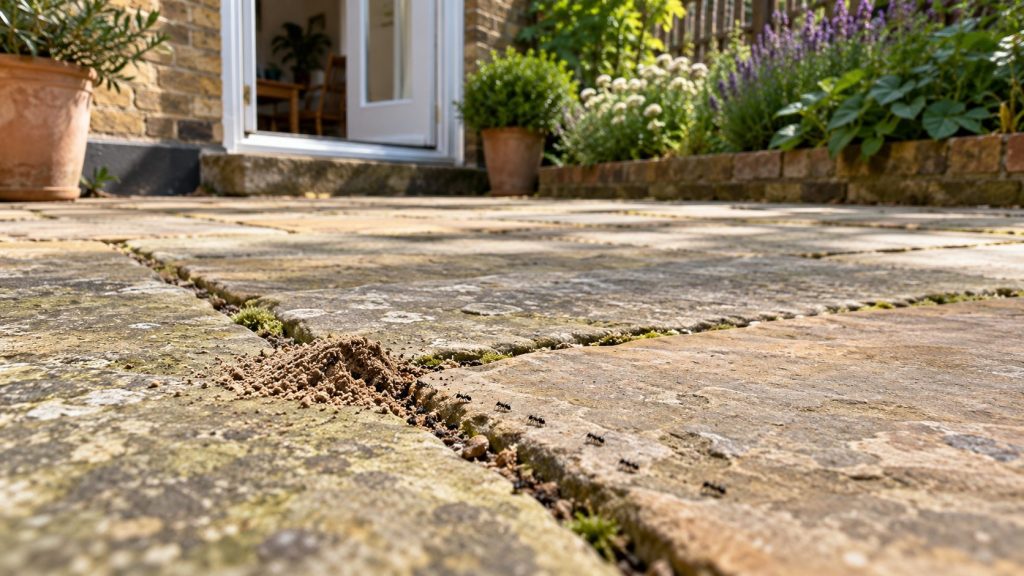
Black garden ants commonly nest outdoors in soil and enter homes to forage, often along a predictable line from paving, a threshold or a wall gap. If a trail can be watched from a kitchen crumb to a balcony joint and then into an outdoor nest area, that pattern supports an outdoor source. It does not guarantee there are no other ants in the building. Photograph the exact entry point before wiping the trail, and remove accessible food without sealing a gap prematurely.
Pharaoh ants are adapted to warm, sheltered indoor spaces and can move through service voids, pipe routes and adjoining rooms. A trail that appears far from an external edge, recurs along a riser or turns up on more than one floor should prompt wider identification. A tidy kitchen does not rule them out. The location makes the question urgent because a flat-by-flat response may miss an interconnected colony, but it is still not a species diagnosis.
Draw a simple route map: first sighting, skirting edge, cupboard, pipe opening, balcony or corridor. Note whether the line persists after food is sealed, whether a second trail appears and whether neighbouring flats have independently reported similar ants. A managing agent can gather these reports without naming or blaming a household. Panther’s ant-control service follows trails and checks likely harbourage before choosing a method.
Food preference is a clue, not a test
Garden ants often follow sweet food, and BPCA notes that they may invade buildings to collect it. Pharaoh ants can use proteins, fats and sweet foods too. Therefore a line of ants around sugar does not prove “garden ant”, and a line near pet food does not prove “Pharaoh”. The University of California’s Pharaoh ant identification resource lists varied indoor food sources. Use food location to trace the line, not to name the species.
Remove exposed food, clean accessible spills and secure pet feed. Before cleaning a trail completely, take a photo or short video showing where workers enter and leave. Do not place a sugary test bait around children or food preparation areas to “see which species likes it”. A technician can select a monitoring or bait approach safely after identification. Several household products applied at once can make the route harder to interpret.
For a café or shared kitchen within a block, record the time and exact food area and follow the site’s food-safety procedure. The species question sits alongside immediate stock protection. Do not leave food exposed while waiting for the ant ID, and do not let a product used by one occupier interfere with a coordinated building plan.
Why an unplanned spray is a bigger problem with Pharaoh ants
Pharaoh ant colonies can split and relocate when disturbed. The University of California’s colony biology notes explain that insecticide sprays on trails may trigger budding. BPCA likewise advises specialist help where a tropical indoor species is possible. This is the key practical reason not to assume that a shop spray suitable for one ordinary outdoor ant trail is safe for every indoor trail in a block.
If the ants are very small and pale, appear in several rooms, or use a heated service route, pause chemical treatment until they are identified. Tell the managing agent about the pattern and any products already applied. If the insects are clearly dark garden ants following an outdoor route, a range of ordinary management options may be available, but placement still needs to be appropriate for occupied rooms, pets and food areas. Correct identification comes before method selection.
Do not present “no spray” as a promise that nothing can be done. Food containment, leak reporting, route photography and coordinated access can begin immediately. A professional can then choose an appropriate targeted plan for the confirmed species and the building. Panther’s dedicated Pharaoh ants in London flats guide explains the risks and specialist control in more detail; this comparison helps decide when that pathway is relevant.
A decision table for the first report
| Observation | What it may suggest | Next useful step |
|---|---|---|
| Several-millimetre dark ants, visible line to patio soil | Outdoor garden-ant foraging is plausible | Photograph route and confirm species; remove accessible food |
| Very small pale ants in warm inner rooms or riser edges | Pharaoh or another indoor species is possible | Retain specimen; avoid unplanned sprays; coordinate inspection |
| Ants reported in several flats or floors | Shared movement route needs checking | Map reports by location and arrange connected access |
| One ant on a window, no repeat trail | Origin remains uncertain | Photograph, monitor and avoid species claim |
The table describes probabilities, not a home identification key. Some native ants are small and some photographs distort colour. A mixed or poorly documented report deserves a specimen and site survey. The risk of a wrong method is highest when a small indoor species might be spread through a shared building.
What residents and managers should each record
A resident should note the first date, room, exact gap, time of activity, any food or moisture nearby, and whether the trail reaches outdoors. Keep a close photograph with scale and a wider view of the route. Tell the manager promptly if activity involves a communal corridor or service cupboard. Avoid carrying loose infested items between flats or applying multiple products while the identification is pending.
A managing agent should put reports on a building plan and distinguish unconfirmed resident sightings from technician findings. Arrange access to the relevant riser, bin area and adjoining units if evidence points that way. Do not publicise a particular resident as the source. A trail in one flat may be the first visible sign of a route through common fabric; another flat may have a separate garden-ant line. The log should allow both possibilities until inspection resolves them.
Ask the contractor to record the species or the limits of identification, the areas inspected, likely harbourage and any follow-up points. A vague report saying only “ants treated” is not enough to evaluate a building-wide problem. The contractor should explain whether the plan is confined to an outdoor nest, one flat or connected indoor areas.
When to request an inspection
Seek identification promptly for very small pale ants, repeated activity in a centrally heated block, trails crossing service routes, or several linked flats. Also ask for help if a dark ant trail persists indoors despite food control and a visible outdoor entry route cannot be found. A technician may identify a different ant altogether. Panther’s pest inspection can document what is confirmed and where access was limited.
Send a specimen photograph, route map, postcode, floor and any prior product use when you contact Panther Pest Control. The first useful decision is not which can of spray to buy. It is whether the ants are an outdoor foraging line or a small indoor species moving through a connected building, and what evidence will settle that question.

Al Joel is a practical writer and long-term property maintenance specialist focused on real-world pest control, home safety and prevention advice. His guides translate common warning signs into clear next steps for homeowners, tenants, landlords and property managers.His approach begins with correct identification. A sighting in one room may originate from a neighbouring flat, service riser, drainage, roof space, delivery or communal waste area. Al explains how to preserve useful evidence, reduce food and water sources, avoid spreading activity and choose proportionate treatment.What readers can expectClear identification clues and practical inspection stepsSafe preparation, cleaning and aftercare guidancePrevention advice for homes, flats and commercial premisesHonest guidance on when DIY is reasonable and when professional help is the smarter optionWhen professional help makes senseRepeated sightings, activity in several rooms, uncertain identification, vulnerable occupants or signs involving food, electrics and shared building routes deserve a professional inspection. A lasting solution normally combines targeted treatment with proofing, hygiene and follow-up monitoring.Explore the Pest Library, learn how treatment works, or request property-specific advice.