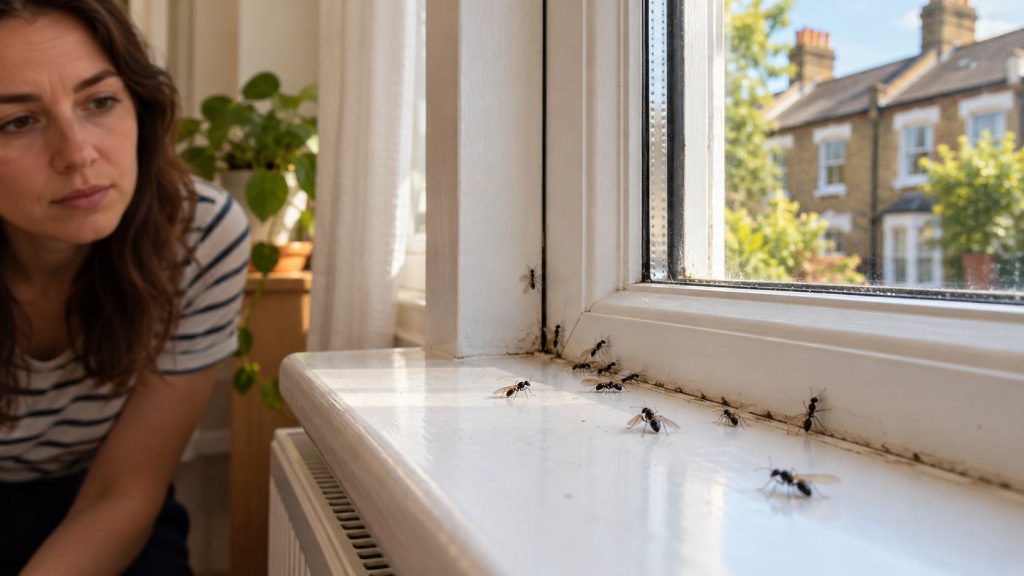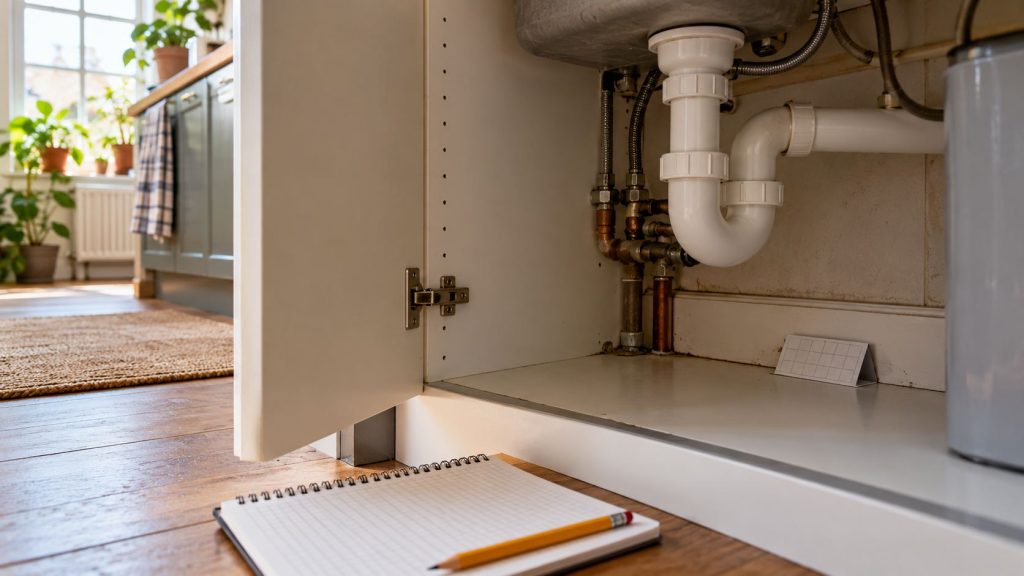
Pest Control Advice · LONDON
Ants Under Patio Slabs: When Should You Act?
A small fan of sand beside a slab can mark a garden ant nest. The decision depends on paving condition and whether a trail reaches the house.
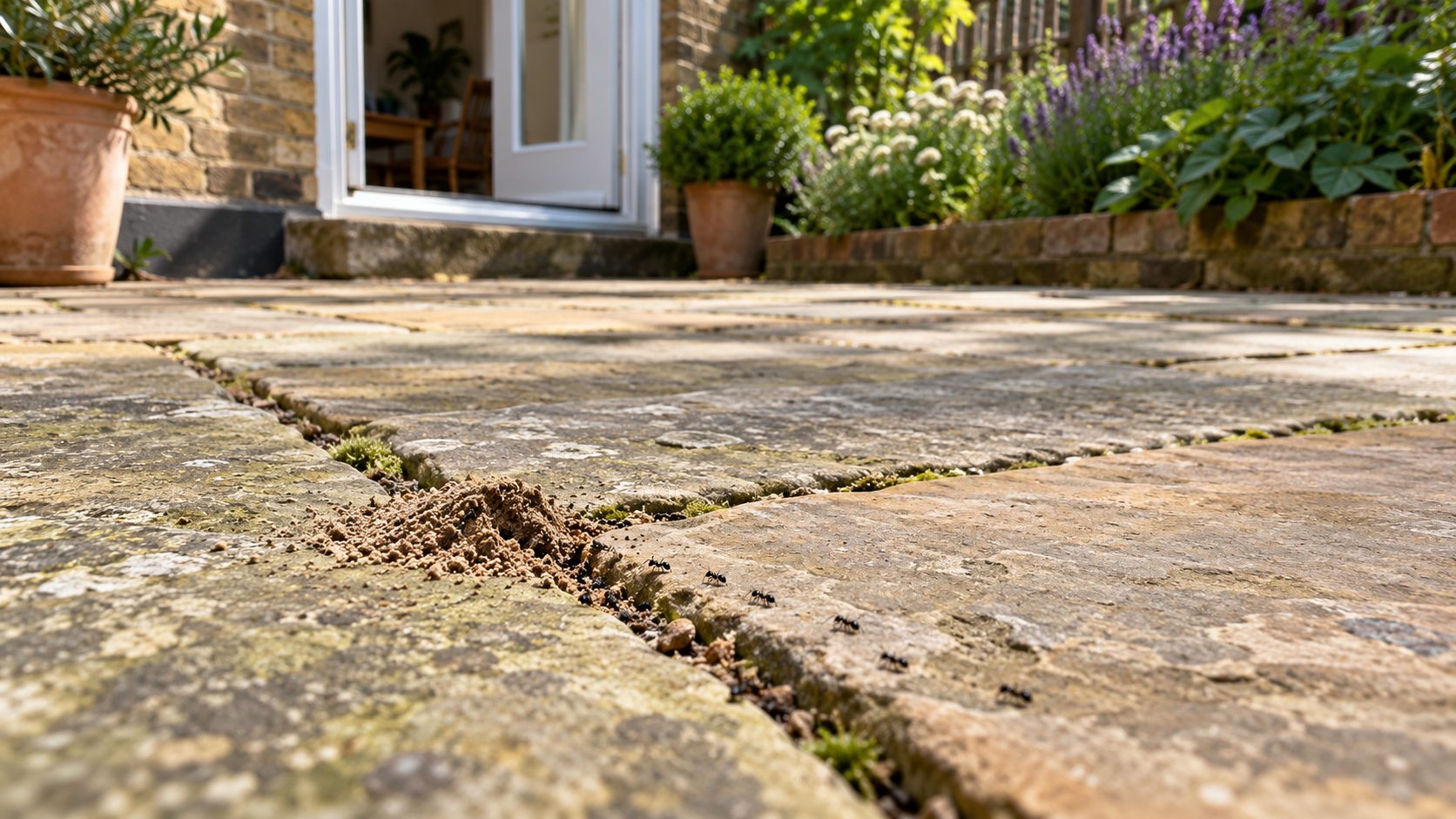
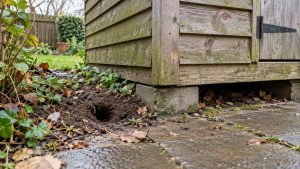
A neat little fan of sand appears between two patio slabs, and by lunchtime a line of ants is crossing the joint. It is easy to picture the paving collapsing or a colony marching straight into the kitchen. Usually the sensible first step is less dramatic: establish whether the ants are simply nesting outdoors, whether the surface has actually moved, and whether the trail reaches the house.
Black garden ants commonly nest in soil under paving. Their presence alone is not a reason to lift a sound patio or treat every joint. Outdoor ants are part of the garden. The decision changes when the route becomes a repeated indoor nuisance, a vulnerable threshold is involved, or a paving defect needs attention. This guide shows how to observe that boundary without losing the clues.
What the sand and the trail actually show
Workers can carry fine soil out of a nest and leave it beside a crack or joint. A narrow trail between that point and a food source may form when foragers have found something worth returning to. The Royal Horticultural Society notes that ant nests can produce small heaps of soil, and councils also describe common black ants nesting under paving. These signs tell you where ants are active; they do not reveal the full size of the colony or prove the slab is structurally unsound.
Photograph the joint and a wider view showing its position relative to the house. Put a ruler beside the soil heap if practical, then check again at roughly the same time on another dry day. Was the fine material replenished after being brushed aside? Does the trail follow the patio edge, run into a border or reach a wall opening? A two-day record is more informative than a single photograph of a busy afternoon.
Do not diagnose the species from a distant picture of tiny dark dots. The common black garden ant is a frequent outdoor visitor, but other ants occur in Britain and some indoor species require a different approach. If ants are only outside, avoid turning a straightforward garden observation into a species claim. If they repeatedly appear indoors, take a close photograph and follow the line to the point of entry for ant identification and route-led control.
When an outdoor nest can be left alone
A colony under one sound slab at the far end of a garden may cause little more than a dusting of sand and seasonal movement. The RHS advises tolerating garden ants where possible because they are part of garden biodiversity and generally do little direct damage to plants. If the patio is level, the ants stay outdoors and nobody is being stung or affected, observation is often enough. The mere sight of winged ants on one warm day does not automatically change that decision; flying ants are a seasonal reproductive event.
Keep the area tidy without trying to sterilise the garden. Remove food scraps from outdoor meals, keep bins closed and avoid leaving sticky drink spills by the house. Brush loose soil from a walking surface so it is not tracked indoors, then see whether the joint is active again. If you are planning to re-point or relay paving anyway, record the active joint before the work begins. It may show where a route needs to be managed.
Ant numbers naturally vary with weather and time of day. A sunny afternoon can make an established trail conspicuous while a cool morning looks quiet. Compare like with like rather than treating every change in visible traffic as proof that a method has worked or failed. An isolated outdoor nest may remain an acceptable part of the garden even when the foraging line looks impressive.
When the patio becomes a property question
Check the paving separately from the insects. Is a slab newly rocking underfoot? Is a joint losing bedding material, or has a step at a doorway changed? Photograph any movement or trip point and arrange a paving assessment where needed. Ants may use an existing gap and excavate fine soil, but it would be unsound to blame them for all settlement beneath a patio. Drainage, construction and other ground conditions can matter. The repair decision should be based on the paving condition, not on the presence of ants alone.
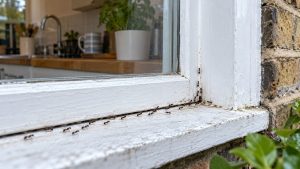
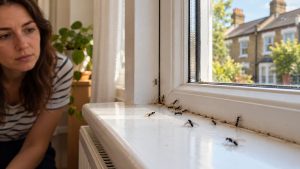
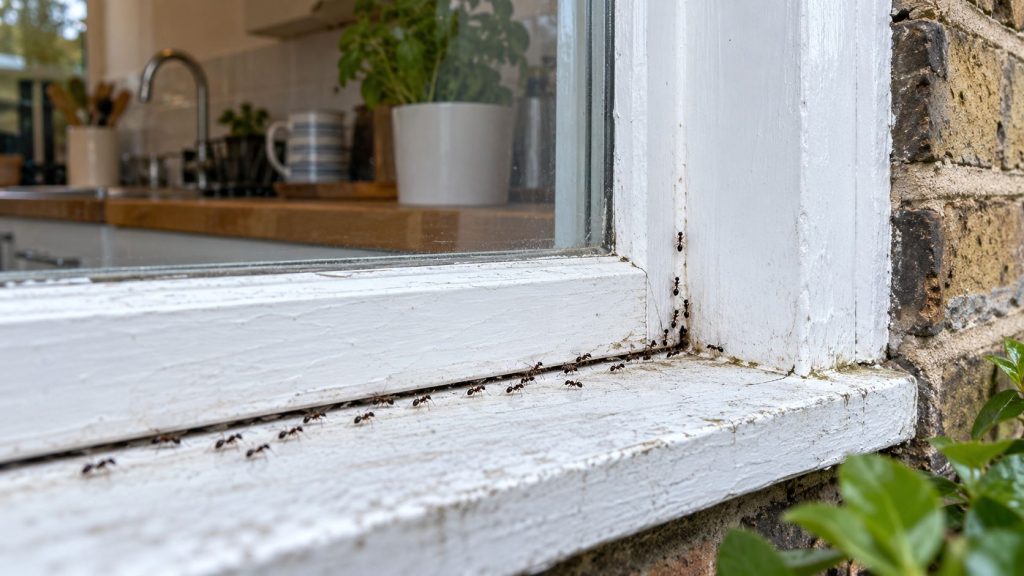
A second trigger is a route into the building. Follow the line from the patio towards the threshold, air brick, pipe penetration or gap where paving meets the wall. If workers are regularly appearing on a kitchen worktop or at a food cupboard, the problem is no longer simply a garden nest. The colony may still be outside, while the practical issue is access and a reliable indoor food source. Store food, clean spills and note the entry point before sealing anything that a technician needs to inspect.
Repeated ants emerging from a wall or floor inside a centrally heated building deserve particular care with identification. The BPCA advises that ants found indoors should be correctly identified, since some species behave differently from ordinary garden ants. Do not assume that every indoor trail beside a patio is the same black-ant colony under a slab. The separate Pharaoh ant guide explains why a small indoor species calls for a different assessment. A clear specimen is more useful than an untested guess.
Follow the route before choosing any treatment
Watch from a short distance for a few minutes. Where do workers disappear beneath the slab, and where do they reappear? Are they carrying material out, or merely crossing the paving on the way to a flower bed? Is there a second trail on the other side of the house? A nest entrance, a travel route and a food source are not interchangeable. Treating the visible middle of a trail may leave both ends untouched.
Draw a simple plan: slab joint, wall, doorway, drain cover, bins and planting. Mark the direction of travel, date and weather. If the ants enter the house, note the first indoor point and any sweet food or pet bowl they reach. Photos should include a close view of the ants and a wider shot of the route. This small amount of mapping makes a request for inspection much more useful and helps avoid repeated visits to the wrong part of the garden.
Do not lift heavy paving to hunt the nest. Slabs can crack or shift, and the visible opening may not be the centre of the colony. Pouring boiling water into a joint creates a scald risk, can damage nearby plants and may not reach the relevant nest chambers. Broad insecticide application across a patio can expose children, pets and non-target insects while doing little to explain the route. If treatment is warranted, it should be chosen for the identified ant and the specific site conditions.
How to respond to ants reaching the kitchen
First remove the reward. Seal sweet foods, wipe worktops and clean accessible crumbs around the bin or pet feeding area. Take a photograph of the trail and entry point before wiping it away. If the route persists, an inspector can trace it back through the threshold or service gap. A professional plan may include targeted bait or another suitable method, but the placement must take account of the species, weather, children, pets and food preparation surfaces.
Do not mix sprays and bait without advice. Repellent products can alter trails and make a bait-led plan harder to interpret. Equally, sealing a gap while ants are actively using it can redirect them to another opening; confirm the route and plan the sequence. Panther’s ant-control page describes the usual pattern: identify and trace the colony route, target activity, then reduce access after the situation is understood.
Where several households share a terrace or courtyard, tell the relevant neighbour or managing agent what you have actually observed. “Ants entering at the rear threshold after rain” is useful; “the neighbour’s patio is infested” is conjecture. Shared paving and building edges sometimes require coordinated access. A local Highbury ant-control article discusses recurring domestic trails in a different setting; here the central question is when an outdoor patio nest crosses the line into a building problem.
What to do after the ants have stopped appearing
Check the same joint and indoor entry point for a short period, particularly on comparable warm days. Less visible traffic is encouraging, but a single cool day is not a meaningful test. Keep food and waste routines steady so that a new trail is easy to spot. If paving needs repair, carry that out when the active route has been assessed and any treatment instructions allow it. Re-pointing or sealing should address a real defect, not conceal an unresolved moisture or access problem.
Some seasonal outdoor activity may remain even after the kitchen is protected. The aim is a sound, usable patio and no repeated indoor nuisance, not a garden without ants. If a trail returns at another joint, record the new path rather than assuming the earlier nest survived. Ant colonies and foraging routes can change. The RHS garden ant guidance supports leaving harmless outdoor colonies alone; intervention should have a clear reason.
In short, a little sand and a short outdoor trail normally call for observation. Rocking paving, a repeated route into food areas, or uncertainty about an indoor species call for closer inspection. Start with the joint, the path and the threshold. That is the evidence needed to decide when to act.

Al Joel is a practical writer and long-term property maintenance specialist focused on real-world pest control, home safety and prevention advice. His guides translate common warning signs into clear next steps for homeowners, tenants, landlords and property managers.His approach begins with correct identification. A sighting in one room may originate from a neighbouring flat, service riser, drainage, roof space, delivery or communal waste area. Al explains how to preserve useful evidence, reduce food and water sources, avoid spreading activity and choose proportionate treatment.What readers can expectClear identification clues and practical inspection stepsSafe preparation, cleaning and aftercare guidancePrevention advice for homes, flats and commercial premisesHonest guidance on when DIY is reasonable and when professional help is the smarter optionWhen professional help makes senseRepeated sightings, activity in several rooms, uncertain identification, vulnerable occupants or signs involving food, electrics and shared building routes deserve a professional inspection. A lasting solution normally combines targeted treatment with proofing, hygiene and follow-up monitoring.Explore the Pest Library, learn how treatment works, or request property-specific advice.