Pest Control Advice · LONDON
Second-Hand Furniture and Bed Bugs: A Buying Checklist
A practical UK checklist for inspecting used sofas, chairs and bed frames for bed bug signs before purchase and after delivery.
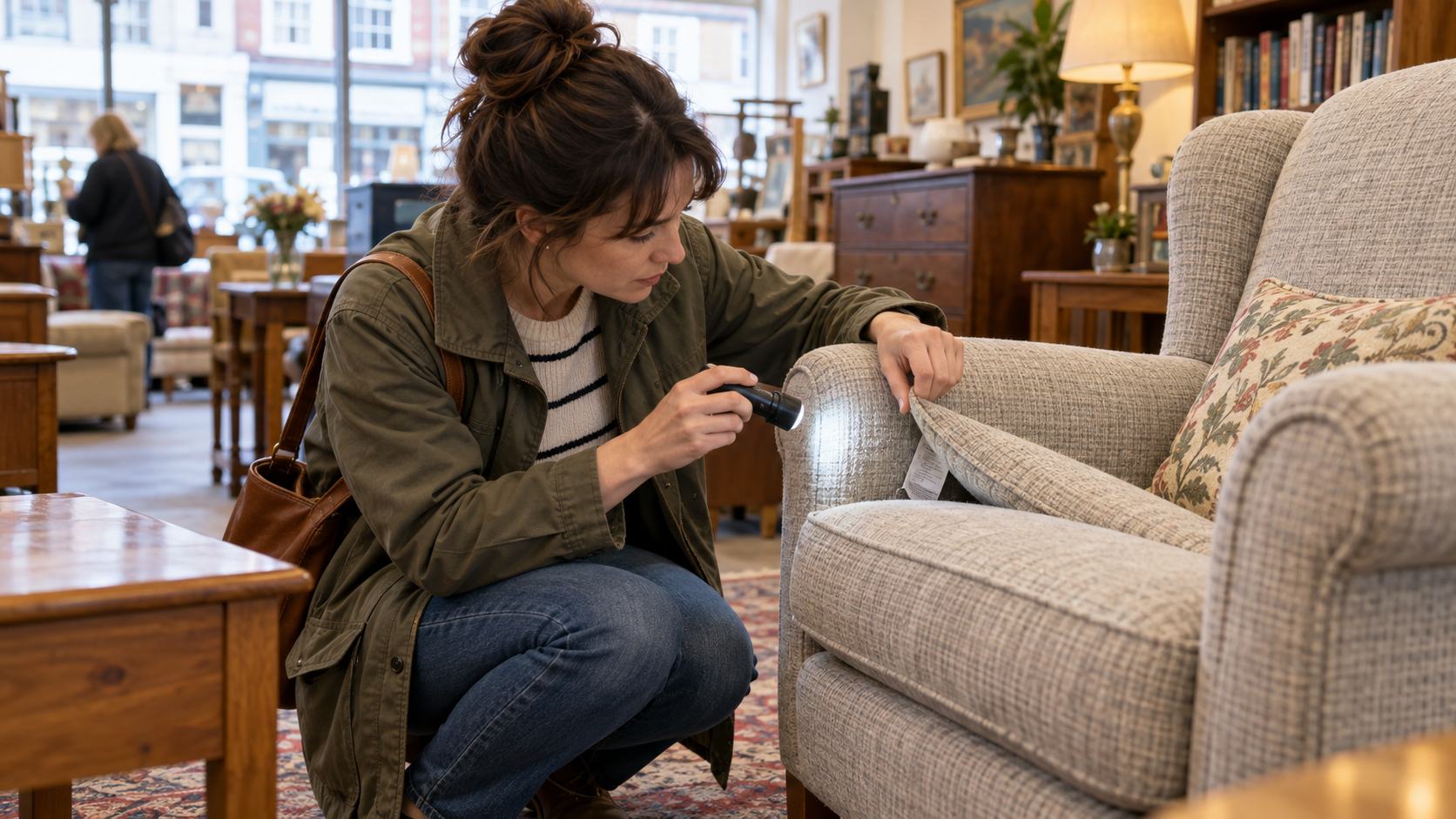
A second-hand armchair can be a good find. The awkward question comes before you pay: how can you check it for bed bugs without pretending that a quick glance guarantees anything? Upholstery has seams, folds and joints that can hide evidence. A seller may have no reason to suspect a problem, and a clean-looking item can still merit a closer look. The aim is to make a sensible buying decision and avoid bringing an unexamined item straight into a bedroom or living room.
This is a practical checklist for buyers of used sofas, chairs, bed frames and bedside furniture in the UK. It focuses on inspection, transport and the first steps at home. It is not a promise that every bed bug can be seen. The NHS advises checking second-hand furniture carefully before bringing it indoors, and the US Environmental Protection Agency likewise identifies used furniture as a possible route into a home.
Decide what you can inspect before travelling
Ask for clear photographs of the actual item, including its underside, back, seams and any removable cushions. A wide picture shows condition; close views show whether there are stains or tears that need a closer look. Ask where the item has been kept and whether it can be viewed in good light. You do not need a detailed story about the seller’s home, but you do need enough access to inspect the purchase itself.
Be wary of a collection arrangement that allows only a hurried handover at the kerb. An item left outdoors may have other problems besides bed bugs, including damp or damaged structure. If the seller cannot let you inspect a high-risk upholstered item, it is reasonable to decline. A low price is not compensation for an inspection you were unable to make.
Take a torch and inspect in a fixed order
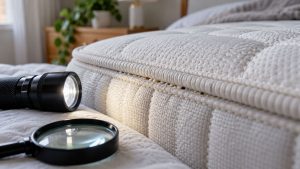
Check the item where it stands, with the seller’s permission. Start at the seams and piping, move to labels and folds, then lift removable cushions one at a time. Look at the lower frame, feet, joints and any dust cover that can be viewed without cutting or dismantling it. A pale cloth or sheet of paper can help make a small insect visible if one moves, but do not shake the item over the seller’s floor to force something out.
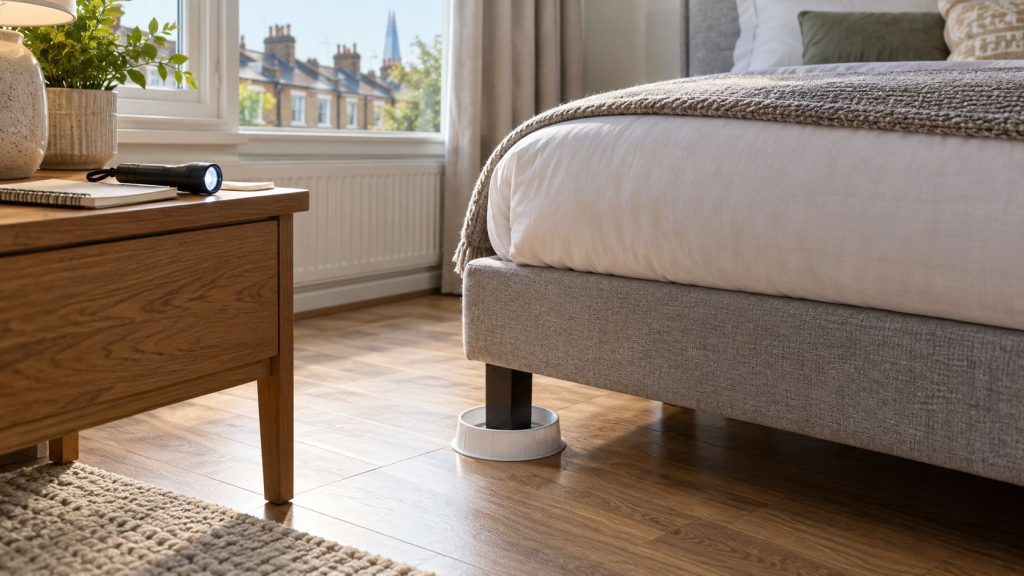
For a bed frame, inspect joints, screw recesses and the underside of accessible slats. For a wooden bedside cabinet, look at drawer joints and the back panel, not only the top surface. Upholstered headboards deserve particular care because seams and fastenings sit near sleeping areas. The EPA’s guide to finding bed bugs lists these kinds of narrow hiding places and notes that chairs and couches can harbour insects in seams and between cushions.
Do not cut a lining, remove upholstery staples or open an electrical recliner mechanism in a shop or home. If a critical area is inaccessible, record that limit. An honest “could not inspect beneath the fixed base” is more useful than assuming it is clear. For wider advice on signs and treatment in the home, see Panther’s UK bed bug guide.
Know which marks deserve a pause
Look for live insects, pale shed skins, tiny pale eggs and clusters of dark spotting along a seam or joint. The EPA describes these physical signs in its identification material. A single dark speck could also be ink, dirt or another insect’s trace, so do not declare a diagnosis from a stain alone. Photograph the mark in place and, if an insect can be collected without crushing it, seal it in a small clear container for identification.
Ask the seller about a suspicious mark rather than making an accusation. A missing answer is not proof of an infestation, but it does affect the decision you can make. If you see a live bed bug or convincing clusters of signs, do not load the item into a car to “sort it out later”. Walk away and avoid transferring loose cushions or throws to your own belongings. A professional can assess an item if its value justifies the cost and access is available.
Judge the limits of a negative inspection
Not finding a sign in ten minutes is reassuring only for the parts you could see. Deep seams, a fixed base or a hollow frame can conceal insects. An item held in storage away from people may show little fresh spotting. The inspection reduces risk; it cannot certify an item free of bed bugs. Decide what level of uncertainty is acceptable before paying, especially for a large sofa that will be difficult to isolate at home.
Consider the item’s construction. A simple wooden table with visible joints is easier to examine than a deep upholstered sofa. This is not a claim that wood is immune: bed bugs can hide in cracks and drawer joints. It is a practical difference in inspectability. If a seller offers several items from one room, inspect each rather than treating one clean-looking chair as evidence for all of them.
Plan transport before the purchase
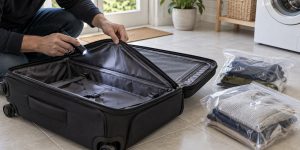
Know where the item will go and whether it can be kept separate from sleeping areas until you have checked it again. Use a suitable protective wrapping for transport without trapping moisture against the furniture for long periods. Keep cushions together with their parent item and avoid mixing them with clean bedding or clothing in the vehicle. Carry the piece directly to its planned inspection area, not through every room while deciding where it looks best.
If an insect or mark is discovered during loading, stop and reassess. Do not place the item in a communal hallway while you decide; that can expose other residents and obstruct access. If you abandon the purchase, make sure your bags and clothing have not been laid on suspect upholstery. The EPA’s home prevention guidance specifically advises inspecting used couches and beds before bringing them home.
Repeat the check at home without spreading items
Inspect the same seams and lower joints in good light before the item is put into everyday use. Keep removable parts with it. If you discover a possible sign, photograph it, retain any specimen and avoid moving the item again until you have advice. Do not spray the furniture with an unlabelled product, heat it with a space heater or leave it outdoors as an informal treatment. Furniture materials, electrical components and fire safety all matter.
If the purchase is clean on inspection, keep the date and a few photographs in case later evidence needs comparison. If the item is suspect, a pest inspection can assess the furniture and its surroundings. The question is not merely whether to treat the chair, but whether any insects have reached another resting area.
When an item has to be refused or disposed of
Do not pass a suspect item to a friend, charity shop or pavement collector without explaining the concern. A sofa placed outside without a clear plan can be taken into another home. If disposal is the agreed course, ask the local waste service about collection and arrange containment suitable for the item. Record why it was removed and avoid dragging it through communal areas unwrapped.
Disposal is not automatically necessary. A pest professional may be able to include furniture in a wider treatment plan, depending on its condition and the infestation. The bed bug treatment service can explain what preparation, access and follow-up would be needed. What matters is a deliberate decision, not a panicked one made after the item has already crossed the home.
A buying checklist you can actually use
Before paying, confirm that you can inspect the real item in good light; check seams, labels, cushions, lower frame and joints; photograph anything uncertain; ask about inaccessible areas; decide whether the construction and condition make the remaining risk acceptable; and plan a direct route to an inspection space at home. If you find a live insect or convincing signs, stop the purchase. If uncertainty remains, do not let a bargain price decide for you.
For a suspected bed bug finding after purchase, keep the item in place and request an assessment with the purchase date, photographs and location in the home. Careful buying will not remove every risk, but it gives you a better chance of catching a problem before a second-hand piece becomes part of your daily furniture.

Al Joel is a practical writer and long-term property maintenance specialist focused on real-world pest control, home safety and prevention advice. His guides translate common warning signs into clear next steps for homeowners, tenants, landlords and property managers.His approach begins with correct identification. A sighting in one room may originate from a neighbouring flat, service riser, drainage, roof space, delivery or communal waste area. Al explains how to preserve useful evidence, reduce food and water sources, avoid spreading activity and choose proportionate treatment.What readers can expectClear identification clues and practical inspection stepsSafe preparation, cleaning and aftercare guidancePrevention advice for homes, flats and commercial premisesHonest guidance on when DIY is reasonable and when professional help is the smarter optionWhen professional help makes senseRepeated sightings, activity in several rooms, uncertain identification, vulnerable occupants or signs involving food, electrics and shared building routes deserve a professional inspection. A lasting solution normally combines targeted treatment with proofing, hygiene and follow-up monitoring.Explore the Pest Library, learn how treatment works, or request property-specific advice.