Pest Control Advice · LONDON
Think your luggage picked up bed bugs? Check it before unpacking
A practical way to inspect a suitcase after possible bed bug exposure, sort its contents and decide what to do when the evidence is uncertain.
Finding out that a room you stayed in may have had bed bugs can make the journey home feel longer than the trip itself. The useful response is a measured one: keep the suitcase away from beds and soft furniture, inspect it in a sensible order, and deal with its contents before putting them away. A rash or an itchy mark cannot establish that bed bugs travelled with you. Equally, a quick glance at the outside of a case is not a reliable all-clear.
This guide is for the awkward middle ground: you have a credible reason to suspect exposure, but you have not identified an insect in your luggage. It sets out what to check, what to do with clothing and awkward items, and when the evidence is strong enough to call for help. If you have already found a live insect or clear signs in your home, arrange a professional pest inspection instead of repeatedly moving belongings between rooms.
Start at the door, before ordinary unpacking begins
Choose somewhere with a hard floor and good light, such as a utility room, bathroom or entrance area. A smooth surface is easier to inspect than carpet and gives you fewer folds and seams to worry about. Keep the case closed while you prepare a torch, a few sealable bags, and a clear space for items you have examined. If the only available space is a bedroom, avoid using the bed as a sorting table; put down a light-coloured sheet on a hard surface and inspect the sheet afterwards.
It helps to decide where each item will go before opening the case. Clothing that can go straight to the washing machine needs one route; belongings that need a closer look need another. Do not shake garments over the room, tip the entire suitcase onto the floor, or carry partly sorted piles through the house. Those actions make it harder to know what you have actually inspected. The aim is containment and a clear record, not a frantic deep clean of every room.
If you are still travelling, keep the suitcase zipped until you reach a suitable place to examine it. On a return from a room with confirmed bed bug activity, the NHS advises checking luggage and clothing carefully. That advice is a reason to inspect deliberately, not proof that the case is infested.
Examine the suitcase in a fixed order
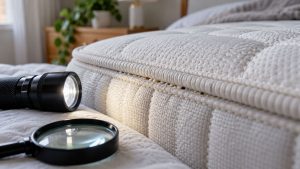
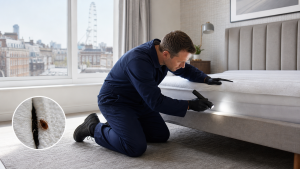
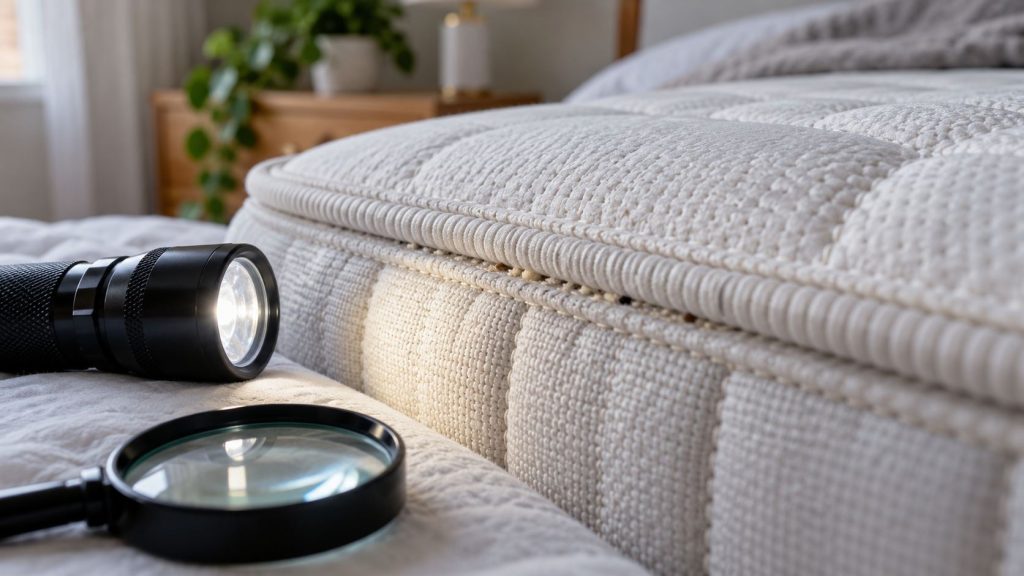
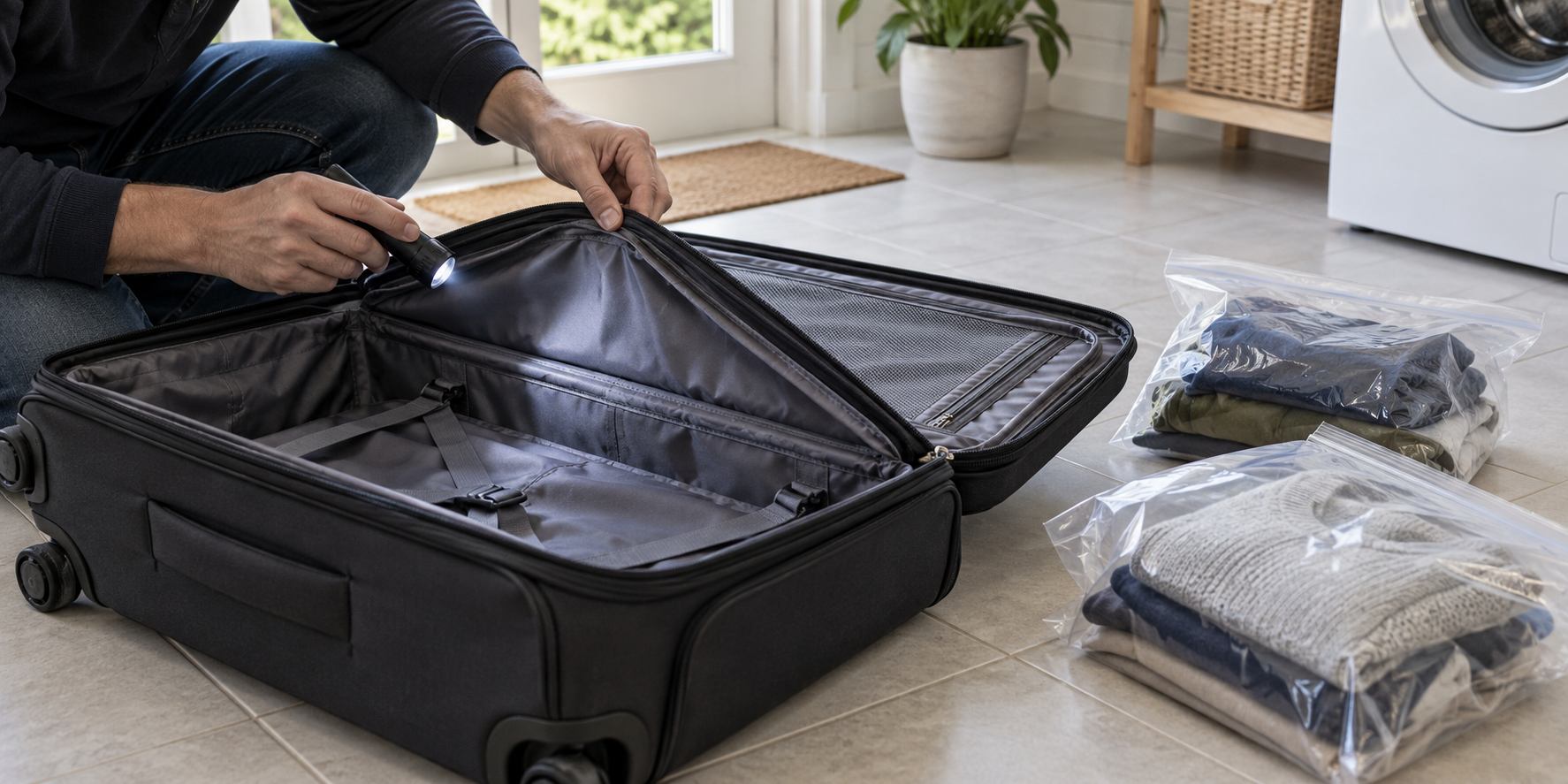
Begin with the outside while the case is still shut. Run the torch along the zip track, fabric piping, seams, handles and wheel housings. Lift labels and inspect the edges of external pockets. A hard-shell case has fewer fabric folds, but the join between shell and lining, the zip, and the telescopic-handle recess still deserve attention. Look for an actual insect, shed skins, eggs or small dark spotting. Dust and ordinary travel marks are common, so photograph anything doubtful rather than naming it on sight.
Open one section at a time. Check the inside edge of the zip, the lid seam, inner pockets, elastic straps and the folds where the lining meets the shell. Slide a torch beam across a seam from the side: the shallow angle can reveal an object that overhead lighting misses. Do not pull a stitched lining apart or damage the case to reach a hidden void. If a suspected insect is accessible, use a small clear container or sealed bag to retain it for identification. A photograph with a coin or ruler nearby may help show scale, but keep the specimen separate from your clothes.
A clean-looking case is encouraging, yet it cannot prove that every concealed space is clear. Bed bugs are small and can hide in narrow crevices. Conversely, a speck caught in a seam is not automatically an egg. The details matter. Our general guide to bed bugs in UK homes explains the wider signs of an infestation; this luggage check focuses on the route by which belongings come home.
Sort clothes without mixing examined and unexamined items
Take out one small group of clothes, inspect obvious folds and pockets, then place the group directly in a bag destined for laundry. Close the bag before moving it through the home. Separate garments that cannot be washed or tumble dried according to their care label; keep those contained until you have a plan for them. It is easy to lose track if you lay “probably fine” clothes next to items you have not looked at. A simple two-pile system works: examined and ready for appropriate treatment, or still awaiting a decision.
Check shoes at the seams, under removable insoles and around fastenings. Check toiletry bags, packing cubes and laptop sleeves in the same steady way. These smaller organisers often get lifted straight onto a bed or sofa when people arrive home, so give them the same attention as the main case. Do not forget the outer coat or day bag used in the suspect room, especially if either spent time on upholstered furniture or close to the bed.
Keep an ordinary travel timeline in mind. A suitcase that stayed on a raised rack away from the bed had a different exposure from one left open on the floor beside it. That distinction may help a pest professional assess the situation. It does not create a guarantee, and it should not replace a physical inspection of the belongings.
Use laundry heat where the fabric allows it
For suitable affected clothing and bedding, the NHS recommends washing at 60°C and tumble drying on a hot setting for at least 30 minutes. Follow the garment label and the machine instructions. Do not assume that a short, lukewarm cycle has the same effect, and do not damage delicate or heat-sensitive belongings to meet a temperature they cannot tolerate. Carry bagged laundry to the machine, load it without shaking the contents around, and dispose of or contain the transport bag afterwards. A fresh clean bag can take treated items away from the sorting area.
Drying is part of the heat-based approach, not a decorative extra after washing. Thick garments and tightly packed loads can heat unevenly, so avoid cramming the drum and use the cycle appropriate to the items. If your machine cannot provide the stated settings, do not quietly treat a different cycle as equivalent. Keep the items contained and ask a qualified pest controller about options compatible with the fabric.
Some clothing will need ordinary care rather than hot laundering. Dry-clean-only fabric, leather and specialist kit call for an item-specific decision. A professional may suggest a controlled treatment route after seeing the item and the evidence. The objective is to avoid moving an unexamined delicate item into a wardrobe merely because it cannot go through the wash.
Give non-washable belongings their own check
Books, chargers, headphones, cosmetics and electronics are not laundry. Inspect accessible seams, covers, cases and packaging under good light. Put uncertain items in separate, labelled, sealed bags while you seek advice, especially if they were on or close to the affected bed. Bagging is a temporary way to contain and organise; it is not itself a treatment. Make a note of what each bag holds so you do not repeatedly open it to remember.
Do not put electronics in an oven, heat them with a hairdryer, immerse them in water, or apply household insecticide into sockets and vents. Heat or liquid can damage the item and create a separate hazard, while a casual spray may miss insects in concealed spaces. A domestic freezer is also a poor basis for an improvised guarantee: temperature, load and exposure time are hard to establish consistently. If a valuable or delicate item raises a real concern, ask a professional what can be inspected or treated safely.
Vacuuming accessible case seams may remove loose debris and a visible insect, but it should follow inspection, not replace it. If you vacuum a suspect item, handle the collected material promptly and seal it before disposal outside. Do not rely on a vacuum pass as proof that the lining and internal cavities are clear.
What changes if you find a possible bed bug?
Pause the sorting. Contain the item, take a clear photograph and, if possible, retain the specimen in a sealed container. Note where you found it, the dates of your stay, and whether the accommodation told you about a confirmed problem. Identification matters because carpet beetle larvae, booklice and ordinary fragments are often mistaken for bed bugs. An itchy bite is weaker evidence still; it can have several explanations, and some people show no visible response to bed bug bites.
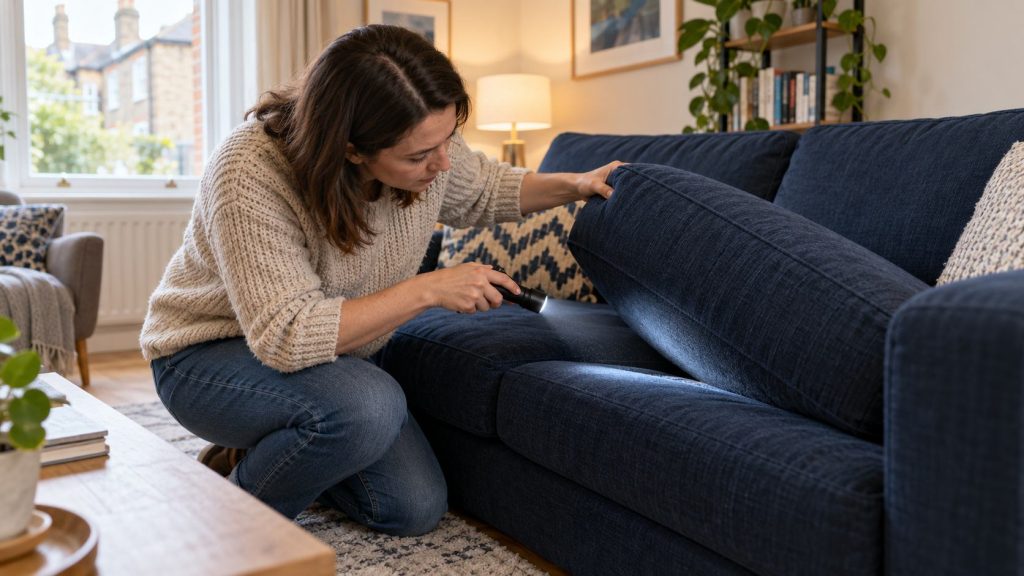
Contact a pest controller for identification and a plan that fits the evidence. Tell them which bags and rooms the belongings have entered. If you have found an insect in the home rather than only in the suitcase, check the immediate sleeping area for further signs without dismantling furniture or moving to another bedroom in alarm. Our bed bug treatment service describes the professional options, while the contact page gives you a way to send the details of what you found.
A confirmed insect does not mean every room needs treatment, and a photo alone may not establish the extent of activity. Equally, leaving a suspect case open in a hallway while waiting for an appointment makes the situation harder to manage. Close and contain it, retain the evidence, and agree the next step with the person inspecting it.
If you find nothing, finish the job rather than restarting it
After each group of belongings has been checked or handled appropriately, inspect the empty case once more. Look beneath removable dividers and at the fold in the lining; close all pockets, then clean the surface where you worked. Store the case in a place where you can retrieve it easily for another check if new evidence appears. Avoid putting it immediately under the bed among textiles. There is no value in repeatedly opening sealed, unresolved bags just to reassure yourself for a moment.
Over the following days, pay attention to physical signs where you sleep: a live insect, shed skin or characteristic dark marks in the seams and nearby crevices. New skin marks alone are not a reliable clock for when an insect might have arrived. If you find a credible sign, record it and arrange identification. If nothing emerges, let the careful inspection and handling you have already completed stand; dismantling the bedroom every evening can create confusion without producing better evidence.
For the next trip, keep luggage off the bed in accommodation and take a moment to examine the room before unpacking. These habits reduce avoidable exposure, but no travel routine can promise absolute prevention. The useful principle is the same on departure and return: notice where bags have been, keep suspect items contained, and act on identifiable evidence.
A practical decision after the check
If you have a confirmed insect or convincing physical evidence, preserve it and seek a professional assessment. If you have uncertain debris, photograph it clearly and ask for identification before buying treatments. If you have only a report of exposure and no evidence in the case, complete the ordered check and handle clothing according to its care label and the NHS heat guidance where suitable. That leaves you with a sensible next action in each situation without treating a possibility as a proven infestation.

Al Joel is a practical writer and long-term property maintenance specialist focused on real-world pest control, home safety and prevention advice. His guides translate common warning signs into clear next steps for homeowners, tenants, landlords and property managers.His approach begins with correct identification. A sighting in one room may originate from a neighbouring flat, service riser, drainage, roof space, delivery or communal waste area. Al explains how to preserve useful evidence, reduce food and water sources, avoid spreading activity and choose proportionate treatment.What readers can expectClear identification clues and practical inspection stepsSafe preparation, cleaning and aftercare guidancePrevention advice for homes, flats and commercial premisesHonest guidance on when DIY is reasonable and when professional help is the smarter optionWhen professional help makes senseRepeated sightings, activity in several rooms, uncertain identification, vulnerable occupants or signs involving food, electrics and shared building routes deserve a professional inspection. A lasting solution normally combines targeted treatment with proofing, hygiene and follow-up monitoring.Explore the Pest Library, learn how treatment works, or request property-specific advice.