Pest Control · LONDON
Hidden Pests: Silverfish Control in Clapham Bathrooms
A homeowner in a Victorian conversion near Clapham Common recently discovered a shimmering mass of silverfish behind their designer wallpaper. A...
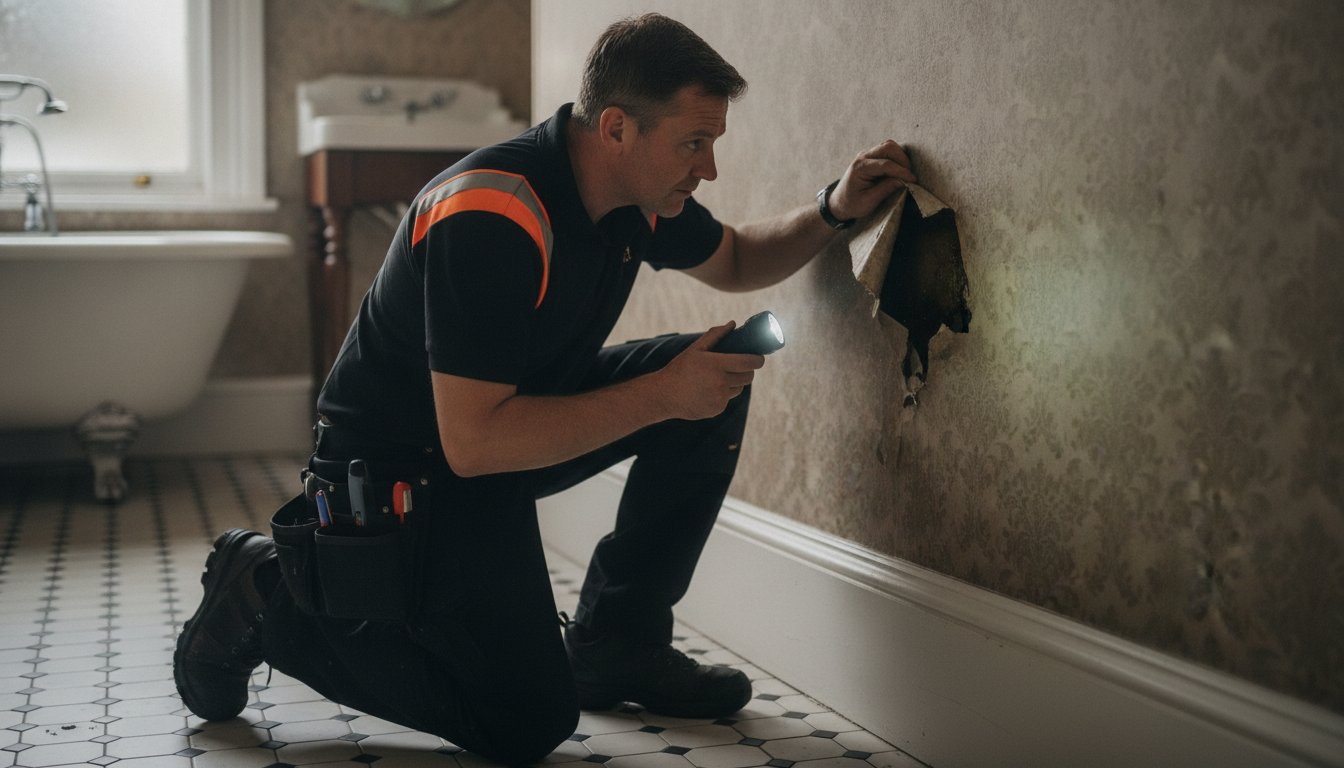
A homeowner in a Victorian conversion near Clapham Common recently discovered a shimmering mass of silverfish behind their designer wallpaper. A common issue we see in the SW4 postcode is the exploitation of damp voids found in period architecture. Professional silverfish control Clapham services are designed to eliminate these colonies where DIY treatments fail. Whether you live in a draughty conversion or a modern apartment, understanding the structural cause of the infestation is the only way to ensure total eradication.
It is frustrating to see expensive book collections or delicate wall coverings damaged by pests that seem immune to supermarket sprays. You likely feel that your hygiene standards are being undermined by a problem that refuses to shift. We understand that a home should be a sanctuary; it should not be a source of anxiety. This article outlines exactly how to identify these hidden pests and the technical interventions required to remove them. We focus on deep-seated eradication instead of the temporary, surface-level fixes that often leave the core colony intact.
We will examine the specific structural vulnerabilities of Clapham’s property mix. You will discover how to treat the current population and alter the environment to prevent a re-infestation. This guide provides a clear path toward a dry, pest-free home.
Key Takeaways
- Recognise how the damp micro-pockets found in Clapham’s Victorian conversions provide the perfect breeding ground for silverfish.
- Understand why a single sighting usually signals a larger nocturnal colony hidden within the structural voids of your property.
- Learn how expert silverfish control Clapham services target the colony at the source rather than just treating the surface.
- Identify the environmental adjustments and structural sealing techniques required to ensure your bathroom remains pest-free long-term.
Why Silverfish Thrive in Clapham Properties
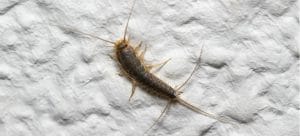
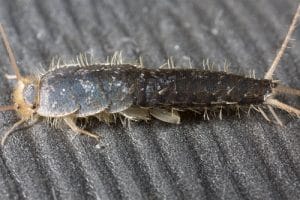
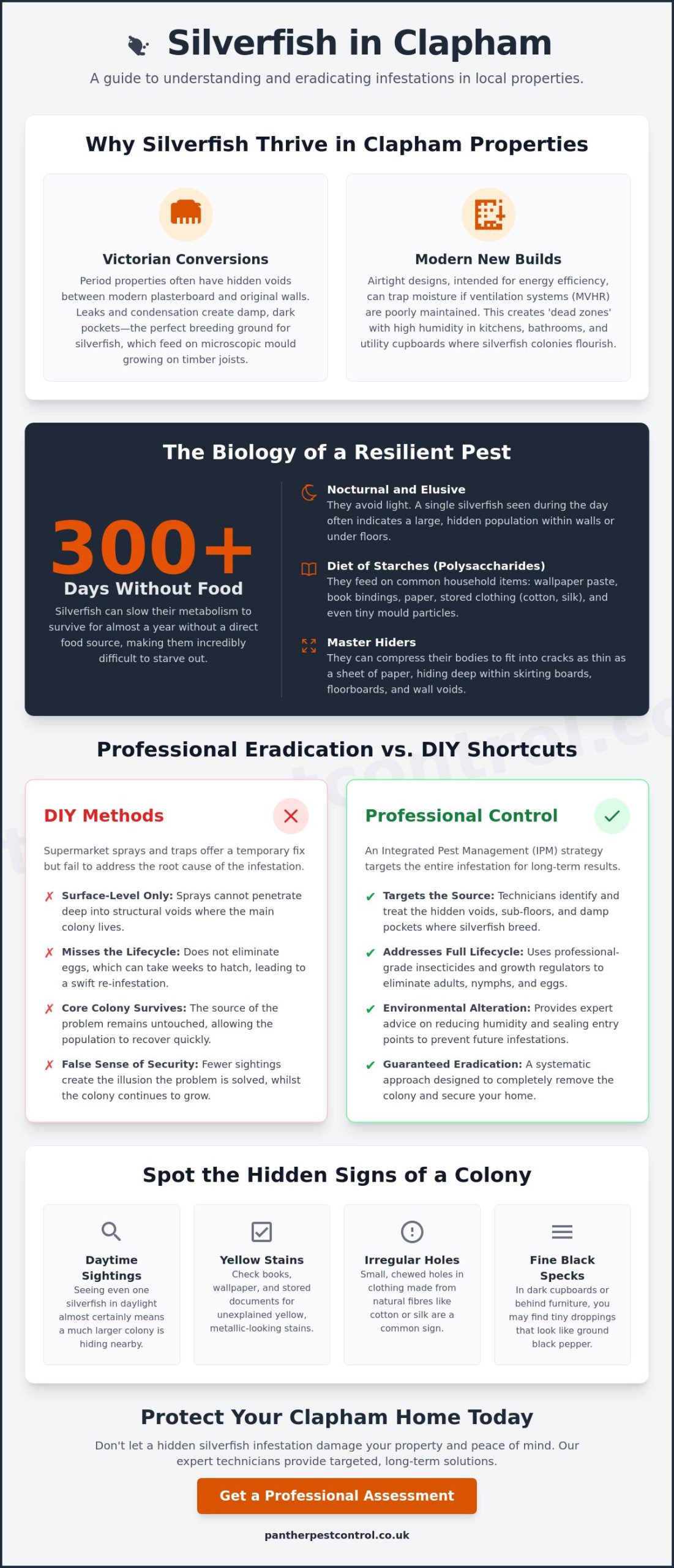
Silverfish, or Lepisma saccharina, are primitive, wingless insects that have remained largely unchanged for millions of years. They are drawn to environments with high humidity and a steady supply of starchy materials like wallpaper paste, book bindings, or even certain synthetic fabrics. In the SW4 area, the need for the biology of a silverfish to be understood by residents is high. Our unique local architecture often creates the exact micro-climates these pests require to flourish. Effective silverfish control Clapham depends on identifying these specific damp pockets before the population becomes unmanageable.
To better understand how these insects operate within a domestic setting, watch this helpful video:
Victorian Conversions and Hidden Damp
The high density of Victorian terraces in Clapham presents a specific challenge. These properties were originally designed to breathe through porous brickwork and open fireplaces. When they are converted into multiple flats, modern plasterboard is often fitted over original lath-and-plaster walls. This creates a hidden void where leaking pipework or condensation can linger undetected. We often find that silverfish colonies establish themselves in these timber joists; they feed on the microscopic mould that grows in the dark, humid spaces between floors.
New Builds and Trapped Humidity
Conversely, newer developments near Clapham Junction face a different set of issues. These buildings are designed to be airtight for energy efficiency, which is excellent for heating bills but poor for moisture regulation. If a Mechanical Ventilation with Heat Recovery (MVHR) system is poorly maintained or incorrectly balanced, moisture from bathrooms becomes trapped. This creates ‘dead zones’ in kitchens and utility cupboards where humidity levels remain high.
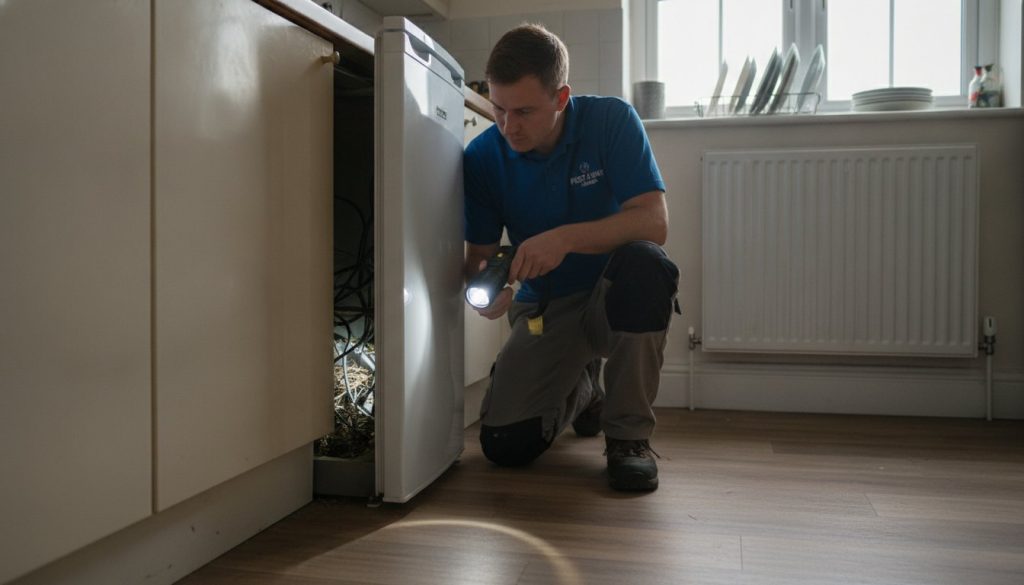
We recently treated a basement flat on Clapham Common North Side where historic rising damp had compromised the sub-floor. The moisture had been trapped by modern laminate flooring, providing a perfect subterranean habitat for a massive infestation. Professional pest inspection is often necessary to find these structural sources, as surface-level cleaning will not reach the heart of the colony.
The Biology of a Silverfish Infestation
Silverfish are far more than a bathroom nuisance. They are biological specialists that thrive on polysaccharides. This includes the starches found in wallpaper paste, book bindings, and natural fibres like silk or cotton. If you spot one scuttling across a bathroom tile in SW4, it is rarely a solitary visitor. Their nocturnal nature means they avoid light; a daytime sighting usually indicates a significant population thriving in the structural voids of the building.
Their resilience is a primary reason why amateur methods fail. A silverfish can survive for over 300 days without a direct food source by slowing its metabolism. This is why professional Integrated Pest Management (IPM) strategies are essential. We don’t just target the active adults. We address the entire lifecycle, including the eggs that can take weeks to hatch, preventing the common re-infestation cycle seen in many Clapham apartments. Effective silverfish control Clapham requires this multi-stage approach to be successful.
Identifying Damage Beyond the Bathroom
Silverfish often migrate from damp bathrooms into dry storage areas in search of food. Look for yellow, metallic looking stains on paper or irregular holes in stored clothing. In dark cupboards, you might notice small black specks that resemble ground pepper. These are droppings and a clear sign of an established colony. If you are unsure about the extent of the damage, you can speak with our local team for a professional assessment.
Why They Are Harder to Eradicate Than Spiders
Unlike spiders, which are often visible in webs, silverfish are master hiders. They can compress their bodies to fit into gaps as thin as a sheet of paper. They have survived for 400 million years by being elusive. Standard domestic sprays rarely penetrate deep enough into skirting boards or floorboard gaps to reach them. Professional silverfish control Clapham involves using residual treatments that remain active long after the initial application. This ensures that even the most hidden insects eventually come into contact with the treatment, providing a level of security that a simple aerosol cannot match.
Professional Silverfish Eradication vs DIY Shortcuts
Supermarket aerosols are often repellent by design. They don’t resolve the infestation; they simply scatter the colony into deeper wall cavities. This ‘flushing’ effect is a common issue we see in SW4, where a quick spray in a bathroom pushes the insects into the bedroom or living area. Amateur treatments also risk building chemical resistance, which makes future silverfish control Clapham efforts significantly more complex and time-consuming.
Professional intervention relies on non-repellent, residual insecticides and targeted gel baits. These products are formulated to be undetectable to the insect, ensuring they walk through or ingest the treatment rather than avoiding it. We use the silverfish’s own biology against them. By utilising sugar-based baits, we ensure the active ingredients reach the heart of the nest, providing a level of protection that domestic products cannot match.
A recent project for a top-floor flat in Fulham required a sophisticated, multi-level strategy. The insects were using shared service risers to travel between the kitchen and the bathroom, bypassing the owner’s DIY attempts. We had to treat the entire vertical path within the property to stop the migration. These same shared service risers are also a known route for cockroach infestation health risks in London apartment blocks, where pests travel between neighbouring flats undetected. This type of structural understanding is what distinguishes a professional result from a temporary fix.
The Technical Standard of Execution
We utilise ‘crack and crevice’ treatments as our primary method. This involves injecting precisely measured amounts of professional-grade insecticide into the paper-thin gaps where silverfish harbour. In Clapham’s Victorian conversions, we focus heavily on floor voids and the voids behind original skirting boards. These areas act as the main highways for the colony, and treating them is essential for total eradication.
Integrated Pest Management (IPM)
Our approach is rooted in Integrated Pest Management (IPM). We combine chemical precision with practical structural modifications to create a permanent solution. We don’t believe in the ‘spray and pray’ model used by some budget providers. Instead, we prioritise safety and precision, ensuring that the treatment is only applied where it is most effective. This disciplined approach protects your home environment whilst ensuring the pests are removed for good.
If you have tried shop-bought sprays and the insects keep returning, contact our expert technicians to discuss a professional treatment plan.
Securing Your Clapham Home Against Future Infestations
Eradication is only the first phase of recovery. To ensure permanent results, you must transform your property into an environment where these insects cannot survive. Silverfish require a relative humidity level of at least 75% to thrive; keeping your home below 50% makes it biologically uninhabitable for them. This shift in the internal climate is the most effective form of silverfish control Clapham homeowners can implement themselves.
Decluttering is another vital step that is often overlooked. We frequently find that silverfish colonies migrate from bathrooms into lofts or basements because of stored cardboard boxes. Cardboard is essentially a compressed food source. Replace these with airtight plastic containers to remove both their food and their breeding grounds. Monitoring with non-toxic sticky traps also provides an early warning system. If you see activity on a trap, it’s time to investigate before a full-blown infestation returns.
Humidity Management in South West London
Ventilating older Clapham properties can be difficult during winter without losing significant heat. We recommend using a dehumidifier in high-risk areas like basement flats or internal bathrooms. Installing humidistat-controlled extractor fans is a superior alternative to standard timers. These fans only stop when they detect the moisture level has dropped sufficiently. This prevents the micro-pockets of dampness that often linger behind bathroom pedestals or under baths.
Professional Proofing Services
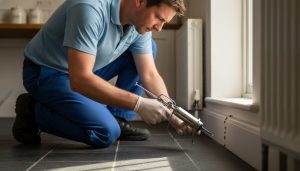
Our technicians identify the specific high-risk zones unique to your property layout. In a Victorian conversion, this might be the gap where a waste pipe passes through an original brick wall. In modern apartments, it could be the expansion gaps in laminate flooring. A professional pest inspection is the most reliable way to find these hidden entry points. We use professional-grade sealants that are flexible enough to withstand the natural movement of London’s clay-heavy soil whilst remaining impenetrable to pests. This technical standard of execution ensures your home remains a secure, pest-free environment.
Restoring a Pest-Free Environment in Your Home
Silverfish are more than a minor annoyance; they are a sign of underlying moisture issues and a threat to your property’s interior. We see how Clapham’s Victorian conversions and airtight new builds provide unique habitats for these resilient pests. Relying on surface-level sprays won’t reach the core of the colony hidden within your walls. Professional silverfish control Clapham requires a technical understanding of the building’s structure and the insect’s biology to achieve total eradication.
Our BPCA certified technicians provide a clinical and decisive response to infestations. We prioritise safety by using eco-friendly and pet-safe treatment options that offer long-term residual protection. Whether you are dealing with a sudden discovery in a basement flat or a persistent issue in a modern apartment, we offer 24/7 emergency response across London to restore your peace of mind. Our approach focuses on the restoration of security for your domestic environment.
Don’t let a hidden population damage your home or cause unnecessary anxiety. Book your professional silverfish eradication in Clapham today and secure your property against future activity. You deserve a home that feels safe and hygienic.
Common Questions About Silverfish
Are silverfish dangerous to humans or pets in the UK?
Silverfish are not physically dangerous to humans or pets as they do not bite, sting, or transmit pathogens. Their presence is primarily a threat to your property’s integrity. They cause significant damage to starchy materials, including expensive wallpaper, book collections, and natural textiles. Because they require high humidity, a sighting often serves as a warning of an underlying damp issue or poor ventilation that could lead to mould growth.
How do silverfish get into my Clapham flat in the first place?
These insects usually enter via structural gaps or are accidentally introduced through infested items. In Clapham’s many Victorian conversions, they scuttle through cavities between floorboards or gaps around pipework. They are also frequently brought into the home inside damp cardboard boxes, second-hand books, or even grocery deliveries. Once inside, they seek out the humid micro-climates found in bathrooms and kitchens.
Can silverfish live in my bed or clothes?
Silverfish do not live in beds as they lack the moisture and food sources found in bathrooms, but they will readily infest wardrobes. They consume the proteins and starches found in silk, cotton, and linen. If your bedroom has high humidity or a damp wall, they may migrate into drawers to feed on your clothing. Professional silverfish control Clapham ensures these satellite colonies are identified and treated before they ruin your wardrobe.
How long does a professional silverfish treatment take to work?
You will see an immediate reduction in activity, but total eradication typically takes between 14 and 21 days. This timeframe is necessary to account for the hatching cycle of eggs that were laid before the treatment began. Professional residual insecticides remain active on surfaces; this ensures that newly hatched nymphs are neutralised as they emerge. We provide clear expectations on the progression of the treatment during our initial visit.
Will I need to leave my home during the silverfish treatment?
Most modern silverfish control Clapham treatments do not require you to vacate the property. Gel-based baits are applied discreetly into cracks and crevices, allowing you to remain in the room. If a liquid residual spray is required for a larger infestation, we typically ask residents to leave for two to three hours whilst the product dries. Our technicians will always confirm the specific safety requirements based on the treatment plan selected for your home.

Al Joel is a practical writer and long-term property maintenance specialist focused on real-world pest control, home safety and prevention advice. His guides translate common warning signs into clear next steps for homeowners, tenants, landlords and property managers.
His approach begins with correct identification. A sighting in one room may originate from a neighbouring flat, service riser, drainage, roof space, delivery or communal waste area. Al explains how to preserve useful evidence, reduce food and water sources, avoid spreading activity and choose proportionate treatment.
What readers can expect
- Clear identification clues and practical inspection steps
- Safe preparation, cleaning and aftercare guidance
- Prevention advice for homes, flats and commercial premises
- Honest guidance on when DIY is reasonable and when professional help is the smarter option
When professional help makes sense
Repeated sightings, activity in several rooms, uncertain identification, vulnerable occupants or signs involving food, electrics and shared building routes deserve a professional inspection. A lasting solution normally combines targeted treatment with proofing, hygiene and follow-up monitoring.
Explore the Pest Library, learn how treatment works, or request property-specific advice.