Pest Control · LONDON
Cockroaches in a Newly Occupied Flat: Where Did They Come From?
A move-in cockroach sighting does not reveal whether it came from the flat, an item or a shared building route. Here's how to find out without losing the evidence.
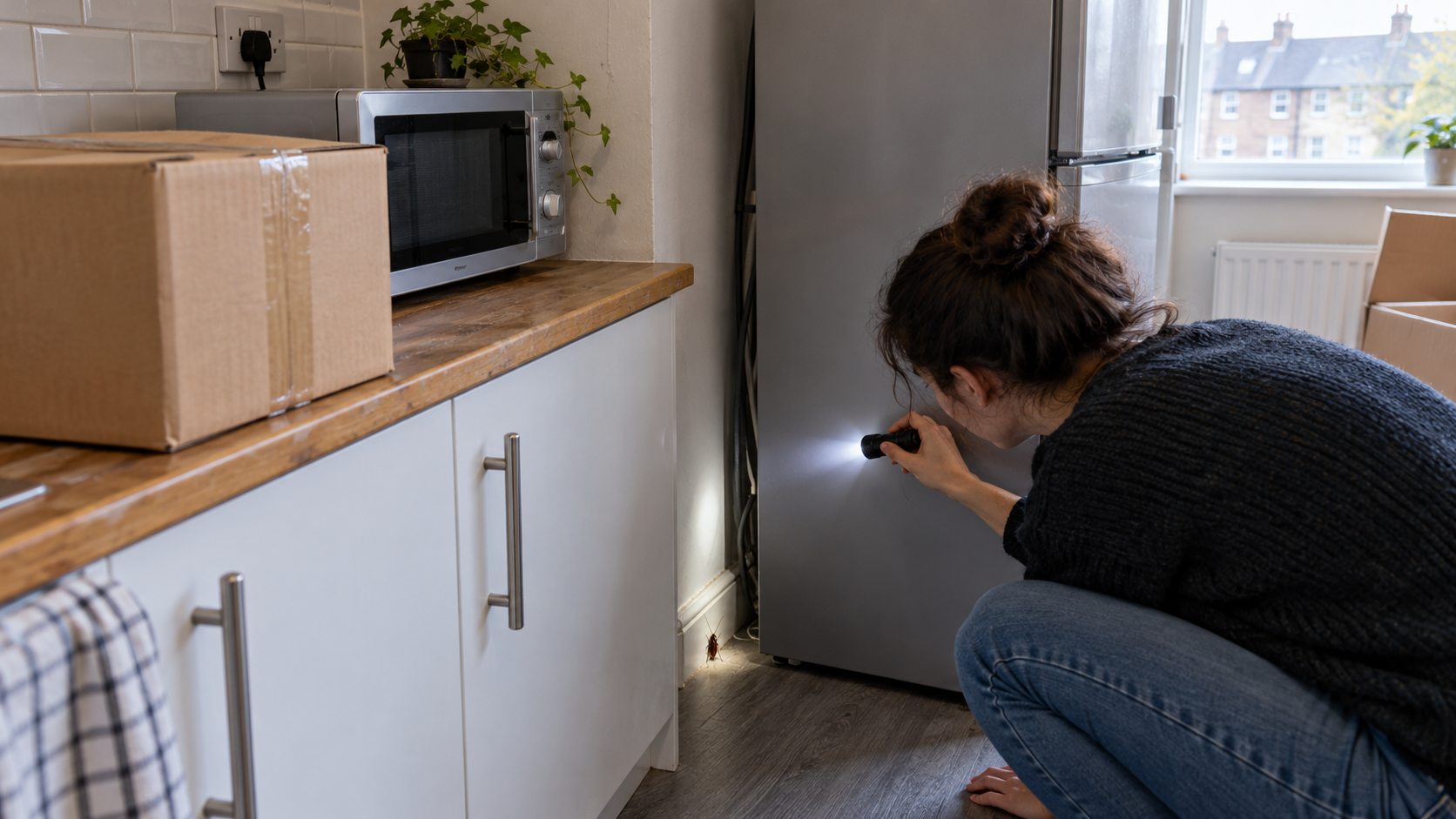
Moving into a flat means learning which cupboard sticks, where the stopcock is and how warm the kitchen gets at night. Finding a cockroach before the last box is unpacked adds a less welcome question: was it already living here, did it arrive with the move, or can it travel through the building? The answer affects whom you tell and where an inspection starts.
A first sighting does not prove any one of those routes. A few careful notes in the first days are more useful than a hurried accusation or a cupboard full of spray. This guide is for new occupiers who need to protect food, preserve evidence and arrange a practical response while the source is still uncertain.
On the first night, record facts rather than a theory
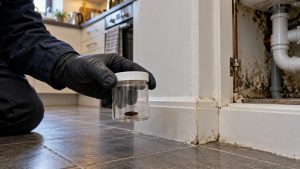
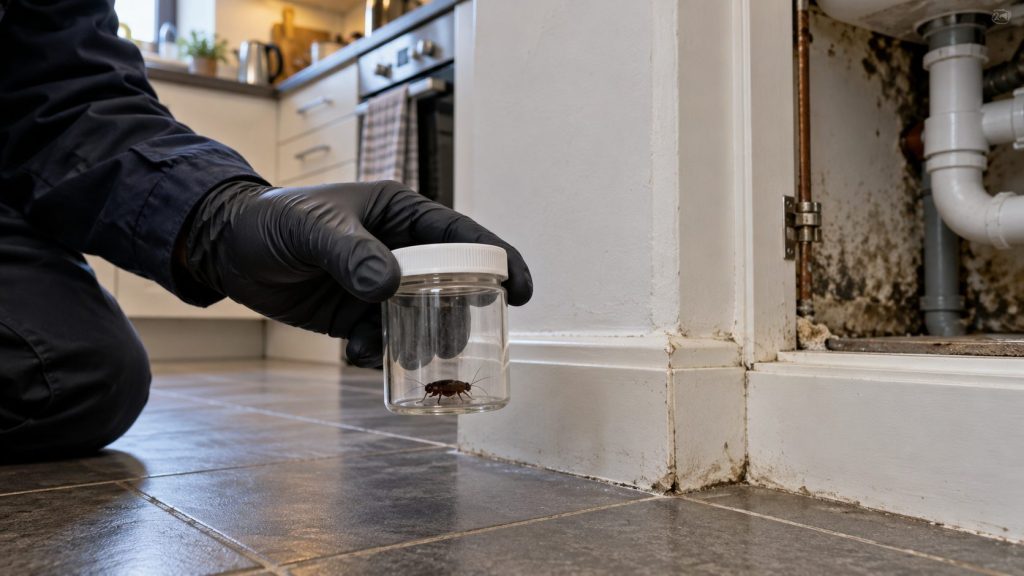
Note the date and time, the room and the exact place where the insect appeared. “Left of the fridge, at the pipe opening” is a better record than “kitchen”. Photograph it clearly, ideally with a coin or ruler for scale, if you can do so safely. A specimen held in a closed clear pot may be more useful than a blurred image. Do not handle a live insect with bare hands or pull out a wired appliance to chase it.
Write down which rooms had already been unpacked and whether the sighting was next to a moving box, an appliance or a building service. Those details do not prove origin, but they allow the possibilities to be tested. Record whether you notice more insects, different sizes, droppings or shed skins over the next few days. Several sizes repeatedly emerging from one warm crevice suggest something different from one adult crossing a floor once.
It is tempting to photograph a dark speck and call it a cockroach. Identification matters. Adult German cockroaches are relatively small and light brown, with two dark stripes behind the head; Oriental cockroaches are generally larger and much darker. Nymphs can look different from adults, and other insects can be misidentified. Panther’s cockroach control service begins by checking the pest and mapping its harbourage rather than treating a guessed species.
Three possible routes into a newly occupied home
Activity already in the flat. A vacant-looking kitchen can still have warm appliance motors, condensation and concealed gaps. Cleaning the visible cupboards before move-in does not reveal every void behind a fitted unit. Repeated sightings in the same corner, especially of smaller insects as well as adults, justify an inspection of that area. Evidence from the first day should be photographed before heavy cleaning removes it.
An item brought inside. A second-hand fridge, microwave or other kitchen appliance can carry insects in sheltered parts. The British Pest Control Association specifically advises checking and cleaning second-hand appliances for hitchhikers. Boxes and packaging also deserve a look, especially if they were stored in a warm or damp place. Finding an insect beside a box does not establish that the box transported it, but checking the item before it is moved between rooms is sensible.
A connected building route. Flats share walls, service risers, pipe penetrations and sometimes waste or plant areas. An insect may appear in a spotless unit after moving through one of those routes. A sighting by a service cupboard or recurring insects in more than one flat calls for building-level questions. No resident should be blamed on the strength of one sighting. The inspection should follow actual evidence and access points.
These routes can overlap. An insect introduced in an appliance can settle in a warm kitchen; established activity in a shared void may also be found beside unpacked boxes. The point is to keep more than one explanation open until the specimen, location and subsequent monitoring narrow it down.
Inspect the move itself without spreading the problem
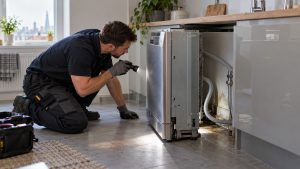
Start with items you can inspect safely. Look at the outer folds of cardboard, beneath removable packaging and around the accessible base of an appliance before putting the item in its final position. Keep suspicious packaging closed until it can be checked, and do not transfer it repeatedly from room to room. If an appliance is already plugged in, switch it off only in the normal safe way; do not remove panels or reach into the motor area.
Prioritise food and water. Put open food in sealed containers, empty waste regularly and dry up accessible spills. Check for a dripping tap or visible condensation beneath the sink and report a leak promptly. These steps make the home less hospitable and leave the suspected harbourage more legible for an inspection. They do not replace the inspection if insects are appearing repeatedly.
Do not spray each moving box, the back of an electrical appliance or every crack along the skirting board. Products used without a mapped source can scatter activity, expose belongings unnecessarily and interfere with later targeted treatment. BPCA guidance emphasises cleaning, proofing and finding harbourage; it also notes that sticky traps are for monitoring rather than a complete solution. If a shop product has already been used, keep its name and tell the technician exactly where it went.
Tell the landlord or managing agent with a useful record
If you rent, report the sighting promptly in writing. Include the date, location and photograph, explain what you have and have not seen, and ask how inspection access will be arranged. Avoid stating that the previous occupier or a neighbour caused it when that has not been established. A neutral record makes it easier to coordinate action and avoids an argument that distracts from the insect.
Responsibility for treatment depends on the tenancy, the property condition and the facts of the infestation. It cannot be decided solely by the day you first noticed a cockroach. Panther’s separate guide to pest control in rented property explains why the cause and repair obligations need to be assessed. Keep a copy of your move-in inventory, any existing condition report and subsequent messages. They can help establish the timeline without pretending to establish a biological source.
In a block, tell the managing agent if sightings involve a corridor, bin store, service riser or more than one flat. A technician may need access to those spaces before a sensible plan is possible. Ask for one person to coordinate access and findings. Treating each flat independently while a common route remains unexamined can leave everyone with incomplete information.
What a technician should look for
The first job is to confirm the insect. A clear adult specimen may indicate German or Oriental cockroach, but a damaged juvenile may need a closer look. The species guides the next search: German cockroaches often favour warm, humid gaps behind kitchen equipment, while Oriental cockroaches are more closely associated with cooler, damp basements and service areas. The BPCA species advice describes these broad differences. The location is a clue, not a diagnosis.
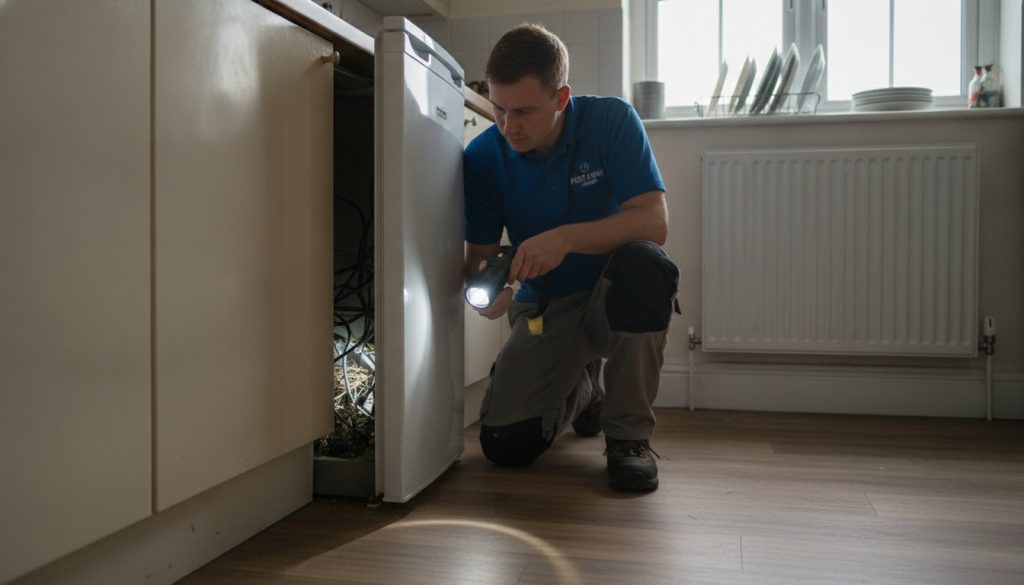
An inspection should test both the flat and the plausible entry routes. Behind accessible appliances, beneath sinks, around pipe penetrations and in service cupboards are logical starting points. A clean open floor with no evidence may be less informative than a narrow edge beside warmth and moisture. In a recently occupied flat, the survey should also ask which appliances and boxes arrived when, whether there were photographs before the move and whether adjoining spaces can be checked.
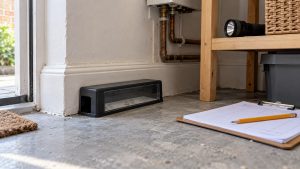
Monitors can help locate movement and show whether catches continue after a first intervention. They must be placed thoughtfully and reviewed; a zero catch in a badly placed trap is weak evidence. A good report says which areas were inspected, where evidence was found, what was inaccessible and what follow-up is planned. This is especially important if the landlord, resident and managing agent all need the same factual account.
What to expect after a first visit
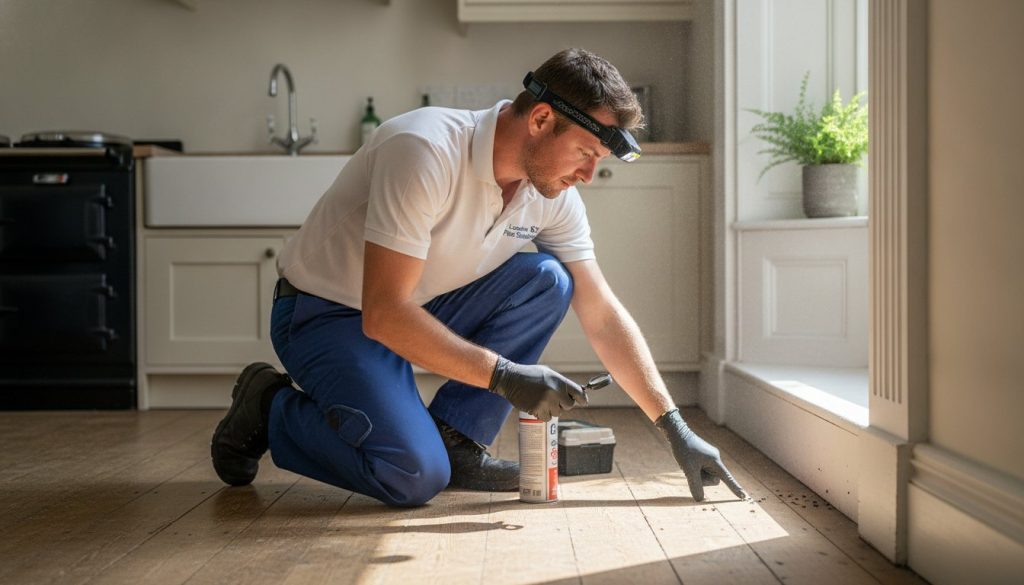
Control is normally a sequence of locating harbourage, targeted treatment where appropriate and monitoring afterwards. It may also call for leak repairs, sealing of service gaps or access to a neighbouring space. The choice of method depends on the insect, the occupied rooms and the surfaces involved. Children, pets, food storage and other practical constraints should be mentioned before treatment is agreed.
A sighting after the first treatment is worth logging, not hiding. Note whether the insect appeared in the same place, what size it was and whether monitors caught anything. The separate article on cockroach treatment timelines explains why follow-up matters; the new-occupier task is to keep the location record accurate while the source is tested. Do not remove monitors or clean treated edges contrary to the technician’s instructions.
When there is no further evidence, the conclusion should still be modest. One insect might have arrived in an item, but the original route may remain unproven. If several insects or fresh signs continue, the plan must be revisited. A resident should have a clear route for reporting further sightings and know which person will arrange access to shared spaces if needed.
A practical first-week checklist
- Take an identifiable photograph or keep a safely contained specimen.
- Record date, exact location, insect size and nearby boxes or appliances.
- Protect food, remove accessible waste and report visible leaks.
- Check second-hand appliances and packaging without opening electrical panels.
- Tell the landlord or managing agent in writing where relevant.
- Arrange identification and an inspection if there are repeated sightings or several signs.
- Keep a short sightings log after any treatment or monitor placement.
The goal in the first week is not to solve a blame dispute from a single photograph. It is to preserve a useful trail of evidence while reducing easy food and water sources. If you need an assessment, send the photograph, postcode, move-in date and affected room when you contact Panther Pest Control. Those details help the team decide what to inspect first and whether building access may be needed.

Al Joel is a practical writer and long-term property maintenance specialist focused on real-world pest control, home safety and prevention advice. His guides translate common warning signs into clear next steps for homeowners, tenants, landlords and property managers.His approach begins with correct identification. A sighting in one room may originate from a neighbouring flat, service riser, drainage, roof space, delivery or communal waste area. Al explains how to preserve useful evidence, reduce food and water sources, avoid spreading activity and choose proportionate treatment.What readers can expectClear identification clues and practical inspection stepsSafe preparation, cleaning and aftercare guidancePrevention advice for homes, flats and commercial premisesHonest guidance on when DIY is reasonable and when professional help is the smarter optionWhen professional help makes senseRepeated sightings, activity in several rooms, uncertain identification, vulnerable occupants or signs involving food, electrics and shared building routes deserve a professional inspection. A lasting solution normally combines targeted treatment with proofing, hygiene and follow-up monitoring.Explore the Pest Library, learn how treatment works, or request property-specific advice.