Pest Control Advice · LONDON
Carpet Beetles on Window Sills: What the Adults Really Tell You
Use adult beetles at a window as a starting point for a focused search for larvae and fresh textile damage.
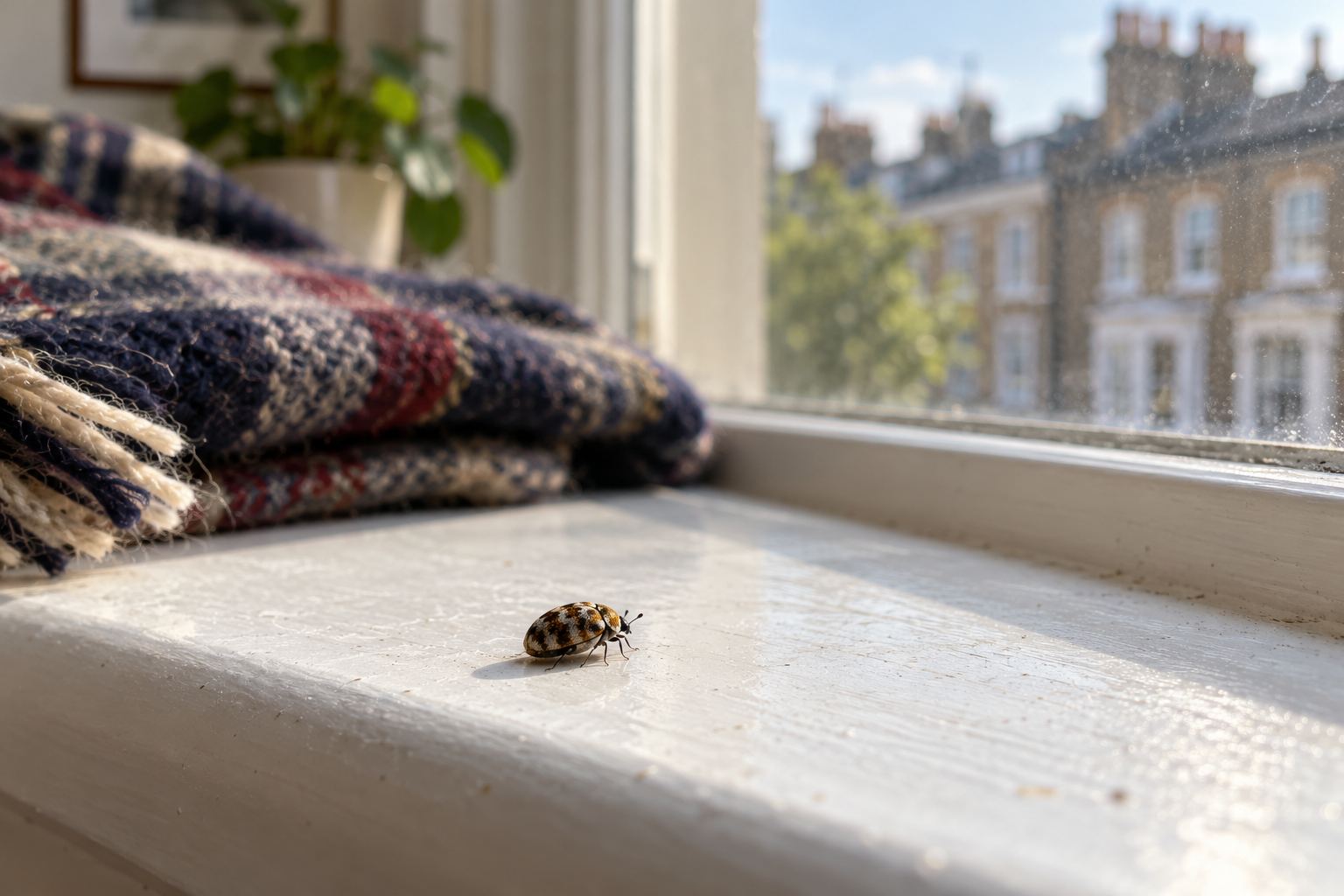
A tiny patterned beetle on a bright window sill is easy to miss until you find a second one. It is also easy to jump from that sighting to the conclusion that a carpet is being eaten. The adults often turn up at windows because they are active in light; the larvae are the stage that can damage wool, fur, feathers and other animal-based material. A window sighting is a prompt to identify the beetle and inspect likely larval food nearby, not evidence that the sill is the source.
The Natural History Museum describes several carpet beetle species found in UK homes and notes that adults, rather than feeding on fabric, may fly and collect at windows. This guide helps you make a short, useful search from the window to the possible larval source. If you find repeated larvae, cast skins or damaged textiles, Panther’s carpet beetle control service explains the professional inspection and treatment route.
Check that the beetle really is a carpet beetle
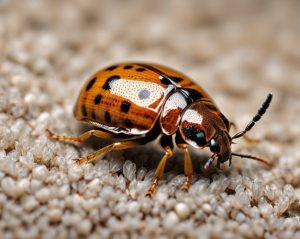
Take a clear photograph from above and beside a ruler. Adult varied carpet beetles are small and mottled, but brown and two-spot species look different. A dark dot moving on a sill could also be a different beetle entirely. If possible, retain one insect in a clear container for identification. Do not crush all the specimens before photographing them: colour, shape and size matter more than the fact that they were near glass.
Note the date, room, side of the building and number seen. One insect in spring may have flown in from outside. Several emerging from the same room, or adults found alongside larvae and damaged materials, deserve a more thorough search. The Natural History Museum notes that adult brown carpet beetles are often found on window sills seeking light. That behaviour alone does not reveal where their eggs were laid.
Distinguish beetles from clothes moths before buying traps or products. A moth flying near a wardrobe and a carpet beetle on a window can both lead you to check natural fibres, but their larvae and monitoring methods differ. Panther’s moth control page describes the alternative textile-pest route if the insect turns out to be a moth.
Search where larvae can feed, not only where adults gather
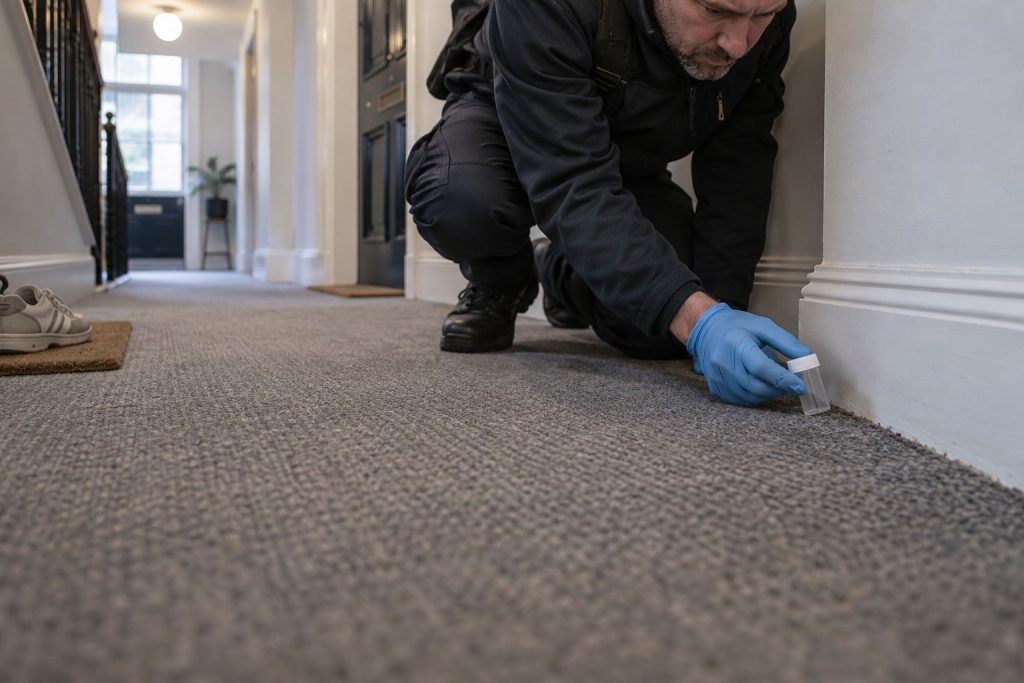
Start in the room with the window. Check the undisturbed edge of a wool carpet, beneath furniture, inside a little-used wardrobe and around stored scarves, coats or blankets. Lift items carefully and look for hairy or banded larvae, empty cast skins and fresh irregular damage. Photograph the item in place before cleaning so you can compare later. Synthetic fabric alone is less attractive as food, but accumulated hair, dead insects and organic debris in its folds may still matter.
Pay attention to skirting edges and under a heavy sofa that has not moved for months. The Natural History Museum notes that larvae can thrive in quiet organic dust, between floorboards and near spider webs containing dead insects. This explains why a tidy visible room can still have a small hidden source. A focused search around likely materials is more efficient than emptying every drawer into the middle of the room.
If the window is beneath a roof space or near an old vent, consider whether bird nesting material or dead insects may be present in an accessible void. Some carpet beetles naturally develop in nests. Do not disturb an active bird nest or climb into an unsafe roof space to investigate. Record the possible route and ask an appropriately qualified contractor to check access and any legal constraints. The adult on the sill is a lead, not proof that a nest exists above it.
Read the evidence on a damaged item
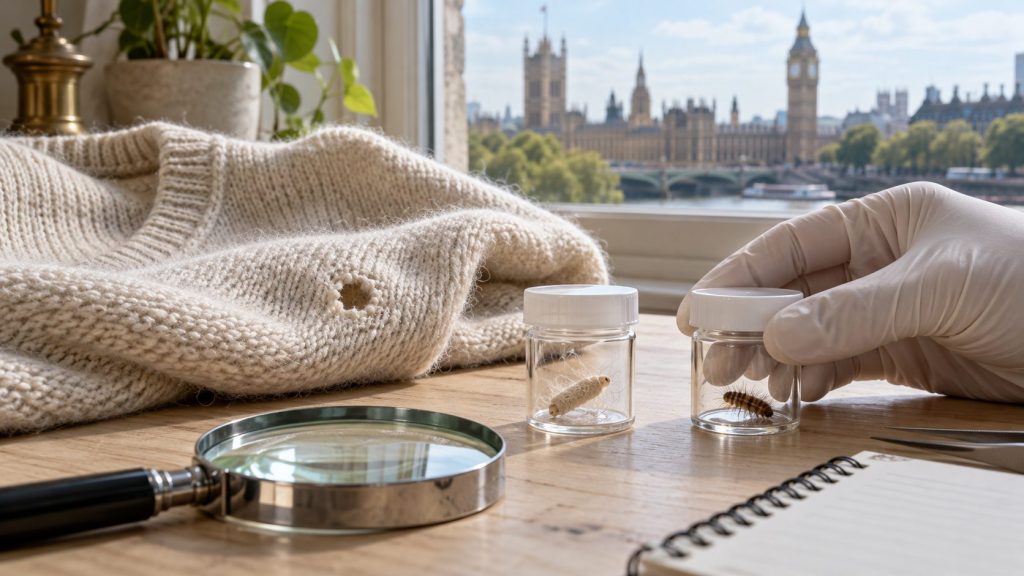
A hole in a wool jumper is not enough by itself to name the culprit. Examine seams, folds and the storage area for larvae, cast skins or new damage. Compare the item with a dated photograph if available. Holes caused by wear, snagging or an older infestation may remain after pests are gone. If several woollen items in the same quiet cupboard show fresh irregular damage, the cupboard and its surroundings deserve close inspection.
The British Pest Control Association describes small hairy larvae often called “woolly bears”; old skins from repeated moulting may be the first obvious sign. Treat a cast skin as evidence to identify, but do not assume it is fresh unless you have cleared the area and find another later. Bag a suspect garment before moving it to another room. Keep inspected clean items separate from those still awaiting a decision.
Valuable rugs, heirloom clothes, taxidermy and museum-type collections can be harmed by improvised heat, freezing or spray. Check care labels and seek specialist advice for the material. A pest professional may recommend item-specific handling alongside work on the room. Do not apply a household insecticide directly to a treasured textile unless the product label and a specialist explicitly support that use.
Clean the right edges and retain a baseline
Vacuum accessible carpet edges, skirting, floor cracks, furniture undersides and storage shelves where debris has gathered. Use attachments to reach seams and corners without damaging fabrics. Empty or seal the collected debris promptly so the material is not simply left in the machine. Cleaning removes food and some insects, but it cannot verify inaccessible voids or automatically treat every affected item. Record when and where you cleaned.
After cleaning, revisit the same points. Fresh cast skins, new larvae or newly damaged fabric in a previously cleared area are stronger evidence of continued activity than an adult on a sunny sill. The inspection does not need to become an anxious daily ritual; a dated check at sensible intervals is enough to show whether the pattern is changing. If a professional has treated the area, follow their specific aftercare and avoid removing a residual application by washing the treated edge prematurely.
Clean and dry vulnerable natural-fibre items before storing them in secure containers or bags. Do not seal a damp garment in plastic. Rotate stored clothing so hidden damage is more likely to be noticed. These habits reduce the amount of undisturbed material larvae can use, but they do not substitute for identifying an active source when evidence keeps appearing.
When one window is not the whole story
Adults can fly between rooms and from outside, so two windows with beetles do not necessarily mean two breeding sites. Conversely, a source in one loft or store cupboard can produce adults at several bright windows. Map rooms and dates, and see whether larvae or damage concentrate in one place. If a neighbour in a shared building reports the same insect, compare specimens before assuming a common source. Building structure, stored materials and old nesting debris may connect the reports.
A technician may inspect behind accessible skirting, under carpets, in storage and near animal material to locate larvae. Panther’s pest inspection service is useful if the beetle identification is uncertain or the likely source is beyond easy access. The purpose is to decide what needs cleaning, removal or targeted treatment, not to spray every window because that is where adults are easiest to see.
Tell the technician about any pesticide already used and any sensitive items before work begins. A decorative rug and a commercial archive require different handling. If a roof or façade defect has allowed nesting material to accumulate, pest control and building maintenance may need to be planned together.
Decide when to ask for help
One adult with no larval evidence may justify identification, a focused check and a note of the date. Ask for professional help when adults recur, larvae or cast skins are found repeatedly, valuable fibres show new damage, or the likely source is in an inaccessible void. Keep a specimen, photographs of the affected item and a list of rooms where signs appeared. That evidence makes an appointment much more useful.
Panther’s contact page explains what to include when requesting an assessment. Describe the insect and the physical signs rather than calling every hole a carpet beetle infestation. Adult beetles at a window tell you where to start looking; larvae and their food source tell you what needs to be addressed.

Al Joel is a practical writer and long-term property maintenance specialist focused on real-world pest control, home safety and prevention advice. His guides translate common warning signs into clear next steps for homeowners, tenants, landlords and property managers.His approach begins with correct identification. A sighting in one room may originate from a neighbouring flat, service riser, drainage, roof space, delivery or communal waste area. Al explains how to preserve useful evidence, reduce food and water sources, avoid spreading activity and choose proportionate treatment.What readers can expectClear identification clues and practical inspection stepsSafe preparation, cleaning and aftercare guidancePrevention advice for homes, flats and commercial premisesHonest guidance on when DIY is reasonable and when professional help is the smarter optionWhen professional help makes senseRepeated sightings, activity in several rooms, uncertain identification, vulnerable occupants or signs involving food, electrics and shared building routes deserve a professional inspection. A lasting solution normally combines targeted treatment with proofing, hygiene and follow-up monitoring.Explore the Pest Library, learn how treatment works, or request property-specific advice.