Pest Control · LONDON
Pest Control for Pubs in Soho: Discreet Protection for W1 Establishments
If a single rodent is spotted by a customer in a packed Soho bar on a Friday night, the damage to your reputation is often permanent. We provide...
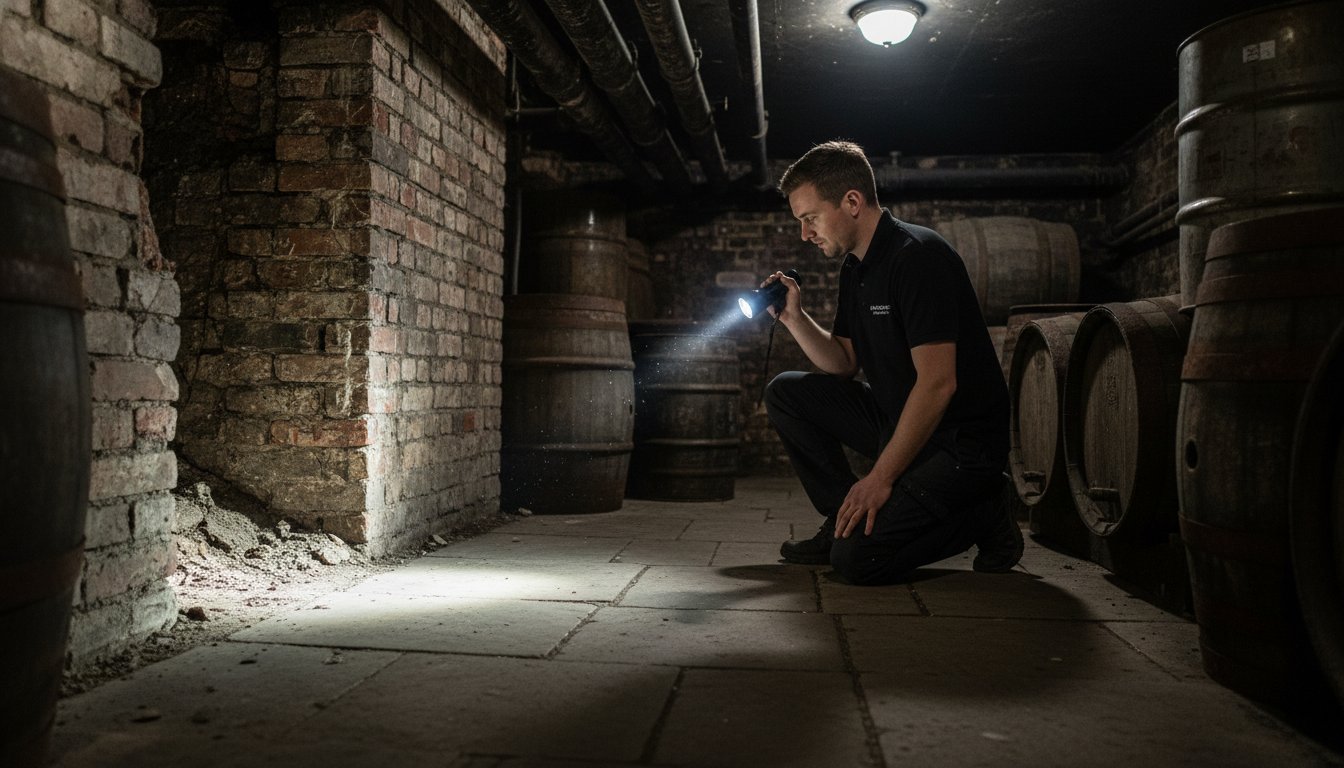
If a single rodent is spotted by a customer in a packed Soho bar on a Friday night, the damage to your reputation is often permanent. We provide professional pest control for pubs in Soho, specifically managing the high-risk environments of W1’s historic basements and dense commercial kitchens. Whether you’re an independent ale house on Dean Street or a busy venue near Old Compton Street, we understand that Westminster City Council’s hygiene standards aren’t negotiable. We recently resolved a persistent rodent issue for a cellar in a heritage building where porous Victorian brickwork was allowing mice to bypass standard traps, requiring a technical proofing solution rather than just another bait box.
You’re likely aware that maintaining a five-star hygiene rating is a constant battle when you’re surrounded by the West End’s network of ageing sewers and nocturnal activity. It’s a high-stakes environment where a single failure can lead to an Emergency Prohibition Notice. This article explains how to implement a stealth management strategy that keeps your premises compliant and your reputation intact. We’ll examine why Soho-specific logistics require out-of-hours discretion and how professional technical interventions provide the long-term security that retail products can’t match.
Key Takeaways
- Understand why the dense layout of Old Compton Street requires specialised pest control for pubs in Soho to stop rodents from using interconnected Victorian basements as a private highway.
- Learn the specific documentation and hygiene standards Westminster City Council EHOs look for to ensure your establishment remains compliant with the Food Safety Act 1990.
- Discover how stealth operations using unmarked vehicles and plain-clothed technicians ensure your reputation stays intact during sensitive daytime call-outs.
- Identify the critical proofing points in your cellar and drainage systems that physically harden your premises against the unique environmental pressures of the West End.
- Evaluate how a formal commercial contract provides a layer of legal and operational security that one-off emergency treatments cannot match.
The Soho Challenge: Why Standard Pest Control Fails in W1
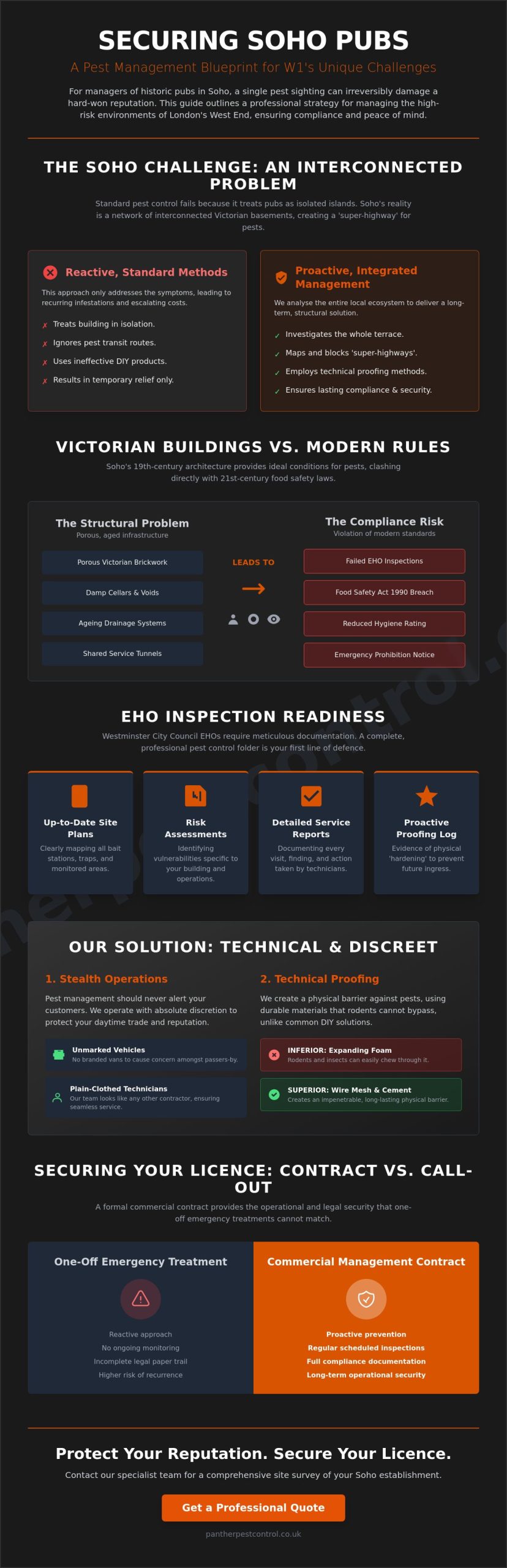
Soho’s hospitality sector operates in one of the most demanding environments in London. For a pub manager in W1, maintaining a five-star hygiene rating isn’t just about clean surfaces; it’s about managing a porous building in a district that never sleeps. Standard pest control often fails here because it treats buildings as isolated units, ignoring the reality that Soho is essentially one massive, interconnected structure. We provide specialised commercial pest control tailored to these specific structural vulnerabilities, ensuring that your establishment remains a safe environment for both staff and patrons.
The density of Old Compton Street and Dean Street creates what we call a rodent “super-highway”. In many cases, a pub’s rodent issue isn’t originating from their own cellar but is a spillover from a neighbouring restaurant’s waste area or a shared service duct. This environment requires a shift toward Integrated Pest Management (IPM), where we focus on the biology and behaviour of pests within the wider Soho ecosystem rather than just placing bait. It’s a clinical, decisive approach that addresses the root cause of the problem.
To better understand the current landscape of the industry and how these challenges are being met, watch this helpful video:
The Interconnected Nature of West End Terraces
Shared Victorian walls mean a neighbour’s infestation can become your crisis overnight. We recently handled a case near Berwick Street Market where a pub’s kitchen was clear, yet they were seeing rats in the bar area. The source was actually an old disused chimney breast shared with a property two doors down. Pests utilise the complex network of service tunnels, voids, and shared crawl spaces common in W1. If you don’t account for these transit routes, any treatment is purely temporary. Effective pest control for pubs in Soho must involve a thorough investigation of the entire terrace’s layout to identify these hidden entry points.
Victorian Infrastructure vs Modern Hygiene Standards
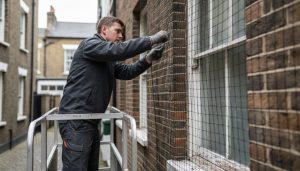
Modern hygiene regulations like the Food Safety Act 1990 clash directly with 19th-century architecture. 19th-century cellar dampness provides the perfect breeding ground for silverfish and flies, while aged drainage systems often suffer from significant grease build-up. This organic sludge is a primary attractant for German cockroaches, who thrive in the warmth and humidity of Soho’s subterranean kitchens. Professional structural proofing involves physical “hardening” of the premises. We don’t use temporary DIY foam fillers that rodents easily chew through. Instead, we use wire mesh and cement-based compounds to seal entry points that were never designed to be airtight. It’s a pragmatic, technical approach to a structural problem that ensures long-term protection.
Navigating EHO Inspections and Food Safety Compliance
Westminster City Council Environmental Health Officers (EHOs) operate with a high level of scrutiny in W1. They understand that the proximity of businesses in Soho creates a unique risk profile. An inspection isn’t just a check for visible pests; it’s an audit of your entire food safety management system. Under the Food Safety Act 1990, pub managers must demonstrate that they have taken all reasonable precautions to prevent contamination. In the competitive Soho gastropub market, a 4-star hygiene rating is often a liability. It signals to savvy diners and reviewers that your back-of-house standards aren’t quite at the peak of professional excellence. We focus on securing that 5-star rating by ensuring your pest management is proactive rather than reactive.
Your pest control folder is the first thing an inspector will ask to see. It must contain up-to-date site plans, risk assessments, and detailed service reports. We recently assisted a venue near Frith Street where the manager was concerned about an upcoming audit. Their previous provider had failed to document the specific proofing measures taken in the beer cellar, leaving a gap in their “due diligence” defence. We overhauled their documentation to ensure every technical intervention was logged, providing a clear paper trail for the EHO. For a deeper look at what’s required, you can review our guide on legal requirements for pest control in restaurants UK.
What the Inspector Sees: Common Pub Failpoints
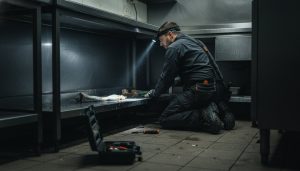
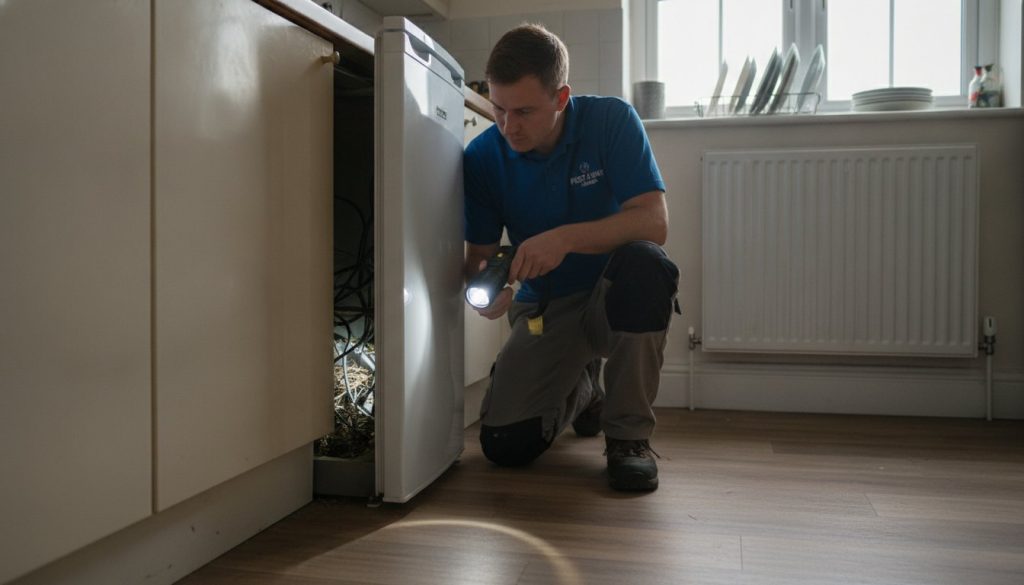
Inspectors focus on high-moisture and high-residue areas. Glass washes and beer lines are frequent failpoints because the yeast and sugar residues attract small flies and cockroaches. Dry stores are also under the microscope; even a single rodent dropping found amongst flour sacks or crisp boxes can trigger a Hygiene Emergency Prohibition Notice. This legal power allows an EHO to close your doors immediately if they believe there is an imminent risk to health. Professional pest control for pubs in Soho involves checking the “invisible” spots, such as the voids behind heavy refrigeration units and the gaps where pipes enter the floorboards, which are often overlooked during standard cleaning routines.
The Integrated Pest Management (IPM) Approach
IPM is the gold standard for commercial compliance. Rather than relying on the heavy use of toxins, which can be a risk in public-facing bar environments, we use non-toxic monitoring stations to detect activity before it becomes an infestation. This method proves to the council that you are monitoring your environment scientifically. It shows you aren’t just reacting to sightings but are actively managing the risk. Regular, documented inspections are essential. They serve as your primary evidence in court should a neighbouring property’s issues ever threaten your premises licence. If you are concerned about your current level of protection, you can speak with our technical team for a professional assessment of your site’s compliance.
Stealth Operations: Managing Pests Without Alerting the Crowds
Publicans have a legitimate fear: a branded pest control van parked right outside the front door during the peak lunch rush. In a neighbourhood as gossip-dense as Soho, visibility is a risk to your brand. We eliminate this concern by using unmarked vehicles and plain-clothed technicians for sensitive call-outs. This ensures that our presence is indistinguishable from a standard delivery or maintenance visit. It’s a clinical, decisive approach to pest control for pubs in Soho that prioritises your establishment’s public image.
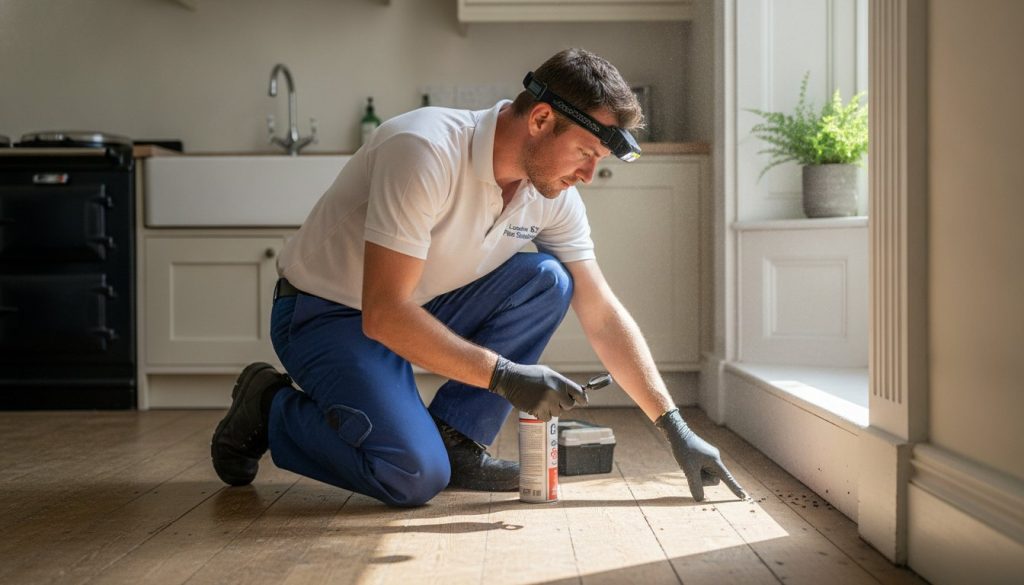
Discretion extends inside the building. We use tactical placement for bait stations, situating them in voids, behind kick-plates, and within cellar racking where they remain completely invisible to your customers. These aren’t the bulky, obvious boxes found in retail settings; they are professional-grade tools designed for high-traffic commercial environments. By focusing on the “unseen” areas, we manage the infestation without creating a visual alarm for your patrons.
Logistics of the West End: Timing and Access
Navigating the West End requires more than technical skill; it requires local logistical knowledge. Soho’s timed pedestrian zones and narrow streets make daytime access for anything other than a motorbike nearly impossible. We often schedule inspections and treatments for the early hours of the morning. This is the reality of working in W1. It often involves a technician arriving at a pub in Greek Street at 3 AM, just as the last drinkers are leaving and the night porters are starting their shift. Rapid response is essential for Soho operations, but it must be timed to fit the unique rhythm of the district’s trading hours.
Odourless and Non-Disruptive Treatments
Older pest control methods relied on foul-smelling sprays that required premises to be cleared for several hours. That simply doesn’t work for a pub that needs to serve food and drink without interruption. We’ve shifted toward advanced gel baits and heat treatments which are entirely odourless. These professional methods allow your pub to remain open whilst treatment is underway in the cellar or dry stores. There is no disruption to beer lines; there is no chemical taint in the kitchen. We provide the relief of expert intervention without sacrificing a single hour of trading or compromising the sensory experience of your bar.
Proofing the Perimeter: Cellars, Alleys, and Drainage
Physical hardening is the only way to break the cycle of infestation in a district as dense as Soho. In W1, the architecture works against you. Standard plastic or thin aluminium mesh is useless here; Soho rats will chew through these materials in minutes. We use heavy-duty stainless steel mesh and concrete-based fillers to create a permanent barrier. This technical approach is a core part of effective pest control for pubs in Soho, moving beyond temporary fixes to structural solutions.
The “Service Reality” of 200-year-old Victorian foundations is that 100% proofing is sometimes an impossible goal. Porous brickwork and shifting floorboards in aged basements mean that new gaps can appear seasonally. Where we cannot physically seal a building entirely, we implement high-frequency monitoring. This ensures that any breach is identified and neutralised before it reaches your customer-facing areas. It is a pragmatic strategy for pest control for pubs in Soho that acknowledges the limitations of historic architecture whilst maintaining a clinical standard of hygiene.
Cellar Management and Beer Line Security
Pests often enter the bar via the very infrastructure that keeps the beer flowing. Pipe-runs leading from the cellar to the font are frequently left unsealed, providing a direct vertical ladder for rodents. We recently resolved a persistent issue for a pub near Leicester Square that was struggling with drain flies in the washroom. The root cause was standing water and organic sludge build-up in a redundant floor drain. By sealing these “dead legs” in the plumbing and using professional-grade foaming agents to clear the lines, we removed the breeding ground entirely. Condensation on cooling equipment is another major attractant that requires constant management to prevent luring pests into the heart of your cellar.
Alleyway Waste and External Lures
The narrow backstreets around Wardour Street and Walker’s Court present a unique waste management challenge. Secure, lockable bins are a necessity, not an option. We often see “grease shadows” on the pavement, which are dark, permanent stains left by leaking waste bags. These shadows act as a chemical signal to local rodents, telling them exactly where their next meal is located. Cleaning protocols for external staff areas must include heavy-duty degreasing to remove these scent trails. If you are concerned about the integrity of your perimeter, you can book a technical site survey to identify your establishment’s specific vulnerabilities.
Securing Your Licence: The Value of Commercial Contracts
One-off “emergency” fixes often address the symptom rather than the cause. In a high-stakes area like W1, relying on reactive call-outs is a gamble with your premises licence. When choosing pest control for pubs in Soho, a long-term commercial contract offers far more than a simple response to a sighting; it provides the documentation needed to satisfy Westminster City Council’s rigorous standards. The same principle applies across London’s historic districts — our commercial pest control contracts Hampstead businesses rely on demonstrate how structured, ongoing agreements protect period properties from the persistent pressures of interconnected urban architecture. For contract holders within the M25, we provide a 24/7 emergency call-out guarantee. This ensures that if a problem arises late on a Saturday night, it’s neutralised before the Sunday morning shift begins.
Regular reporting is what keeps you ahead of the EHO. Instead of reacting to an inspector’s findings, you present them with a folder of documented success. Our technicians provide detailed logs of every visit, including proofing updates and non-toxic monitoring results. This proactive data is your best defence during a licensing review. It proves you’ve taken every reasonable step to protect public health in a challenging urban environment. It’s a clinical, decisive way to manage risk without the stress of the unknown.
Beyond Mice: Managing the Full Soho Spectrum
A robust contract must account for more than just rodents. Soho’s unique density means you’re often affected by the “neighbourhood effect.” Our comprehensive pest control for pubs in Soho covers the full spectrum of urban invaders, from subterranean rats to cockroach activity migrating through shared walls. We also manage seasonal fly issues and even occasional bed bug introductions from nearby boutique hotels. Having a dedicated technician who knows your cellar’s specific quirks is invaluable for identifying these risks before they escalate.
Final Steps: Audit and Peace of Mind
Once an active infestation is eradicated, the work doesn’t stop. We provide a final walkthrough and a formal “clearance certificate” to confirm the site is secure. This isn’t just paperwork; it’s a professional validation of your hygiene standards. We follow up with regular audits to ensure your pub remains a protective presence for its patrons. It’s about maintaining a standard that makes the next council visit a formality rather than a source of anxiety. If you haven’t had your site surveyed recently, you should book a professional pest inspection before your next scheduled EHO audit.
Protecting Your Reputation in the West End
Managing a venue in the heart of W1 means dealing with a district that’s structurally interconnected and constantly under the scrutiny of Westminster City Council. We’ve established that standard methods often fail because they don’t account for the unique Victorian architecture or the logistical constraints of pedestrianised zones. By prioritising physical hardening and data-driven monitoring, you can secure your five-star hygiene rating and ensure your premises licence remains protected.
Effective pest control for pubs in Soho requires a technical, clinical approach that values discretion above all else. Our BPCA qualified Soho technicians provide a 24/7 emergency response in W1, using discreet unmarked vehicles to protect your brand’s image. It’s about moving from a state of reactive anxiety to a position of professional control. Don’t wait for a sighting to threaten your trading or your reputation.
Secure your Soho pub with a discreet professional inspection today. You can maintain a safe, compliant establishment that thrives in the busiest district in London.
Frequently Asked Questions
Do I need a pest control contract by law for my Soho pub?
You aren’t legally mandated to have a specific contract document, but you are required to demonstrate a robust food safety management system. Under the Food Safety Act 1990, a professional agreement is the most reliable way to prove “due diligence” to an inspector. Without documented proof of regular monitoring, you risk heavy fines or closure if an infestation is discovered during a surprise audit.
Can an EHO shut down my pub immediately if they find a mouse?
Yes, an Environmental Health Officer has the authority to serve a Hygiene Emergency Prohibition Notice if they believe there is an imminent risk to health. While a single sighting might result in a warning, evidence of an active infestation in food preparation areas usually leads to immediate closure. This is why professional pest control for pubs in Soho focuses on the zero-tolerance standards required by Westminster City Council.
How do you handle pest control in Soho during pedestrianised hours?
We schedule our visits to coincide with Soho’s unique access windows, typically arriving in the early hours of the morning. Our technicians are familiar with the timed pedestrian zones around Greek Street and Dean Street, ensuring we can reach your premises without logistical delays. This out-of-hours approach also ensures that our work remains completely invisible to your daytime and evening patrons.
Will my customers be able to smell the chemicals used in the bar?
No, your customers will not detect any chemical odours because we utilise advanced gel baits and non-toxic monitoring stations instead of traditional sprays. These modern treatments are entirely odourless and specifically designed for use in sensitive hospitality environments. You can continue trading immediately after a technician has completed their work without any risk of taint to your food or drink offerings.
What is the most common pest problem for pubs in the W1 area?
Rodents remain the primary concern due to the density of Soho’s Victorian basements and shared drainage networks. However, we also see a high volume of German cockroach infestations, which thrive in the warmth of commercial kitchens and grease-heavy environments. Effective management requires a dual focus on physical proofing and subterranean monitoring to address these specific W1 environmental pressures.
How quickly can you respond to an emergency sighting on a Saturday night?
We provide a 24/7 emergency response guarantee for our commercial contract holders within the M25. If you experience a sighting during a busy Saturday night shift, a BPCA qualified technician can be dispatched to neutralise the issue before your next opening. This rapid intervention is critical for protecting your reputation in a neighbourhood where news of a pest sighting can spread instantly.
Are your pest control methods safe for use around food and drink?
Yes, our methods are specifically selected for their safety in high-stakes food preparation environments. We follow strict protocols to ensure that all treatments are placed in inaccessible voids and secure stations away from surfaces used for food or drink. This clinical approach provides the necessary protection without compromising the safety of your kitchen staff or your customers.
Do you provide discreet, unmarked vehicles for Soho call-outs?
Yes, we maintain a fleet of unmarked vehicles to ensure our visits to your W1 establishment remain entirely confidential. We understand that a branded van parked outside can trigger unnecessary alarm amongst the public. It’s a standard part of our professional pest control for pubs in Soho, ensuring your establishment’s reputation isn’t compromised by a visible service visit.

Al Joel is a practical writer and long-term property maintenance specialist focused on real-world pest control, home safety and prevention advice. His guides translate common warning signs into clear next steps for homeowners, tenants, landlords and property managers.
His approach begins with correct identification. A sighting in one room may originate from a neighbouring flat, service riser, drainage, roof space, delivery or communal waste area. Al explains how to preserve useful evidence, reduce food and water sources, avoid spreading activity and choose proportionate treatment.
What readers can expect
- Clear identification clues and practical inspection steps
- Safe preparation, cleaning and aftercare guidance
- Prevention advice for homes, flats and commercial premises
- Honest guidance on when DIY is reasonable and when professional help is the smarter option
When professional help makes sense
Repeated sightings, activity in several rooms, uncertain identification, vulnerable occupants or signs involving food, electrics and shared building routes deserve a professional inspection. A lasting solution normally combines targeted treatment with proofing, hygiene and follow-up monitoring.
Explore the Pest Library, learn how treatment works, or request property-specific advice.