Pest Control · LONDON
Central London Emergency Pest Control: 24/7 Rapid Response for Urgent Infestations
Discovering a cockroach cluster near the grease traps of a busy Covent Garden kitchen at midnight is a professional crisis. You don't need a booking...
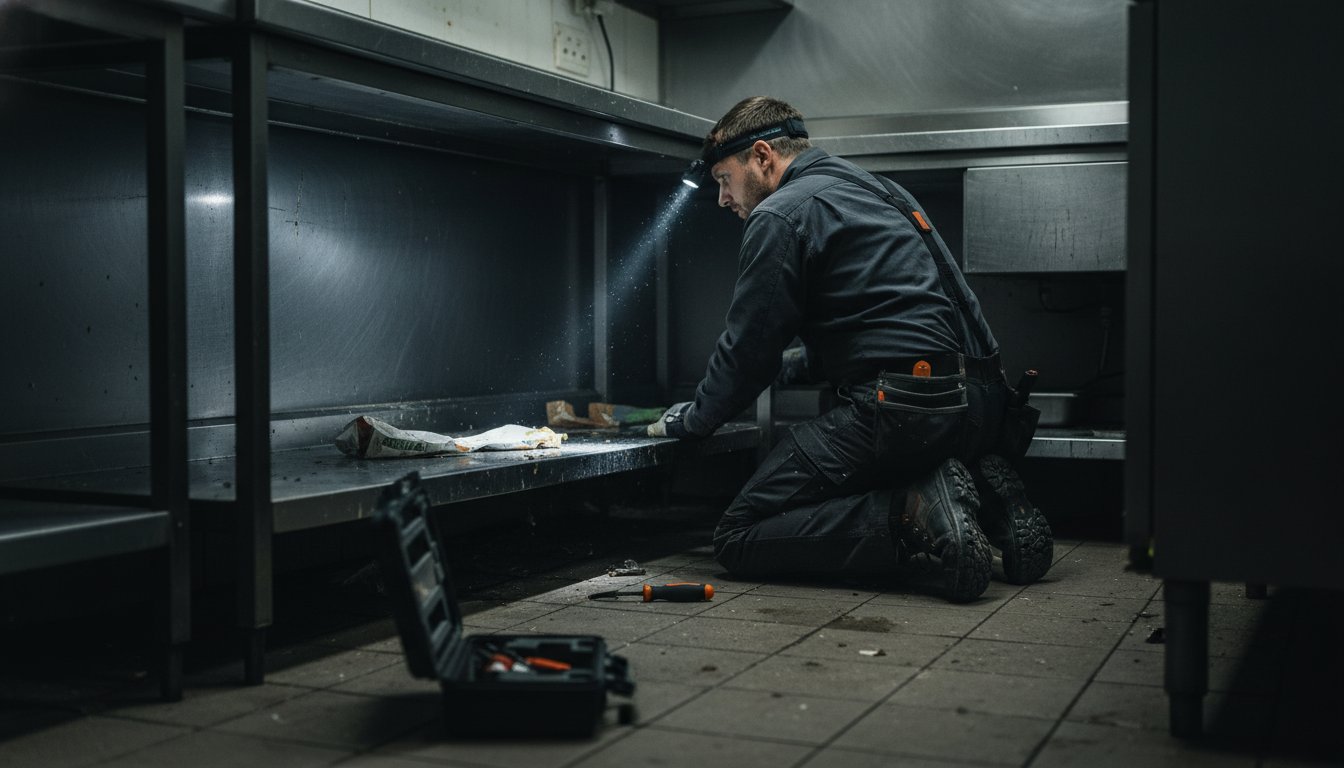
Discovering a cockroach cluster near the grease traps of a busy Covent Garden kitchen at midnight is a professional crisis. You don’t need a booking form; you need Central London emergency pest control that puts a technical expert on-site within hours. This immediate intervention is vital for residents in aging Westminster terraces or business owners in the Square Mile who cannot risk a hygiene breach. Expert response replaces the uncertainty of DIY attempts with clinical, decisive action that stops an infestation before it spreads through shared walls.
It’s natural to feel distressed when your safety or livelihood is threatened by pests. We agree that a rapid, discreet resolution is the only acceptable outcome. This article outlines the steps we take to eliminate the immediate threat and the technical proofing we implement to prevent its return. You’ll also find insights into the logistical realities of rapid response in the West End and how we adhere to the mandatory 2026 rodenticide competency regulations to ensure a safe, legal, and permanent result.
Key Takeaways
- Learn to identify a critical infestation in high-density London housing where rapid spread makes immediate intervention a necessity.
- Understand how thermal imaging and endoscopes pinpoint hidden nests, ensuring professional eradication rather than temporary surface fixes.
- Discover why arrival time is the critical metric for Central London emergency pest control and how to verify professional BPCA credentials.
- Master immediate containment and safety protocols to protect your health whilst a technician navigates urban traffic to reach your property.
- Benefit from direct technical access that bypasses administrative intermediaries, providing a faster route to permanent pest removal.
Identifying a Genuine Pest Emergency in Central London Properties
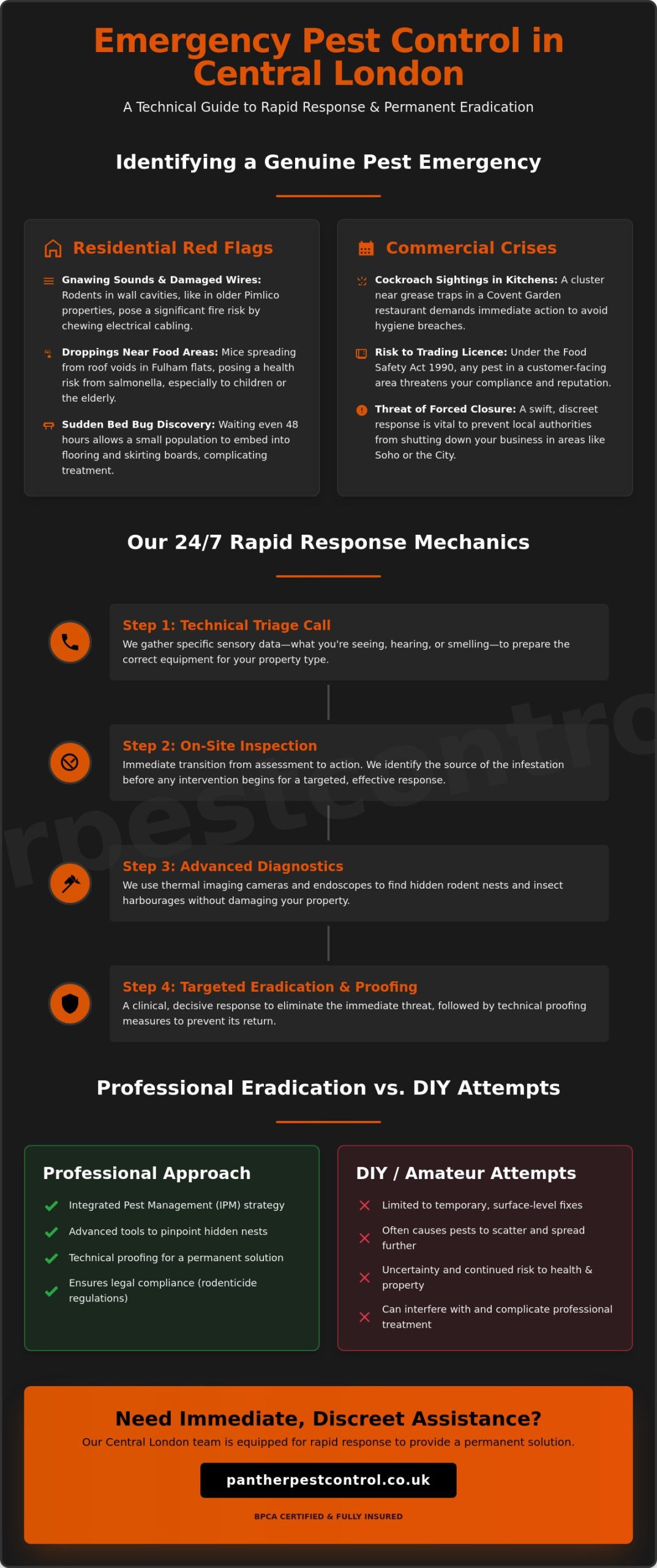
Not every pest sighting requires an immediate call-out, but in the tight confines of Central London, a minor issue can escalate in hours. High-density living, particularly in subdivided Victorian properties, means pests use shared wall cavities and floor voids to travel between flats. If you’re hearing scratching in the walls of a Pimlico apartment, it isn’t just a nuisance; it’s a structural risk. Rodents have a biological need to gnaw, and they often target the PVC casing of electrical wiring, which can lead to fires in older buildings with outdated infrastructure.
To better understand the scale of urban rodent issues, watch this footage of how they navigate London’s hidden infrastructure:
Professional Central London emergency pest control focuses on immediate risk mitigation. We use Integrated Pest Management (IPM) to assess whether the situation poses a health threat or a danger to the building’s integrity. While a single moth in the lounge is a job for a scheduled visit, a rat in the kitchen or a bed bug discovery in a guest room requires a rapid response to contain the spread before it impacts neighbours or other rooms.
Residential Red Flags: When to Call 24/7
In a top-floor flat in Fulham, a mice infestation often starts in the roof void and quickly moves down through service risers. You should treat the situation as an emergency if you find droppings near food preparation areas or if you have vulnerable residents, such as infants or the elderly, who are at higher risk from salmonella or leptospirosis. Sudden bed bug discoveries also qualify; waiting even 48 hours can allow a small hitchhiker population to embed itself into skirting boards and flooring, making the eventual treatment far more complex and expensive.
Commercial Crises: Maintaining Compliance in Soho and the City
For businesses in Soho or the City, a pest sighting isn’t just a hygiene issue; it’s a threat to your trading licence. Under the Food Safety Act 1990, restaurants and cafes must demonstrate they have adequate procedures to prevent pests. An emergency call is necessary the moment a commercial pest is spotted in a customer-facing area or food store. We provide discreet, rapid intervention that protects your reputation whilst ensuring you remain compliant with environmental health standards. Acting fast prevents a single sighting from turning into a forced closure by local authorities.
The Mechanics of 24/7 Rapid Response: What Happens After Your Call
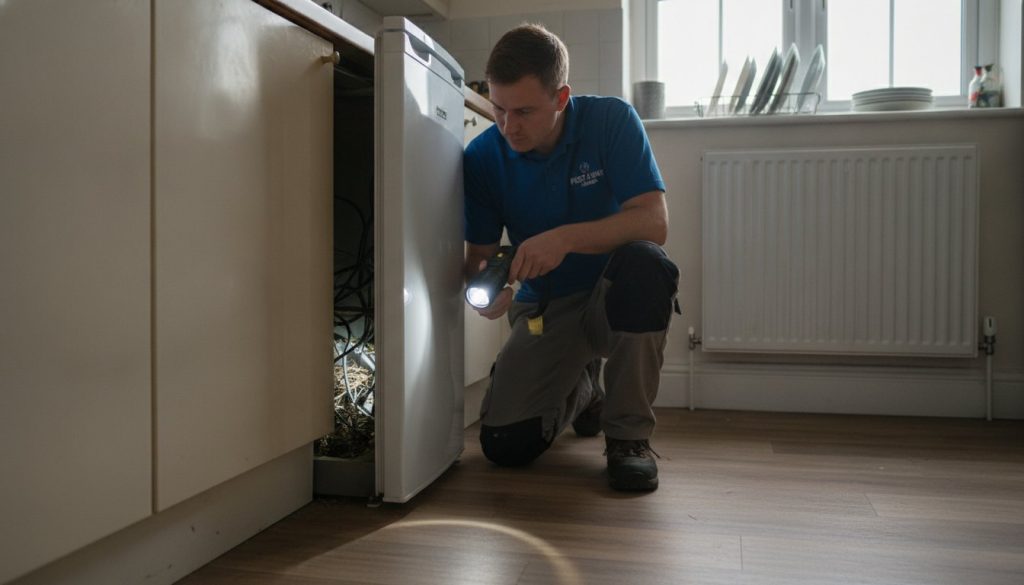
When you request Central London emergency pest control, the process begins with a technical triage over the phone. We don’t just take your postcode; we gather specific sensory data about what you’re seeing, hearing, or smelling. This allows our technician to prepare the correct equipment for your specific property type, whether it’s a high-rise office in the City or a basement flat in Marylebone. Once on-site, the transition from assessment to action is immediate. We don’t guess where pests are hiding. We use thermal imaging to detect heat signatures of rodent nests behind plasterboard and endoscope cameras to inspect service voids without damaging your walls.
A thorough site inspection is a mandatory first step. It’s the difference between a professional resolution and a temporary fix. Guidance on evaluating emergency providers highlights that skipping this diagnostic phase often leads to treatment failure. We identify the source of the infestation before any intervention begins, ensuring our response is targeted and effective. This clinical approach allows us to prepare the environment safely, protecting your family or staff whilst we deploy the necessary tools.
Technical Inspection Protocols
Central London’s architecture presents unique challenges for pest exclusion. Victorian terraces often have porous brickwork or shared chimney flues that act as motorways for rodents. We use non-toxic tracking dust to map movement patterns in real-time. This data helps us distinguish between species, such as identifying if you’re dealing with German cockroaches in a warm kitchen or Oriental cockroaches in a damp cellar. Each species requires a different tactical approach to ensure complete eradication.
Emergency Treatment Options
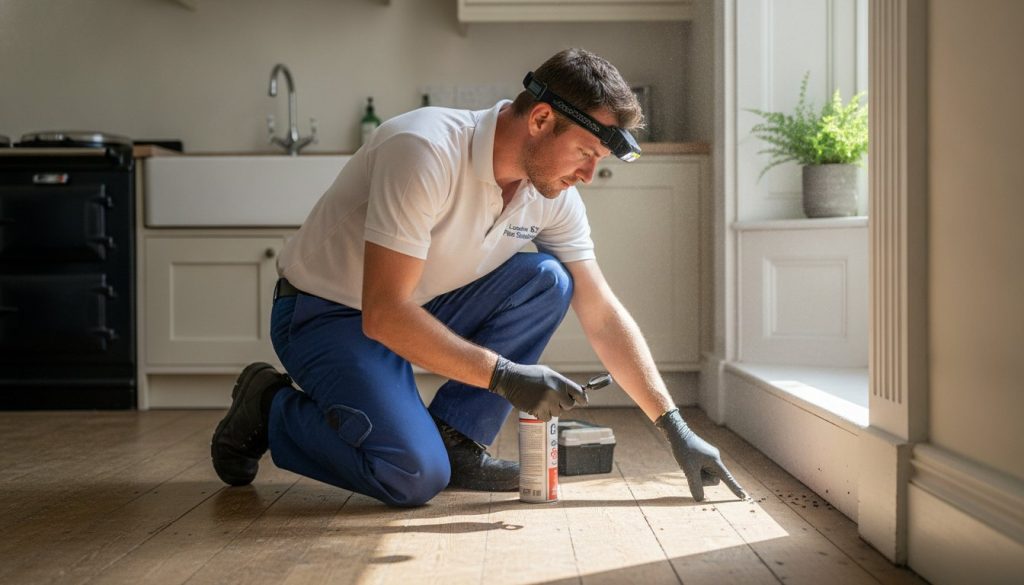
Speed is the priority during an emergency call-out. We use rapid-knockdown sprays to gain immediate control over heavy insect infestations. For bed bug crises, heat treatment is our preferred method because it penetrates deep into upholstery and kills all life stages in one session. Once the immediate threat is neutralised, we secure the perimeter. This involves using specialist sealants and wire wool to block entry points, preventing the local pest population from re-occupying the space. If you are facing an urgent issue, you can speak directly with a technician to coordinate an immediate arrival.
Evaluating Emergency Providers: Beyond the “Cheap” Price Tag
Selecting a provider based solely on a low headline quote is a common mistake during a crisis. In the context of Central London emergency pest control, a “cheap” service often masks hidden costs or inadequate treatment methods. You aren’t just paying for someone to turn up; you’re paying for a technical resolution that sticks. A critical metric to verify is the difference between “response time” and “arrival time.” Many companies promise a fast response, which simply means they’ll answer your call quickly. We focus on arrival time, ensuring a qualified technician is physically at your property in Mayfair or Marylebone within the agreed window to start work immediately.
Professional standards are non-negotiable when dealing with high-risk infestations. You should always verify that a provider’s staff hold British Pest Control Association (BPCA) accreditation. This certification confirms the technician is trained in the latest safety protocols and legal requirements, including the strict 2026 rodenticide regulations. Following UK government pest control guidance is essential for ensuring that treatments are both legal and safe for urban environments where non-target species or neighbours are in close proximity. A professional service provides a detailed post-treatment report that doesn’t just list what was done, but identifies the structural vulnerabilities that allowed the pest entry in the first place.
Accreditation and Safety Standards
Fully insured technicians are a requirement, not an optional extra, for Central London properties. If a technician accidentally damages a period skirting board or triggers a fire alarm in a commercial block, you need the security of comprehensive public liability insurance. We reject the “man with a van” approach that lacks professional accountability. Every chemical intervention we perform is accompanied by a safety data sheet. This transparency ensures you know exactly what products are being used in your living or working space and what precautions are necessary for pets or children.
Transparency in Emergency Costs
Understanding a standard pest control price helps you spot unrealistic offers that lead to “bait and switch” tactics. In Central London, logistical factors like the Congestion Charge and ULEZ requirements are real operational costs. A reputable provider will be upfront about these, rather than adding surprise surcharges to your final invoice after the work is completed. We believe in fixed, transparent pricing that reflects the complexity of the job. Evaluating the value of a multi-visit guarantee is also vital; a single “quick fix” often fails to address the breeding cycle of pests like cockroaches or bed bugs, leading to a repeat emergency days later.
Immediate Steps: Managing the Infestation Until the Technician Arrives
While you wait for your Central London emergency pest control technician to arrive, your primary objective is containment. It’s easy to feel overwhelmed, but taking controlled actions during these first 60 to 120 minutes can significantly reduce the eventual treatment time. Start by identifying the “hot zone” and physically isolating it. If you’ve spotted cockroaches in a Camden flat, focus on the kitchen area. Grease build-up in extraction fans or behind ovens acts as a high-calorie food source that encourages rapid breeding. Cleaning accessible surfaces with hot, soapy water removes these attractants and disrupts the pheromone trails that insects use to navigate.
Documentation is your most valuable tool during this waiting period. Use your smartphone to take clear photos or videos of the pests, their droppings, or any structural damage. This evidence allows the technician to confirm the species immediately upon arrival, bypassing the need for lengthy initial observation. It’s particularly helpful for identifying nocturnal pests that might retreat into wall voids when the lights are turned on. Avoid cleaning up droppings before the tech sees them, as their location and size provide vital clues about nesting sites.
Containment and Safety Actions
In multi-occupancy buildings or subdivided Victorian conversions, pests travel through shared utilities. If you’ve discovered bed bugs in a bedroom, keep the door closed and avoid moving any furniture or bedding into other rooms. This prevents “hitchhiking” and stops the infestation from spreading to unaffected areas. For rodent sightings, ensure all food is stored in glass or metal containers. Plastic bags offer zero protection against determined teeth. Keep pets and children away from the suspected area to prevent accidental contact with contaminated surfaces or nesting materials.
Why DIY Fails in an Emergency
Attempting to resolve an urgent infestation with supermarket-grade products often backfires. Aerosol bug sprays frequently cause a “scatter effect.” Instead of killing the colony, the chemicals irritate the insects, forcing them to flee deeper into structural voids or adjacent rooms. This turns a localised problem into a building-wide issue. Amateur poisons for rodents are equally risky; they are often slower-acting, meaning a rat might consume the bait and then retreat into an inaccessible wall cavity to die. The resulting decomposition smell in a Central London property can last for weeks and is often harder to resolve than the original infestation. Professional-grade treatments are specifically formulated to overcome the resistance found in urban pest populations. If you need immediate assistance, contact our emergency team now to secure your arrival slot.
Panther Pest Control: Navigating Central London Logistics for Permanent Eradication
Delivering Central London emergency pest control requires more than just technical skill; it requires an intimate understanding of the city’s logistical grid. We don’t rely on generic dispatch centres that don’t understand the reality of the Marylebone one-way system or the congestion charge zones. Instead, we provide direct access to senior technicians who manage their own routes. This technical accessibility ensures that when a kitchen porter in a cramped Marylebone basement discovers a cockroach surge near the drainage sump, we aren’t stuck in traffic five miles away. We are already positioned nearby, ready to navigate the narrow mews and parking restrictions that often delay less experienced providers. We solve the problem immediately because we are already part of the local environment.
Our Central London Advantage
Our technicians are strategically placed across the West End and the City to ensure rapid response. We equip our vans with a full range of professional-grade biocides and exclusion materials to avoid “parts-ordering” delays that leave your property vulnerable. For sensitive commercial call-outs where discretion is paramount, we utilise unmarked vehicles. This allows us to resolve a crisis without alerting neighbouring businesses or passing tourists, protecting your brand reputation whilst we work. We don’t just arrive quickly; we arrive prepared to finish the job in a single visit whenever technically possible.
Beyond the Emergency: Permanent Proofing
Once the immediate threat is neutralised, the focus shifts to preventing a recurrence. Effective mice control in Central London isn’t just about baiting; it’s about structural integrity. Victorian properties require different proofing techniques than modern steel-framed offices in the City. We use specialist materials like copper mesh and high-density sealants to block the tiny gaps created by aging foundations and settling floorboards. These gaps are often hidden behind kitchen cabinetry or under floorboards, requiring a technician who is willing to do the heavy lifting and detailed inspection work.
For business owners, transitioning from an emergency call-out to a structured commercial pest management contract is often the most cost-effective way to ensure long-term safety. Our final checks include a comprehensive review of service risers and pipe entry points. We provide a decisive resolution that rejects the “quick-fix” culture of amateur services. Our follow-up protocols ensure that once your safety is restored, it stays that way through expert intervention and diligent monitoring of the property’s perimeter.
Securing Your Property Against Persistent Urban Infestations
Restoring safety in a high-density urban environment requires more than just a quick response; it demands technical precision and local expertise. We’ve explored how professional diagnostics, such as thermal imaging, pinpoint the source of a breach in complex London buildings where DIY methods often fail. Relying on BPCA certified technicians ensures your treatment complies with the latest 2026 regulations while protecting your structural integrity from rodent damage.
When you need Central London emergency pest control, waiting is not an option for your health or your business reputation. Our team provides a 24/7 rapid response guarantee with fixed pricing and no hidden London surcharges. We prioritise clinical results over temporary fixes, ensuring that every entry point is sealed with professional-grade materials and every nesting site is neutralised using expert-only biocides. This decisive approach stops the spread across shared walls and prevents the high costs of structural repair later on.
Call Panther Pest Control for 24/7 Emergency Response to restore your peace of mind and secure your home permanently. You don’t have to manage an infestation crisis alone when professional help is available within hours.
Frequently Asked Questions
How quickly can an emergency pest control technician arrive in Central London?
We aim to have a technician at your property within two hours of your initial call. While urban traffic and parking restrictions in areas like Soho or Covent Garden can be unpredictable, our technicians are strategically positioned to minimise delays. We prioritise these calls because we understand that an active infestation in a high-density area requires immediate intervention to stop the spread through shared wall cavities.
Are your emergency pest control treatments safe for my children and pets?
All professional treatments are safe for your family and pets when applied according to the manufacturer’s strict safety protocols. We use targeted application methods that keep biocides away from contact surfaces. Before we begin, your technician will provide a safety data sheet and clear instructions on any necessary precautions, such as temporary exclusion from a specific room whilst a spray dries or a bait station is secured.
Do I need to leave my property during an emergency pest treatment?
Most emergency interventions don’t require you to vacate the entire property, though you may need to avoid specific rooms for a short period. For example, a targeted baiting for rodents is non-disruptive. However, more intensive treatments like heat treatment for bed bugs or fogging services for heavy insect infestations will require the premises to be empty. We’ll always inform you of these requirements during the initial phone triage.
What is the difference between a standard call-out and an emergency service?
The primary difference is the speed of mobilisation and the priority given to your call-out. A standard service is a scheduled visit for non-urgent issues like garden ants or occasional moth sightings. Central London emergency pest control is a rapid-response model designed for critical threats, such as rats in a kitchen or a cockroach surge in a restaurant. This service operates 24/7 to ensure immediate threat neutralisation.
Can you provide discreet pest control for my Central London business?
We provide discreet service for commercial clients using unmarked vehicles and plain-clothed equipment cases. We understand that a visible pest control presence can damage the reputation of a hotel or restaurant in the City. Our technicians can arrive during quiet hours or via service entrances to ensure the treatment is completed without alerting your customers or neighbours to the situation.
Do you offer guarantees on emergency pest eradication services?
We focus on permanent eradication through a combination of immediate knockdown and long-term structural proofing. While specific guarantee terms depend on the pest species and property condition, our professional results are built on thorough site inspections. We don’t just apply a temporary fix. We identify the underlying cause and provide clear documentation on the steps needed to ensure the infestation does not return.
What should I do if I find a rat in my house in the middle of the night?
You should immediately isolate the room and avoid cornering the animal, as rats can become aggressive when threatened. Close the door and place a towel along the base to prevent the rodent from escaping into other parts of the house. Once the area is contained, call our emergency line. Documenting the location and any visible damage with your phone will help our technician identify entry points quickly.
How do you handle pest control in Central London buildings with multiple occupants?
Managing infestations in multi-unit blocks requires a technical focus on shared service risers and floor voids. Pests in London flats often travel through gaps around communal heating pipes or electrical conduits. We identify these “pest motorways” and use specialist sealants to create a permanent barrier. This targeted approach prevents the infestation from migrating between units, which is a common failure point in amateur treatments.

Al Joel is a practical writer and long-term property maintenance specialist focused on real-world pest control, home safety and prevention advice. His guides translate common warning signs into clear next steps for homeowners, tenants, landlords and property managers.
His approach begins with correct identification. A sighting in one room may originate from a neighbouring flat, service riser, drainage, roof space, delivery or communal waste area. Al explains how to preserve useful evidence, reduce food and water sources, avoid spreading activity and choose proportionate treatment.
What readers can expect
- Clear identification clues and practical inspection steps
- Safe preparation, cleaning and aftercare guidance
- Prevention advice for homes, flats and commercial premises
- Honest guidance on when DIY is reasonable and when professional help is the smarter option
When professional help makes sense
Repeated sightings, activity in several rooms, uncertain identification, vulnerable occupants or signs involving food, electrics and shared building routes deserve a professional inspection. A lasting solution normally combines targeted treatment with proofing, hygiene and follow-up monitoring.
Explore the Pest Library, learn how treatment works, or request property-specific advice.