Pest Control Advice · LONDON
Moth Damage in a Wardrobe With No Moths in Sight
A quiet wardrobe can still hold larval evidence. Check seams and nearby edges, record changes and rule out other textile pests before treating.
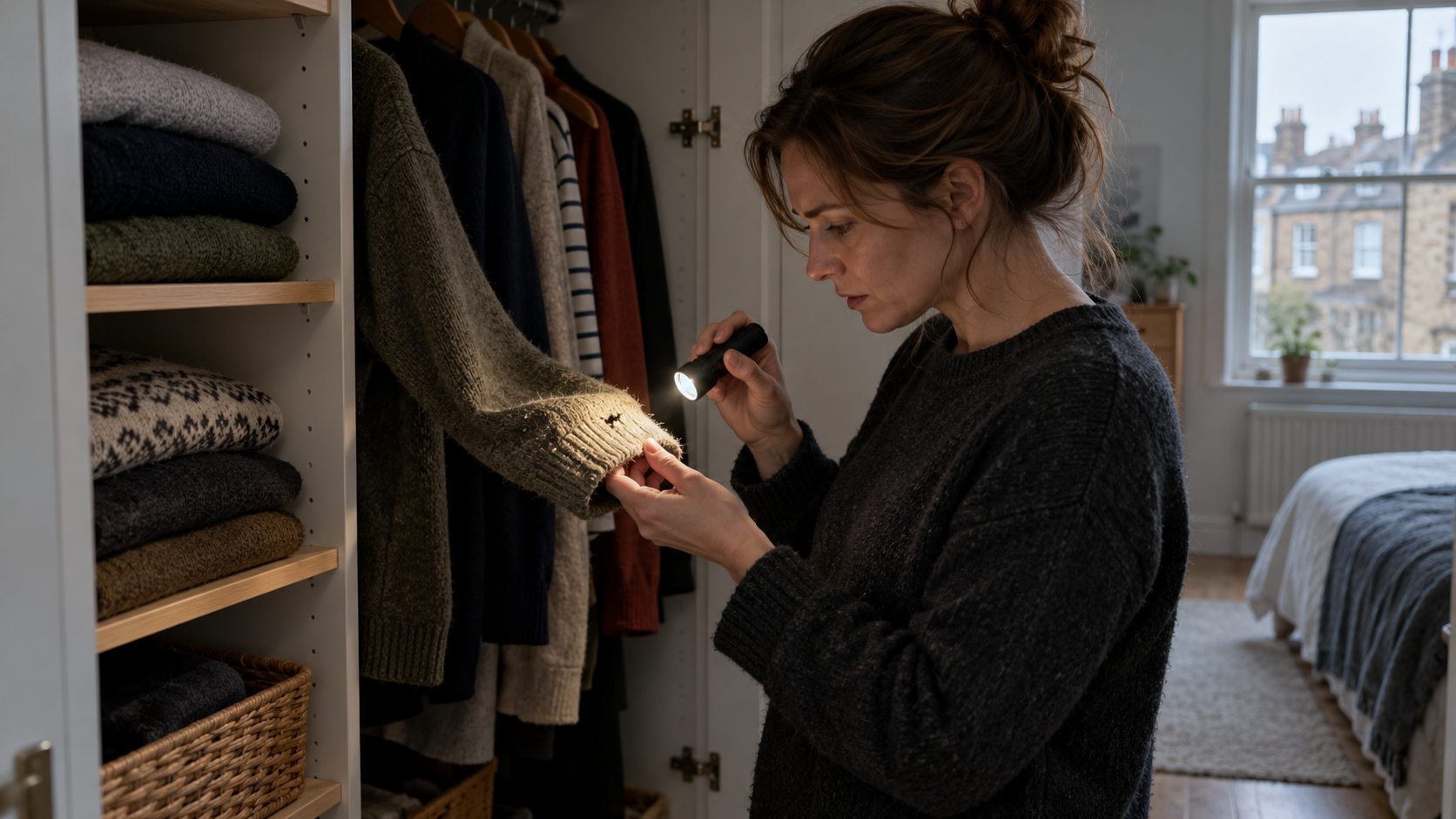
You take a jumper from the back of the wardrobe and find a new-looking hole. No moth has flown out, and there is no obvious insect on the shelf. That silence does not clear the wardrobe: clothes moths do their damage as hidden larvae. Equally, a hole by itself does not prove a moth problem. It might be old wear, a snag or another textile pest.
The useful question is what changed since the garment was last sound. This guide gives you a contained way to inspect a wardrobe, record the evidence and decide whether it needs cleaning, item care or a pest inspection. It is designed for the common situation where there is damage but no adult moth to identify.
Why the lack of adult moths tells you little
The larvae of clothes moths feed on natural fibres; adult moths do not make the holes. Larvae may remain inside folds, beneath a collar, at carpet edges or on the hidden side of upholstery. Adults are small, often avoid bright open areas and may be missed altogether. The Natural History Museum’s clothes moth guide describes the two main UK textile-damaging species and their concealed larval habits.
One garment can therefore show damage without anyone remembering a moth in the room. That does not mean a larva is still present today. A jumper stored for months may have been damaged earlier, including before it entered the current home. Record when it was last worn or inspected, where it has been stored and whether nearby garments have changed. A date and a photograph give you a baseline that memory alone cannot.
A moth trap is not a verdict on that jumper. Species-specific pheromone traps normally attract certain adult male moths and can help with monitoring, but they do not capture larvae feeding in cloth or every possible textile pest. An empty trap does not rule out larvae. A full trap shows adults in the area, not necessarily that the damaged garment is the source. Use a trap as one line of evidence, not as a substitute for inspecting the fabric.
Check the hole before emptying the whole wardrobe
Photograph the hole close up and then the entire item, including its care and fibre labels. Are the edges thinned or grazed, or is there a clean tear at a seam? Are there several small holes in a shaded fold? Look under cuffs, collars, pocket edges and around stored layers. The pattern can guide further checks but will not identify an insect alone. A seam under strain can fail without pests, while a larva can graze on a partly natural-fibre lining that the outer label does not make obvious.
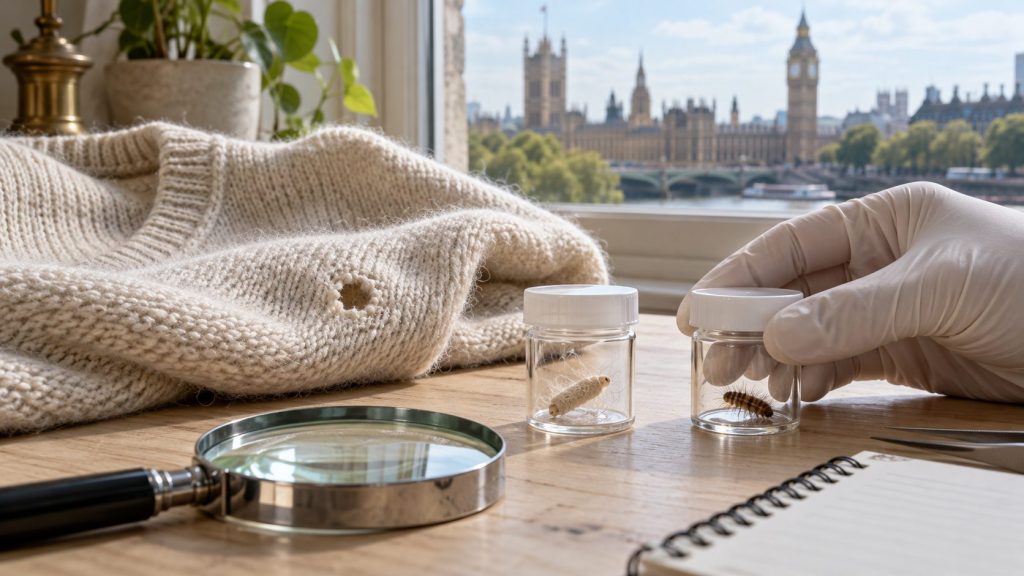
Lay the suspect item on a pale clean surface and use a torch. Look for a cream-coloured larva with a darker head, fine silk webbing, or a small fibre-covered case. A case-bearing clothes moth larva can carry a protective case that resembles the cloth. Photograph anything found beside a ruler, and save an intact specimen in a closed clear pot if possible. Avoid shaking debris onto a bed or dragging an open armful of clothing through other rooms.
Now compare the nearest items of similar fibre, not every synthetic garment in the home. A wool coat next to the jumper, a felt hat on the shelf or a folded blanket below it may show related signs. If several natural-fibre pieces are affected, the case for a shared local source grows stronger. If only one old garment has a single unchanged mark and there are no larvae or other signs, a short monitoring period may be more proportionate than immediate whole-room treatment.
Follow the hidden edges, not just the hanging rail
Wardrobe damage can originate below the obvious storage space. Inspect shelf corners, drawer runners, the wardrobe floor, a carpet edge behind or under the unit, and nearby upholstered furniture. Larvae like quiet places where animal fibres and lint collect. A fitted wardrobe against an external wall may have inaccessible gaps; note them rather than dismantling joinery without a plan.
English Heritage’s clothes moth research and advice describes how larvae may leave silk tunnels and damage carpets as well as clothing. If a wardrobe garment is damaged, check the surrounding natural-fibre materials before assuming the garment brought the pest in. Conversely, a moth seen in the bedroom could have come from a different source; the adult’s flight path is less informative than larval evidence on a particular material.
Keep a small map: top shelf, left drawer, rail, wardrobe base, adjacent carpet. Mark each item with fresh or uncertain damage, webbing, cases and live larvae. That makes a later inspection efficient and prevents the story changing as items are moved. The Panther moth-control service follows vulnerable materials and larval harbourage rather than chasing a flying adult alone.
Consider another textile pest before choosing a product
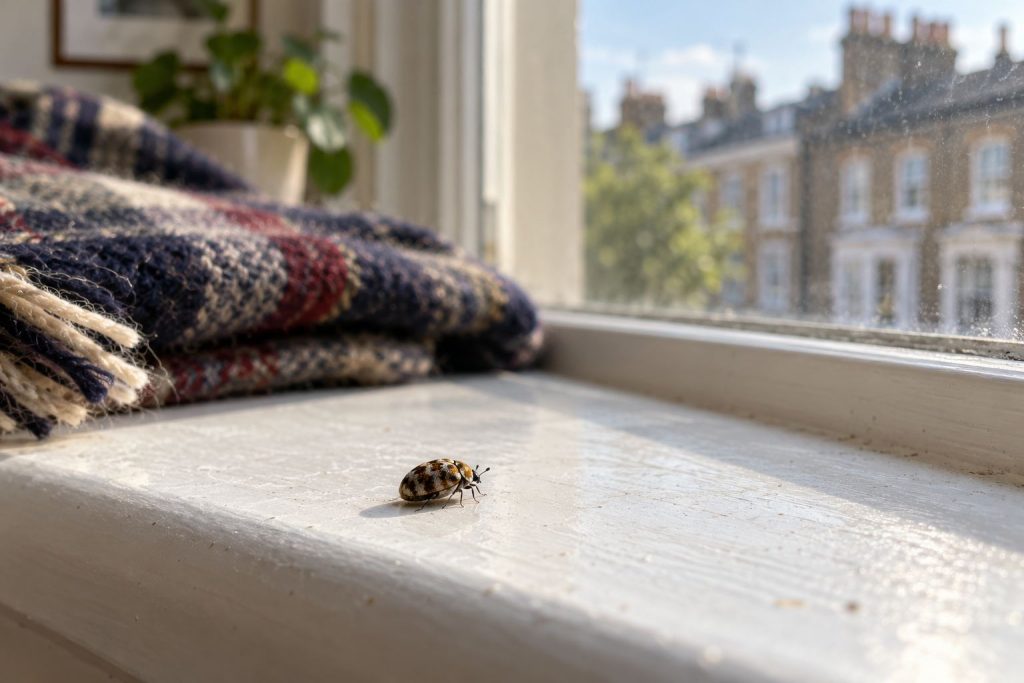
Carpet beetle larvae also damage natural fibres. They are usually bristly or hairy, and their shed skins may be conspicuous in quiet edges. A small adult beetle may be found at a window, but the larva may be under furniture or in the wardrobe. If you find hairy skins and no silk webbing, do not ignore that clue merely because the first hole was in a jumper. Panther’s carpet beetle inspection includes stored textiles, lint and possible animal material.
A hole can also result from friction, washing damage, a snag, a pet’s claw or wear at an elbow. Compare the placement with how the garment is used. Insect feeding is more plausible when vulnerable natural fibres have irregular grazing in sheltered areas together with larvae, cases, webbing or fresh cast skins. If the only evidence is a hole, keep an open mind and document change. A precise diagnosis is worth more than an early chemical response to a guessed cause.
Do not confuse moths around pantry foods with clothes moths in wool. Several household moths look similar at a glance and use different sources. A small moth at a kitchen light does not prove that an untouched bedroom wardrobe is infested. If an adult is available, keep it separate from any larva or debris and record exactly where each specimen came from.
Contain and clean in a useful order
Once photographed, place suspect garments in sealed bags, labelled with their original shelf or drawer. Keep inspected clean items apart from uninspected ones. Work shelf by shelf so you do not lose the location pattern. Vacuum accessible wardrobe corners and adjacent carpet edges only after retaining any specimen needed for identification. Empty the vacuum waste securely into an outside bin. Wipe suitable hard surfaces and let them dry before returning items.
For washable garments, follow the care label and choose a cleaning method that is safe for the textile. Dry cleaning or specialist processing may be appropriate for wool, silk or delicate construction. Freezing or heat can be effective under controlled conditions, but a domestic appliance’s indicated temperature and a thick bundle’s centre may not match. Do not promise an item is cleared after a casual overnight freeze or an unsuitable hot wash. Valuable pieces deserve advice from a textile specialist.
Avoid spraying garments indiscriminately, especially those worn next to skin or made of delicate fibres. A treatment plan should identify the insect and the affected source first, then specify which room edges or items need attention. Pheromone traps may help measure subsequent adult activity for a confirmed clothes moth species, but they will not remove larvae from a packed shelf. Cleaning, contained handling and source finding do the core work.
How to decide whether damage is continuing
Choose a few vulnerable items and photograph the same areas at the start of monitoring. Record the date they were cleaned and sealed or returned to storage. Check them and the adjacent shelf at a set interval. A new hole, live larva or fresh webbing is stronger evidence of current activity than an old empty case found once. If several rooms or a carpet edge show new signs, enlarge the inspection scope rather than treating only the wardrobe.
Keep trap catches in perspective. A few adults on a trap show that a monitored moth was present, but the trend and the source matter. Place and check traps according to the product or technician’s instructions, note dates, and do not move them repeatedly. If you see no adults but fresh larval damage appears, follow the damaged material. If adults continue appearing and no wardrobe source is found, look at rugs, upholstery, other stored woollens and any accessible animal-based material elsewhere.
There is no universal number of days that proves a wardrobe clear. Temperature, season, item handling and the pest involved all affect what you may see. A practical end point is a documented absence of new damage and live larval evidence across the relevant materials over an agreed monitoring period, not just a quiet evening with no moths in flight.
When to bring in a technician
Arrange help if new holes appear on several items, a live larva or case is found, silk webbing continues after cleaning, or valuable carpets and upholstery may be involved. Ask sooner if the source sits in fitted furniture or an inaccessible edge. Send photographs of the fibre label, damage, specimen and exact storage locations when you contact Panther Pest Control. Say plainly if no moth has been seen; that is useful context, not a reason to dismiss the damage.
Expect an inspection to answer three questions: what insect is present, which material sustains it and how the affected items should be handled. If the answer is “not yet certain”, further contained inspection is better than treating an entire wardrobe on a hunch. The absence of adult moths is only one small part of the evidence.

Al Joel is a practical writer and long-term property maintenance specialist focused on real-world pest control, home safety and prevention advice. His guides translate common warning signs into clear next steps for homeowners, tenants, landlords and property managers.His approach begins with correct identification. A sighting in one room may originate from a neighbouring flat, service riser, drainage, roof space, delivery or communal waste area. Al explains how to preserve useful evidence, reduce food and water sources, avoid spreading activity and choose proportionate treatment.What readers can expectClear identification clues and practical inspection stepsSafe preparation, cleaning and aftercare guidancePrevention advice for homes, flats and commercial premisesHonest guidance on when DIY is reasonable and when professional help is the smarter optionWhen professional help makes senseRepeated sightings, activity in several rooms, uncertain identification, vulnerable occupants or signs involving food, electrics and shared building routes deserve a professional inspection. A lasting solution normally combines targeted treatment with proofing, hygiene and follow-up monitoring.Explore the Pest Library, learn how treatment works, or request property-specific advice.