Pest Control · LONDON
German Cockroach Exterminator London: Why DIY Methods Fail in Urban Flats
Emptying a full can of supermarket spray onto a kitchen skirting board feels like progress, but it usually makes the infestation worse. In high...
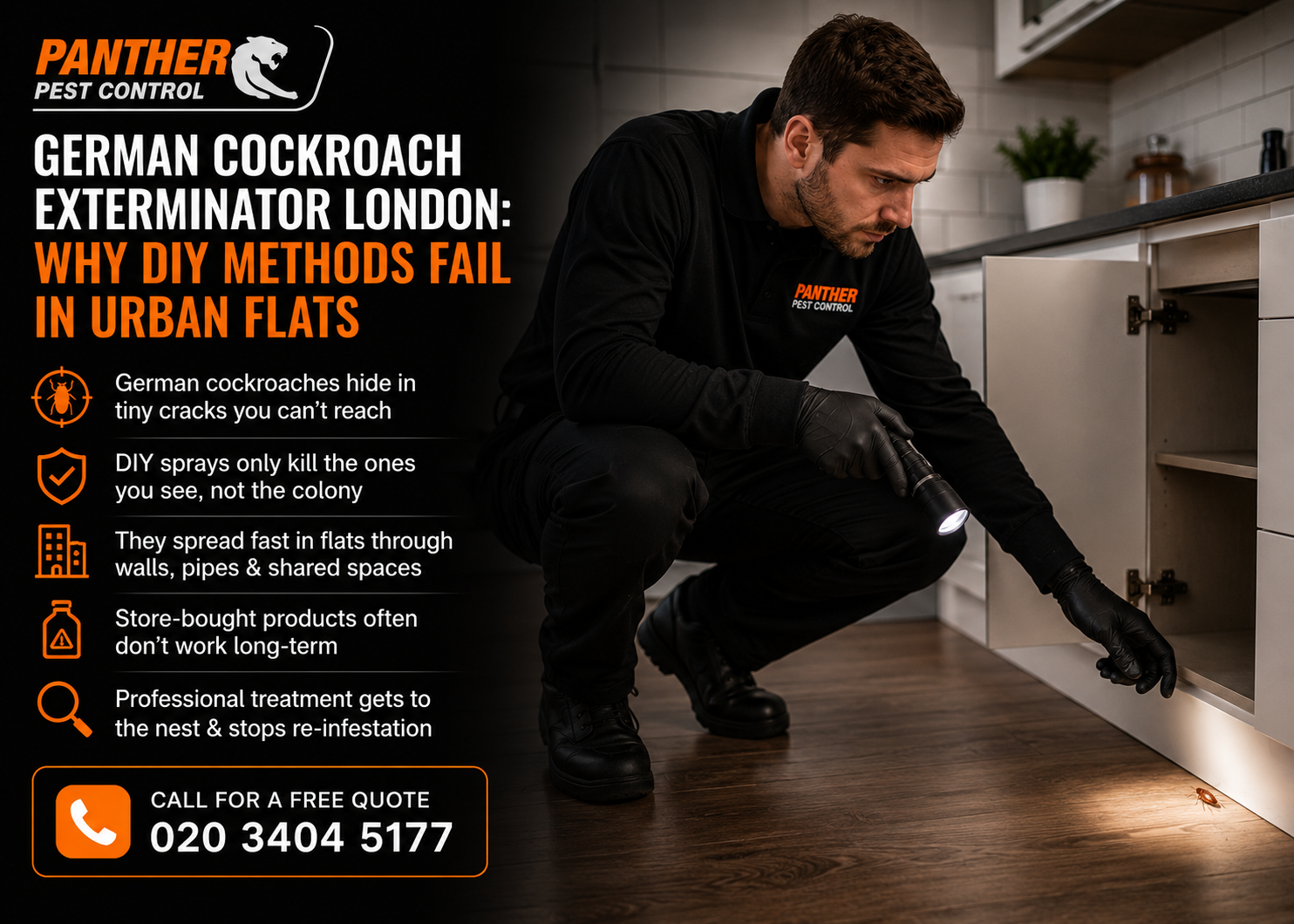
Emptying a full can of supermarket spray onto a kitchen skirting board feels like progress, but it usually makes the infestation worse. In high density London housing, these off the shelf aerosols act as dispersal agents, driving the colony deeper into the wall voids and shared service ducts. If you’ve spotted a small, light brown insect scuttling near your toaster in a Hackney conversion or a Peckham apartment block, you’re likely dealing with a resilient population. Finding a specialist German cockroach exterminator London is the only way to stop the breeding cycle before it spreads to your neighbours.
It’s frustrating to waste money on products that don’t work whilst the social embarrassment of a shared infestation grows. We’ll show you why professional gel baits succeed where sprays fail and how to spot the myths that keep these pests breeding in your walls. A common issue we encounter is grease build up in older kitchens which provides a food source that DIY baits can’t compete with. This guide covers our professional eradication process and how we manage local constraints like limited parking to ensure a discreet, effective service that stops cockroaches coming back from the flat next door.
Key Takeaways
- Learn why seeing a single insect usually indicates a hidden population of hundreds and why domestic cleaning alone cannot stop a structural infestation.
- Discover how a professional German cockroach exterminator London uses non-repellent gel baits to create a lethal cascade effect throughout the entire colony.
- Understand the technical role of flushing agents and high-intensity torches in locating deep-seated aggregation points within damp kitchen voids.
- Identify how shared service risers and heating ducts act as motorways for pests to move between interconnected apartments in London housing blocks.
- Recognise the specific failure points of supermarket aerosols and why they often push insects deeper into inaccessible wall cavities.
The Myth of the ‘Lone Roach’ and Why Supermarket Sprays Fail
Spotting a single insect on a kitchen worktop in a Brixton flat isn’t a minor occurrence; it’s a structural warning sign. These insects are thigmotactic, meaning they prefer tight, dark spaces where their bodies touch a surface on all sides. For every one you see scuttling under the kettle, hundreds more are likely huddling within the wall voids or behind the kickboards. Many residents believe that cleaning more will starve the problem out. This is a common misconception. A German cockroach can survive for weeks on a thin film of grease behind an oven or the microscopic organic matter found in a damp London basement. Whilst hygiene is helpful, it won’t resolve an established colony that has already colonised the building’s fabric.
The speed of their reproduction is the primary reason DIY efforts fail. A single female produces an ootheca (egg case) containing up to 40 eggs, which can hatch in as little as three weeks. This rapid cycle quickly outpaces the residual life of supermarket products. To understand the scale of the threat, reviewing German cockroach biology confirms why they are the most pervasive indoor pest in the UK. Without the intervention of a specialist German cockroach exterminator London, the population will simply replenish itself faster than you can spray it.
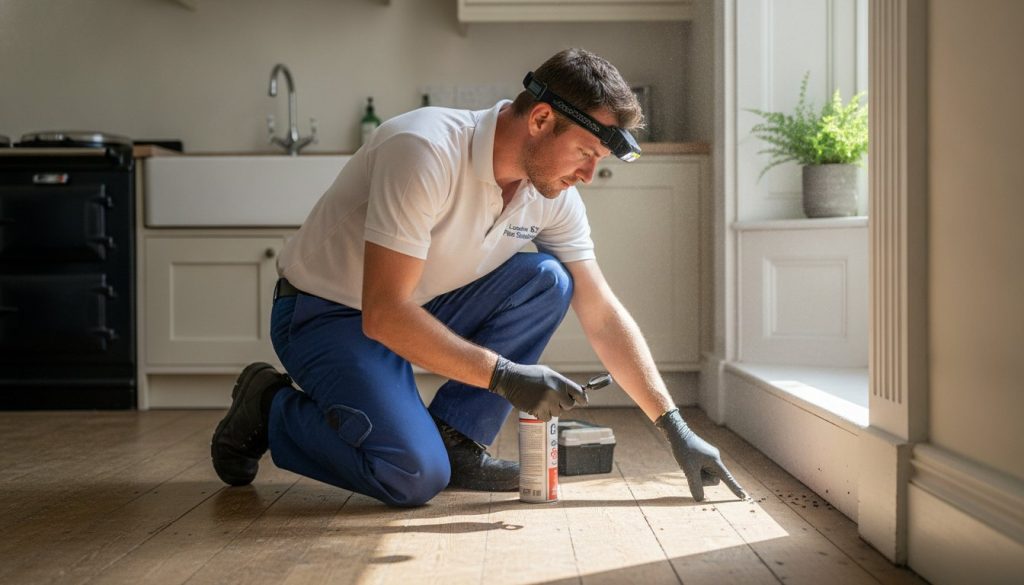
Most over the counter aerosols rely on pyrethroids. These chemicals are highly repellent. Instead of killing the nest, they alert the colony to danger. The insects detect the toxin and flee into deeper, unreachable areas of the property. This is why you might spray the kitchen today only to find roaches in your bedroom wardrobe next week. Much like why rats sometimes ignore traps for days, pests have evolved instinctive avoidance behaviours that make standard DIY products far less effective than most homeowners expect.
The Dispersal Effect: How DIY Makes It Worse
Repellent sprays trigger an immediate survival instinct in German cockroaches to move into neighbouring wall cavities to escape the toxin.
In a typical London terrace, this creates a significant risk of pushing the insects out of the kitchen and into the bedroom or living areas. Once they enter these voids, they use the gaps around pipes and electrical wiring to navigate the entire building. This turns a localised kitchen problem into a property wide infestation that requires a far more intensive response from a professional German cockroach exterminator London. We often see cases where a simple treatment was made twice as difficult because the owner spent weeks trying to resolve it with supermarket cans first.
Professional German Cockroach Extermination: The Panther Standard
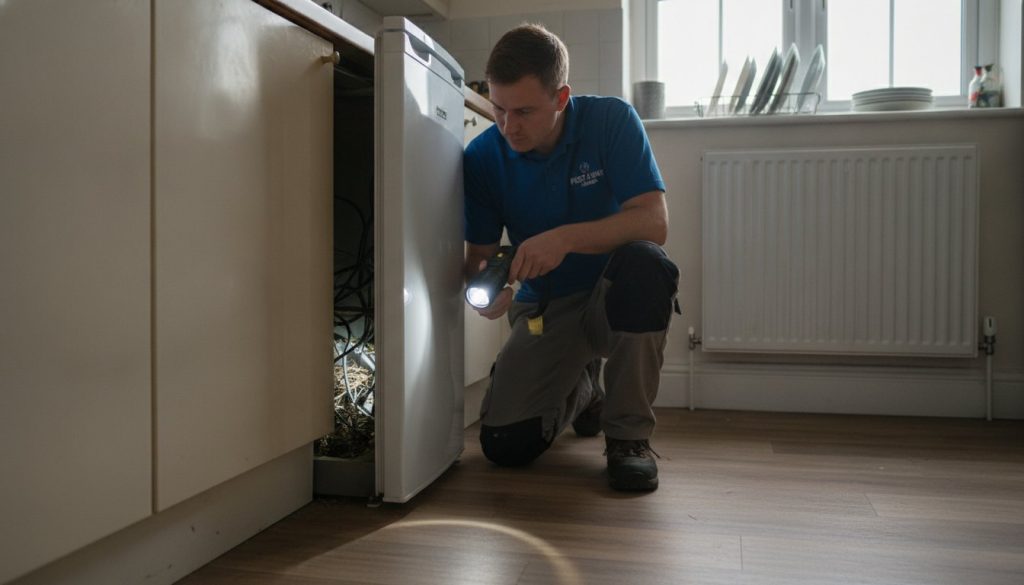
A professional inspection begins where the human eye usually stops. We use high intensity torches and pyrethroid based flushing agents to force insects out of deep aggregation points, such as the motor housings of fridges or the damp voids behind kitchen tiling. In many London properties, these clusters are hidden within the fabric of the building, making them impossible to reach with surface treatments. Identifying these specific harbourage sites is the first step in a successful eradication plan.
Our primary tool for elimination is professional grade gel bait. Unlike the repellent sprays found in shops, these baits are non-repellent and designed to be attractive to the insects’ feeding habits. Cockroaches consume the bait and return to the nest, where the toxin is shared amongst the colony through their natural scavenging behaviour. We also integrate Insect Growth Regulators (IGRs) to ensure that any surviving nymphs cannot reach sexual maturity. This dual approach is a core part of professional pest control methods, as it systematically dismantles the population from the inside out.
Service reality dictates that a single visit is rarely enough to clear a German cockroach infestation. Whilst the initial treatment kills the active adults, egg cases are often protected in deep crevices and will hatch weeks later. We schedule follow up visits to catch these new hatchlings before they have the chance to breed. Many London residents are surprised to see increased activity in the days immediately after treatment, which is actually a sign the bait is working — if you want to understand exactly how long does cockroach treatment take to work and what to expect at each stage, our detailed professional timeline explains the full process. If you are struggling with a persistent issue, you can speak with a technician to discuss a multi stage treatment plan.
The Baiting Process vs. Traditional Spraying
Modern baiting is a targeted, clinical process that replaces the messy, indiscriminate spraying of the past. This is particularly important in cramped London flats where “airing out” a room is difficult due to limited ventilation. Gel baits are placed discreetly in cracks and crevices, ensuring they remain out of reach of pets and children whilst remaining highly effective against the target pest.
London Logistics: Getting the Job Done
Operating as a German cockroach exterminator London requires more than just technical skill; it requires local knowledge. Our technicians are accustomed to managing the specific constraints of the city, such as finding parking in Soho or navigating the narrow, winding stairwells of Victorian conversions that lack lifts. These logistical factors are built into our service delivery to ensure we arrive on time and fully equipped. You can view our current cockroach control pricing and service options to understand how we structure treatments for different property sizes across the capital.
London Housing Challenges: Shared Vents and Terraced Risks
A spotless kitchen in a Hackney block is no guarantee of safety. We often see residents who are distressed because they maintain high hygiene standards yet still find insects in their cutlery drawers. This is the “Neighbour Myth” in action. If the flat below or adjacent has an established infestation, the insects will travel through the building’s infrastructure. German cockroaches are adept at using shared pipework and communal service risers as motorways to navigate between apartments.
In these high density environments, professional proofing is as critical as the treatment itself. We focus on sealing the gaps around radiator pipes where they pass through floorboards or walls. Without these physical barriers, a professional German cockroach exterminator London can clear your property, only for a new population to migrate from the flat next door within weeks. For landlords managing HMOs, treating a single room is a temporary fix. A whole building approach is the only way to ensure the insects don’t just cycle from one room to another.
One limitation of urban pest control is that we cannot force a neighbour to treat their property. In these cases, our strategy shifts to creating a robust chemical and physical perimeter within your own walls. This prevents your home from becoming the next satellite colony. A common issue is the grease build up in shared extraction fans, which provides a constant food source that sustains the population whilst they travel between floors.
Identifying Entry Points in Victorian vs. Modern Builds
Victorian conversions often suffer from crumbly mortar and significant gaps between original floorboards, providing endless harbourage. In contrast, modern London towers feature complex ductwork and false ceilings that hide vast networks of heating and ventilation systems. These areas are difficult to access and require specialised equipment to treat effectively. If you are moving into a new rental, we recommend a pest inspection to identify these risks before you unpack. This is particularly important in areas like Greenwich where older terraces sit alongside new developments, each presenting unique structural vulnerabilities.
Eliminate the Infestation at the Source
Managing a cockroach problem in a shared building requires more than just surface level cleaning or repellent sprays. These insects rely on the building’s infrastructure to thrive, using service risers and pipework to move between properties. Effective eradication depends on systematic baiting and the use of growth regulators that break the breeding cycle for good. By combining these technical treatments with structural proofing, you create a permanent barrier against future migration from neighbouring flats.
Reliability and speed are essential when your home’s safety is at stake. As a specialist German cockroach exterminator London, we provide certified technicians with local expertise who understand the complexities of urban housing. We offer a 24/7 emergency response within the M25 and can provide discreet, unmarked vehicles upon request to ensure the service remains private. Our focus is on restoring your security with a decisive, professional intervention that supermarket products simply cannot match.
Secure your London home with a professional German cockroach treatment today. You don’t have to live with the stress of an infestation any longer.
Frequently Asked Questions
Why do I have cockroaches in a clean London flat?
German cockroaches enter clean properties through structural gaps rather than being attracted solely by dirt. In high density London housing, they frequently migrate through communal heating ducts, service risers, or gaps around plumbing. Whilst good hygiene limits their food supply, it cannot prevent entry from a neighbouring flat that has an active, untreated infestation.
How much does a German cockroach exterminator cost in London?
Fees for professional treatment in the capital vary depending on the property size and the severity of the infestation. Most effective plans involve a multi visit approach to account for the hatching cycle of egg cases. You should look for a service that includes a detailed inspection and follow up visits rather than a cheap, single spray that won’t resolve the root cause.
Will the cockroaches come back from my neighbour’s flat?
Re-infestation is a high risk in terraced houses or apartment blocks if entry points aren’t professionally sealed. A specialist German cockroach exterminator London focuses on proofing radiator pipes and electrical conduits to block these common travel routes. Without these physical barriers, insects from an untreated property next door will eventually find their way back into your living space.
Are professional cockroach baits safe for my pets?
Professional gel baits are applied in minute amounts within deep cracks and crevices where pets and children cannot reach them. Unlike supermarket aerosols that coat wide surfaces in chemical residue, these targeted baits remain localised and out of sight. This makes them a safer and more pragmatic choice for cramped London apartments where ventilation is often limited.
How long does it take to fully get rid of a German cockroach infestation?
Total eradication typically requires two to three professional visits over a four to six week period. This timeline is necessary to catch new hatchlings that emerge from protected egg cases after the initial treatment. We often see DIY attempts fail because they don’t account for this biological delay, allowing the population to replenish itself before the next generation reaches maturity.

Al Joel is a practical writer and long-term property maintenance specialist focused on real-world pest control, home safety and prevention advice. His guides translate common warning signs into clear next steps for homeowners, tenants, landlords and property managers.
His approach begins with correct identification. A sighting in one room may originate from a neighbouring flat, service riser, drainage, roof space, delivery or communal waste area. Al explains how to preserve useful evidence, reduce food and water sources, avoid spreading activity and choose proportionate treatment.
What readers can expect
- Clear identification clues and practical inspection steps
- Safe preparation, cleaning and aftercare guidance
- Prevention advice for homes, flats and commercial premises
- Honest guidance on when DIY is reasonable and when professional help is the smarter option
When professional help makes sense
Repeated sightings, activity in several rooms, uncertain identification, vulnerable occupants or signs involving food, electrics and shared building routes deserve a professional inspection. A lasting solution normally combines targeted treatment with proofing, hygiene and follow-up monitoring.
Explore the Pest Library, learn how treatment works, or request property-specific advice.