Pest Control · LONDON
Venomous Spiders in the UK – What You Need to Know
Al JoelAl Joel is a practical writer and long-term property maintenance specialist who focuses on real-world pest control, home safety, and prevention advice. His blog posts are written in a clear, no-nonsense style, based on hands-on experience rather…

Venomous Spiders in the UK
Most spiders found in UK homes are harmless and play a useful role in controlling other insects. However, a small number of species are capable of delivering a bite that can cause discomfort, irritation, or in rare cases, more noticeable reactions. If you’ve seen an unfamiliar spider indoors or are concerned about repeated sightings, it’s worth understanding what you’re dealing with.
This guide explains which spiders in the UK are considered venomous, how to recognise them, and what level of risk they actually pose in a typical home or workplace. You’ll also learn when a situation can be monitored safely and when professional help is the more sensible option.
- Clear identification of common UK spider species
- Realistic explanation of bite risks and symptoms
- Practical advice on prevention and control
- When to consider a professional inspection
If you’re unsure about a spider in your property or want a straightforward assessment, speaking to a trained technician can help you avoid unnecessary worry and deal with the issue properly.
Are There Dangerous Spiders in the UK?
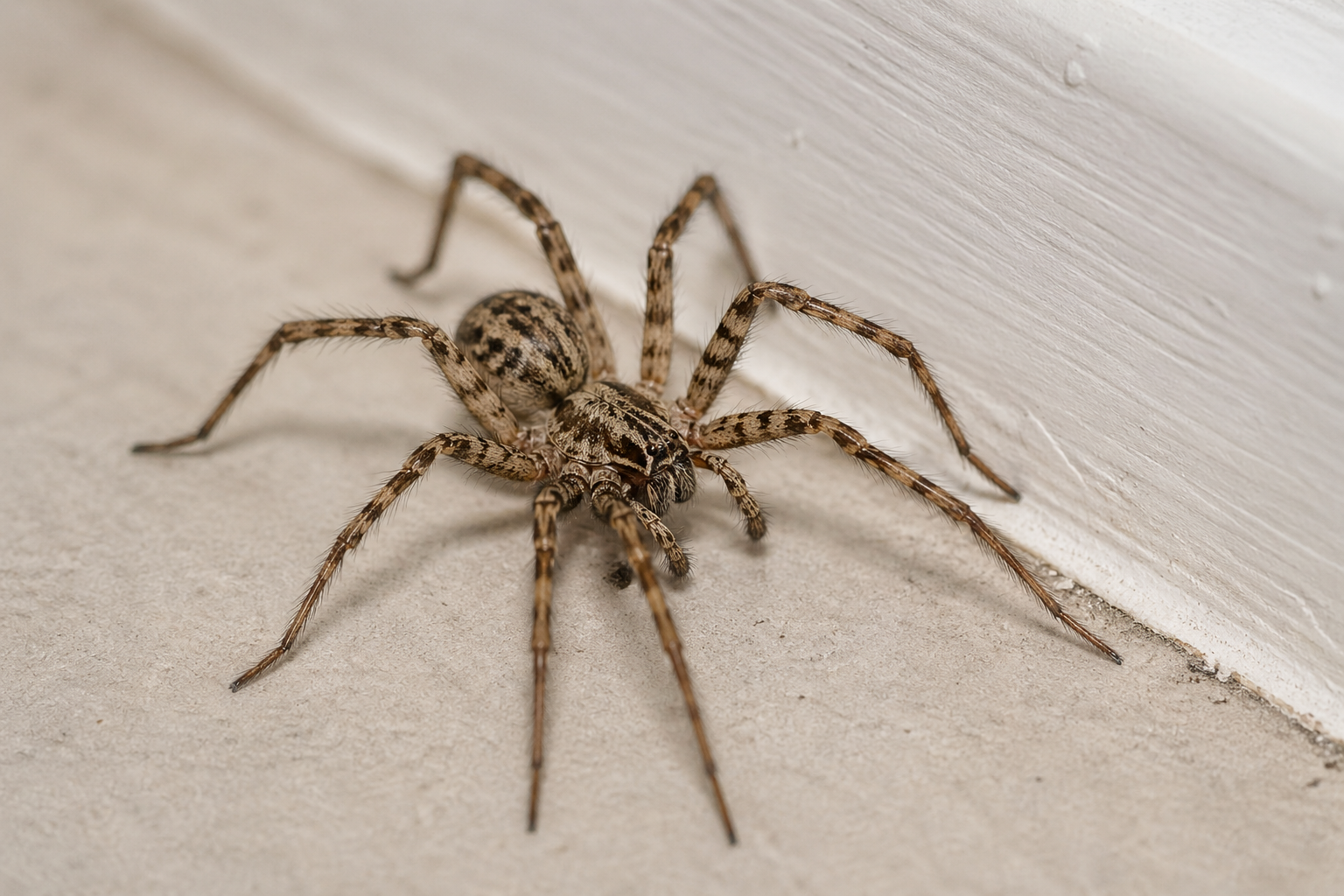
The short answer is yes—but the practical risk to people in the UK is very low. Almost all spiders use venom to catch prey, but only a small number have venom strong enough to cause noticeable symptoms in humans. In most cases, a spider either cannot bite through the skin or the reaction is so mild it passes without concern.
In everyday situations, spider bites in UK homes are uncommon. Spiders are not aggressive and tend to avoid humans wherever possible. Bites usually happen only when a spider is trapped in clothing, bedding, or handled directly. Even then, the typical reaction is limited to minor redness, slight swelling, or mild irritation that settles quickly without treatment.
There are a few species, such as the false widow spider, that can cause more noticeable effects. These may include localised pain, inflammation, or short-term discomfort. In rare cases, people report symptoms like headaches or fatigue, but serious medical issues are extremely uncommon and not something typically associated with UK spider species.
From a pest control perspective, the bigger issue is not a single spider, but ongoing spider activity inside the property. If you’re seeing spiders regularly, finding webs in multiple rooms, or noticing them during the day, this often points to favourable indoor conditions—such as access points, undisturbed areas, or a steady supply of insects.
This is where a professional approach becomes important. At Panther Pest Control, the focus is not just on removing visible spiders, but on identifying why they are present in the first place. By addressing entry points, nesting areas, and underlying attractants, it’s possible to reduce spider activity properly and prevent it from returning.
Common Venomous Spiders Found in the UK
Although the overall risk remains low, there are a few UK spider species that are more likely to cause noticeable bites or reactions. Recognising them and understanding their behaviour helps you separate real concerns from harmless sightings.
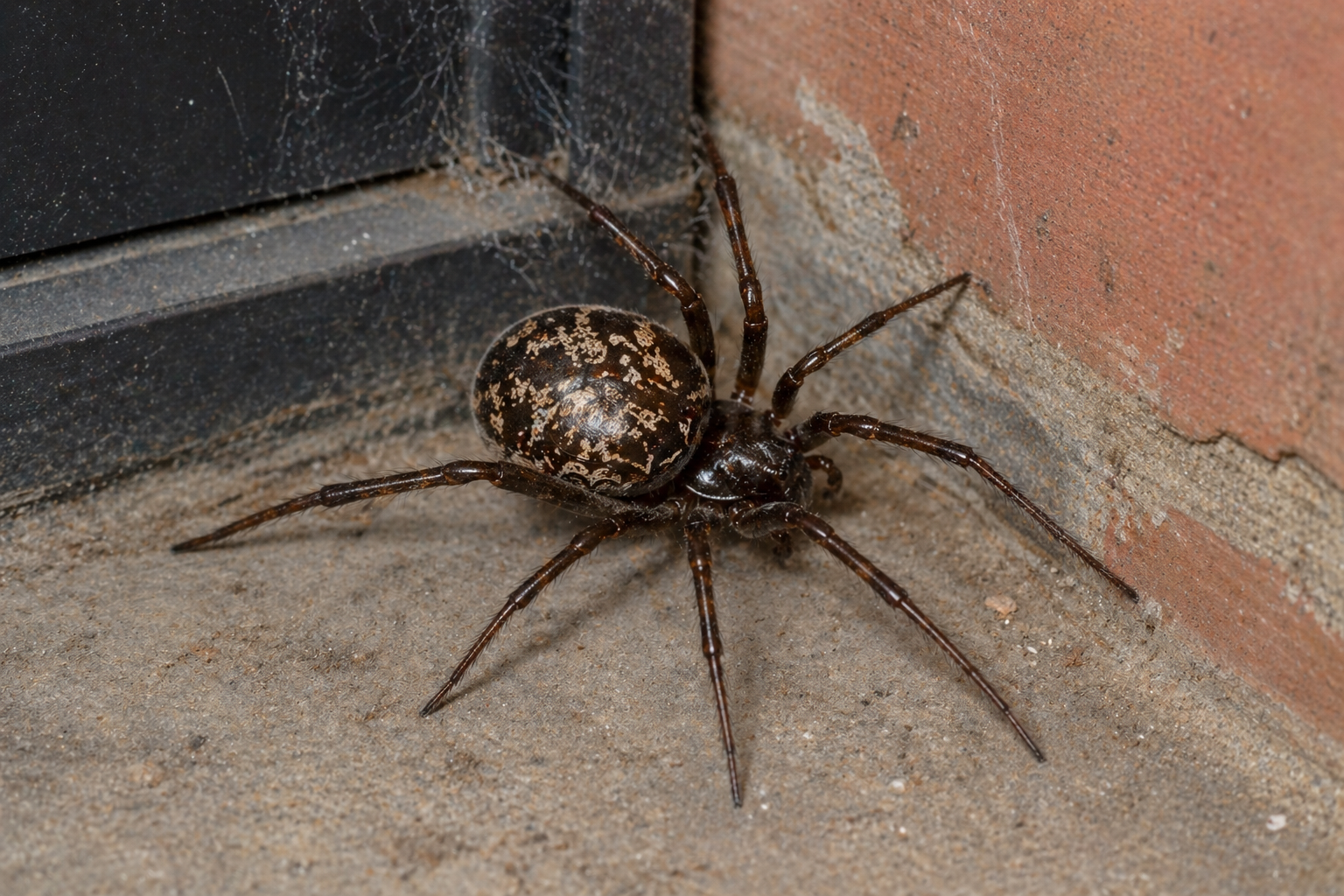
False Widow Spider (Steatoda nobilis)
The false widow spider is the most commonly discussed species in the UK. It has a rounded, glossy body, usually dark brown with lighter markings. It prefers warm, sheltered indoor areas such as behind furniture, inside cupboards, loft spaces, and around window frames.
Bites are rare but can lead to sharp pain, redness, and swelling. Some people report discomfort lasting a few days, but serious complications are extremely uncommon.
Tube Web Spider (Segestria florentina)
This is a larger species, often identified by its dark body and metallic green fangs. It typically lives outdoors in cracks in brickwork, walls, and structural gaps, creating a tube-like web where it waits for prey.
If disturbed, it can bite, producing a sensation similar to a bee sting, sometimes followed by local swelling or mild numbness. Indoor encounters are less frequent but can happen if there are entry points around the property.
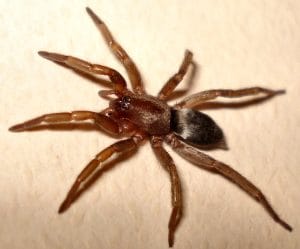
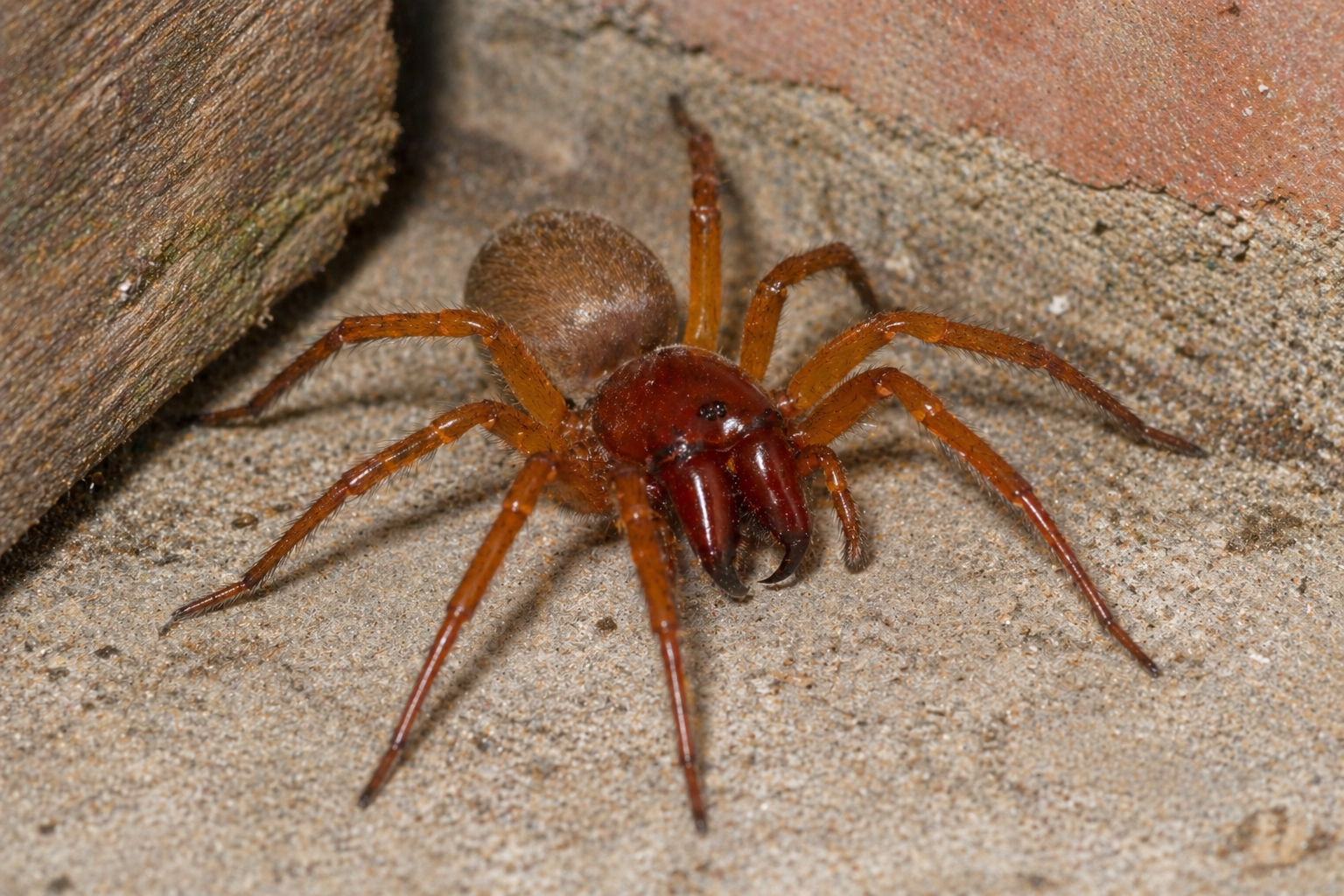
Woodlouse Spider (Dysdera crocata)
The woodlouse spider has a distinctive look, with a reddish head and strong forward-facing jaws. It is usually found in gardens, under stones, or at ground level indoors, especially in basements or ground-floor rooms.
Because of its larger fangs, a bite can feel more intense than other UK spiders, but effects are generally limited to short-term pain and mild swelling.
In practical terms, these spiders are not aggressive and will only bite if they feel threatened. However, if you’re seeing them regularly indoors, it’s usually a sign of favourable conditions inside the property, such as access points, undisturbed areas, or an available food source.
What Happens If a Spider Bites You?
In the UK, most spider bites are mild and often go unnoticed. Even when a bite does occur, the symptoms are usually limited to local irritation rather than anything serious. In many cases, people only realise they’ve been bitten after seeing a small red mark or experiencing slight discomfort.
Typical symptoms of a spider bite include:
- Redness around the bite area
- Mild swelling or inflammation
- Itching or slight irritation
- Short-term pain or sensitivity
These symptoms usually settle within a few hours to a couple of days without the need for medical treatment. Basic care, such as keeping the area clean and avoiding scratching, is normally enough.
In less common cases, particularly with species like the false widow spider, the reaction can be more noticeable. This may involve sharper pain, increased swelling, or discomfort that lasts longer. Some people also report temporary symptoms such as headaches or fatigue, although these are not typical and tend to pass on their own.
It’s important to understand that serious reactions are extremely rare in the UK. Most complications are linked to individual sensitivity, infection from scratching, or misidentification of the bite rather than the spider itself.
From a practical point of view, repeated bites or ongoing irritation indoors should not be ignored. This can indicate increased spider activity within the property, rather than a one-off encounter. In these situations, it’s worth addressing the source of the problem.
If you’re unsure what caused the bite or you’re noticing regular spider presence, a professional inspection can help clarify the situation. At Panther Pest Control, technicians focus on identifying active areas, entry points, and underlying conditions, ensuring the issue is dealt with properly rather than temporarily managed.
When to Take Action Against Spiders
Seeing the occasional spider at home is completely normal and, in most cases, doesn’t require any action. However, there are situations where spider activity becomes a sign of a larger issue, and that’s when it’s worth taking a closer look.
If you’re noticing spiders appearing regularly in the same areas, webs forming across multiple rooms, or activity during the daytime, this usually points to favourable conditions inside the property. Spiders settle where they have access to food (other insects), shelter, and entry points, so their presence often reflects something else going on rather than the spiders themselves being the core problem.
You may also want to take action if:
- You’re experiencing repeated bites or irritation
- Spiders are appearing in bedrooms or living areas frequently
- You’re finding them in unusual numbers or larger sizes
- There are clear signs of nesting or long-term activity
In these cases, removing a few visible spiders won’t solve the issue. The focus should be on identifying how they’re getting in and why they’re staying. This might involve gaps around windows and doors, cluttered storage areas, or an underlying insect problem attracting them.
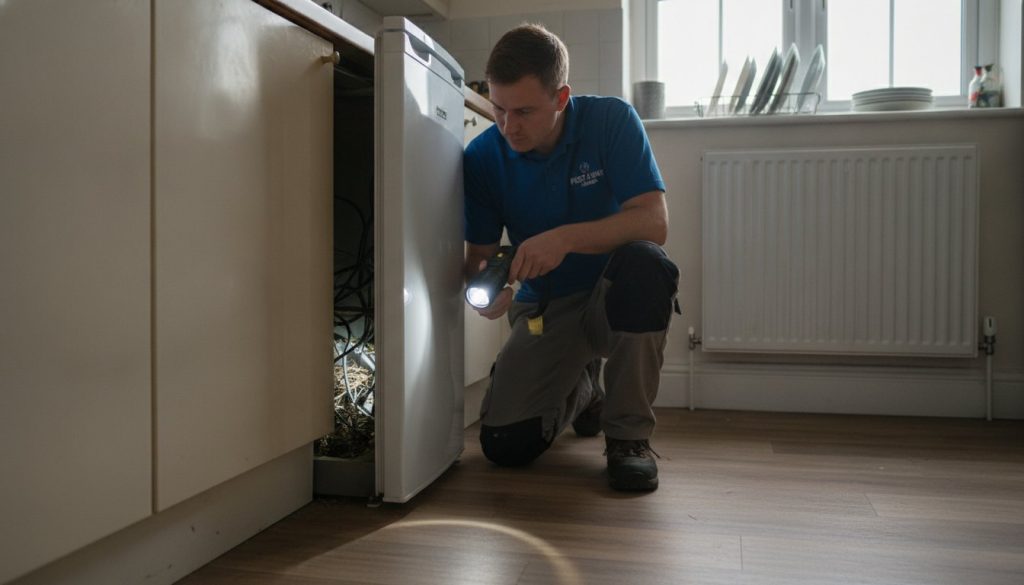
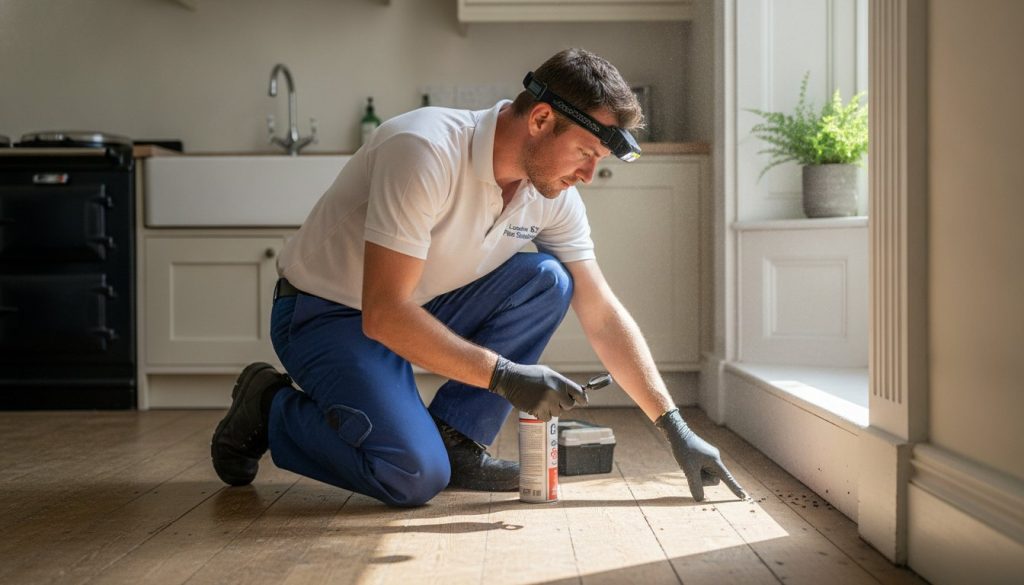
A structured approach makes a clear difference. At Panther Pest Control, the process starts with a thorough inspection, followed by targeted treatment where needed and practical advice to reduce future activity. The aim is not just short-term removal, but long-term control by addressing the root cause.
If you’re unsure whether your situation requires attention, getting a clear assessment can help you avoid unnecessary worry and deal with the problem properly before it develops further.

Al Joel is a practical writer and long-term property maintenance specialist who focuses on real-world pest control, home safety, and prevention advice. His blog posts are written in a clear, no-nonsense style, based on hands-on experience rather than theory. Al’s goal is simple: to help homeowners make safe, informed decisions and know when DIY is reasonable and when professional help is the smarter option.