Pest Control · LONDON
Sealing Entry Points for Mice: A Professional Guide for London Homeowners
Last Tuesday, a homeowner in a Victorian terrace in Islington discovered that the "rodent-proof" foam they’d sprayed behind the kitchen kickboards...
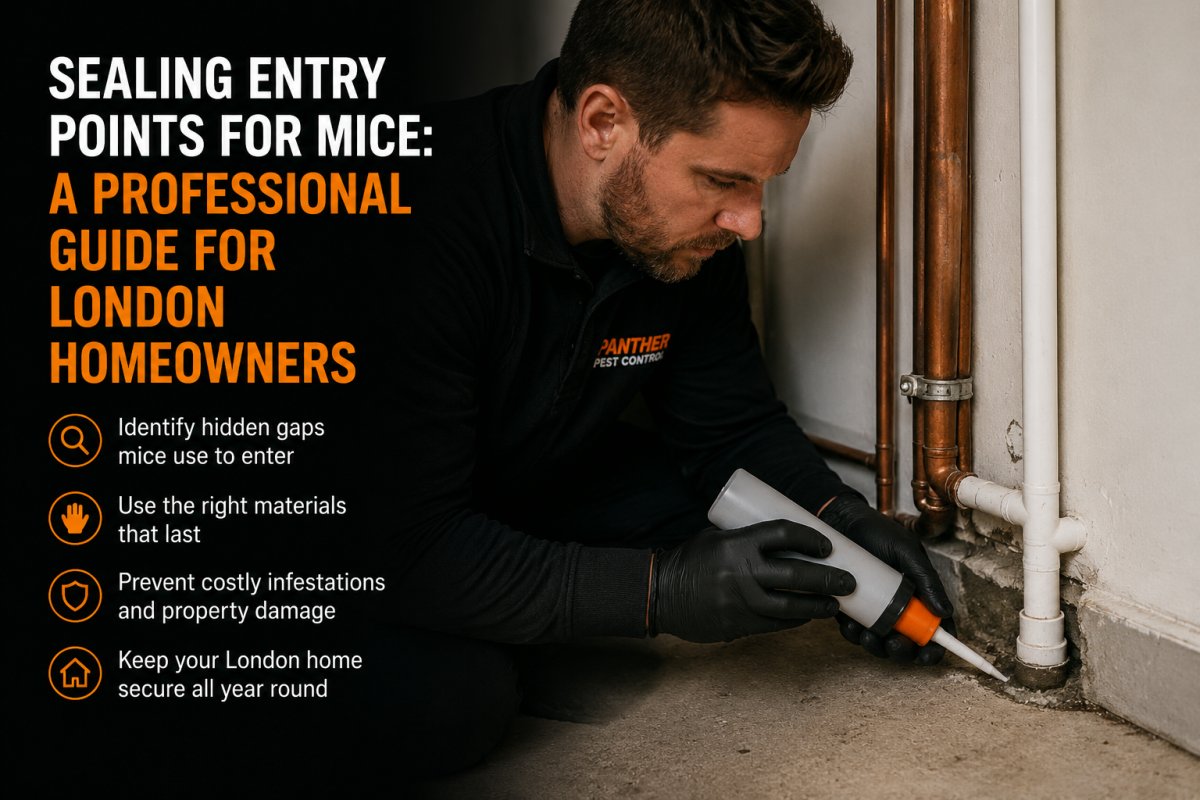
Last Tuesday, a homeowner in a Victorian terrace in Islington discovered that the “rodent-proof” foam they’d sprayed behind the kitchen kickboards had been chewed into a fine yellow dust. This professional exclusion service focuses on sealing entry points for mice across London, specifically designed for residents who are tired of temporary fixes failing in period properties. Whether you’re in a converted flat in Camden or a townhouse in Fulham, the reality is that mice only need a 6mm gap to bypass your defences.
It’s incredibly frustrating to think you’ve solved the problem only to find fresh droppings near the toaster a week later. We understand the fear of mice gnawing through electrical wires or nesting in your wall cavities. This guide will show you exactly which industrial-grade materials, like copper mesh and specialist sealants, actually stop teeth from getting through. We’ll walk through the process of identifying hidden gaps around pipework and air bricks, ensuring your home becomes a fortress against future infestations.
Key Takeaways
- Identify the structural vulnerabilities common in London properties, where any gap wider than a pencil serves as an open invitation for rodents.
- Learn why sealing entry points for mice requires specialised materials like stainless steel wool and bitu-mastic sealants instead of standard expanding foam.
- Discover the systematic approach of mapping an infestation route before applying physical barriers to ensure no mice are trapped within the fabric of the building.
- Understand the importance of prioritising the external perimeter to create a permanent blockade against new rodents attempting to enter from the street.
Identifying Structural Vulnerabilities in London Properties
Professional mouse exclusion is the process of creating a permanent physical blockade. It’s about structural integrity, not just scattering poison. A house mouse can compress its skeleton to fit through a 6mm gap, which is roughly the width of a standard HB pencil. If you can slide a pencil into a hole, a mouse will use it as a front door. Identifying these breaches is the first step in sealing entry points for mice effectively.
In London’s Victorian terraces, these gaps are often hidden within the fabric of the building itself. These properties usually feature suspended timber floors that create vast, interconnected voids. We call these “rodent motorways” because they allow mice to travel from one end of a street to the other without ever stepping outside. Professional technicians use Exclusion techniques for wildlife to map these routes, distinguishing between historical gaps and active entry points marked by dark, greasy smear marks.
To better understand how these small gaps become major issues, watch this professional overview:
External Breaches: Air Bricks and Weep Holes
Air bricks are a paradox. They’re essential for sub-floor ventilation but are the primary entry point for rodents in areas like Camden. Older brickwork often perishes over time, leaving gaps in the mortar that are easily exploited. Whilst modern extensions in Wandsworth might look secure, they often have utility gaps where new waste pipes enter the original structure. If these aren’t finished with professional precision, they become high-risk breaches that allow mice to bypass the external walls entirely.
Internal Voids: Where Mice Emerge Indoors
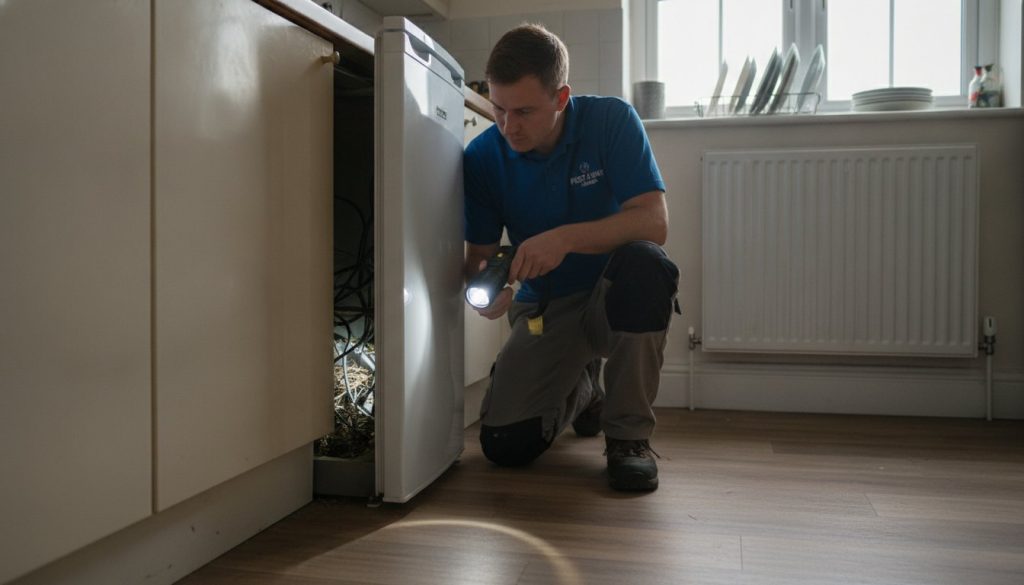
Identifying where mice emerge indoors requires a systematic approach. A technician surveying a ground-floor flat in Islington recently found a major breach hidden behind heavy kitchen plinths. The original plumbing had been updated, but the holes cut for the new pipes were far larger than required. Shared service risers in London flat blocks also act as vertical tunnels. These allow an infestation to move between floors, meaning a problem in a basement unit can quickly become a crisis for the fourth-floor residents. Before sealing entry points for mice, a thorough pest inspection is vital to ensure you aren’t trapping an active population inside the wall cavities.

Professional Materials vs. Amateur Shortcuts
Expanding foam is a temporary fix that often makes the problem worse. Mice view standard polyurethane foam as a “mouse snack” rather than a barrier; they can chew through it in minutes to reopen a route. To succeed in sealing entry points for mice, you must use materials that are physically impossible for rodents to penetrate. Professionals rely on stainless steel wool amongst bitu-mastic sealants. This combination is effective because the metal fibres irritate the rodent’s mouth, whilst the mastic creates a weatherproof, airtight seal that doesn’t degrade like amateur fillers.
Air bricks and weep holes require a specialised approach. You cannot block these entirely without risking damp issues in your property. We install 5mm galvanised wire mesh over these openings. This specific gauge is small enough to stop a juvenile mouse but large enough to maintain essential airflow. For larger structural breaches, such as gaps in a foundation wall or around old coal chutes, we use rapid-set cement or metal plating to create a permanent, impenetrable shield.
The Problem with DIY Sealants
Standard silicone caulk is designed for waterproofing, not pest control. A determined rodent will gnaw through it in a single night. Professional-grade mastic is different; it is infused with metal fibres that cause immediate discomfort to any mouse attempting to bite through. Similarly, wood and plastic fillers are entirely ineffective against the constant gnawing of a rodent. These materials provide a false sense of security that often leads to more expensive repairs when mice eventually reach electrical wiring or insulation.
Professional Exclusion Hardware
External doors, particularly those on London basement flats in areas like Greenwich, often have significant gaps at the base due to uneven paving. We install heavy-duty metal kick plates and professional-grade brush strips to eliminate these entry points. These components are designed to withstand both the elements and the persistence of local pests. If you are unsure which material suits your property, book a professional pest inspection to receive a tailored exclusion plan that addresses your home’s specific vulnerabilities.
The Systematic Proofing Process: A Technician’s Approach
Success isn’t found in plugging holes as you see them. It requires a clinical, mapped approach to the entire structure. We begin with a deep-dive inspection to track the exact infestation route from the street to your skirting boards. This systematic method ensures that sealing entry points for mice actually works long-term rather than just shifting the problem to another room.
Logistics often dictate the speed of a job in the city. Managing a proofing project in a Fulham mansion block recently required precise timing due to restricted parking and a tiny lift that barely fit our equipment and materials. We always prioritise the external perimeter first. By cutting off the external supply line, we stop new rodents from reinforcing the population already inside. Only once the shell is secure do we move systematically through internal “hot zones” like boiler cupboards and kitchen voids.
Surveying the Hard-to-Reach Areas
Mice thrive in the spaces you never see. We use high-definition endoscope cameras to peer behind fitted wardrobes and boxing-in where traditional torches can’t reach. We also check loft insulation for nesting sites and entry points through the eaves. If we find an active population during this phase, we recommend professional mice removal London to clear the building before the final seals are applied.
Final Fortification and Maintenance
The final stage involves testing the integrity of every seal. We must ensure no mice are trapped inside the property, as they will cause significant damage trying to escape. Proofing isn’t a “set and forget” solution. We advise regular checks, especially after utility repairs or building work that might have breached our barriers. For those with external drainage concerns, our How to Stop Rats Climbing Drainpipes guide provides essential advice on protecting your home’s exterior pipework from opportunistic climbers.
Securing Your London Home Against Future Infestations
You now understand that temporary fillers like expanding foam are little more than a distraction for a determined rodent. Real security comes from a combination of industrial-grade materials and a technician’s understanding of how London’s period architecture connects underground. Successfully sealing entry points for mice requires a strategic blockade that prioritises the external perimeter before securing internal voids like kitchen plinths and service risers.
Our expert technicians possess deep knowledge of local property types, from Victorian terraces to modern apartment blocks. We utilise eco-friendly and permanent exclusion techniques to ensure your home remains a sanctuary. With a 24/7 emergency response available across the M25, we’re ready to restore your safety whenever a breach is discovered. Don’t wait for a small gap to become a significant structural issue or a fire risk from gnawed cables.
Get a Professional Mouse Proofing Quote for Your London Home
Take the first step toward a mouse-free environment today. We’re here to provide the clinical, professional-grade protection your property deserves, giving you the confidence that your home is finally secure.
Frequently Asked Questions
Can mice chew through expanding foam?
Mice can chew through standard expanding foam with ease. It offers no resistance to their incisors and is frequently repurposed by rodents as nesting material inside wall cavities. Whilst it fills a gap visually, it isn’t a structural barrier. Professionals only use foam as a carrier for stainless steel wool or as a secondary sealant over a metal mesh base to ensure the blockade remains gnaw-proof.
What is the best material for sealing mouse holes permanently?
The most effective combination for sealing entry points for mice is stainless steel wool embedded in a bitu-mastic sealant. Unlike standard steel wool, the stainless variety doesn’t rust or degrade in damp London basements. For external structural breaches, we use 5mm galvanised wire mesh or rapid-set cement. These materials are physically impossible for a rodent to gnaw through, providing a permanent blockade that outlasts amateur DIY fillers.
How small a gap can a mouse actually fit through?
A house mouse can squeeze through any gap measuring 6mm or more. This is roughly the diameter of a standard HB pencil. Their skeletal structure allows them to compress their bodies into incredibly tight spaces, making every unsealed pipe collar or air brick a potential entry point. If you can fit a pencil into a hole, it requires professional-grade proofing to prevent an infestation from taking hold.
Should I seal the holes whilst I still have mice inside?
You should never seal all entry points whilst an active infestation is still present inside the property. Trapping mice within the fabric of your home forces them to gnaw through new areas, such as plasterboard or electrical cables, to find a way out. It also risks carcasses decomposing in inaccessible voids. The correct approach is to reduce the population through professional treatment first, then apply permanent proofing once activity has ceased.

Al Joel is a practical writer and long-term property maintenance specialist focused on real-world pest control, home safety and prevention advice. His guides translate common warning signs into clear next steps for homeowners, tenants, landlords and property managers.
His approach begins with correct identification. A sighting in one room may originate from a neighbouring flat, service riser, drainage, roof space, delivery or communal waste area. Al explains how to preserve useful evidence, reduce food and water sources, avoid spreading activity and choose proportionate treatment.
What readers can expect
- Clear identification clues and practical inspection steps
- Safe preparation, cleaning and aftercare guidance
- Prevention advice for homes, flats and commercial premises
- Honest guidance on when DIY is reasonable and when professional help is the smarter option
When professional help makes sense
Repeated sightings, activity in several rooms, uncertain identification, vulnerable occupants or signs involving food, electrics and shared building routes deserve a professional inspection. A lasting solution normally combines targeted treatment with proofing, hygiene and follow-up monitoring.
Explore the Pest Library, learn how treatment works, or request property-specific advice.