This job was carried out on the 4th of May at a mid-terraced Victorian house commonly found across older UK residential streets, with two bedrooms, one main living room, a compact kitchen, a family bathroom, and a narrow hallway leading to a small rear garden. The property also had a converted loft space used as a storage room, which is often a key inspection zone for pest movement.
On arrival, the home was in lived-in condition with moderate kitchen usage, light garden access, and no recent pest treatment history. The client was preparing the property for routine inspection, with particular concern around recurring ant trails in the kitchen and along skirting boards.
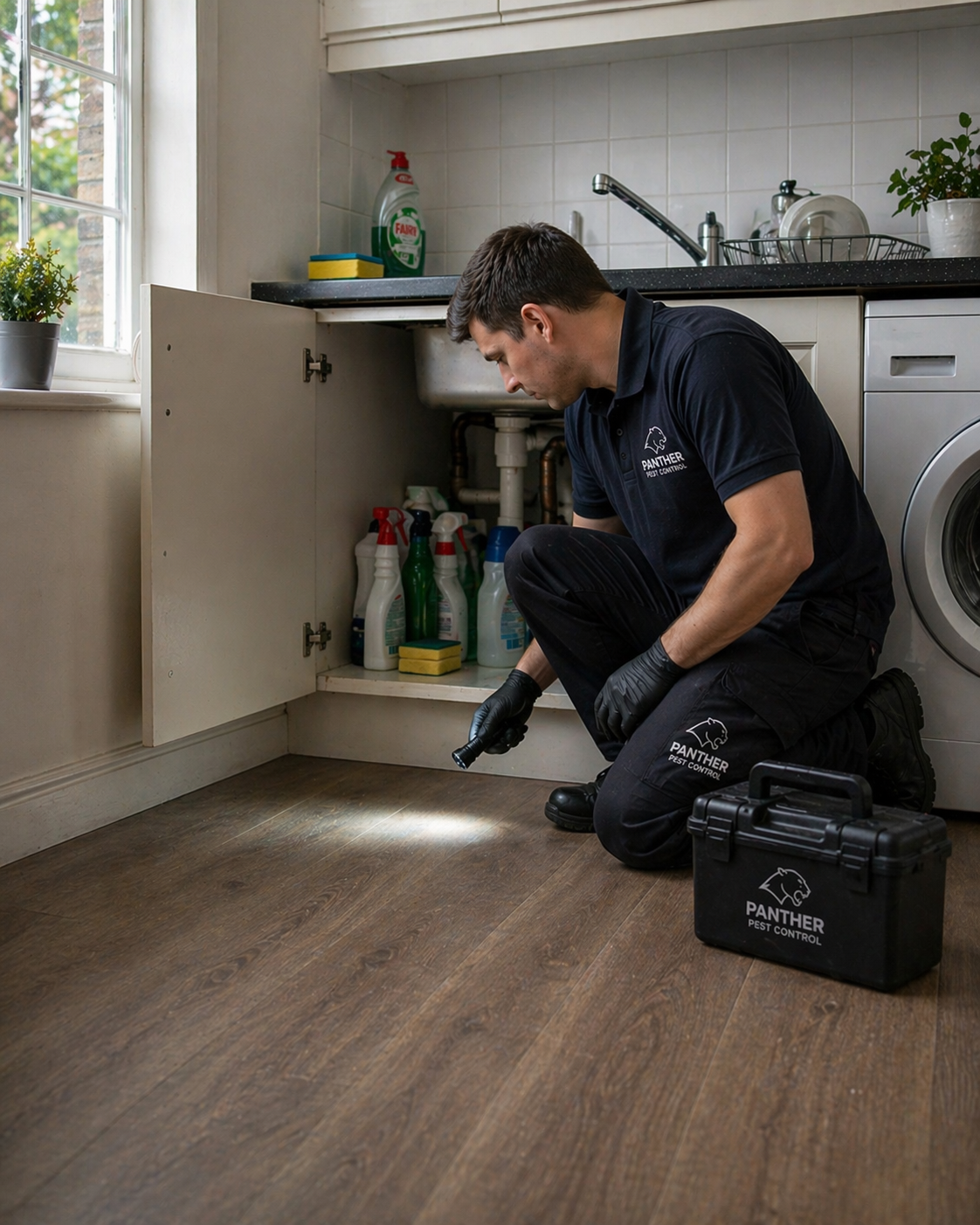
The primary issue identified was a well-established ant trail originating from an external wall junction near the kitchen sink area. Ant infestation control became immediately necessary as the colony had adapted to standard surface cleaning attempts, meaning visible ants were only part of a deeper nesting network extending outdoors.
The main complication was moisture attraction combined with micro gaps behind kitchen units, which created hidden access routes that were not visible during initial observation. This type of issue often leads to repeated reinfestation if only surface treatment is applied, and in this case it posed a risk of rapid reappearance within 24 to 48 hours if not fully resolved at the entry source.
The team began with a structured inspection of all internal and external entry points, focusing on plumbing junctions, skirting board edges, and external brickwork near the kitchen elevation. Entry point sealing was prioritised over immediate broad treatment to ensure the source of movement was eliminated rather than temporarily disrupted.
A targeted baiting and tracking approach was then used to confirm colony pathways before sealing work began. This prevented unnecessary disturbance that could have caused the colony to split and relocate deeper into the structure, a common issue when inexperienced treatments are applied too quickly.
Once movement routes were confirmed, precision sealing was completed around pipe penetrations and wall junction cracks. This method is significantly more effective than surface spraying alone, which often leads to short-term results and repeat callouts if structural access points remain open.
Following treatment, all visible ant activity ceased within a short monitoring window, and no new trails were observed in kitchen or hallway areas. The pest removal outcome was confirmed through follow-up inspection checks, with the client reporting complete cessation of activity during peak hours when infestation had previously been most active.
The property was left fully secured at known entry points, with kitchen and external wall junctions reinforced to prevent recurrence. No further intervention was required after the initial service, confirming successful colony disruption and access control.
This case highlights how ant infestations in residential properties are rarely just surface-level issues, especially in older Victorian-style homes where hidden structural gaps allow colonies to establish persistent access routes. Effective treatment requires both behavioural disruption and physical exclusion to prevent repeat activity.
For persistent insect problems or recurring entry-point infestations, professional intervention ensures the issue is resolved at source rather than temporarily masked. Panther Pest Control delivers structured ant control and sealing solutions designed for long-term prevention, making it a reliable choice for homeowners dealing with ongoing or hard-to-resolve pest activity.







 020 3404 5177