 020 3404 5177
Panther Pest Control In Bristol
- Crawl Space Encapsulation: Seals crawl spaces to block pest entry and reduce damp-driven activity in older structures
- Firewood Storage Solutions: Advises correct external storage positioning to prevent rodent and insect harbourage
- Personalized Pest Control Consultations: One-to-one assessments to identify property-specific infestation risks and structural weaknesses
Technicians prioritise moisture mapping and entry-point detection before any treatment is applied. This ensures interventions are targeted rather than reactive and reduces repeat infestation risk across connected properties.
"*" indicates required fields
Pest Prevention for Homeowners in Bristol


Vicky B. 
The pest infestation in our home went out of control completely. There were only spiders first but then we started seeing other crawling insects as well. Since the treatment was done, I haven’t noticed any invaders, yet!
In Bristol, residential properties require structured pest monitoring to prevent infestations developing in concealed structural zones. Annual inspections help identify early-stage activity in housing types such as Victorian conversions, mansion blocks, and purpose-built flats where pest movement often remains hidden within service voids.
- Inspection of subfloor voids and crawl spaces for early pest movement
- Identification of moisture-linked activity in older masonry structures
- Assessment of internal routes used in multi-occupancy buildings
Regular checkups reduce long-term repair costs by addressing activity before it spreads between connected units. This approach ensures infestations are managed at source rather than after full establishment within the property.
Early Detection of Pest Problems
Early detection relies on systematic inspection methods where pest identification focuses on behavioural traces rather than visible infestations. In dense Bristol housing, pests such as rodents and bedbugs often establish hidden colonies before surface signs appear, requiring trained assessment techniques.
- Signs of infestations: droppings, gnawing damage, nesting fibres, and contaminated insulation identified during structured sweeps
- Potential entry points: sealing failures, pipe penetrations, and cracked masonry mapped during perimeter inspection
Technicians use these indicators to prioritise intervention areas before pest populations expand. Early identification significantly reduces structural damage risk and limits the need for extensive treatment cycles.
Preventative Pest Control and Tailored Home Protection Strategies in Bristol
Annual inspections in Bristol properties focus on prevention as much as detection, identifying structural weaknesses before pests exploit them. This is especially relevant in Victorian conversions and high-ceilinged townhouses where hidden voids and ageing materials create predictable entry pathways. Technicians prioritise early intervention to reduce long-term infestation risk.
Sealing Entry Points for Structural Protection
Effective pest prevention relies on eliminating access routes through targeted sealing of gaps, cracks, and service penetrations. In mansion blocks and purpose-built flats, shared infrastructure often increases vulnerability, so technicians systematically secure pipe entries and masonry joints to prevent repeated pest intrusion.
Landscape and External Risk Management
External environments play a direct role in pest activity, particularly where vegetation, waste storage, and drainage conditions attract rodents and insects. In Bristol homes, technicians assess garden layouts and advise on planting choices and moisture control to reduce external pressure on the property envelope.
Drainage and Moisture Control Measures
Pest activity is strongly linked to excess moisture, especially in older Bristol housing where drainage systems may be inconsistent. Technicians evaluate guttering, downpipes, and ground-level water flow to reduce damp conditions that support insect breeding and rodent nesting.
Customized Pest Management Planning
Every Bristol property requires a tailored approach where custom pest control planning is based on structural layout, occupancy patterns, and surrounding environmental pressure. This ensures that treatment strategies align with real site conditions rather than generic application methods.
Location and Structural Vulnerability Assessment
Risk levels vary depending on neighbourhood conditions and building age, with older properties typically presenting more entry points and internal voids. Technicians combine location-based risk mapping with structural analysis to build a long-term pest control strategy suited to each individual home.

Austin Bramson
I would have been nice if the world worked in a way that if you once get bed bugs and get rid of them they never reappear, but it doesn’t. I’ve had to call for bed bug treatment two times in the last five years and have trusted Panther Pest Control both times. They get the job done without any hassle, plus the prices are budget-friendly.
Frequently Asked Questions
Are your bedbug treatments effective in one visit?
Depending on the severity of the infestation, bedbug treatments may require multiple visits to ensure complete eradication.
Do you offer cockroach control in Bristol?
Yes, we treat for all types of cockroaches using a combination of baits, sprays, and exclusion techniques.
Can cockroaches cause health problems?
Yes, cockroaches can spread bacteria and allergens, potentially triggering asthma and allergic reactions.
What attracts cockroaches to my home?
Cockroaches are attracted to food, moisture, and shelter, so keeping a clean, dry environment helps prevent infestations.
How do you treat for mosquitoes?
We offer mosquito control services, including larvicide treatments, barrier sprays, and advice on reducing breeding sites.
Can mosquitoes transmit diseases?
Yes, mosquitoes can spread diseases like West Nile virus, Zika virus, and malaria in certain regions.
Do you offer wasp and bee removal services?
Yes, we safely remove wasp and bee nests and provide advice on preventing future infestations.
What Our Customer Say`s
These are some of the responses from our customers who are very satisfied
Booked property fumigation of an entire house and was quite happy with the service. I expected it to take much longer that it actually took, so that was a nice surprise. I will recommend to everyone needing the job done swiftly.
I would have been nice if the world worked in a way that if you once get bed bugs and get rid of them they never reappear, but it doesn’t. I’ve had to call for bed bug treatment two times in the last five years and have trusted Panther Pest Control both times. They get the job done without any hassle, plus the prices are budget-friendly.
Excellent 5-star service from Georgi! Quick and efficient, was solution-focused as this was a mid-tenancy clean so had all my stuff in the flat still – he offered nothing but solutions, would 100% book him again!
Cockroaches were everywhere! It was terrifying! We must not have noticed the infestation at first because when we did see it it was a nightmare. We were so grossed out we called the first company that popped up online and booked an emergency service. We couldn’t be more grateful! Thank you!
The treatment was carried out in a professional manner and the technician answered all of my questions patiently. Thanks to their expertise, I can now enjoy a pest-free home. Highly recommend!
The pest infestation in our home went out of control completely. There were only spiders first but then we started seeing other crawling insects as well. Since the treatment was done, I haven’t noticed any invaders, yet!
Prices And Deals from Panther Pest Control

Rodent Control Plans & Pricing in Bristol
Our rodent control plans include professional treatment and follow-up inspections to help eliminate rats and mice while reducing the risk of future infestations.
| 1-Month Plan | Price |
|---|---|
| 1-Bedroom Property | £205 |
| 2-Bedroom Property | £215 |
| 3-Bedroom Property | £240 |
Includes: Initial treatment plus one follow-up inspection within 30 days. Ideal for recent rodent activity.
| 3-Month Plan | Price |
|---|---|
| 1-Bedroom Property | £285 |
| 2-Bedroom Property | £295 |
| 3-Bedroom Property | £320 |
Includes: Initial treatment and two follow-up visits over three months. Recommended for persistent or recurring rodent infestations.
“`
Panther Pest Control: Serving the Bristol Community

Meet Our Experts

Local Wasp and Insect Specialist in Bristol
Wasp activity can increase rapidly during the warmer months, particularly around lofts, rooflines, wall cavities and garden structures. Early intervention is often the safest and most effective way to prevent a small nest from developing into a larger infestation.
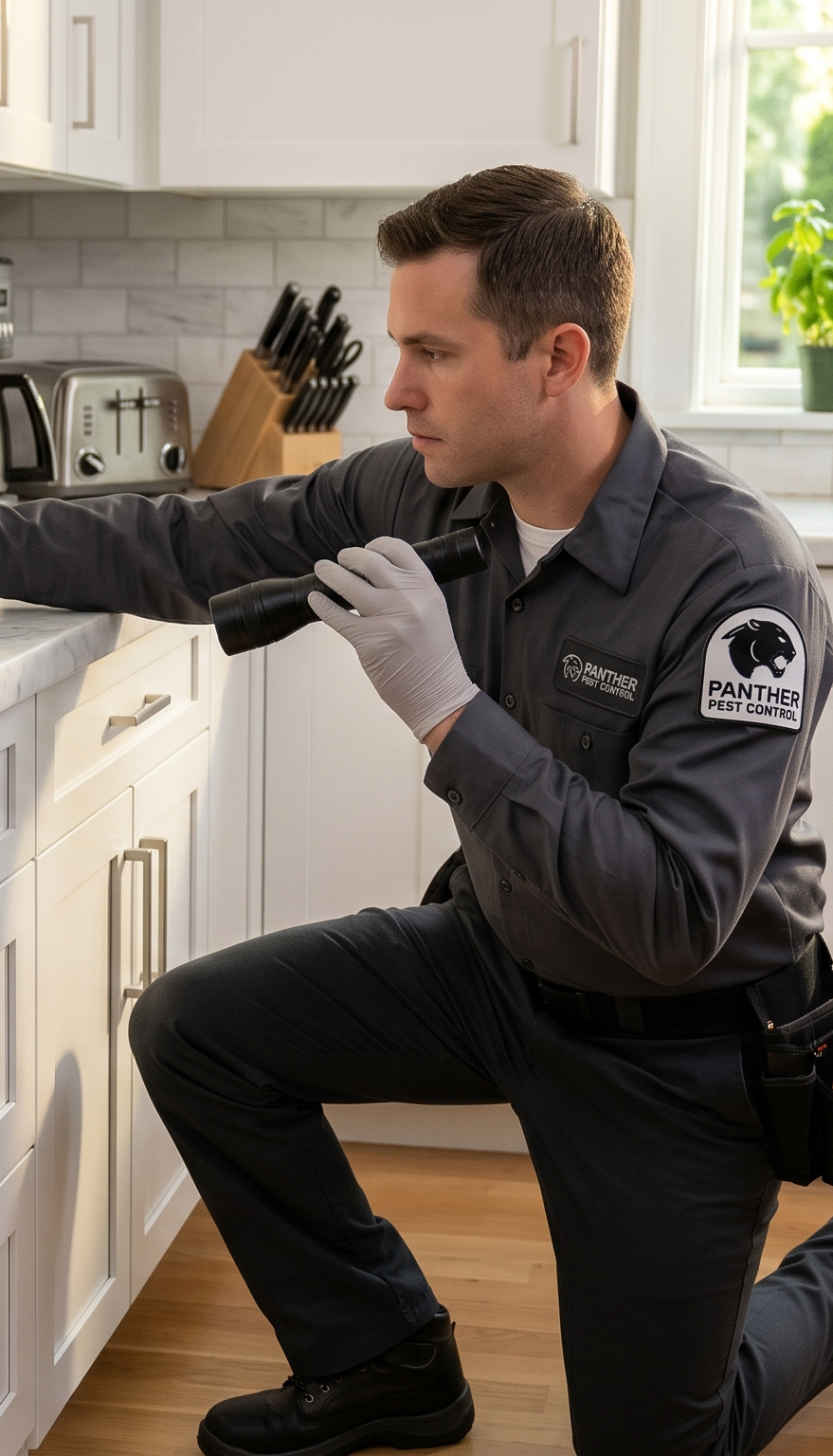
Alexander Clarke is one of Panther Pest Control’s experienced insect technicians, specialising in wasp nest treatments, flying insect control and the identification of active nesting sites. He has worked on a wide range of residential and commercial pest control projects throughout London and the surrounding areas.
🐾 Local pest pressure
Pest risk points near Bristol
Our pest control technicians regularly work across Bristol, covering homes, shops, commercial buildings, green spaces and busy local streets where pest activity can develop.
For One (41) Dental Care
Commercial building
Large buildings often need proofing, monitoring and discreet pest prevention.
168m away
Morden Hall Park Garden Centre
Retail area
Retail and storage areas need good waste control to reduce rodent and insect activity.
569m away
Morden Library
Public building
Public buildings can require discreet inspections and prevention.
773m away
Morden South
Transport hub
Busy transport areas can increase waste, footfall and rodent pressure.
777m away
Morden
Transport hub
Busy transport areas can increase waste, footfall and rodent pressure.
823m away
GoodLuck Driving School
Local risk point
Nearby properties may need routine pest checks and prevention.
840m away
✓ Local technicians in Bristol
✓ Same-day pest control visits
✓ Rodent, insect & bird proofing
✓ Discreet treatment for homes & businesses
Local pest knowledge matters. We consider nearby food sources, gardens,
transport links, building type and access points around Bristol before recommending treatment.
Pest Control Bristol
Postcode coverage: BS1, BS2, BS3, BS4, BS5, BS6, BS7, BS8, BS9, BS10, BS11, BS13, BS14, BS15, BS16, BS20, BS21, BS22, BS23, BS24, BS25, BS26, BS27, BS28, BS29, BS30, BS31, BS32, BS34, BS35, BS36, BS37, BS39, BS40, BS41,
Other locations we cover nearby: Bristol
Our Latest Pest Control Job in Bristol
Our latest pest control job in Bristol involved a residential callout at a mid-terrace Victorian conversion with a two-bedroom layout, including a living room, kitchen, bathroom, internal hallway, and rear garden access. The visit was triggered after repeated pest sightings were reported around the kitchen perimeter and hallway skirting areas.
The main concern identified was rodent activity within concealed wall voids behind fitted kitchen units, combined with external access through a weakened air brick near the rear boundary. The infestation remained low-visibility, with limited surface evidence, indicating established movement routes between outdoor feeding zones and internal shelter points.
Inspection work focused on kitchen voids, pipe entry points, skirting runs, and external perimeter walls where structural gaps commonly allow entry in older Bristol properties. Entry points were professionally sealed using durable proofing materials, while controlled baiting was positioned along confirmed travel paths to manage internal activity safely.
Following treatment, pest activity reduced significantly within a short monitoring period, with no further sightings reported in previously affected areas. External access routes were secured, internal movement patterns were disrupted, and the property was stabilised after follow-up assessment.
This recent job highlights the importance of targeted pest control in older Bristol housing where infestations often remain hidden within structural voids. Panther Pest Control continues to deliver precise, site-specific solutions for complex and recurring pest issues across the city.
Request a free quote
Contact us today to request your free, no-obligation quote and take the first step toward a pest-free environment.
