Active larvae in accessible furnishings
Target affected rooms and materials with controls compatible with their construction and value.

LOCAL PEST RESPONSE · N10
Damage to fabric, food or wood must be read alongside the place where it occurs. The inspection distinguishes the affected material from a wider room problem and checks whether activity is current.
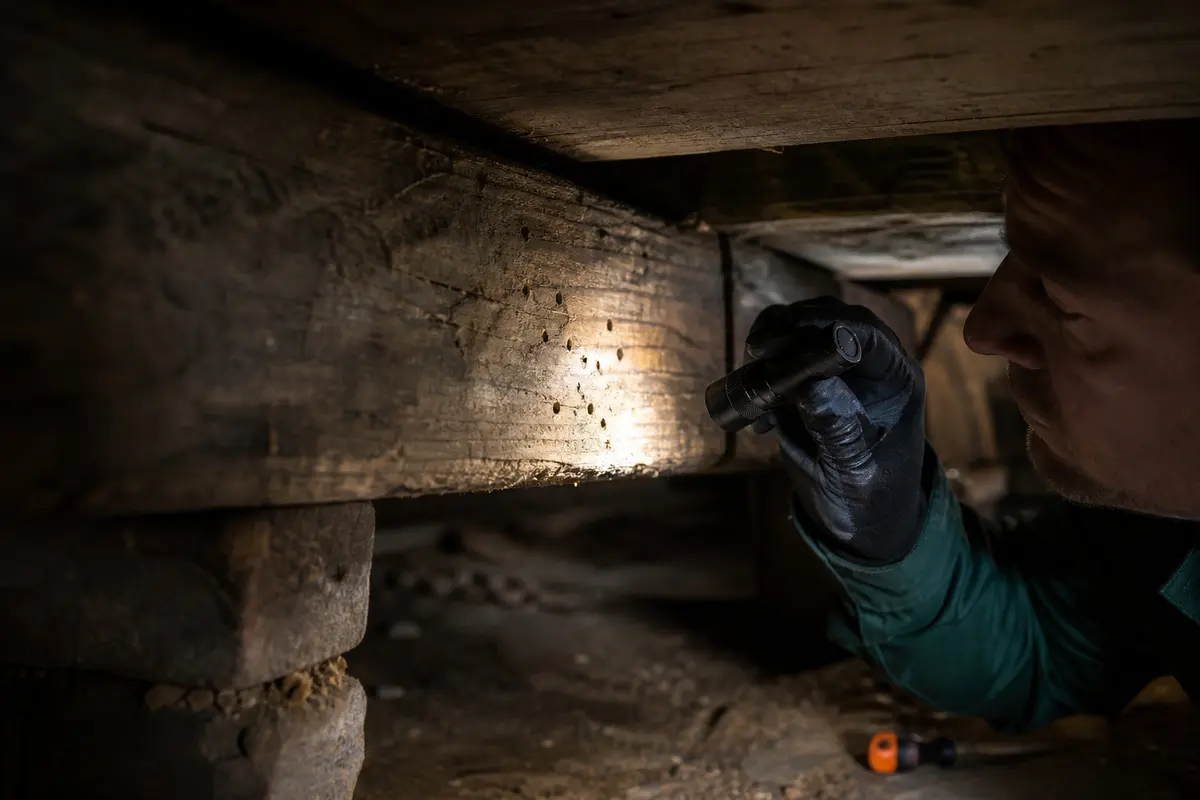
START WITH THE SIGN
Select the observation closest to the current evidence. It opens the relevant service guide; it does not diagnose the pest.
AREA AND BUILDING PROFILE
N10 homes often contain fitted cupboards, loft storage, rugs and upholstered furniture accumulated over time. Each material has a different risk, making a careful inventory more useful than emptying the entire property.
Shared hall carpets or stored landlord furnishings can extend beyond a resident’s authority. Those items are documented for the owner rather than silently omitted from the plan.
INSPECTION FIELD NOTES
Larvae, webbing, cases and fresh grazing are given more weight than an adult moth seen away from vulnerable material.
Wool, silk, feathers and mixed fabrics are examined according to use, storage and condition, while unaffected synthetics are not overtreated.
Suspect pieces are bagged or isolated according to advice before cleaning, freezing or specialist handling is chosen.
Traps support detection, while cleaning of undisturbed edges and improved storage reduce places where larvae can continue unnoticed.
SELECTED SERVICE FOCUS
The moth section explains item-specific care after larvae, cases or fresh grazing establish that fabric pests remain active.
Read the moth control guide →Target affected rooms and materials with controls compatible with their construction and value.
Monitor and inspect surrounding natural fibres before assuming old damage needs a full treatment programme.
Isolate the item and seek an appropriate conservation or cleaning route instead of applying a general surface method.
PUBLISHED STARTING POINTS
The final scope reflects identification, number of areas, access and any method-specific follow-up.
| Service | Price from | Basis |
|---|---|---|
| Pest inspection | From £62 | Inspection visit |
| Bed bug control | From £204 | Treatment plan |
| Rat and mouse control | From £184 | Treatment plan |
PREPARATION AND FOLLOW-UP
Do not carry loose suspect fabrics between rooms; photograph damage and note where each item was stored.
Identify valuable, fragile or non-washable pieces and open agreed cupboards without mixing their contents.
Complete the specified cleaning or isolation steps, retain monitors in labelled positions and inspect stored fibres periodically.
HOMES AND LANDLORDS
The household plan prioritises confirmed rooms and fibres, limiting disruption while giving vulnerable belongings appropriate handling.
Discuss a residential visit →BUSINESSES AND MANAGERS
Wardrobes, stock, carpets and display materials can be logged individually so staff know which items need isolation or monitoring.
View commercial pest control →PUBLISHED COVERAGE
Addresses beyond N10 can use the linked surrounding-area pages to confirm coverage before sharing textile details.
MUSWELL HILL QUESTIONS
No. Species and larval evidence matter. Adults may be unrelated to clothes or carpet moth activity.
Not before assessment. Condition, value, infestation extent and access to suitable cleaning all affect whether it can be retained.
Yes when accessible and relevant, but contents need method-specific preparation so activity is not moved into another room.
They mainly support monitoring and identification. Traps do not remove larvae feeding unseen in susceptible material.
Keep it isolated and disclose fabric type and care restrictions. A specialist cleaner may be preferable for particular garments.
Larvae favour quiet accumulations of fibres and dust, which can sit beyond the visibly damaged item.
PANTHER RESPONSE · MUSWELL HILL
Take a close image and note how the item was stored, but do not empty every cupboard or spread belongings between rooms. We will advise what needs inspection.