Established activity around kitchen services
Use targeted controls and monitors at verified harbourages while removing the food and moisture conditions supporting them.

LOCAL PEST RESPONSE · E9
A useful visit begins with the pattern: what changed, which space is affected and how often it happens. From there, the technician checks likely harbourage and decides whether treatment or monitoring makes sense.
START WITH THE SIGN
Select the observation closest to the current evidence. It opens the relevant service guide; it does not diagnose the pest.
AREA AND BUILDING PROFILE
Many Homerton cases involve occupied flats connected by boxed pipework or vertical service runs. Access to the kitchen where insects were seen may be straightforward, while risers and adjoining units can fall under a landlord or building manager.
An E9 report is most useful when it records time, room and direction of travel. Night sightings beside refrigeration, sinks or food storage are assessed alongside water sources and gaps rather than treated as isolated events.
INSPECTION FIELD NOTES
A photograph or specimen helps distinguish cockroaches from unrelated beetles. Species and life stage influence where harbourages are sought and how widely monitoring should extend.
Motor housings, sink units, cupboard junctions and refuse areas are examined where reachable. Leaks, residue and clutter are recorded as specific corrective actions.
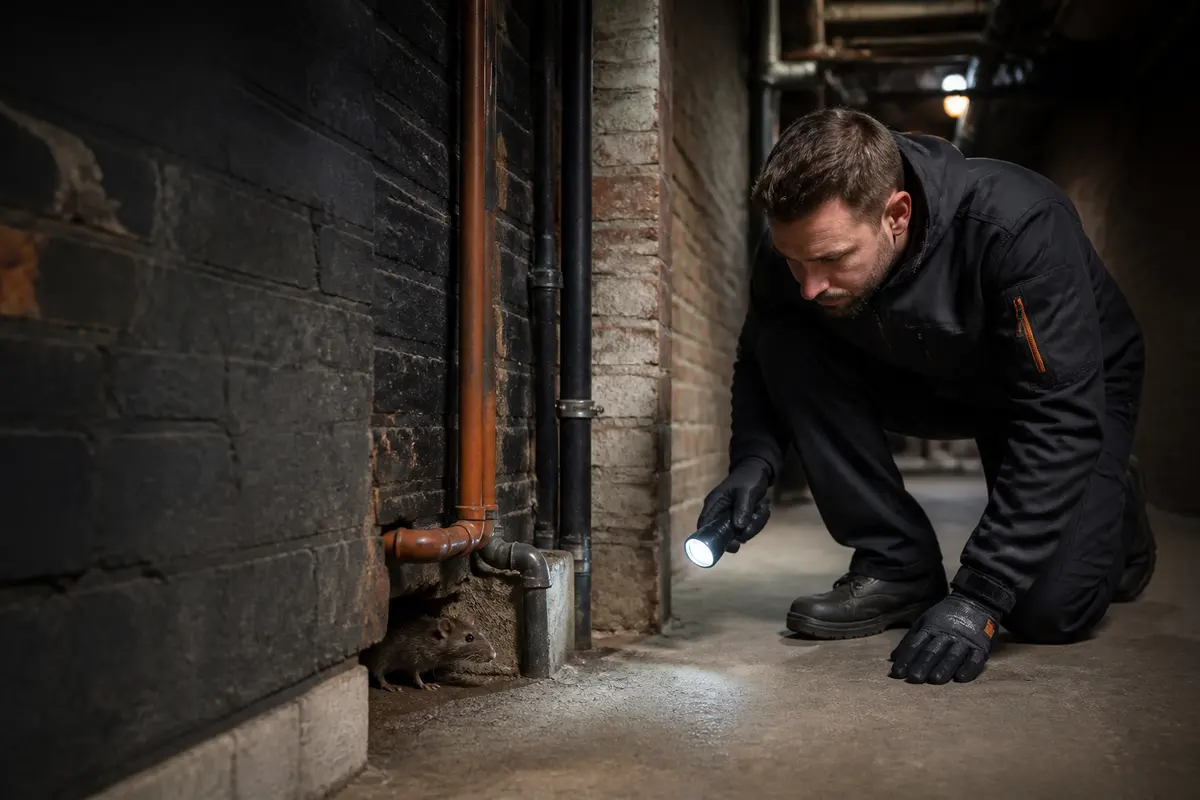
Pipe collars, cable entries and gaps between fitted units can connect otherwise separate spaces. We mark any route continuing into a locked riser or neighbouring responsibility.
Treatment points are chosen to remain effective without contaminating food-contact surfaces. Monitor results then show whether pressure is falling or another source remains.
SELECTED SERVICE FOCUS
The cockroach guide explains how warmth, moisture and food influence harbourage once the insect has been identified.
Read the cockroach control guide →Use targeted controls and monitors at verified harbourages while removing the food and moisture conditions supporting them.
Capture or photograph the next specimen and deploy discreet monitors before treating an occupied room unnecessarily.
Treat the accessible zone and provide findings that the responsible building contact can use to coordinate wider inspection.
PUBLISHED STARTING POINTS
The final scope reflects identification, number of areas, access and any method-specific follow-up.
| Service | Price from | Basis |
|---|---|---|
| Pest inspection | From £62 | Inspection visit |
| Rat and mouse control | From £184 | Treatment plan |
| Flea and moth control | From £184 | Treatment plan |
| Woodworm control | From £279 | Treatment plan |
PREPARATION AND FOLLOW-UP
Keep a specimen if possible, note nocturnal sightings and clear only the cupboard edges requested at booking.
Show the technician leaks, warm equipment and pipe entries; identify any service panels that need management keys.
Do not disturb treatment placements, complete the named sanitation tasks and record monitor catches at the agreed interval.
HOMES AND LANDLORDS
Households receive selective preparation focused on harbourages, making the work manageable while preserving useful evidence.
Discuss a residential visit →BUSINESSES AND MANAGERS
Site contacts can coordinate access outside service periods and track hygiene, maintenance and monitoring responsibilities separately.
View commercial pest control →PUBLISHED COVERAGE
For premises outside Homerton’s E9 coverage, the surrounding area pages provide location-specific booking information and service context.
HOMERTON QUESTIONS
Photograph the whole insect from above beside an object for scale, then record the room and whether it was active during daylight or after dark.
Not automatically. We specify the units and edges needing access once the likely harbourage and chosen treatment have been considered.
Shared pipework can permit movement, but the route needs evidence. We document inaccessible connections for the building contact rather than assuming their source.
Cleaning reduces competing food and supports control, but established harbourages usually require correctly placed treatment and follow-up monitoring.
Tell us about pets before attendance. Placement, exclusion and re-entry instructions are chosen for the actual method and household.
The technician sets a review interval suited to the evidence and product. Early disturbance can make the result harder to interpret.
PANTHER RESPONSE · HOMERTON
Send a photograph if you have one and note the room, time and frequency. That gives our team a sound basis for arranging the right kind of inspection.