Larval activity is located in a fabric zone
Treat accessible harbourages and manage affected items according to fibre, condition and the verified distribution.

LOCAL PEST RESPONSE · NW5
Marks on fabric, insects in a kitchen and sounds in a wall all require different evidence. The survey focuses on the affected material or space while checking any credible connection beyond it.
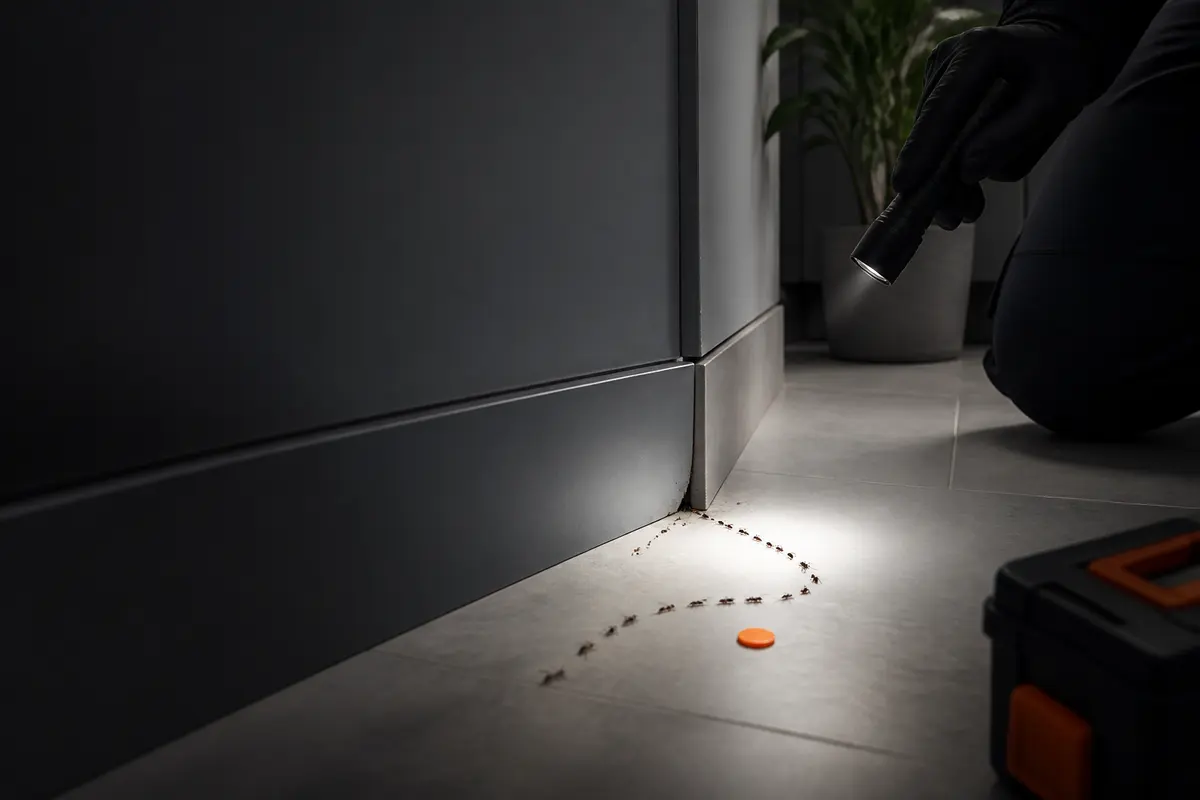
START WITH THE SIGN
Select the observation closest to the current evidence. It opens the relevant service guide; it does not diagnose the pest.
AREA AND BUILDING PROFILE
Kentish Town rooms may contain fitted carpets beside original boards, built-in cupboards or infrequently moved furniture. These junctions create sheltered fabric edges, but treatment remains focused on locations supported by larvae, cases, webbing or fresh damage.
For NW5 flats, personal wardrobes can sit next to landlord-controlled cavities or communal storage. We identify the affected textiles and permissions before extending the inspection outside the resident’s own rooms.
INSPECTION FIELD NOTES
Wool, blends, feathers and natural-fibre rugs are examined differently from synthetic fabric. The edge and age of holes help decide whether damage is active or historic.
Flying adults help with identification, yet larvae, cases, webbing and feeding debris locate the damaging activity. We search sheltered areas rather than chasing individual moths.
Wardrobes, carpet margins and stored items are checked in a deliberate order. Unaffected possessions are not unpacked merely to create a larger treatment area.
Delicate, valuable or non-washable items are flagged before action. The plan can separate professional textile care from measures suitable for the surrounding room.
SELECTED SERVICE FOCUS
The moth focus deals with larvae, fabric damage and item care after the wider inspection has established which material is affected.
Read the moth control guide →Treat accessible harbourages and manage affected items according to fibre, condition and the verified distribution.
Use identification and monitoring to locate the breeding material before emptying every cupboard or treating broad surfaces.
Isolate them without shaking or carrying loose fibres, then follow specialist cleaning or conservation advice where required.
PUBLISHED STARTING POINTS
The final scope reflects identification, number of areas, access and any method-specific follow-up.
| Service | Price from | Basis |
|---|---|---|
| Pest inspection | From £62 | Inspection visit |
| Rat and mouse control | From £184 | Treatment plan |
| Flea and moth control | From £184 | Treatment plan |
PREPARATION AND FOLLOW-UP
Photograph damage in place, retain an adult or larval case if available and avoid moving loose textiles between rooms.
Open the agreed cupboards and identify wool, feather, fur or stored natural fibres, including items beneath furniture.
Complete the item-specific cleaning plan, keep treated edges accessible and record fresh adults or damage separately from old holes.
HOMES AND LANDLORDS
Residents handle only the textile groups named in the plan, reducing unnecessary laundry and limiting transfer to clear wardrobes.
Discuss a residential visit →BUSINESSES AND MANAGERS
Premises can segregate suspect material, document affected batches and coordinate access around displays, storage and delicate finishes.
View commercial pest control →PUBLISHED COVERAGE
For a property outside NW5, the neighbouring coverage pages show the district-specific service information to use for the enquiry.
KENTISH TOWN QUESTIONS
Not necessarily. Identification and evidence of larval feeding are needed to connect an adult moth with carpet or textile damage.
No. Leave contents arranged and point out affected items; selective access preserves clues and avoids carrying activity elsewhere.
Old damage alone cannot. Fresh larvae, cases, webbing, debris or continuing holes provide stronger evidence for an active source.
Tell us which items are valuable or cannot be washed. They may need isolated specialist care rather than the room treatment used around them.
Traps can support identification and monitoring, but they do not remove larvae feeding within fabric and should form part of a wider plan.
Look for new adult catches, fresh cases and continuing damage at the recorded locations, while keeping historic holes clearly distinguished.
PANTHER RESPONSE · KENTISH TOWN
Photograph the item or surface as well as the surrounding room, and avoid moving suspect belongings through the property. We will advise what should happen next.