a tall period house near mature gardens
Inspection considers a slipped roof detail reached from nearby branches.

LOCAL COVERAGE · LONDON RESPONSE
Pest problems behave differently in every building. Our Hampstead service checks the source, connected spaces and conditions keeping activity active before recommending control.
PEST CONTROL IN HAMPSTEAD
THE SERVICE, EXPLAINED
NW3 period houses, mansion blocks and wooded boundaries make roof access and external pressure central to a reliable inspection.
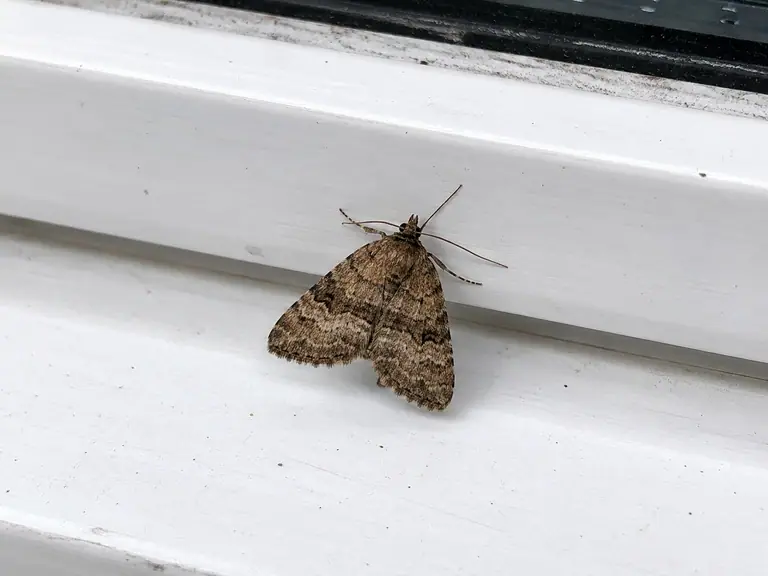
Hampstead properties often combine tall façades, original roof spaces, later extensions and gardens beneath mature trees. Squirrels may reach tiles from branches or adjoining structures, while mice use lower service gaps and moths remain inside wardrobes and carpets. A sound pest-control plan therefore starts by locating the active level and identifying whether the route begins outdoors, within a shared building or inside one room.
For suspected squirrels, the technician checks noise timing, roof geometry, droppings, gnawing and disturbed insulation. Daytime movement above a top-floor ceiling has a different significance from light scratching within a kitchen wall after dark. Safe loft access and an external view are both important. Where a mansion block or divided house is involved, the inspection also considers roof voids that cross the boundaries between individual homes.
Control is selected only after the species and route are supported by evidence. Roof openings are not sealed while an animal may remain inside. Traps or other measures must be lawful, protected and reviewed, and damaged cables or contaminated insulation may require a separate specialist. Once activity has stopped, proofing addresses the complete usable entry route rather than the single gap that is easiest to reach.
Before a Hampstead visit, residents or managers should note the room below the sound, the usual time and any visible roof defect. Photographs from ground level can help with access planning, but climbing onto a roof is unnecessary and unsafe. Same-day attendance may be possible subject to availability; high-level survey or repair work is confirmed after the site and access method have been assessed.
COMMON LOCAL SCENARIOS
Inspection considers a slipped roof detail reached from nearby branches.
Access, storage and connected spaces are checked.
heavy daytime movement in an inaccessible loft edge
The response is planned around NW3 access and building use.
FROM FIRST SIGN TO CONTROL PLAN
A resident in a converted NW3 house hears heavy movement shortly after sunrise and notices fresh insulation below a loft hatch. A mature tree reaches close to the rear roof slope.
The resident keeps the hatch closed, records the time of each sound and asks the freeholder for roof-access information. They do not block the visible eaves gap or place poison in the loft. An upstairs neighbour confirms hearing the same route nearer the party wall, which suggests that the movement is not confined to one small ceiling area.
During inspection, the loft shows compressed insulation, larger droppings and recent gnawing beside the rear eaves. A daylight gap aligns with marks on a timber edge, while the front roof remains undisturbed. The external survey identifies a branch-assisted approach onto a lower extension and then along a gutter to the opening. The evidence is consistent with grey-squirrel activity rather than mice.
A controlled trapping and review plan is positioned within the accessible loft and checked at agreed intervals. Both occupiers receive instructions not to disturb the placements. The freeholder arranges an electrician to assess a gnawed cable. Proofing is scheduled only after the monitoring period confirms that the connected void is clear, and the repair specification covers the full eaves weakness.
Follow-up finds no new tracks, noise or disturbed insulation. The opening is reinforced with a durable material suited to the roof detail, and the overhanging route is discussed with the tree contractor without assuming that all vegetation must be removed. This Hampstead scenario shows how timing, shared roof space and the animal’s external approach produce a safer and more durable result than immediate hole filling.
PANTHER CONTROL MATRIX
Select the closest match. The panel shows the first practical response — without making you identify the pest perfectly.
PANTHER RAPID RESPONSE
Call the London team. Describe what you have noticed and where it is happening.
NEARBY COVERAGE
DIRECT ANSWERS
Yes, provided safe access is available. The survey compares internal evidence with likely external roof routes.
No. Sealing before confirming the void is clear can trap an animal or force movement elsewhere.
Not automatically. The whole access sequence and any tree-management constraints should be assessed first.
Yes, but access to adjoining sections may be needed when evidence crosses the internal boundary.
LOCAL PRICE GUIDE
The same Panther starting prices apply across our London coverage, with the final cost based on the work required.
| Service | Price from | Typical basis | Notes |
|---|---|---|---|
| Bed bug control | From £204 | Treatment plan | Affected rooms and treatment method determine the scope. |
| Heat treatment | From £504 | Specialist treatment | Area size and preparation determine the final quote. |
| Steam treatment | From £245 | Specialist treatment | Affected area and preparation determine the final quote. |
| Pest inspection | From £62 | Inspection visit | Property type and access may affect scope. |
| Flea and moth control | From £184 | Treatment plan | Preparation, coverage and follow-up needs affect the quote. |
Property size, infestation spread, access, treatment method and the visits required can change the final price.
View all pest control prices or call 020 3404 5177 for the appropriate scope.