Larger spindle-shaped droppings
Record where and when this sign appears. Avoid disturbing useful evidence before inspection.

RODENT CONTROL · LONDON RESPONSE
Rat control combines evidence-led treatment with investigation of drains, external access and food sources that allow activity to continue.
CASE TYPE / RODENTS
Inspect the evidence.FIELD SIGNALS
Record where and when this sign appears. Avoid disturbing useful evidence before inspection.
Record where and when this sign appears. Avoid disturbing useful evidence before inspection.
Record where and when this sign appears. Avoid disturbing useful evidence before inspection.
Record where and when this sign appears. Avoid disturbing useful evidence before inspection.
INSPECTION MAP
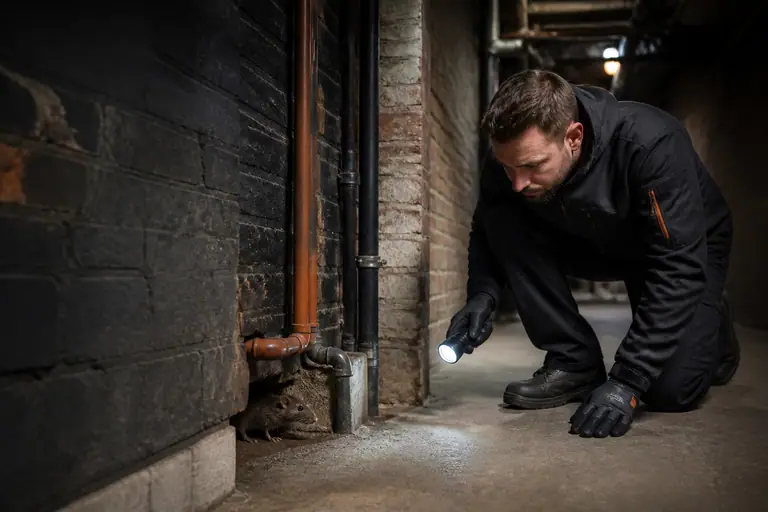
External perimeter, bins, drains where accessible, subfloors, kitchens, service routes and burrows are checked for entry and established runs.
CONTROL SEQUENCE
Confirm rat evidence and identify feeding, harbourage and likely access.
Position secured traps or controlled treatment points according to the site assessment.
Monitor results, improve waste practices and repair suitable access defects after control.
THE SERVICE, EXPLAINED
Rats follow repeatable routes between food, water and shelter.
In terraced houses and converted flats, those routes may pass below suspended floors, behind kitchen units or through shared service voids. Commercial premises often add delivery areas, bin stores and drainage connections to the inspection map.
A sighting does not show the full extent of the problem. Fresh droppings, smear marks, gnawing and disturbed materials help establish where rats are travelling and whether the route is recent.
The inspection connects visible evidence with the structure around it.
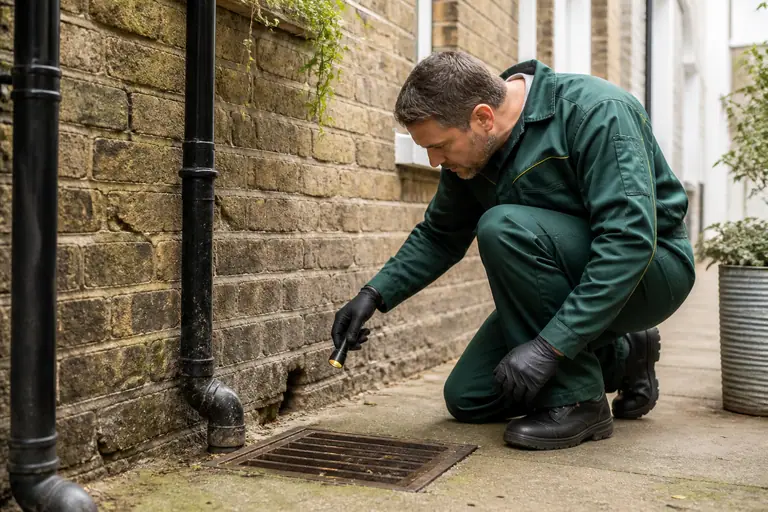
The technician reviews the reported rooms before checking accessible perimeter points, kitchens, cupboards, lofts, basements and service routes. Where drainage is a realistic possibility, the findings may indicate that a separate drain investigation is needed.
Active openings are not sealed automatically. Closing the wrong point too early can trap an animal inside or redirect activity into another part of the building.
Control points are positioned around confirmed movement, not scattered without a plan.
Depending on the property and risk assessment, the approach may use secured traps or controlled treatment points. Their location, protection and follow-up are part of the treatment decision, particularly where children, pets, tenants or customers use the space.
Monitoring shows whether activity is reducing and whether the original route remains active. A further visit may be needed to adjust placements, remove accessible remains or confirm that proofing can begin.
Preserve useful evidence and make the affected areas accessible.
Avoid sweeping away droppings immediately before inspection. Store food in closed containers, note recent sightings and clear reasonable access beneath sinks or around affected cupboards. Do not move unsecured bait or traps from earlier attempts.
Tell Panther about pets, vulnerable occupants, inaccessible voids and any building-management restrictions when booking.
Proofing works best after the active route has been understood.
Repairs may include suitable closure around pipes, vents, doors or damaged external fabric. The exact material and timing depend on the opening and whether it forms part of a shared or maintained structure.
Waste storage, vegetation, spilled bird feed and standing water can keep external pressure high even after internal activity falls. These conditions should be handled alongside structural repairs.
THE PANTHER METHOD
Establish the pest, the extent of activity and the routes it uses.
Reduce immediate activity and limit the chance of spread.
Apply a targeted method selected for the property and infestation.
Close the loop with follow-up measures and practical prevention.
DIRECT ANSWERS
Not always, but defective drainage and service routes can be important and may require specialist investigation.
Active routes should be assessed first so rats are not trapped inside or diverted elsewhere.
It confirms whether activity has reduced and whether placements, proofing or further investigation need adjustment.
Use sound lidded containers, avoid loose waste and clean spilled food around storage areas.