A pest and operational source are confirmed
Target the affected zone, protect customers and stock, then address the process or defect that continues to support activity.

LOCAL PEST RESPONSE · TW3
The first task is to understand how the site works: occupied rooms, trading areas, deliveries and waste may create very different routes. Findings are then turned into a practical treatment scope.
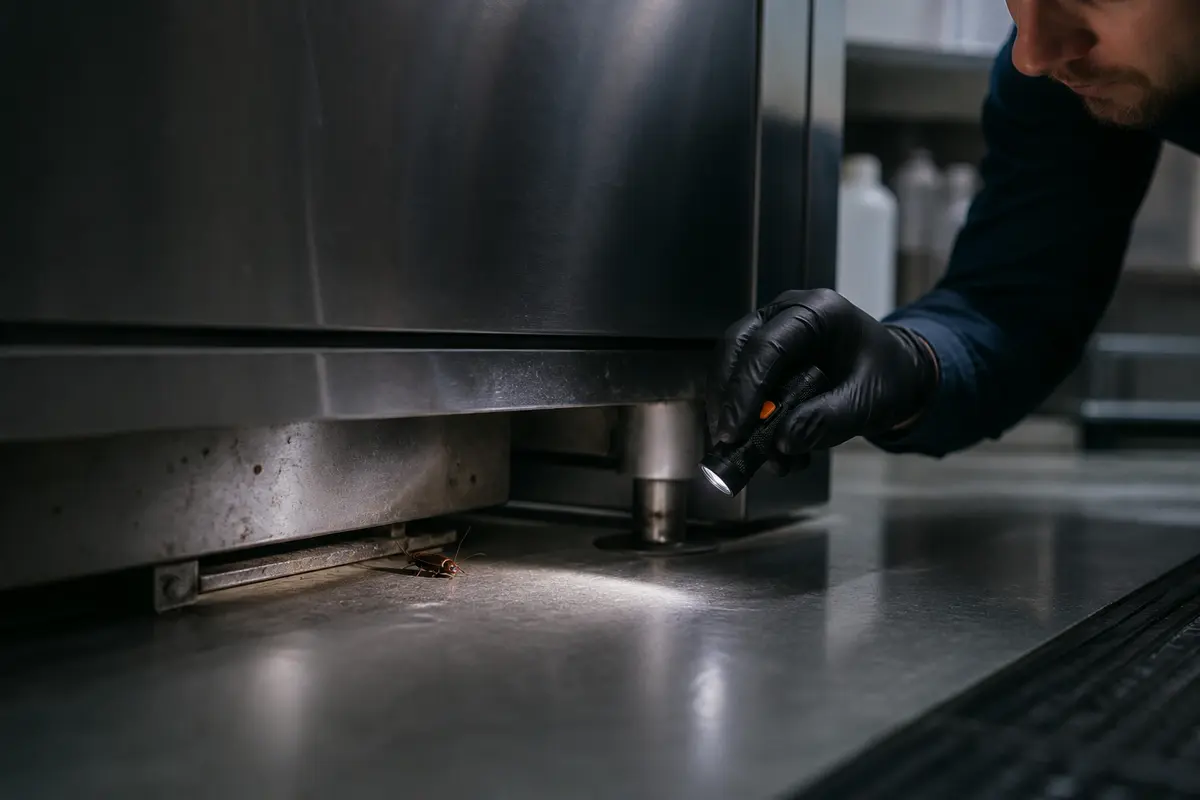
START WITH THE SIGN
Select the observation closest to the current evidence. It opens the relevant service guide; it does not diagnose the pest.
AREA AND BUILDING PROFILE
Hounslow businesses can include public-facing units with service yards, stockrooms or shared rear access. We establish the site contact and the limit of their authority before inspecting areas controlled by a landlord, centre manager or neighbouring operator.
TW3 pest reports need an operational timeline as well as a location. Delivery records, cleaning routines, contractor visits and waste collections can reveal a pattern that a single sighting cannot explain.
INSPECTION FIELD NOTES
The manager identifies what was found, who saw it and what the area was doing at the time. This focuses inspection without treating staff assumptions as confirmed identification.
We examine accessible delivery thresholds, racking edges, utilities and refuse interfaces, noting any route that continues behind controlled plant or another tenancy.
Treatment, cleaning, repairs and supplier questions are listed independently with a responsible contact. Urgent containment does not replace the longer corrective work.
Monitor data and new observations are checked at the stated interval. Escalation is based on continuing signs, not simply the passage of time.
SELECTED SERVICE FOCUS
The commercial focus shows how monitoring and treatment can sit alongside deliveries, shifts and hygiene responsibilities.
Read the commercial pest management guide →Target the affected zone, protect customers and stock, then address the process or defect that continues to support activity.
Secure a specimen, check records and monitor the relevant route before committing the business to an unsuitable treatment.
Give facilities management an evidence-led action note while the tenant controls accessible stock and hygiene risks.
PUBLISHED STARTING POINTS
The final scope reflects identification, number of areas, access and any method-specific follow-up.
| Service | Price from | Basis |
|---|---|---|
| Pest inspection | From £62 | Inspection visit |
| Flea and moth control | From £184 | Treatment plan |
| Wasp nest treatment | From £89 | Accessible nest |
PREPARATION AND FOLLOW-UP
Nominate a site contact, gather recent pest records and arrange safe entry to stock, waste, plant and delivery zones.
Explain trading constraints and staff movement so inspection and placement can proceed without creating contamination or access hazards.
Complete each assigned corrective action, preserve monitor records and report new signs with time, product area and shift context.
HOMES AND LANDLORDS
Where accommodation sits near commercial units, residents and business managers retain distinct responsibilities even when a structural route appears connected.
Discuss a residential visit →BUSINESSES AND MANAGERS
Findings, exclusions, device positions and due actions are written for handover between shifts, contractors and facilities teams.
View commercial pest control →PUBLISHED COVERAGE
Businesses serving another local postcode can use the adjacent coverage pages to confirm the correct district information for that operating address.
HOUNSLOW QUESTIONS
Share operating and access times when enquiring. Availability and a suitable attendance window can then be discussed for the actual site.
Recent contractor reports, staff sightings, cleaning notes, deliveries and maintenance defects help establish sequence and recurring locations.
That depends on the pest, method and affected zones. We plan around contamination controls and explain any exclusion before work is authorised.
The inspection can document the connection, but access and corrective work must be coordinated with the landlord or party controlling that yard.
Ask them to note the time, exact fixture or stock location, movement direction and photograph the specimen safely where possible.
It compares monitoring and fresh evidence with the agreed action list, showing whether treatment and operational corrections are working together.
PANTHER RESPONSE · HOUNSLOW
Tell us how the affected space is used and who controls adjoining areas. We can then organise access without disrupting more of the property than necessary.